

Champagne Drappier — A pioneer in low-sulphur winemaking since 1808
In the villageof Urville, in the heart of the Côte des Bar, Drappier has been producing a Champagne style unlike any other since 1808: low in sulphites, authentic, and deeply rooted in its clay-limestone soils. Now in its eighth generation under the leadership of Michel Drappier, the house is built upon 57 hectares of vineyards, predominantly planted with Pinot Noir (70 per cent), with a third cultivated organically. This Pinot Noir, grown on Kimmeridgian clay soils — the very same soils that have made Chablis in Burgundy famous — gives the champagnes their characteristic deep, coppery gold colour. These iconic grapes are complemented by heritage grape varieties that have all but disappeared: Arbane, Fromenteau, Petit Meslier and Blanc Vrai, which are preserved with conviction in every cuvée. A pioneer in low-sulphur winemaking for decades, the house is also the first Champagne producer to be certified as low-carbon: a rare harmony between an artisanal vision and environmental commitment.
Buy Drappier champagnes online
The Drappier vintages — Pinot Noir, Patrimoine and Pureté
La Carte d’Or, made up of 80 per cent Pinot Noir, is the perfect accompaniment to oysters, langoustines and roast poultry. La Grande Sendrée, a prestigious vintage cuvée, enhances fine dining: black truffles, pan-fried scallops, guinea fowl in a casserole. The Cuvée Charles de Gaulle — a tribute to the loyal regular from Colombey-les-Deux-Églises — pairs well with white meats and dishes with character. Finally, the Brut Nature Sans Soufre reveals crystalline purity when served with sushi, fish tartare or briny oysters.
These champagnes should be served at between 8 and 10 °C in a tulip-shaped glass to reveal their full aromatic complexity. Non-vintage cuvées are best enjoyed within 3 to 5 years of purchase; vintage cuvées have an ageing potential that can exceed ten years when stored in a cool cellar, laid horizontally and away from light.
Discover the Drappier range on Pépites en Champagne: an artisanal selection, expert advice and careful delivery throughout France and Europe for your most exceptional dining occasions.
Drappier — Cistercian Cellars and the Aube Vineyard
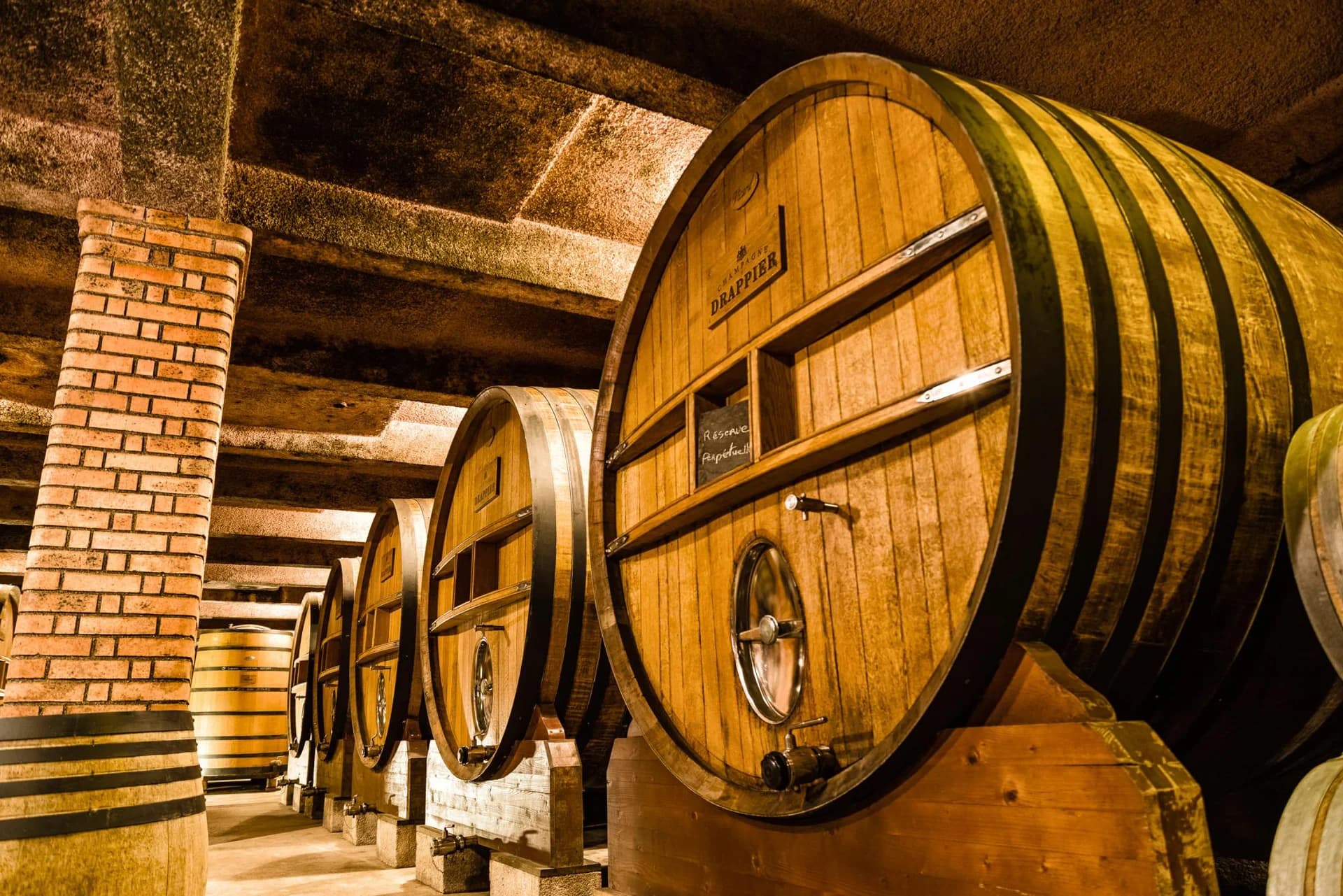
It was in 1808 that François Drappier laid the foundation stones of this house in the Aube region, in the village of Urville. The estate boasts an exceptional architectural heritage: vaulted cellars built by the Cistercian monks ofClairvaux Abbey in the 12th century, where the wines have been matured since 1958. These galleries were supplemented in 1991 by cellars hewn out of virgin chalk, forming a double chamber with a naturally constant temperature that preserves the wines at every stage of their production.
Drappier’s philosophy is based on a founding principle: minimal sulphiting. With just 0.002 per cent sulphur added — compared with an industry average of 5 per cent — the champagnes express their natural colours, rich golden and coppery hues, without any chemical additives. This approach, combined with organic farming on a third of the vineyard, made the house the first Champagne producer to be certified as low-carbon in 2016.
Your questions about Drappier champagnes
How much do Drappier champagnes cost?
Drappier champagnes cover a wide price range: from €30 to €35 for non-vintage cuvées such as the Carte d’Or, up to around €80 for prestige cuvées such as the Grande Sendrée. For a house that has been committed to low sulphur levels and organic farming for generations, this represents remarkable value for money compared with the major champagne houses.
What food and wine pairings go well with Drappier champagne?
The Carte d’Or (predominantly Pinot Noir) is superb with oysters, shellfish and poultry in sauce. The pure, mineral-rich Brut Nature Sans Soufre perfectly complements sushi and fish tartares. La Grande Sendrée pairs beautifully with black truffles, foie gras and fine fish. The cuvées made from heritage grape varieties (Arbane, Petit Meslier) bring freshness and finesse to hard cheeses at the end of a meal.
How should Drappier champagne be served and stored?
Serve at between 8 and 10 °C in a tulip glass to bring out the aromas without overpowering them. Non-vintage cuvées are best enjoyed within 3 to 5 years of purchase. Vintage wines (Grande Sendrée) can be cellared for 8 to 15 years at around 12 °C, stored horizontally, away from vibrations and light. An hour in the fridge is sufficient — avoid the freezer.
Where can I buy Drappier champagne online?
Discover the full Drappier range at Pépites en Champagne — a selection of artisan products, expert advice, and express delivery throughout France and Europe.
Was Drappier really Charles de Gaulle’s favourite champagne?
Yes. Drappier was the champagne served at General de Gaulle’s private receptions in Colombey-les-Deux-Églises, a few kilometres from Urville. This special relationship has endured over the decades and given rise to the eponymous cuvée. A unique historical and geopolitical connection within the history of Champagne, which the major online retailers have never bothered to highlight.
How does the terroir of Urville in the Aube differ from the rest of Champagne?
Urville is situated on the Kimmeridgian clays of the Côte des Bar, the same soils as those found in Chablis, Burgundy. This terroir gives the Pinot Noir a structure and depth distinct from those found on the chalk soils of the Marne, resulting in fuller-bodied champagnes with characteristic coppery gold hues and a mineral character of great distinctiveness.
About
Champagne Drappier — the essentials
- Founded in
- 1808
- Founder
- François Drappier
- House / owner
- Drappier
- Location
- Urville (Aube), Montagne de Reims
- Vineyard
- 57 ha
- Grape varieties
- Pinot Noir (70%), Chardonnay (15%), Pinot Meunier (15%)
- Distinctions
- Culture biologique
- Cuvées
- Brut Nature sans soufre
