

Moët & Chandon Champagne — The historic house in Épernay since 1743
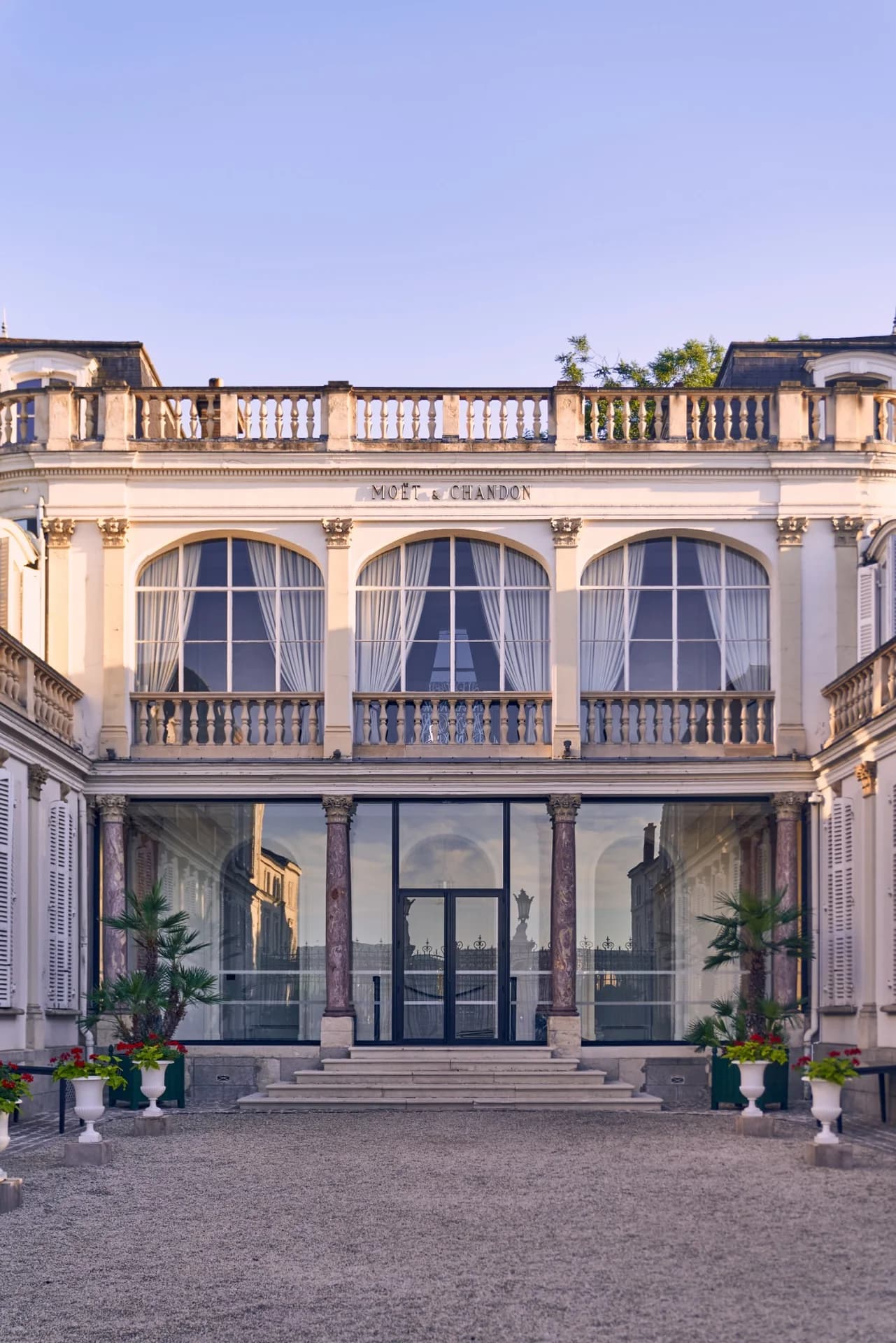
Founded in 1743 by Claude Moët on the famous Avenue de Champagne in Épernay, Moët & Chandon has, for nearly three centuries, embodied a unique vision of champagne: combining the diversity of Champagne’s terroirs with a stylistic consistency recognised worldwide. Now owned by the LVMH Group and boasting 1,190 hectares of vineyards spread across the Montagne de Reims, the Côte des Blancs, the Vallée de la Marne and the Côte des Bar, the house sources its grapes from more than 200 distinct crus. Behind the fruity and generous style of the Brut Impérial — crafted from 822 base wines — Benoît Gouez, Cellar Master, orchestrates one of Champagne’s most meticulous blends. A champagne from a grand maison, to be approached not with naivety but with genuine curiosity.
Buy Moët & Chandon champagnes online
Moët & Chandon cuvées — From Brut Impérial to Grand Vintage
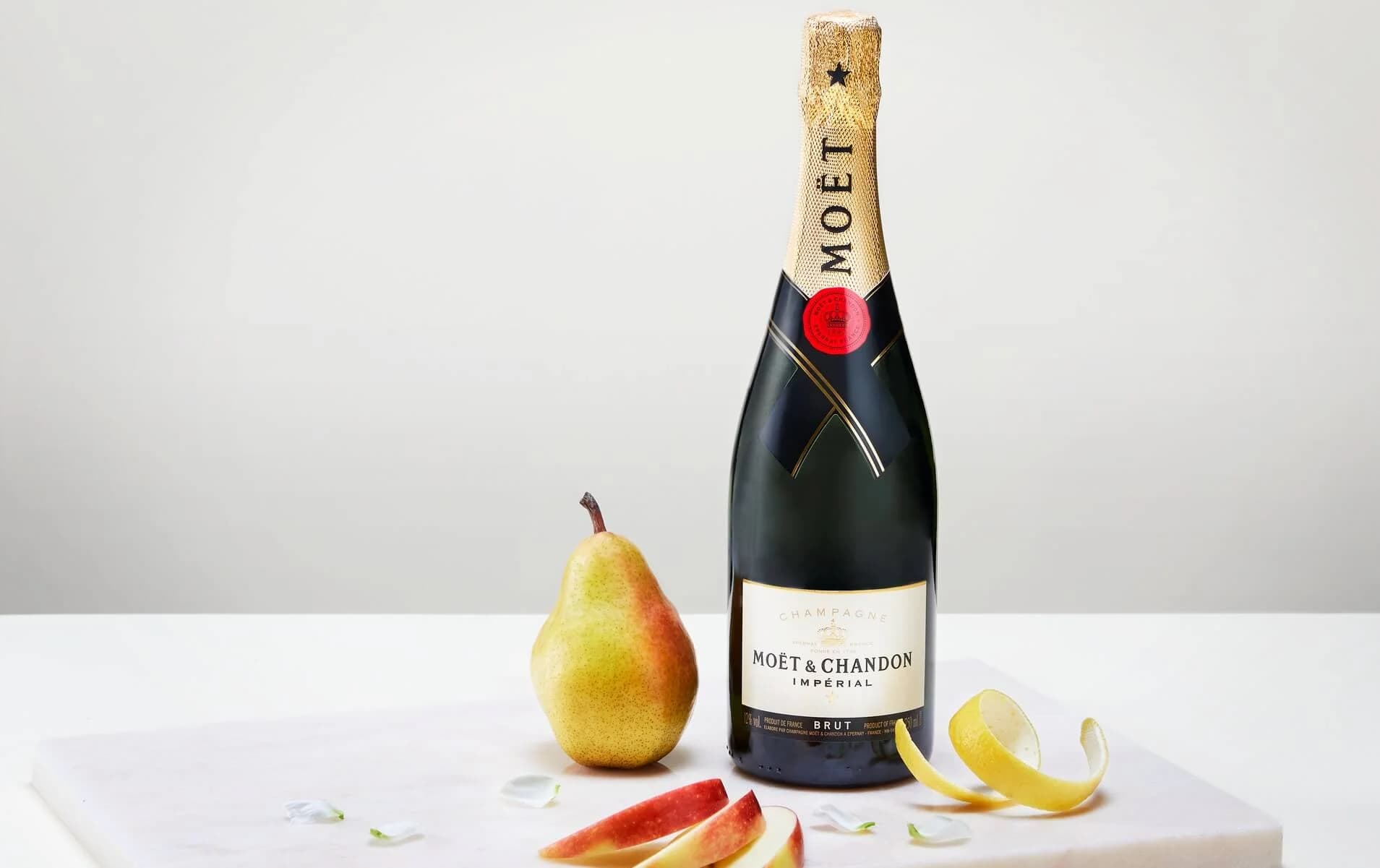
Brut Impérial (35% Pinot Noir, 35% Meunier, 30% Chardonnay, 200+ crus) is ideal as an aperitif or with oysters and scallops. Its rosé counterpart offers more red fruit notes, making it ideal with roast poultry or salmon.The Ice Impérial, designed to be served over ice, reinvents the summer terrace experience. The Grand Vintage reveals a complexity that pairs beautifully with truffles, lobsters and mature cheeses. The semi-dry Nectar Impérial complements fruity desserts or semi-cured foie gras.
When serving, Brut Impérial is best enjoyed at 9–11 °C in a tulip-shaped glass, which concentrates the aromas.Ice Impérial can be served at up to 12–13 °C over ice. In terms of ageing potential, the non-vintage Brut is best enjoyed within three to five years; the Grand Vintage can be cellared for five to ten years in a cool, dark cellar.
Discover the full Moët & Chandon range at Pépites en Champagne: expert advice, a carefully curated selection and express delivery across France and Europe — from prestigious gifts to exceptional tasting experiences.
Moët & Chandon — 1743: vineyards, terroirs and the heritage of Champagne
In 1743, Claude Moët founded his wine merchant’s business in Épernay with the aim of exporting Champagne wines to the royal courts of Europe. Two and a half centuries later, the house is part of the LVMH group and owns 1,190 hectares of vineyards spanning the four major Champagne terroirs: Montagne de Reims, Côte des Blancs, Vallée de la Marne and Côte des Bar. This exceptional landholding enables it to source its grapes from over 200 different crus.
Benoît Gouez, Cellar Master, oversees the blending of each cuvée. For the Brut Impérial alone, he selects 822 base wines — a blend of the current year’s wines and reserve wines — to ensure a recognisable, fruity and fresh profile from one year to the next, despite an annual production of 28 million bottles.
Your questions about Moët & Chandon champagnes
Is Moët & Chandon champagne worth the price?
With 28 million bottles a year, Moët & Chandon is a major house whose prices reflect consistent quality rather than the scarcity of specific vintages. The Brut Impérial offers an accessible, fruity balance, whilst the Grand Vintage justifies its premium status through its commitment to a single vintage and a genuine ageing potential of five to ten years.
What food and wine pairings go well with Moët & Chandon champagne?
Brut Impérial is excellent as an aperitif, with oysters, scallops or sushi. Brut Impérial Rosé pairs well with roast poultry, smoked salmon or strawberries with pepper. Grand Vintage reveals its complexity when served with truffles or lobster. Nectar Impérial, a semi-dry champagne, is ideal with desserts featuring exotic fruits or semi-cured foie gras.
How should Moët & Chandon champagne be served and stored?
Serve Brut Impérial at 9–11 °C in a tulip glass. Ice Impérial is designed to be served with ice and is best enjoyed at 12–13 °C. Storage: Brut Impérial is best enjoyed within three to five years; Grand Vintage can be cellared for five to ten years in a cool cellar at 10–12 °C, away from light.
Where can I buy Moët & Chandon champagne online?
Discover the full Moët & Chandon range at Pépites en Champagne — an artisanal selection, expert advice and express delivery throughout France and Europe.
Is Moët & Chandon an artisanal or industrial champagne?
Neither entirely. With an annual production of 28 million bottles, the house does not claim to practise the artisanal methods of a ‘récoltant-manipulant’. However, Benoît Gouez selects 822 base wines for the Brut Impérial alone — a blending process of rare rigour. It is precisely this transparency regarding scale and method that distinguishes the discerning connoisseur from the casual consumer.
Which Moët & Chandon vintage should you choose as a gift or for a special occasion?
For a prestigious gift, the Grand Vintage or a magnum of Brut Impérial are the obvious choices — the 1.5-litre bottle ages better and makes a real impression when opened. For a party or a sophisticated aperitif, Brut Impérial remains the universal benchmark. Ice Impérial will be a delightful surprise at a summer party; Nectar Impérial is ideal for palates unaccustomed to dry champagnes.
About
Champagne Moët & Chandon — the essentials
- Founded in
- 1743
- Founder
- Claude Moët
- House / owner
- LVMH
- Location
- Épernay, Champagne
- Vineyard
- 1190 ha
- Cuvées
- Brut Impérial, Brut Impérial Rosé, Grand Vintage, Grand Vintage Rosé, Ice Impérial, Ice Impérial Rosé
