How to buy champagne at the right price
The essentials
Buying champagne at a fair price means understanding the factors that make up its cost: exceptional land (over one million euros per hectare in 2021), exclusively hand-picked grapes, capped yields, and demanding winemaking expertise. Opting for short supply chains helps to avoid inflating the price with marketing and distribution costs.
- Why is the price of a hectare of vineyard so high in Champagne?
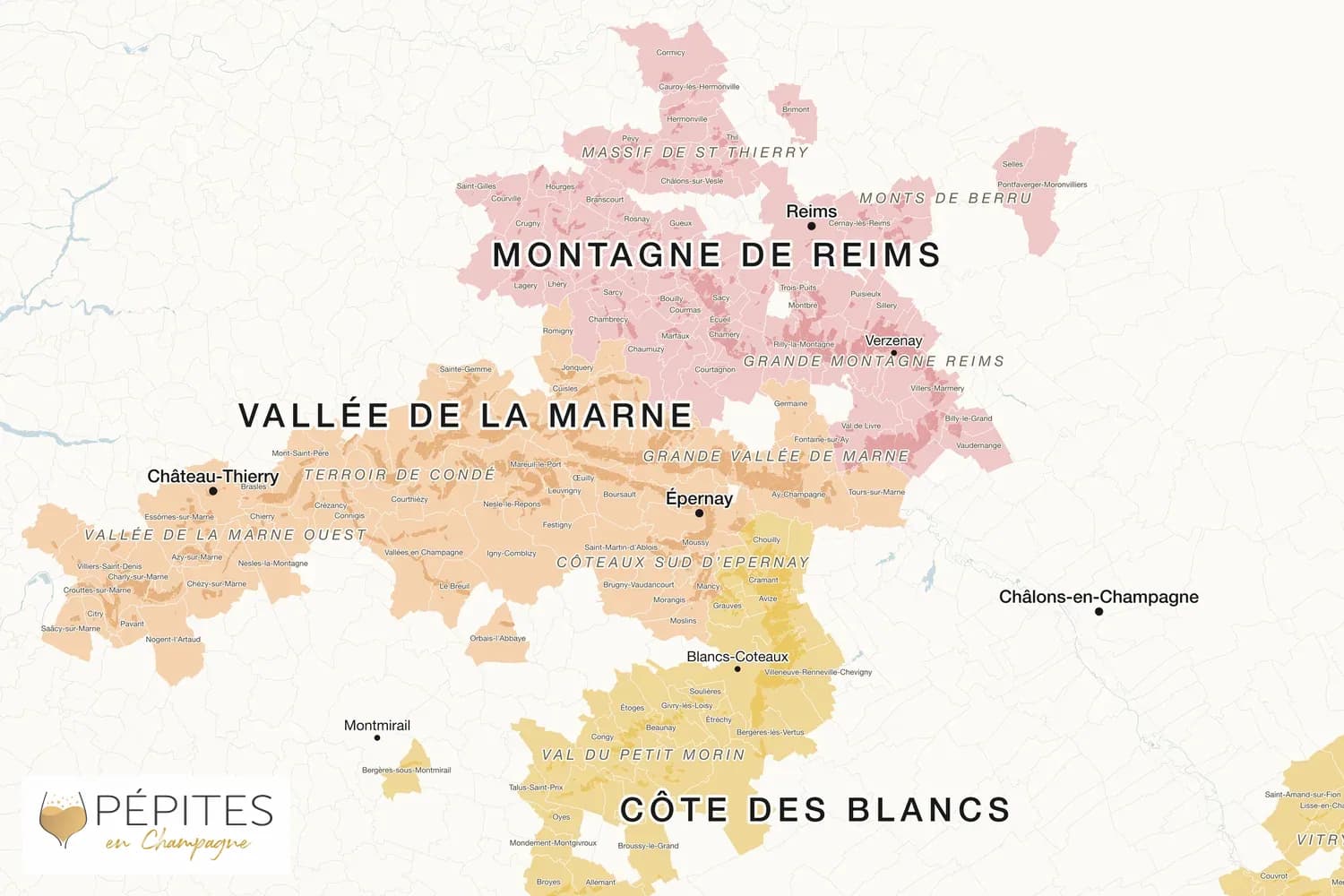
- In 2021, the average price of a hectare in Champagne exceeded one million euros, compared with an average of 150,000 euros for French AOP vineyards. On the Côte des Blancs, it stands at nearly 1.7 million euros; on the Côte des Bar, around 900,000 euros.
- Which winemaking criteria influence the price of a champagne?
- The price of a champagne reflects specific choices: extended ageing, ageing in barrels or amphorae, the selection of an exceptional vineyard plot, the choice of an outstanding vintage, a low dosage and a rigorous environmental approach. These factors are all guarantees of quality.
- Why choose champagnes sold through short supply chains?
- Choosing a champagne sold through direct-to-consumer channels can be a wise move: marketing and promotional costs remain low and do not put a strain on the champagne lover’s budget.
Why does champagne cost what it does? Exceptional vineyards, hand-harvesting, meticulous winemaking: a breakdown of the factors that determine its fair price.

To find the best champagne at the right price, weneed to look at the elements that make up the cost of champagne: origin, requirements, know-how and winemaking choices.
The value of Champagne vineyards stands out from other French vineyards. Indeed, the price of 1 hectare of vines in Champagne is 10 to 20 times higher than in the Loire, for example. This is due to the quality of the terroir, the complexity of working the vines in France's most northerly wine-growing region, and the very low volume of transactions.
The price of Champagne also takes into account the specific features of the appellation's specifications.Harvesting is exclusively manual. Yields are capped.
Thereare many requirements in terms of viticulture and vinification.
Add to this the know-how and choices made:
- prolonged ageing to develop aromas,
- barrel ageing for complexity, or amphora ageing for finesse and neutrality,
- selection of an outstanding plot,
- vintage from a year of excellence,
- choice of a more or less restrictive environmental approach,
- low dosage with the addition of champagne.
While all these factors play a part in the price, they are also a guarantee of quality, as long as communication and distribution costs are kept under control.
It may therefore be wise to opt for short-distance products, whose marketing and promotion costs are not a burden on the champagne-lover's budget.
Price per hectare
The average price of a hectare of vines in Champagne in 2021 is expected to exceed one million euros (*), with wide regional disparities. Prices in the Côte des Blancs vineyards continue to rise. They reach nearly 1.7 million Euros per hectare, compared with 900,000 Euros on the Côte des Bar.
As an indication, the average price per hectare of vines in the French wine-growing regions A.O.P. is 150,000 Euros in 2021.