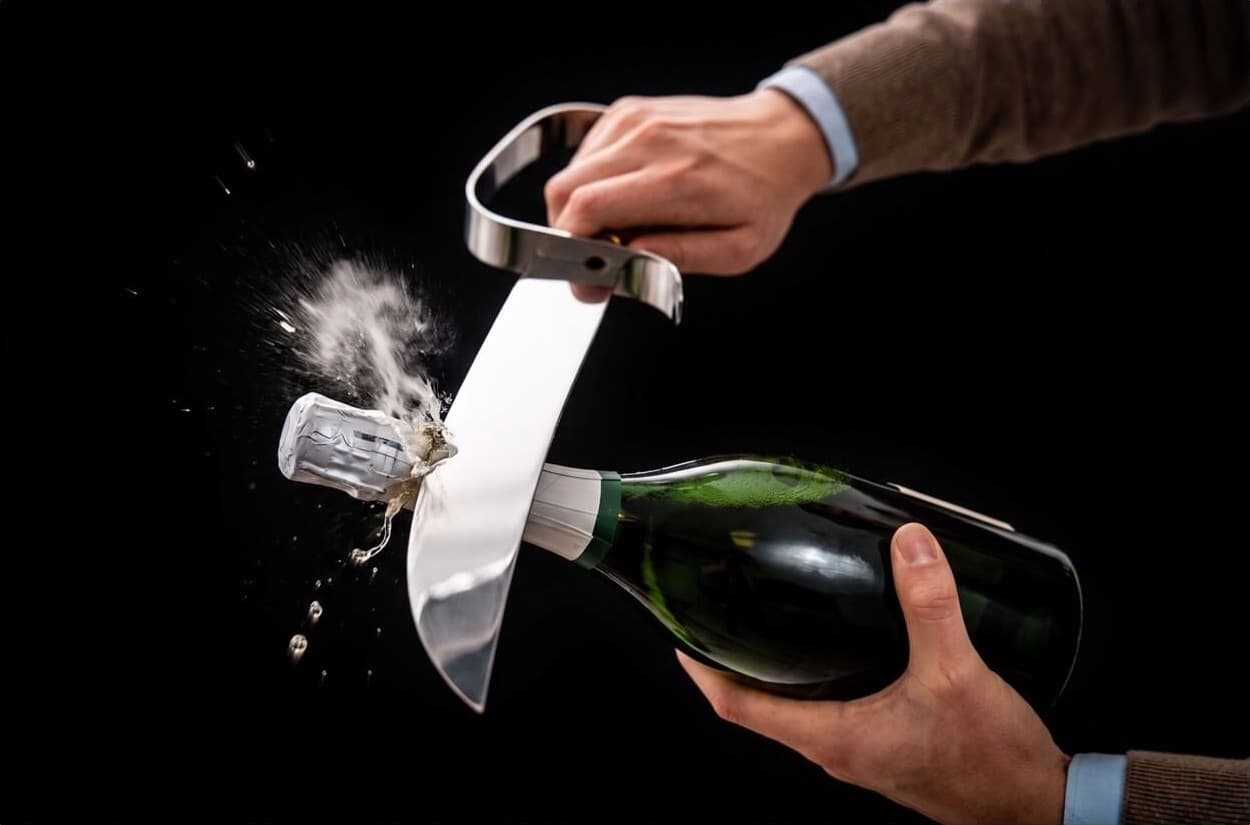
We often speak of the champagne experience as an art in its own right. But what really strikes you is the precise moment when opening a bottle is accompanied by an elegant, almost theatrical gesture. Sabering champagne is much more than a simple tradition. It's a ritual that brings people together, intrigues and sometimes amuses, and lifts even the simplest celebration to a higher level.
Sabering, a fascinating gesture
The first time I saw someone saber a bottle was at a birthday party in the heart of the Marne region. The table was already covered with cheeses, artisan rillettes and, of course, a few flutes ready to welcome the first bubbles. There was silence just before the gesture. Then, in a flash, the neck came off cleanly, projecting a light cloud of mist over the bottle. Everyone applauded. But deep down, few knew that it's not that simple. You need the right tool, a minimum of technique, and above all, never neglect safety.
Why use a champagne sabre rather than a conventional knife?
You might think that a sharp kitchen knife would do the trick. However, the champagne saber is designed to ensure a clean, efficient gesture, without the risk of damaging the bottle or causing dangerous splinters. Experienced amateurs know: the blade doesn't even have to be sharp. What counts is inertia, the weight of the saber, and precision of movement. On the sabrer le champagne website, you'll find tested models designed for this unique moment, with ergonomic handles and shapes sometimes reminiscent of Napoleonic sabres
Tools that make all the difference at tastings
Selecting the right accessories isn't just a question of aesthetics. For example, using the right champagne saber considerably reduces the risk of accidents. The Champagne region is steeped in tradition. But it also knows how to embrace modernity. More and more Champagne houses are working with artisan cutlers to create unique, personalized objects, sometimes engraved with the estate's initials. This is where a site like knivesandtools comes into its own. Not only can you find champagne sabers, but also pocket knives for picnics in the vineyards, flashlights for late-night cellar tours, and even binoculars for admiring the landscape at sunrise. Fast delivery and free returns are a real convenience when you're looking to equip yourself without the hassle.
A few tips for successful sandblasting
A good sabrage starts with a chilled bottle, ideally around 7 to 9 degrees Celsius. The internal pressure will then be just right to loosen the neck without exploding or spilling over. You also need to locate the vertical weld line on the bottle, which is where the blade will slide. A straightforward gesture, without hesitation, and the job's done. It sounds simple, but you may have to go over it several times before you get that famous clean snap. Some sommeliers admit to failing at their first attempts, even after years of experience. This is quite normal. As with all things, the most important thing is to respect safety rules and never aim at guests.
The champagne experience
In the end, whether you're a fan of tradition or curious about original experiences, sabering a bottle of champagne remains a powerful gesture. It marks the moment, brings people together and creates memories. And with the right tools, the experience takes on a whole new dimension. Accessories from specialist cutlery manufacturers, such as those offered by knivesandtools, really do make life easier for enthusiasts. From selection to delivery, everything is designed for those who want to make the most of every moment around champagne and French-style conviviality