Champagne, the emblematic region of France, is famous for its sparkling wine, champagne. But did you know that this worldwide renown is based on unique and diverse terroirs? Each parcel of vines, each grape variety and each winemaking method contributes to creating champagnes with distinct flavors. Get ready to plunge into the fascinating world of Champagne terroirs!
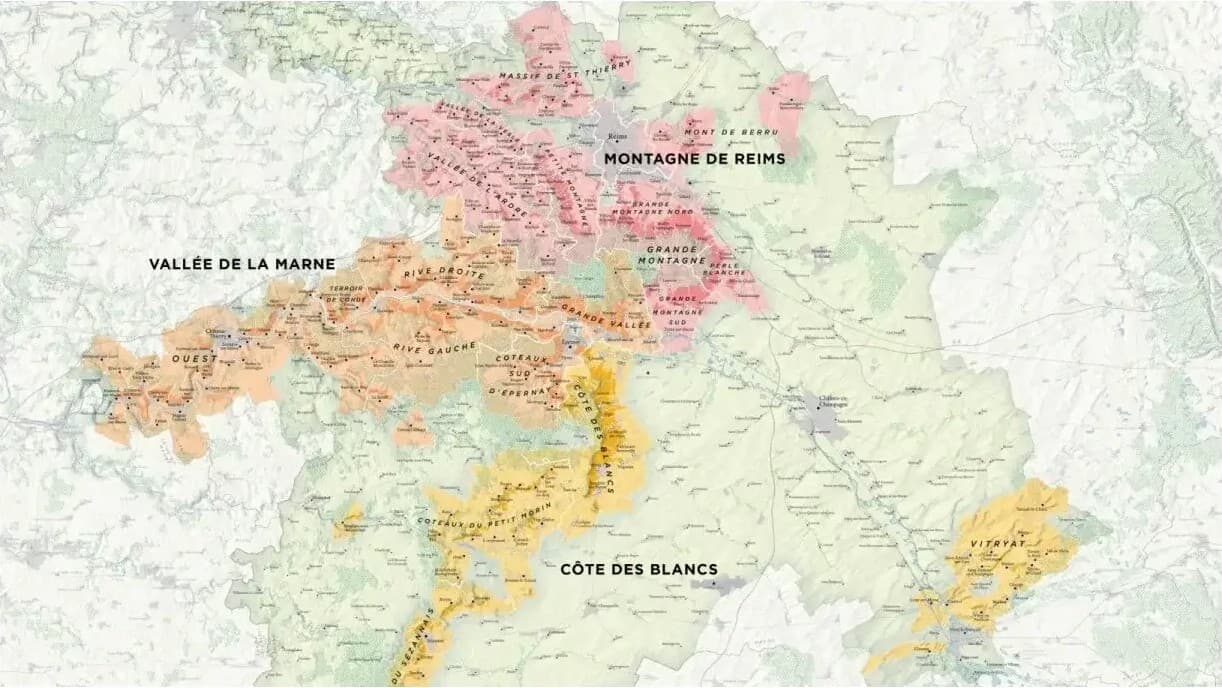
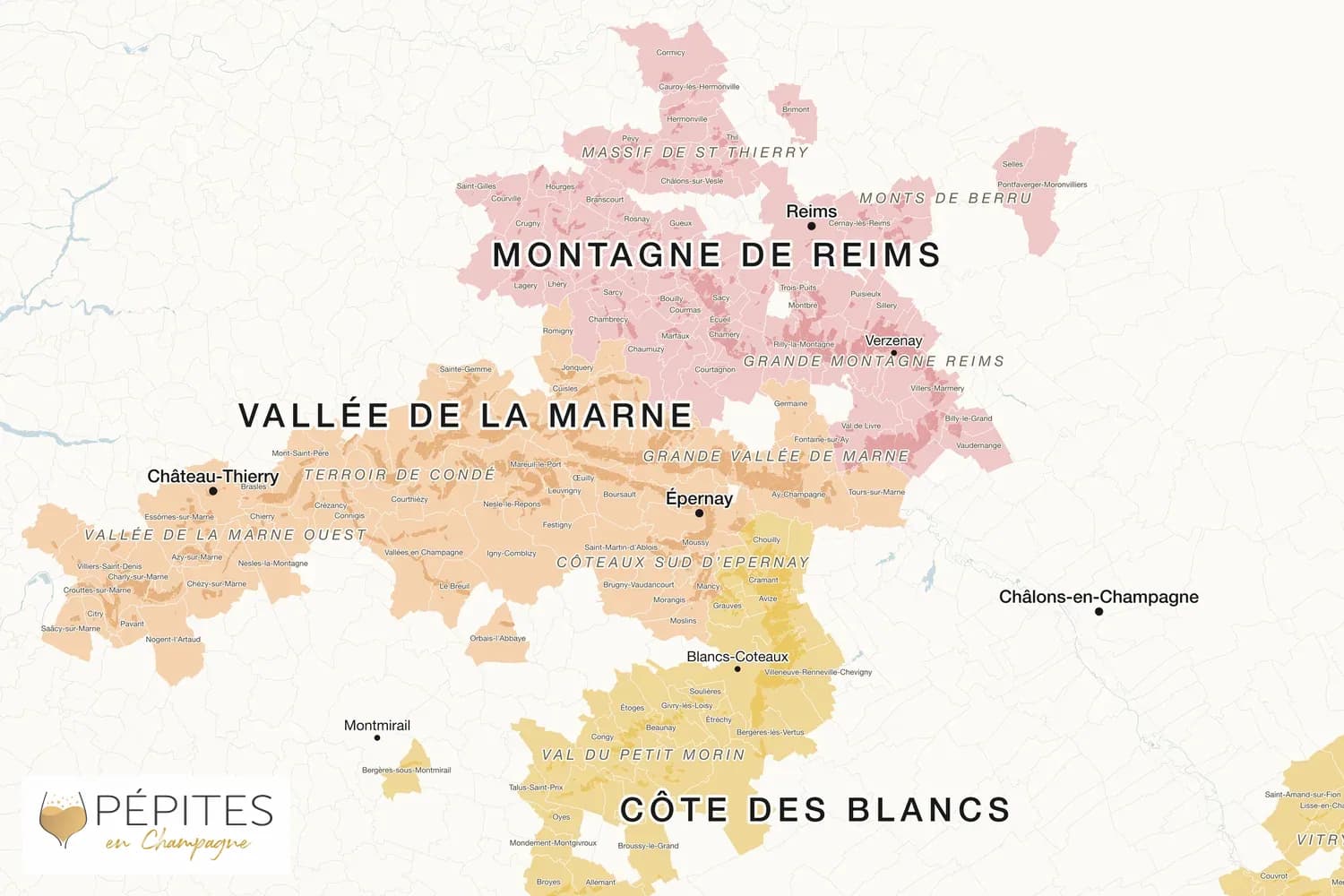
The Champagne AOC covers 4 main terroirs: Montagne de Reims, Vallée de la Marne, Côte des Blancs and Côte des Bars.
The Montagne de Reims: The Cradle of Pinot Noir
A privileged terroir
The Montagne de Reims is one of Champagne's main wine-growing regions, stretching from Reims to Épernay. This terroir is particularly renowned for its flagship grape variety, Pinot Noir, which accounts for around 60% of the wine-growing area. The predominantly limestone soils provide ideal conditions for growing this black grape with its white juice.
The Montagne de Reims is one of Champagne's main wine-growing regions, stretching from Reims to Épernay. This terroir is particularly renowned for its flagship grape variety, Pinot Noir, which accounts for around 60% of the wine-growing area. The predominantly limestone soils provide ideal conditions for growing this black grape with its white juice.
Temperate climate: The Montagne de Reims enjoys a temperate climate thanks to its extensive forest cover, which favors slow, even ripening of the grapes.
Undulating relief: The slopes of the Montagne de Reims provide optimum exposure to the sun, essential for the development of aromas.
Les Vignerons de la Montagne
Notable winemakers in this region include Champagne Pierson Cuvelier, which specializes in 100% Pinot Noir champagnes, offering powerful, elegant cuvées.
The Marne Valley: The Diversity of Grape Varieties
An Eclectic Vineyard
The Marne Valley is the largest of the Champagne regions, covering almost 12,000 hectares. It is known for its diversity of grape varieties, with Pinot Meunier predominating, accounting for around 60% of plantings.
Varied soils and climates
Clay-limestone soils:
The soils of the Marne Valley are rich in clay and limestone, enabling the different grape varieties to flourish.
Microclimates: The proximity of the Marne creates microclimates favorable to viticulture, offering ideal conditions for grape development.
Vignerons de la Vallée
Producers such as Champagne Berat Schenk and Champagne Sourdet Diot are renowned for their champagnes made from Pinot Meunier grapes, offering fruity notes and freshness.
Côte des Blancs: Chardonnay excellence
A Terroir of Renom
The Côte des Blancs is famous for its Blanc de Blancs champagnes, made exclusively from Chardonnay. Chardonnay accounts for nearly 82% of the region's vineyards.
Characteristics of the terroir
Chalky soils: The chalky soils of the Côte des Blancs provide excellent drainage and enhance the finesse of the aromas.
Ideal exposure: South and east-facing slopes guarantee optimum sun exposure, essential for grape ripening.
Côte des Blancs winemakers
Champagne Phillipe Lancelot is an example of a producer who brings out the elegance and finesse of Chardonnay, offering refined, complex cuvées.
The Côte des Bar: An Emerging Terroir
A Recent Discovery
The Côte des Bar, located in the Aube region, is often less well known than other regions, but it is starting to gain recognition thanks to the quality of its champagnes. Pinot Noir is the dominant grape variety, accounting for around 87% of plantings.
Terroir
Clay and limestone soils: Côte des Bar soils are rich in clay and limestone, which contributes to the finesse and elegance of the champagnes produced.
Continental climate: This region benefits from a more continental climatic influence, giving it unique characteristics.
Les Vignerons de la Côte des Bar
Producers such as Champagne Huguenot Tassin and Champagne Drouilly LV are at the forefront of this region, offering light, pleasant champagnes perfect for any occasion.
Champagne Grape Varieties: A Priceless Wealth
The three main grape varieties
Champagne is mainly made from three grape varieties: Pinot Noir, Pinot Meunier and Chardonnay. Each brings unique characteristics to champagnes.
Pinot Noir: Adds body and power, with aromas of red fruits.
Pinot Meunier: Contributes freshness and fruity notes.
Chardonnay: Synonymous with elegance, it offers delicate floral and citrus aromas.
The Diversity of Grape Varieties
In addition to the main grape varieties, Champagne also allows for other lesser-known varieties, such as Petit Meslier and Pinot Blanc, which add even more complexity to champagnes.
The Traditional Method: The Art of Winemaking
A Rigorous Process
The traditional method of champagne vinification involves several key stages, each playing a crucial role in the development of aromas and bubbles.
Pressurage: The grapes are gently pressed to extract the juice without coloring the must.
Fermentation: The juice undergoes alcoholic fermentation, followed by malolactic fermentation to soften the acidity.
Blending: Wines from different cuvées are blended to create the unique style of each house.
Prise de Mousse: A liqueur de tirage is added to trigger the second fermentation in the bottle, creating the characteristic bubbles.
Ageing and Riddling
Champagnes must age on lees for at least 15 months, and often much longer for prestige cuvées. Riddling is a technique used to move sediment to the neck of the bottle before disgorging.
Prior to bottling, the winemaker or cellar master may add a dosage liqueur, also known as "liqueur d'expédition". This is often made from cane sugar dissolved in wine. The amount of liqueur added to the bottle varies according to the type of wine required: