When we think of Champagne, we immediately imagine sparkling bubbles, celebrations and moments of joy. But do you know what makes this sparkling wine so special and so prized the world over? It's the méthode champenoise, also known as the méthode traditionnelle.
Introduction
The méthode champenoise is a specific production process used to make top-quality sparkling wines in the Champagne region of France. The method was developed in the 17th century by the Benedictine monks of Hautvillers Abbey, such as Dom Pérignon.
Steps in the méthode champenoise
The méthode champenoise comprises several crucial stages that guarantee the exceptional quality of Champagne. Here's an overview of the main stages:
1. Harvesting and initial vinification
It all starts with the careful selection of grapes at harvest time. The grapes used to make Champagne are generally Chardonnay, Pinot Noir and Pinot Meunier. After harvesting, the grapes are pressed and the juice fermented to produce a low-alcohol still wine base.
2. Blending and setting the foam
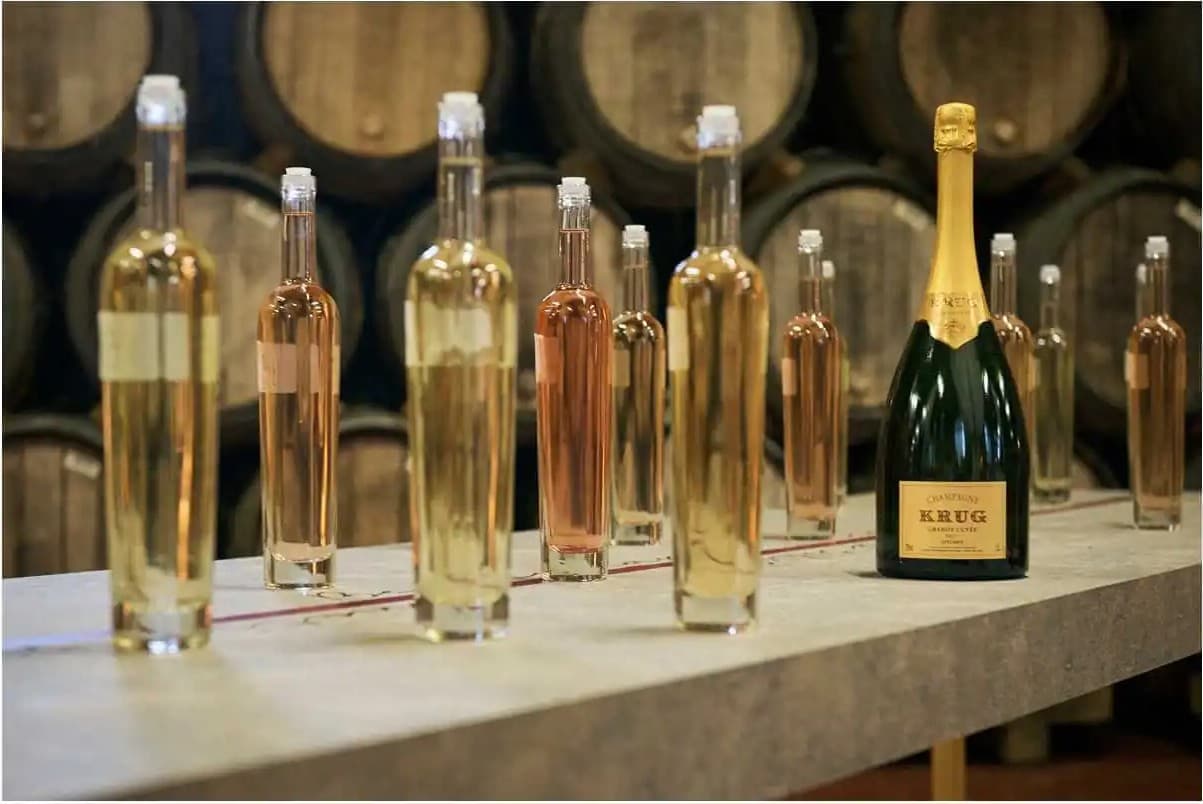
Once the different still wines have been produced, the blending is carried out by the cellar masters. They blend different wines from different grape varieties and harvest years to obtain a coherent taste profile characteristic of Champagne. Next, a liqueur de tirage made from sugar and yeast is added to the blended wine, and the bottle is sealed with a hermetic cap.
3. Bottle fermentation
This is the key stage in the Champagne method. The bottle is placed in a cellar at a controlled temperature, usually between 10 and 15 degrees Celsius. The yeast consumes the added sugar, producing carbon dioxide and alcohol. This in-bottle fermentation creates Champagne's emblematic bubbles.
4. Racking and disgorging
After bottle fermentation, dead yeast settles in the neck of the bottle. To remove them, the bottle is tilted and turned daily in a process called riddling. Once the yeast has collected in the neck, the bottle is quickly disgorged. The neck is immersed in a frozen solution that expels the frozen yeast in the form of an ice cube.
5. Dosage and ageing
After disgorging, a mixture of wine and sugar, called liqueur d'expédition, is added to adjust the sugar level of the Champagne. This stage, called dosage, determines the type of Champagne (brut, dry, demi-sec, sweet, etc.). Champagne is then aged in the cellar for a period ranging from a few months to several years, giving it its complexity and unique character.
The importance of the Champagne method
The méthode champenoise is essential to guarantee the quality and authenticity of Champagne. It creates sparkling wines of incomparable finesse and elegance. Here are just a few reasons why the méthode champenoise is so important:
1. Fine, persistent bubbles
Fermentation in the bottle produces fine, persistent bubbles, which add a pleasant texture on the palate and a sensation of lightness. These bubbles are a key element of the Champagne experience.
2. Aromatic complexity
Thanks to the méthode champenoise, Champagne develops a wide range of aromas. Aromas of fresh fruit, flowers, brioche and honey combine to create unique, captivating taste profiles.
3. Exceptional ageing
Cellar aging allows Champagne to develop deeper flavors and additional complexity. Bottles can be kept for many years, adding value and rarity to special cuvées.
4. A worldwide reputation
The Champagne method is synonymous with prestige and quality. Champagne from the Champagne region benefits from an appellation d'origine contrôlée (AOC), guaranteeing its authenticity and provenance. Consumers the world over recognize this method as a guarantee of quality.
Conclusion
The méthode champenoise is a complex and meticulous process that has made Champagne one of the most famous and appreciated beverages of all time. From delicate bubbles to complex flavors, Champagne made using this method offers a unique sensory experience. Whether to celebrate a special occasion or simply to indulge yourself, Champagne remains a benchmark of luxury and elegance. So raise your glass and enjoy every sip of this exceptional sparkling wine!
FAQ
What's the difference between méthode champenoise and méthode traditionnelle?
The méthode champenoise is a specific term used for wines produced in the Champagne region of France. The méthode traditionnelle is the term used for sparkling wines produced outside this region.
How long does the méthode champenoise fermentation last?
Bottle fermentation in the méthode champenoise generally lasts between 12 and 36 months, depending on the style and complexity of the Champagne.
How is bottle fermentation controlled in the méthode champenoise?
Bottle fermentation is controlled by choosing the amount of sugar added (liqueur de tirage) and by maintaining the cellar temperature at a constant level throughout fermentation.