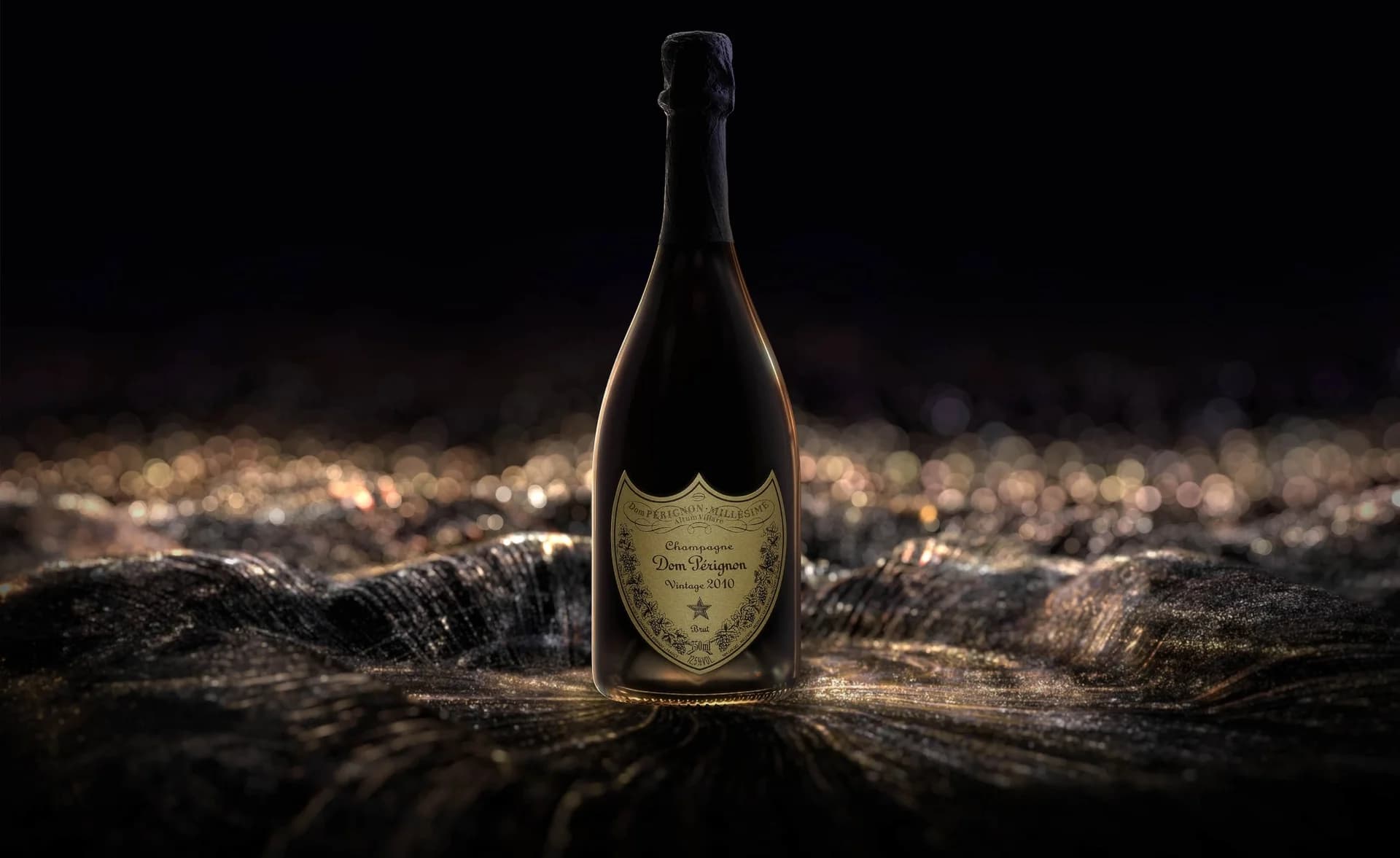
Dom Pérignon belongs to the LVMH group, within Moët Hennessy. The cuvée was born at Moët & Chandon, in Épernay, and is often presented as the first prestige cuvée in Champagne. It is named after a monk who died more than two centuries before it went on sale.
Pierre Pérignon was born in Sainte-Menehould, in late 1638 or early 1639. In 1668, he became cellarer of the Abbey of Saint-Pierre d'Hautvillers, that is, its steward. Founded in the 7th century above the Marne, the abbey lived off its vineyards: he looked after them and the presses for 47 years, until his death in 1715. His gravestone can still be found in the choir of the Saint-Sindulphe church, in Hautvillers.
Did he invent champagne? No. The development of sparkling wine was a collective effort. His reputation as an inventor mainly comes from a letter written in 1821 by Dom Jean-Baptiste Grossard, a monk of the same abbey, more than a century after his death. What is actually credited to him is more concrete: blending grapes from several varieties and plots before pressing. To learn more, read our story of Dom Pérignon.
In 1823, Pierre-Gabriel Chandon, son-in-law of Jean-Rémy Moët, purchased the abbey. It still belongs to Moët & Chandon. The name “Dom Pérignon” itself was initially held by the house of Mercier, which never used it. It passed to Moët in 1927, with the marriage of Francine Durand-Mercier and Count Paul Chandon-Moët.
In 1935, Simon Brothers, Moët's agent in London, celebrated its hundredth anniversary and offered two bottles of the 1926 vintage to 150 of its best customers. They did not yet bear the monk's name. The following year, around a hundred cases of the 1921 vintage set sail for New York aboard the ocean liner Normandie, this time under the name Dom Pérignon. This is why two dates are cited: 1921 for the first vintage, 1936 for its release.
In 1962, cinema got involved: in Dr. No, James Bond holds a bottle from 1955 and remarks that he prefers the 1953.
Richard Geoffroy became cellar master of Dom Pérignon in 1990. Vincent Chaperon officially succeeded him on 1 January 2019, after thirteen harvests at his side since 2005. Also read our profile of Vincent Chaperon.
Their mission has not changed: deciding whether a year deserves to bear the name, then composing the blend. Years judged insufficient are not released: there was no Vintage 2016. The house's archives contain nearly fifty vintages since 1921.
Each vintage blends chardonnay and pinot noir, in proportions that vary: 65% chardonnay in 1970, 60% pinot noir in 1969. The grapes come from grands crus of Champagne and the premier cru of Hautvillers.
The same vintage can be released several times. Dom Pérignon uses the word “Plénitudes” for these moments when the wine, left in the cellar on its lees, changes character.
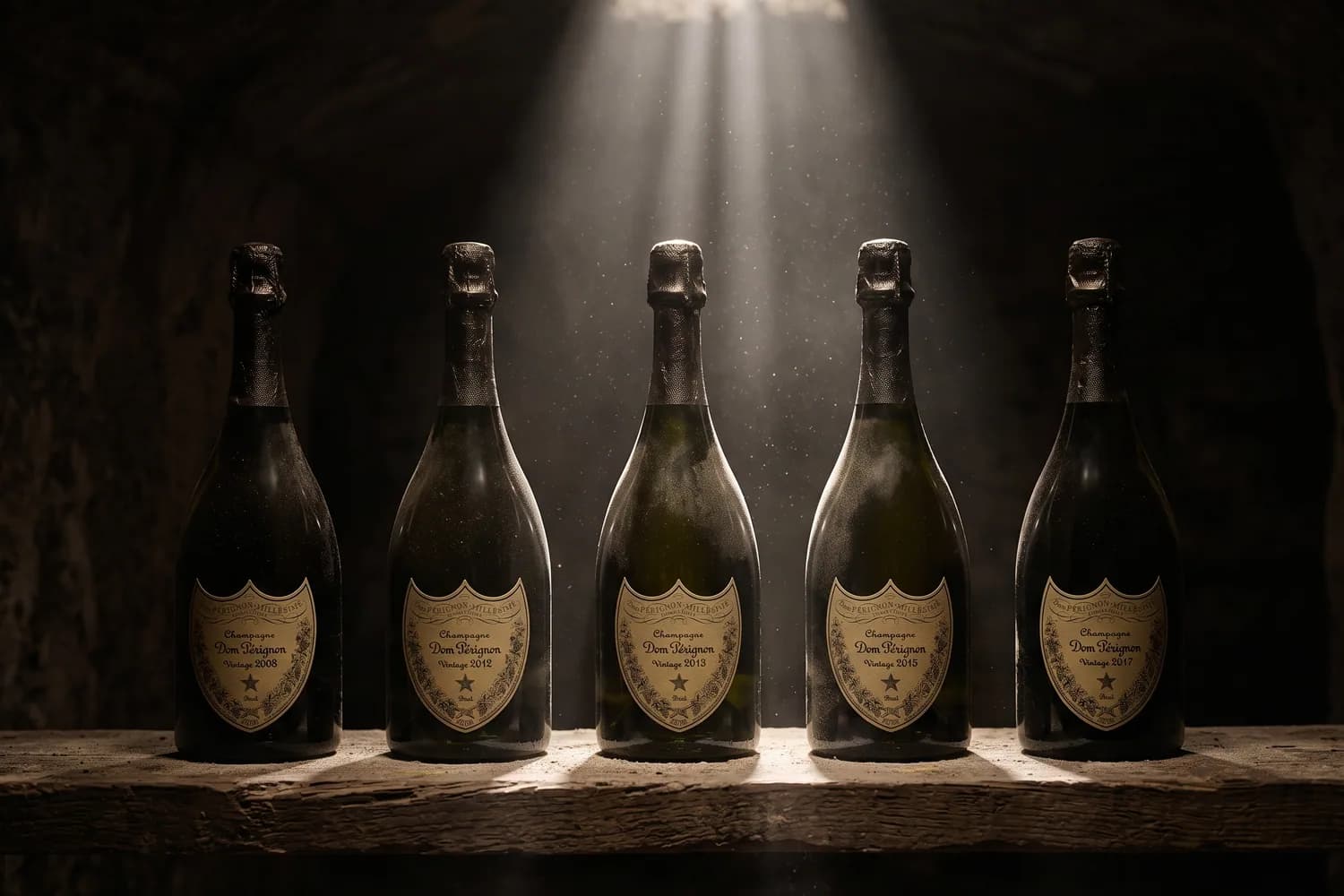
- P1, the Vintage: at least seven to eight years in the cellar. This is the best-known bottle, such as the Vintage 2017.
- P2: around fifteen years. The wine gains in breadth and length, such as the Plénitude P2 2008.
- P3: beyond twenty-five years. Releases are rare.
The Rosé is not a Plénitude. It is a separate cuvée, which first appeared with the 1959 vintage, whose colour comes from a red pinot noir wine added to the blend, such as the Rosé Vintage 2009. To choose a year, follow our vintage guide.