
Blog navigation

Latest posts

4 essential types of champagne for your aperitif toasts
458 views

Rien n’évoque la fête et l’élégance comme un bon toast accompagné de bulles raffinées. Savourer du champagne autour...

Read more
How can you tell a good Champagne from a bad one?
462 views

Champagne is much more than just a sparkling wine; it's a symbol of celebration, elegance and French savoir-faire....

Read more
Multi-temperature wine cellar: each wine at its ideal temperature
616 views

Choisir le bon vin, c'est bien. Le conserver et le servir dans des conditions optimales, c'est mieux. Que vous soyez...

Read more
Which software should you choose to manage your wine cellar?
1425 views

Dans un restaurant ou un hôtel, la cave à vin ne se résume pas à un simple espace de stockage. Elle représente un...

Read more
How exceptional storage enhances the pleasure of your champagne
2215 views

Creating a dedicated Champagne space in your home allows you to celebrate this prestigious wine in a setting that...

Read more

Geographical location of Champagne

571485 Views
 

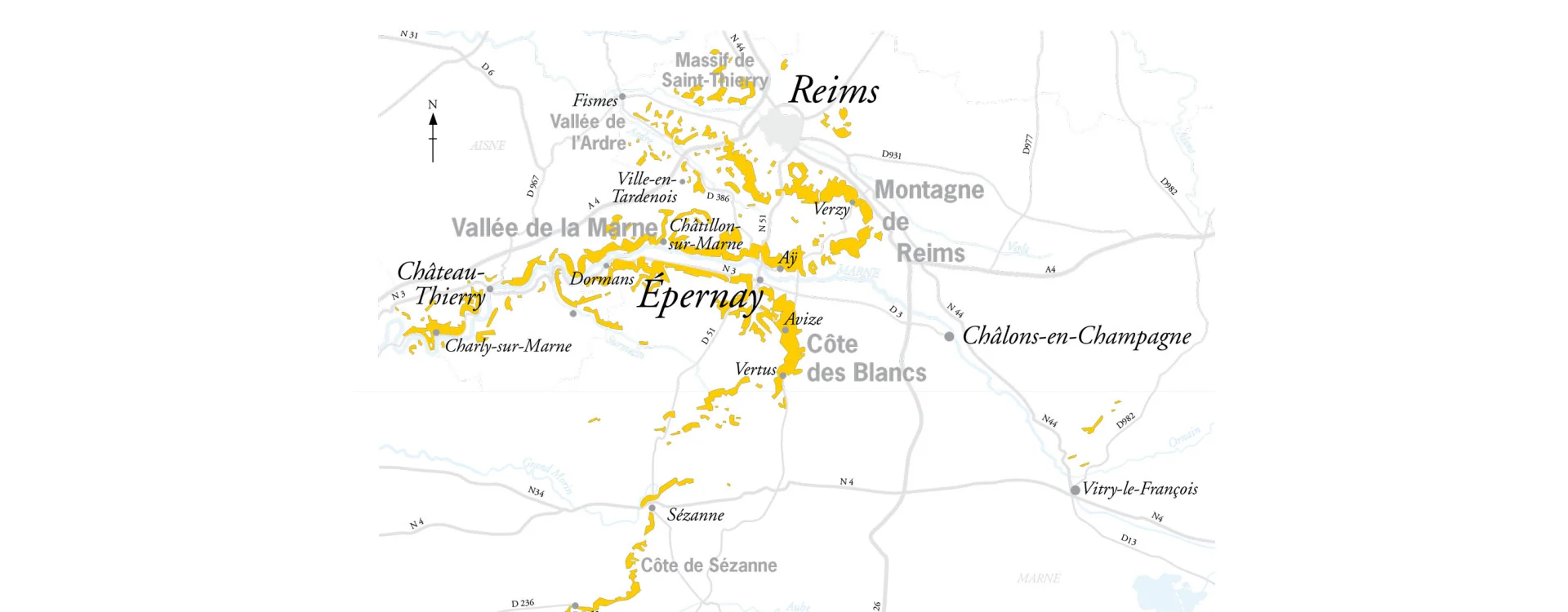
The production area of the Champagne appellation d'origine contrôlée (AOC), defined by law in 1927, covers some 34,000 hectares. This region, located in France some 150 kilometers east of Paris, comprises 319 crus (or communes) spread across five départements: Marne (67%), Aube (23%), Aisne (9%), Haute-Marne and Seine-et-Marne.

The Champagne vineyards are divided into four main regions: Montagne de Reims, Vallée de la Marne, Côte des Blancs and Côte des Bar. It comprises some 281,000 parcels, each with an average surface area of 12 ares. Historically, 17 villages have received the "grand cru" designation and 44 villages have received the "premier cru" designation. The three key elements of the Champagne terroir - climate, soil and subsoil, and relief - form a unique combination, a mosaic of micro-terroirs with unique characteristics. The expertise of Champagne's 15,000 winegrowers makes the most of these characteristics.

THE CHAMPAGNE REGION

Champagne vineyards are planted between 90 and 300 meters above sea level. It is a hillside vineyard, mostly facing south, southeast and east, with an average slope of 12%, and some slopes reaching almost 60%. The Champagne terroir is sufficiently steep and undulating to allow good insolation of the vines, and its slope facilitates drainage of excess water.