Contrary to popular belief, champagne improves with age, and tends to look cheekily young with age!
Champagne seems to be the victim of a huge misunderstanding! Unlike the great wines of Burgundy, Bordeaux or elsewhere, all connoisseurs rush to the cellar after receiving their purchases, champagne bottles are opened and drunk within days or weeks of purchase. "Champagne does not improve with age", we are often told to justify such early consumption, which can even flirt with infanticide.
The magic of old Champagne bottles
And yet, there are many enthusiasts who appreciate older bottles with faded, worn labels. "These old champagnes have a particular flavor that can confuse newcomers," admits François Audouze, a great collector of old wines. But they still have a special flavor. A flavour sometimes close to dessert wines. They're great table companions ". When the bubbles are intact, the wine is almost miraculous. Wine expert Pascal Kuzniewski explains: "The Diamants Bleus, Grandes Dames and Dom Pérignon of the 60s and 70s are absolutely drinkable today. Personally, I would place Krug 1928 in the pantheon of wines, all regions included, that I have ever tasted".
This craze is particularly pronounced in Scandinavian countries and the UK, two regions with a long-standing culture of fine wine. Customers were prepared to pay a fortune at auction for prestigious bottles like this Salon 64 magnum sold for €5,000 in Epernay. However, it is possible to treat yourself at a very reasonable price", explains Pascal Kuzniewski. In this auction, wine lovers can buy a bottle of Laurent Perrier 1934 for €210 and a bottle of A Pol Roger 1949 for €380, as well as a Dom Ruinart €85 rosé.
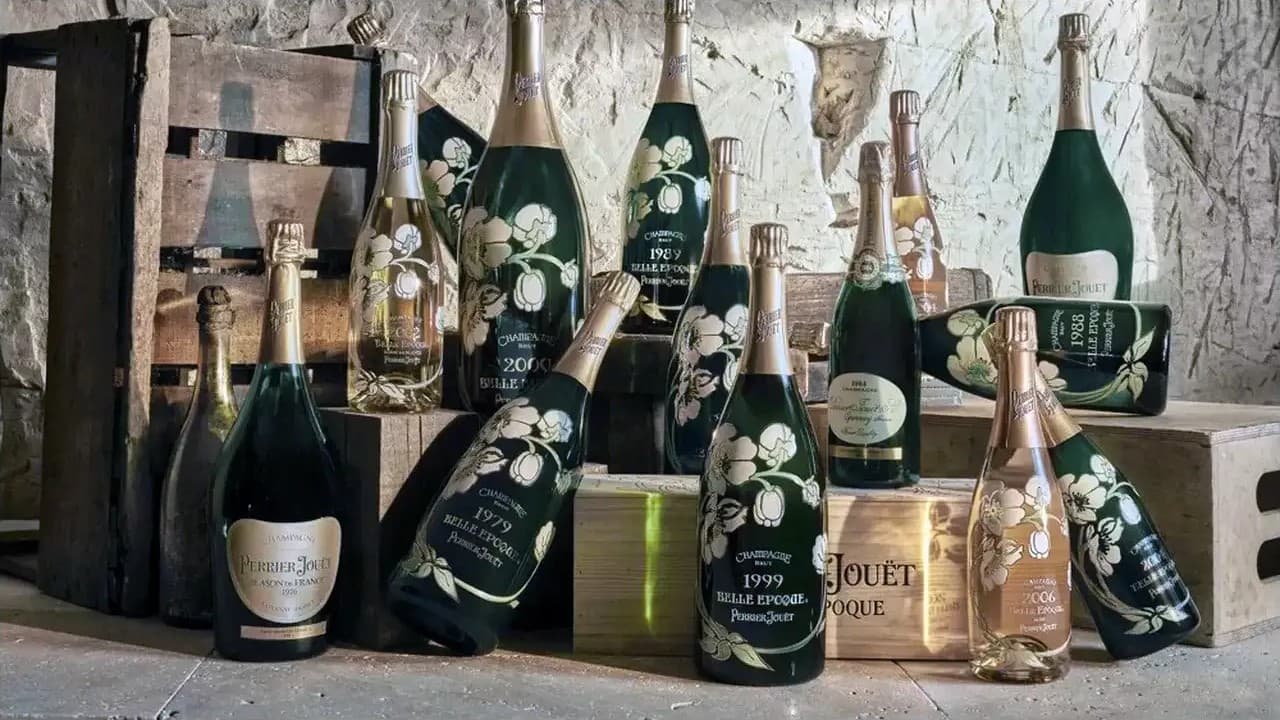
The houseswant to put an end to the prejudice against Champagne ageing, and no longer hesitate to organize large-scale vertical tastings to measure the evolutionary capacity of great vintages. For example, a wine tasting organized by Perrier-Jouët takes us back to 1825.
A recent immersive experience organized by Ruinart, Bollinger or Salon is a beautiful revelation of the magic that vintage champagne can unleash.
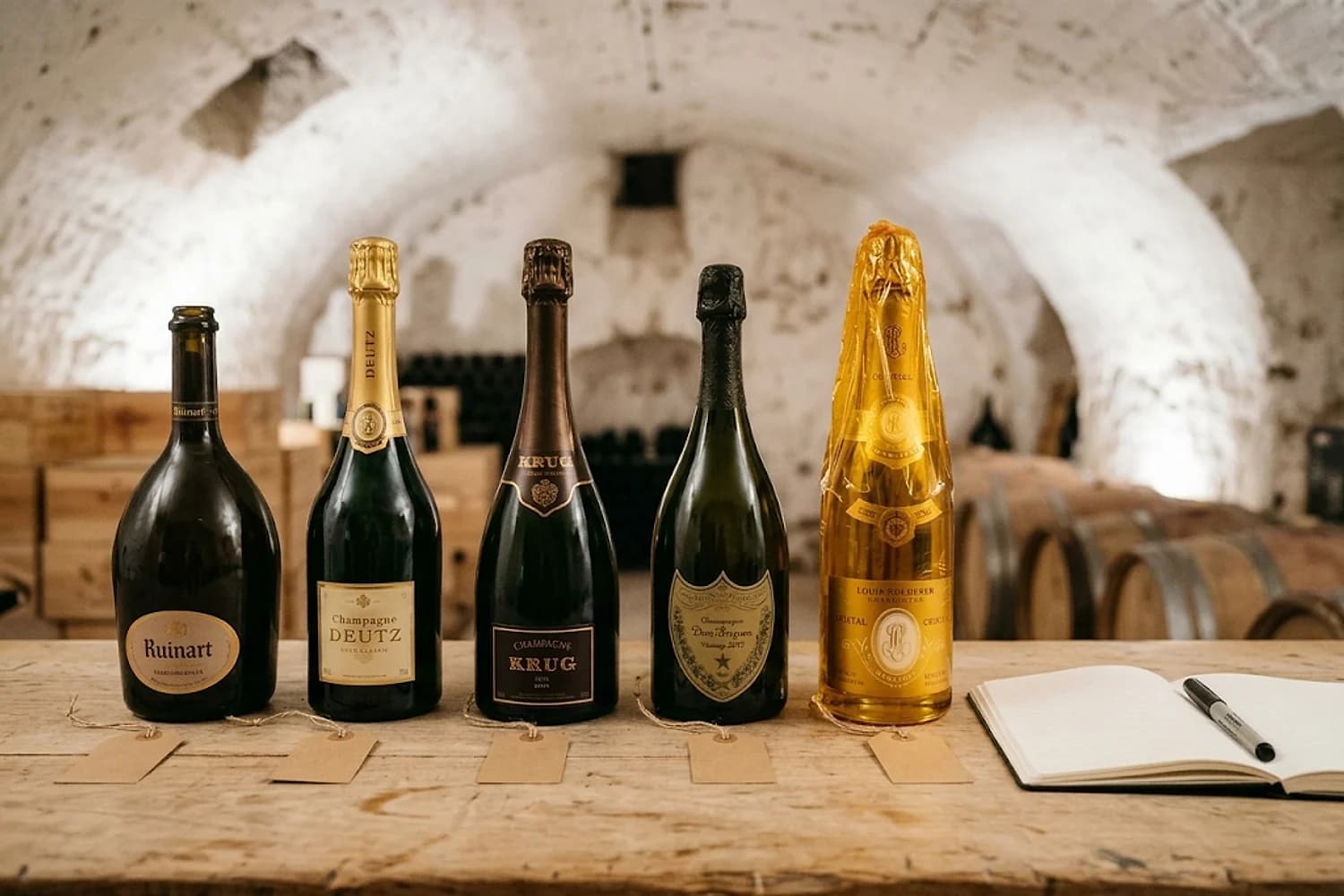
Dom Ruinart celebrates its 50th anniversary by presenting 18 of the 21 cuvées produced since 1959 to a select group of lucky tasters. Most of the time, these wines take on the air of impetuous youth, like the brilliant 1961, or the delicious 1969.
Bollinger and its president, Jérôme Philipon, made the same observation after tasting the wine. An opportunity to revisit 22 of the 27 vintages produced between 1950 and 2000. Here, even if the youngest wines delight us with their delicacy and elegance, the oldest cuvées push us into another dimension. The entry begins with the RD 1985 cuvée, the RD 79, a very full-bodied and vinous champagne, the RD 66, with a more complex and evolved aromatic palette, and finally the RD 1952, the first RD house marketed by RD. This bottle is simply perfect.
The show is made more educational by presenting parallel tastings of five vintages (1997, 1996, 1990, 1988 and 1976) in bottle and magnum. The big container wins every time. The wine navigates in two parallel realms. The bottle is punctual, in direct contact with its vintage and its natural evolution, while the magnum seems to have frozen the wine in time, systematically presenting champagne in effervescent form. Because it's also the magic of old champagnethat can give these old ladies a new lease of life.