Get a €40 discount on purchases of €600 or more, and a €100 discount on purchases of €1,200 or more of champagne on participating items (excluding shipping costs)
Logo of the Ruinart Champagne house

Ruinart Champagne


Founded on 1 September 1729 in Reims by Nicolas Ruinart, Ruinart is the oldest house created to sell champagne. Chardonnay is its signature grape variety: it comes mainly from the Côte des Blancs and the Montagne de Reims. Its wines age in crayères listed as a UNESCO World Heritage site, 38 metres beneath the city. The range includes the R de Ruinart, the Blanc de Blancs, the Rosé and the prestige cuvée Dom Ruinart. The house belongs to the LVMH group, and Caroline Fiot has been its cellar master since 2025.

Buy Ruinart champagnes online


Ruinart Champagne — the cuvées

The Ruinart cuvées — from R de Ruinart to Dom Ruinart


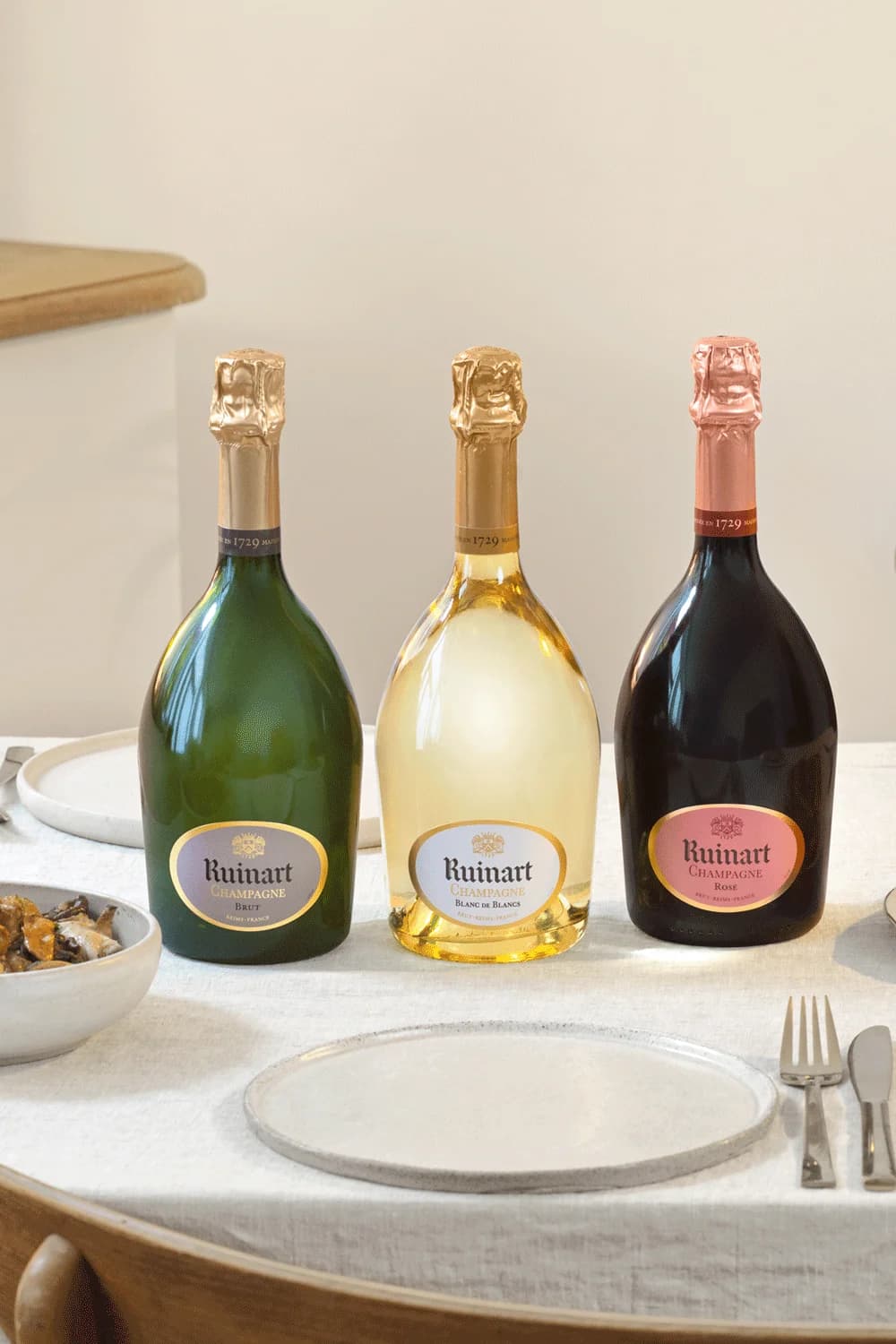
The Ruinart range is built around four pillars. R de Ruinart is the perfect introduction to the world of the house, ideal as an aperitif or with delicate canapés. Ruinart Blanc de Blancs — 100% chardonnay — offers a creamy texture and a citrus-mineral finish that calls for fine oysters, langoustines and noble fish. Ruinart Rosé, with its rare aromatic delicacy, pairs with salmon tartare, roast poultry or a lightly fruity starter. The prestige cuvées Dom Ruinart Blanc de Blancs (2010 and 2013 vintages) and Dom Ruinart Rosé (2009 vintage) reach gastronomic heights, best reserved for Breton lobster, scallops or a long-matured Comté.

Serve the Blanc de Blancs between 8 and 10°C in a narrow white wine glass to reveal chalk and citrus notes. Dom Ruinart deserves 10 to 12°C in a slightly more open glass. Non-vintage cuvées keep for 3 to 5 years in a cool, dark cellar; vintage Dom Ruinart cuvées can reach their peak between 10 and 15 years.

Discover our Ruinart selection at Pépites en Champagne — premium selection, personalised advice, careful delivery across France and Europe.

Ruinart — Nearly three centuries in Reims


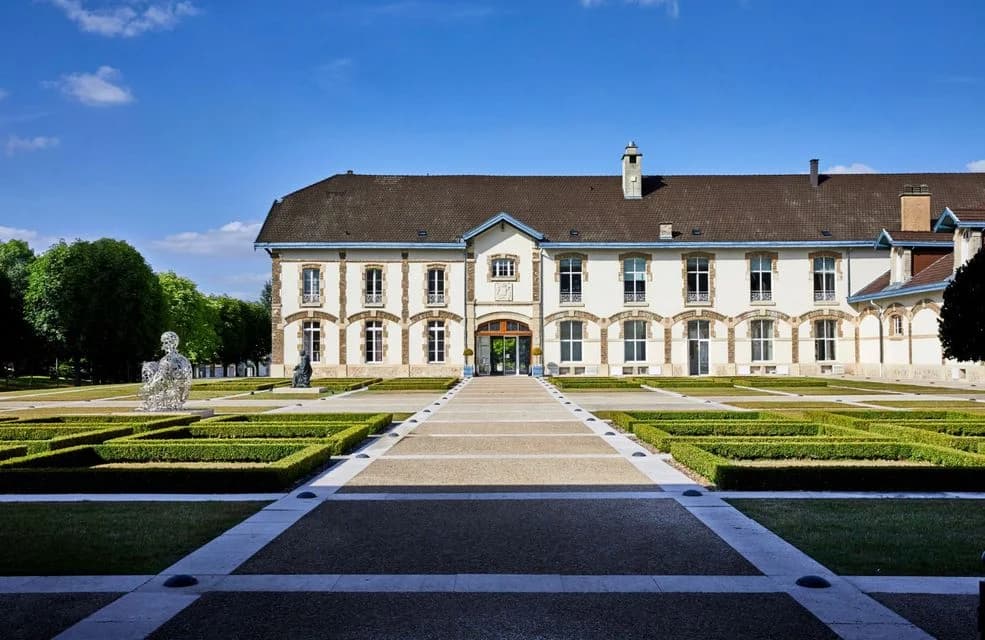
Nicolas Ruinart signed the founding deed of his house on 1 September 1729, in Reims. Nearly three centuries later, it is still headquartered there, at 4 rue des Crayères. It belongs to the LVMH group, within Moët Hennessy. Chardonnay, its signature grape variety, is at the heart of all its cuvées.

Beneath the city of Reims, Ruinart's crayères stretch over 8 kilometres of galleries across three levels, down to 38 metres deep. Listed as a UNESCO World Heritage site, they maintain a constant temperature of 10 to 12°C — ideal conditions for the slow ageing of the cuvées, from the entry-level range to the prestige Dom Ruinart vintages.

Domaine Ruinart in Champagne — vineyards and cellars on the Marne

Ruinart, from Dom Thierry to the crayères of Reims


Ruinart was founded in Reims in 1729, and the house is preparing its tercentenary there, in 2029. Remaining family-owned until 1963, it was then taken over by Moët & Chandon, and later joined the LVMH group when it was created, in 1987.

1729, a nephew, a monk and a royal decree

Nicolas Ruinart is the nephew of Dom Thierry Ruinart, a Benedictine monk and contemporary of Dom Pérignon. In 1728, a royal decree authorised the transport of wine in bottles, which opened up the champagne trade. On 1 September 1729, Nicolas drew up the founding deed of his house in Reims. It initially ran textiles and wine side by side, before abandoning textiles in 1736. In 1764, it shipped its first bottles of rosé champagne, then known as "œil de perdrix".

Is Ruinart really the oldest? Yes, as a champagne house. Gosset, founded in 1584, is older, but it first sold still wines and presents itself as the oldest wine house in Champagne. To find out more, read why Ruinart is the oldest champagne house.

1877, the move into the crayères

In 1877, the house installed its cellars in the crayères of Reims, former chalk quarries whose origin is believed to date back to Gallo-Roman times. They form 8 kilometres of galleries over three levels, down to 38 metres deep, with a constant temperature of 10 to 12 °C. Listed as a historic monument as early as 1931, they have been inscribed on the UNESCO World Heritage List since 2015, along with the Champagne Hillsides, Houses and Cellars.

In 1896, André Ruinart commissioned Alfons Mucha for a poster, which the house presents as the first advertisement by a champagne house. The First World War destroyed part of the buildings: Charlotte Ruinart had them rebuilt identically and took over the leadership of the house when André passed away in 1919.

The crayères can be visited. The house offers a two-hour guided tour at 4 rue des Crayères, followed by a tasting of two cuvées. Booking is done on its website.

1959, Dom Ruinart

Dom Ruinart, the house's prestige cuvée, was born with the 1959 vintage and bears the name Dom Thierry. It is a blanc de blancs, made solely from grand cru and premier cru chardonnay: around 70% from the Côte des Blancs and 30% from the Montagne de Reims for the 2013, aged at least nine years in the cellar. In 2022, the Dom Ruinart Blanc de Blancs 2010 won the title of world champion at the Champagne & Sparkling Wine World Championships. To find out more, read everything about Dom Ruinart.

From Frédéric Panaïotis to Caroline Fiot

Frédéric Panaïotis was cellar master from 2007 to 2025. Caroline Fiot, who joined the house in 2016, succeeded him. In 2026, she unveiled the 1926 vintage, a century after its harvest: 18 bottles once given to Paul Bocuse and rediscovered in 2023 in his restaurant's cellar. These are the oldest that Ruinart holds.

R de Ruinart, Blanc de Blancs, Rosé: what sets them apart

  • R de Ruinart: around 40% chardonnay, complemented by pinot noir and meunier. This is the house's entry point.
  • Blanc de Blancs: chardonnay only, from 25 to 30 crus. This is the house's signature cuvée, in its round bottle inherited from the 18th century.
  • Rosé: 45% chardonnay and 55% pinot noir, 12% of which is vinified as red.

R de Ruinart and Blanc de Blancs contain 20 to 30% reserve wines, which ensure their consistency. To help you choose, read our cuvée comparison and our Blanc de Blancs guide.

Your questions about Ruinart champagnes


What budget should you plan for a Ruinart champagne?
Expect to pay around €55 to €60 for the R de Ruinart, €75 to €95 for the Blanc de Blancs and the Rosé, and €230 to €265 for Dom Ruinart. The exact price of each bottle is shown higher up on this page.
What food and wine pairings go well with Ruinart champagne?
R de Ruinart is superb as an aperitif or served with Comté gougères. The Blanc de Blancs comes into its own with oysters, langoustines and fine fish. The Rosé pairs well with salmon tartare, roast poultry or lightly fruity starters. Dom Ruinart is best enjoyed with Breton lobster, pan-fried scallops or a long-matured hard cheese.
How should Ruinart champagne be served and stored?
Serve the Blanc de Blancs at 8–10 °C in a flute or a slender white wine glass; serve the Dom Ruinart at 10–12 °C in a slightly wider glass. When stored in a cellar at a stable temperature (10–12 °C, away from light and vibrations), non-vintage champagnes can be kept for 3 to 5 years, whilst vintage Dom Ruinart champagnes can be kept for up to 15 years.
Where can you buy Ruinart champagne online?
Discover our Ruinart selection at Pépites en Champagne: expert advice, express delivery across France and Europe.
Ruinart belongs to LVMH: is quality really preserved?
Competition results suggest so: Dom Ruinart won the title of world champion at the Champagne & Sparkling Wine World Championships in 2021 and 2022, under LVMH. The house keeps its chalk cellars, its oenology team, and chardonnay remains at the heart of its cuvées.
Ruinart Blanc de Blancs or Ruinart Rosé: which one should you choose?
Choose the Blanc de Blancs for its mineral intensity, citrus notes and hints of fresh chalk — ideal with seafood or as a sophisticated aperitif. Opt for the Rosé if you’re looking for a rounder, fruitier profile and delicate floral notes — perfect with slightly more structured dishes. For a prestigious gift, the Dom Ruinart vintage is the obvious choice.
Who owns Ruinart?
The LVMH group, within Moët Hennessy. The house remained family-owned until 1963, when Moët & Chandon took it over.
Is Ruinart the oldest champagne house?
Yes, as a champagne house: it dates back to 1729. Gosset, founded in 1584, is older, but it first sold still wines.
Can you visit the Ruinart cellars?
Yes, in Reims, at 4 rue des Crayères. The house offers a guided tour of its crayères, followed by a tasting. Booking is done on its website.
What is the best Ruinart champagne?
There is no official ranking. The Dom Ruinart Blanc de Blancs 2010 was crowned world champion in 2022. For a first bottle, the Blanc de Blancs gives the best idea of the house's style.

About

Champagne Ruinart — the essentials

Founded in
1729
Founder
Nicolas Ruinart
House / owner
MHCS (LVMH Group)
Location
Reims (4 Rue des Crayères), Champagne
Grape varieties
Chardonnay
Cellar master
Caroline Fiot
Cuvées
Ruinart Blanc de Blancs, Ruinart Rosé, R de Ruinart, R de Ruinart Millésimé, Dom Ruinart Blanc de Blancs, Dom Ruinart Rosé

Price list

Ruinart Champagne prices

At Pépites en Champagne, Ruinart champagnes in stock range from €59.00 to €975.00 including VAT. Here is the price of each cuvée.

Average customer rating for Ruinart cuvées: 4.9/5 (220 reviews).

CuvéePrice incl. VAT
Ruinart R de Ruinart€59.00
Ruinart R de Ruinart Seconde Peau€59.00
Ruinart R de Ruinart 2016€89.00
Ruinart Rosé€90.00
Ruinart Blanc de Blancs Seconde Peau€92.50
Ruinart Blanc de Blancs€94.00
Ruinart R de Ruinart 2016 & Ruinart Rosé Duo€189.00
Ruinart Blanc de Blancs & Ruinart Rosé Duo€189.00
Ruinart Blanc de Blancs Wooden Gift Box – Set of 2 Bottles€199.00
Ruinart Dom Ruinart Rosé 2009 wooden gift box€265.00
Ruinart Cave Urbaine Gift Set — 3 Bottles€269.00
Ruinart Discovery Cellar Case€344.00
Ruinart Blanc de Blancs Cellar Case€484.00
Ruinart The Complete 6-Cuvée Case€975.00

Further reading

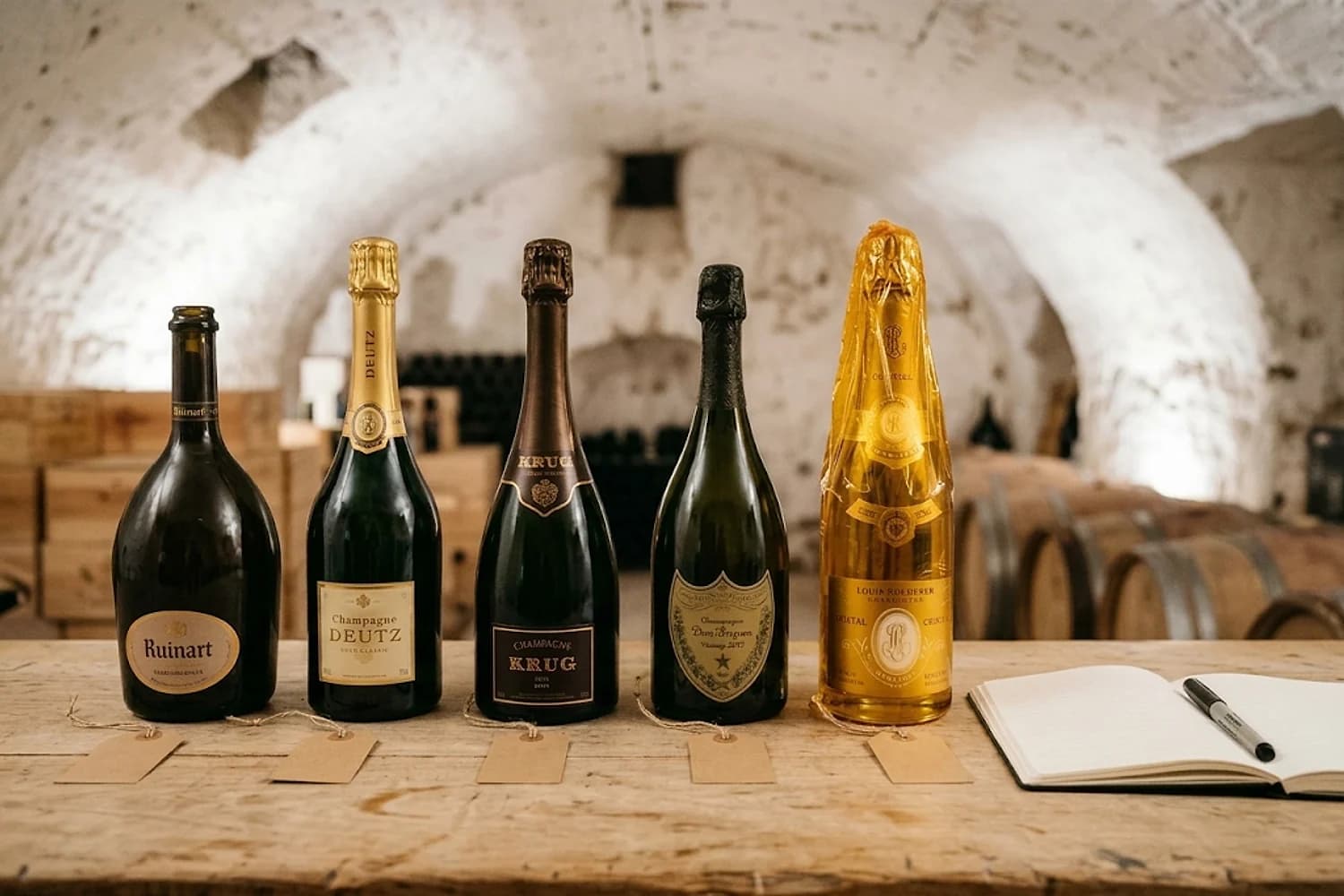
Five bottles of champagne lined up on a wooden table in a vaulted cellar — Ruinart, Deutz, Krug, Dom Pérignon and Cristal by Louis Roederer — with kraft price tags and a tasting notebook
Champagne prices in 2026: our cellar's barometer, based on 268 cuvées
How much does a bottle of champagne really cost in 2026? We reviewed the 268 cuvées in stock in our cellar: median price, differences between major houses and winegrowers, price by style, and loss-leader prices from major brands.
The best cheeses to pair with a Ruinart Rosé
Discover the best cheeses to pair with a Ruinart Rosé for the perfect tasting experience. Whether soft, matured or goat’s cheese, find the ideal pairing to bring out the fruity and elegant aromas of this exceptional champagne. 🍾🧀✨
Which is Ruinart’s best cuvée? A comparison
Discover Ruinart’s finest cuvée with a detailed comparison of the house’s various iconic cuvées. Learn how to choose the right one to suit your tastes and the occasion.
What dishes go well with a Ruinart Blanc de Blancs?
Discover which dishes to enjoy with a Ruinart Blanc de Blancs to make every moment special. Explore the best food and champagne pairings for an unforgettable taste experience.
Ruinart and art: iconic artistic collaborations
Ruinart and art: a unique partnership between champagne and creativity. Discover its iconic artistic collaborations that celebrate excellence and innovation.
How should you store a bottle of Ruinart to allow it to age?
Find out how to store a bottle of Ruinart to allow it to age in the best possible conditions. Temperature, humidity, position, light… Discover all the tips to enhance the development of your champagne and ensure an exceptional tasting experience. 🍾✨

L'abus d'alcool est dangereux pour la santé, à consommer avec modération.
Alcohol abuse is dangerous for your health. Consume in moderation.