Blog navigation

Latest posts

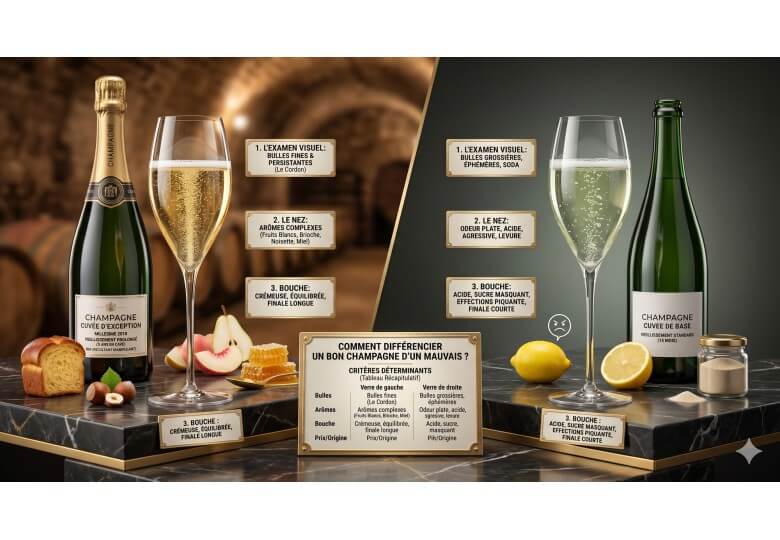
How can you tell a good Champagne from a bad one?
461 views

Champagne is much more than just a sparkling wine; it's a symbol of celebration, elegance and French savoir-faire....

Read more
Multi-temperature wine cellar: each wine at its ideal temperature
614 views

Choisir le bon vin, c'est bien. Le conserver et le servir dans des conditions optimales, c'est mieux. Que vous soyez...

Read more
Which software should you choose to manage your wine cellar?
1424 views

Dans un restaurant ou un hôtel, la cave à vin ne se résume pas à un simple espace de stockage. Elle représente un...

Read more
How exceptional storage enhances the pleasure of your champagne
2213 views

Creating a dedicated Champagne space in your home allows you to celebrate this prestigious wine in a setting that...

Read more
How do you recognize a great Left Bank wine?
1336 views

The left bank of the Garonne River in the Bordeaux region is home to some of the most famous and coveted red wines in...

Read more

Why do drivers splash champagne on the podium?

11243 Views
 

The tradition goes back to the origins of F1. On July 2, 1950, the brand-new championship came to France for the sixth Grand Prix of the season. The Reims-Gueux circuit welcomed the pioneers of the discipline. At the end of a magnificent race, Juan Manuel Fangio wins ahead of Italy's Luigi Fagioli and Britain's Peter Whitehead. As seen in the podium photo, Juan Manuel Fangio celebrates his success with a bottle of champagne in hand.

An idea from Moët et Chandon

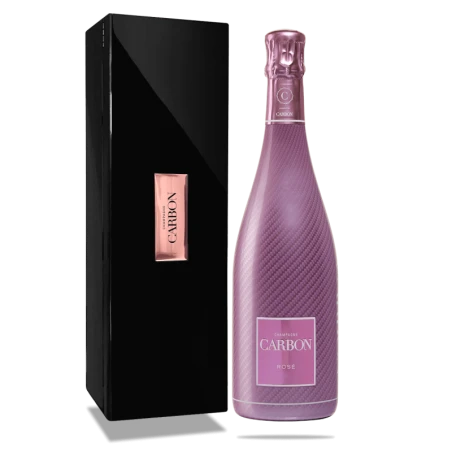
The idea was born in the minds of two cousins, motorsport enthusiasts and, incidentally, famous champagne producers: Paul Chandon Moët and Frédéric Chandon de Brailles. With the Grand Prix in Reims in mind, the pair took the initiative of offering a bottle of champagne to the winner of the race. A unanimously appreciated gesture and a stroke of marketing genius. The practice has since spread to other motor sports (endurance, rallying) and to all Grand Prix events. Moët et Chandon has been a great showcase for several decades. In 2017, Champagne Carbon became the Official Supplier of Formula 1 and offered Jeroboams on the podium for $3,000.

And America became restless..

In the 1950s and up to the end of the 1960s, drivers, like good gentlemen drivers, politely enjoyed Champagne. But Dan Gurney, a talented and cheerful American driver, was to change the destiny of the famous bubbles forever. The American, winner of the 1967 24 Hours of Le Mans, decided to show off by shaking the bottle of champagne offered to the winners at the finish. The cork explodes. The effect and the shower are guaranteed.

A few departures from tradition

Since June 11 1967, champagne has almost invariably landed on drivers' suits and faces, rather than in their stomachs (with a few exceptions). There are exceptions, however. Under contract to a famous Canadian beer brand, Gilles Villeneuve sometimes swapped fine bubbles for hops on the podium. The late father of Jacques Villeneuve could be forgiven for this slight departure from tradition.

More recently, the opening up of the discipline to new countries has led to a number of "innovations". In Bahrain and Abu Dhabi, champagne on the podium is prohibited. Instead, drivers spray themselves with sparkling fruit juice. A small "perfumed" departure from tradition. After all, for the drivers, it doesn't matter what the bottle is, as long as they're intoxicated...with victory.