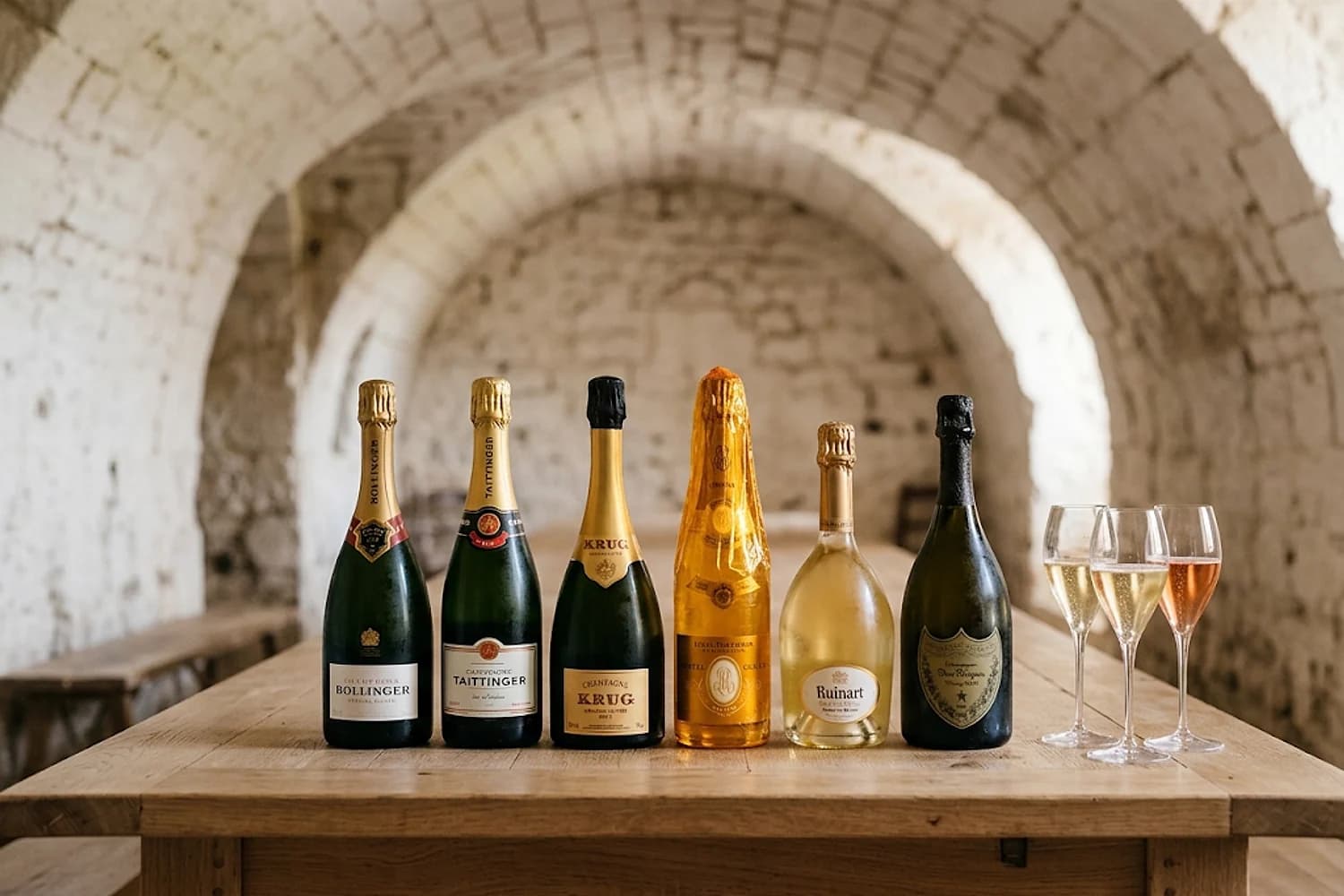
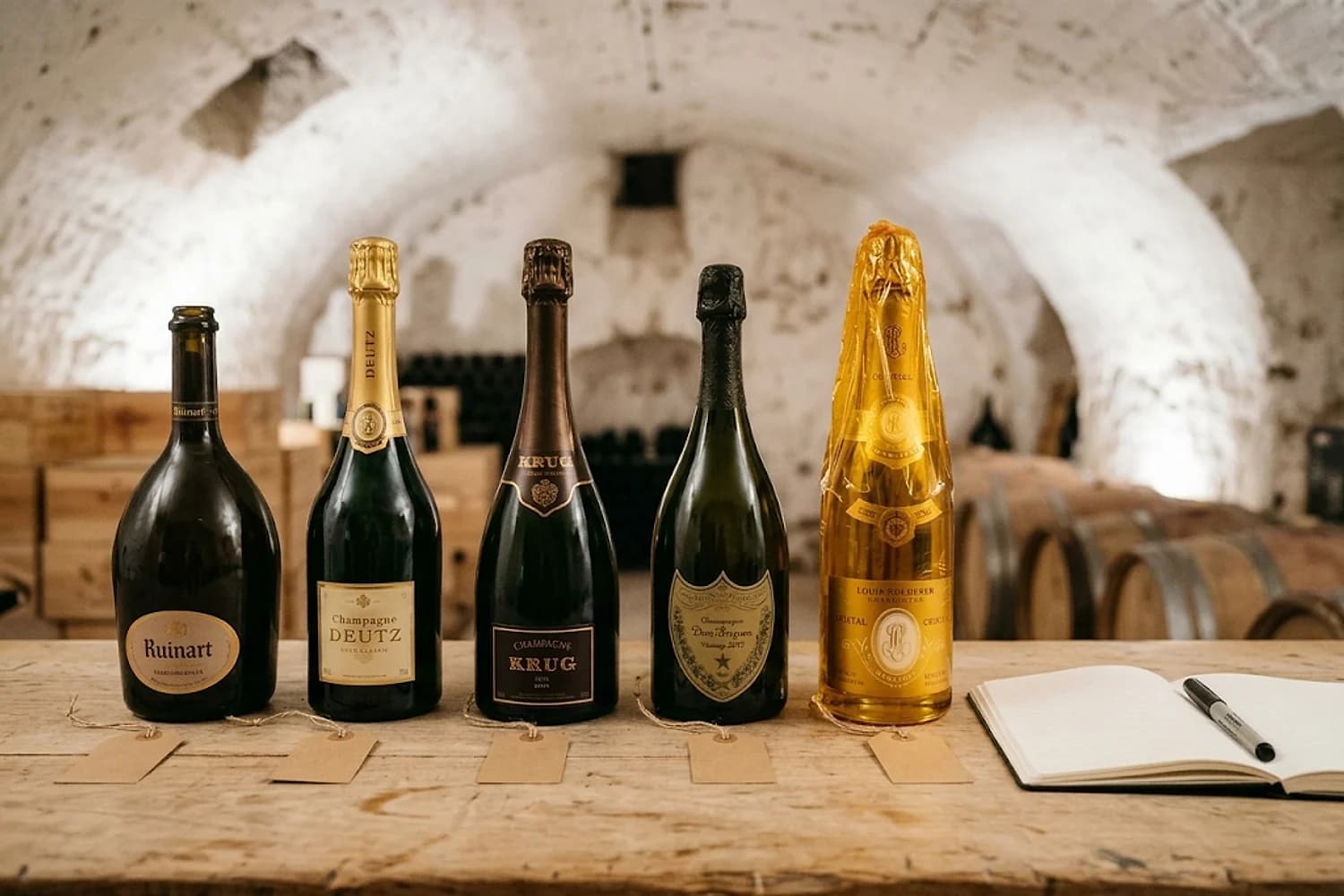
The 50 Best Champagne Brands in the World 2025
The essentials
In the 2025 ranking of the world’s 50 best champagnes, Krug and Jacques Selosse have been awarded four out of four stars, followed by Bollinger, Louis Roederer, Egly-Ouriet and Philipponnat with three stars. Frerejean Frères and Agrapart round off the list with two stars. Krug is particularly impressive with its 170th cuvée, crafted from 195 different wines spanning twelve vintages.
- Which is the best champagne in the world according to the 2025 rankings?
- The 2025 classification awards four stars to two houses: Krug, whose Grande Cuvée is aged for at least seven years, and Jacques Selosse, whose estate has been run by Guillaume Selosse since the 2018 harvest.
- What is Krug’s flagship cuvée?
- Krug’s flagship cuvée is the Grande Cuvée, which is now numbered; it is a blend of several dozen wines from complementary vintages and is aged for at least seven years. The 170th edition brings together 195 different wines spanning twelve vintages, from 2014 to 1998.
- What sets Jacques Selosse’s style apart from other champagnes?
- The champagnes from the Jacques Selosse estate are distinguished by a solera-style blending process — in which each older vintage matures the younger ones — and an ‘Initial’ cuvée (33,000 bottles per year) with a concentration of dry extracts and salinity that is unrivalled in Champagne.
Krug, Selosse, Bollinger, Roederer: which champagnes truly deserve the top marks in 2025? The ranking by the experts at Pépites en Champagne.

We add new brands of Champagne every week
⭐⭐⭐⭐ KRUG ️
Within the LVMH group, rug embodies the top of the range of Champagne and produces only prestigious vintages, starting with the Grande Curée, now numbered, which embodies the spirit of the house.
The latter is the result of a skilful blending of several dozen wines from complementary vintages, followed by an additional ageing period of at least seven years.
A code on the bottle allows you to find out its composition. But Krug is also a solid team with, around its sparkling president Margareth Henriquez, Olivier Krug, general manager, and Julie Cavil as cellar master.
This oenologist, who has already spent more than ten years with the house, replaces Eric Lebel since January 2020, with the mission of perpetuating the style Krug, a major signature of Champagne. The coherence of the editions and the accuracy of the wines produced, always with great regularity, without betraying the DNA of this house, lead us to award a fourth star this year.
The wines: this year we discover the 170° anniversary edition, composed of 195 different wines and twelve vintages from 2014 to 1998.
The wine is fine and distinguished, with controlled power; the mouth is refined and the Pinots tamed. It is not, however, a taut, chiseled wine like the 169° Edition was.
It seduces with its freshness and relaxed texture. The 164° Edition is delivered with class: the 2008 base, combined with the patina of the reserve wines and autolysis, gives it a complex and subtle palette, combining chalky and autumnal nuances.
The 2008 Brut is a racy wine that asserts its Pinot dominance, but the finesse of the vintage channels it. These notes of stone fruit, dried fruit, cookies and its mineral background give it depth.
A young wine that has the power and restraint to age well. We have been waiting for the release of the 2008 Clos du Mesnil and we are not disappointed: the wine delivers itself with a fair and elegant frame, a graceful mousse.
It has incredible scope and tension. A great vintage for sure.
✨ O nline sale of KRUG's vintages ✨
⭐⭐⭐⭐ JACQUES SELOSSE ️
A new page has been turned at this legendary Avize estate.
During the 2018 harvest, Anselme Selosse left the reins of the vineyard to his son Guillaume. The young and discreet winemaker is taking up the torch of the work initiated by his father in the mid-1970s.
Thanks to a deep reflection on viticulture, a grape harvested at full maturity and a vinification under multiple origins of wood (in a solera style, each old vintage educates the youngest in the spirit of the great jerez), the wines have a singular interpretation, almost artistic of the chardonnays of the Côte des Blancs, distributed essentially between Avize, Cramant, Oger and Mesnil-sur-Oger, with some delicious pinots noirs of Aÿ, Ambonnay and Mareuil. The Initial Cuvée (33,000 bottles per year) embodies the unmistakable style of Selosse's champagnes, handling oxidation with chalky depth of flavor. The concentration of dry extracts and the vibrancy of the saline notes on the palate have no equivalent in the region or elsewhere in the world.
A great reflection on the reds opened up, including a pinot noir from Ambonnay (Le Bout du Clos), an infusion with a dizzying scent of rosewater.
The wines: thirty minutes of aeration will do the most good to these champagnes high in color and concentrated in dry extracts. Initial (disgorged on May 12, 2021) pushes the oxidative character far and wide and has a charming fullness, but with the vegetal touch evoking the year 2015.
The wine is already very open. The high aromatic concentration of ripe pinot noir (cherry, pot pourri, smoked bacon...) emerges from La Côte Faron, in Aÿ.
A blanc de noirs with a voluptuous attack, tightened by an irresistible chalky sensation on the finish. Magistral! It is made to be kept. The 2010 seems a bit older than its twelve years: it evolves on notes of button mushrooms and a slightly angular finish. It does not have the breed of the two previous monuments 2008 and
2009.
Immense interpretation of Les Carelles (disgorged on February 3, 2020). This Chardonnay from Mesnil-sur-Oger shines with chalky salinity, blending beautifully rich flavors (fresh grapes, bread crust, old count, toast...).
An aesthetic canon with deep substance and prodigious length. We salute the unique work and the extraordinary emotion
⭐⭐⭐ BOLLINGER ️
If there is a brand with a strong personality and a very recognizable style, it is Bollinger.
This family-run house from Ay cultivates a taste for wines with a large dominant of pinot noir, vinous and deep. The history of Bollinger is incredibly rich: a dive into the old vintages of the house allows to measure to what extent excellence has always been at the heart of its concerns.
We can regret that the R.D. vintages (recently disgorged) are sometimes released prematurely, as they are never better than after a few more years in the cellar, and perhaps a few Grande Année vintages are not quite what we expected. But Bollinger remains a reference for lovers of great expressive and table champagnes.
The wines: we express a certain disappointment about the tasting of the range. Even though the wines are still young, the two La Grande Année cuvées, in white and rosé, do not live up to our expectations and remain far from the level of the best vintages.
La Grande Année white 2014 is open, with that aromatic patina true to the house, but the mouthfeel seems a bit short.
The Grande Année 2014 rosé is more complex and subtle, still carried by this duo between the core and the floral that seduces at first sight. The mouth is better managed and the whole transports us a little further.
Spécial Cuvée is a federative champagne: the reserve wines show their nose, but the dosage is a bit too much and brings a rounder heart in the mouth. In brut without year, the rosé is more accomplished, its dosage is opposed to the tannins brought by the red wines. RD 2007 is a wine of great dimension, all in subtlety and finesse.
✨ Online sale of the BOLLINGER house vintages ✨
⭐⭐⭐ LOUIS ROEDERER ↘️
here is one of the most beautiful standard-bearers of Champagne. This family house relies on a vineyard of 420 plots of land with a majority of Pinot Noir and 70% classified as Grand Cru. Viticulture is a real priority here, especially through the passage in biodynamic. The work of the grounds is generalized.
Only such an exceptional vineyard explains the unique level of harmony and concentration on such important volumes.
It is no coincidence that the cellar master, Jean-Baptiste Lécaillon, is an oenologist but also an agronomist, just like Jean-Claude Rouzaud, who built the current empire of the great Roederer international vineyards. In good understanding, he entrusted the reins of the group to his son, Frédéric Rouzaud, current president.
Here, malolactic fermentation is only partial and random (between 25% and 50%). The juices are worked on the lees in vats and in oak barrels, in order to give them thickness.
The wines: this year, the cuvée 242 is offered to us in magnum, and it confirms all the good things we think about this new profile of brut without year.
We must salute the efforts made by the house to pass a milestone with this type of wine. Vintage is a relaxed expression of the 2014 vintage: the wood creates a nice patina and complexifies the definition of the wine, a partial malo rounds out the attack, while retaining the nice length typical of the year.
The blanc de blancs is more contained, the slight toastiness of the reduction standardizes it further.
The 2014 rosé has a lovely bouquet of red berries, with a hint of citrus and underbrush. The palate is free flowing with a balanced texture.
Cristal 2014 is a very clean juice, true to the vintage. The wine delivers incredible energy, which is worth waiting for.
On the other hand, we remain dubious about the 1997 Vinothèque.
It is true that the vintage reveals some pastry and solar aspects, but the wine lacks energy and freshness. We think that this noble house should offer older wines in much better shape considering the selling prices.
The 2000 and 1997 vintages cannot be the current reflections of Louis Roederer.
⭐⭐⭐ EGLY-OURIET ↘️
Francis Égly's vision is summed up in one phrase:
Vines are like horses: if you want to master them, you have to give birth to them As a good horseman-breeder, this producer has a vineyard approaching 40 years of age, built by his family around remarkable massal selections, at the origin of the rare flavor of his grapes and therefore of his champagnes. For three generations, the family has built up a heritage of grand cru vineyards in Bouzy.
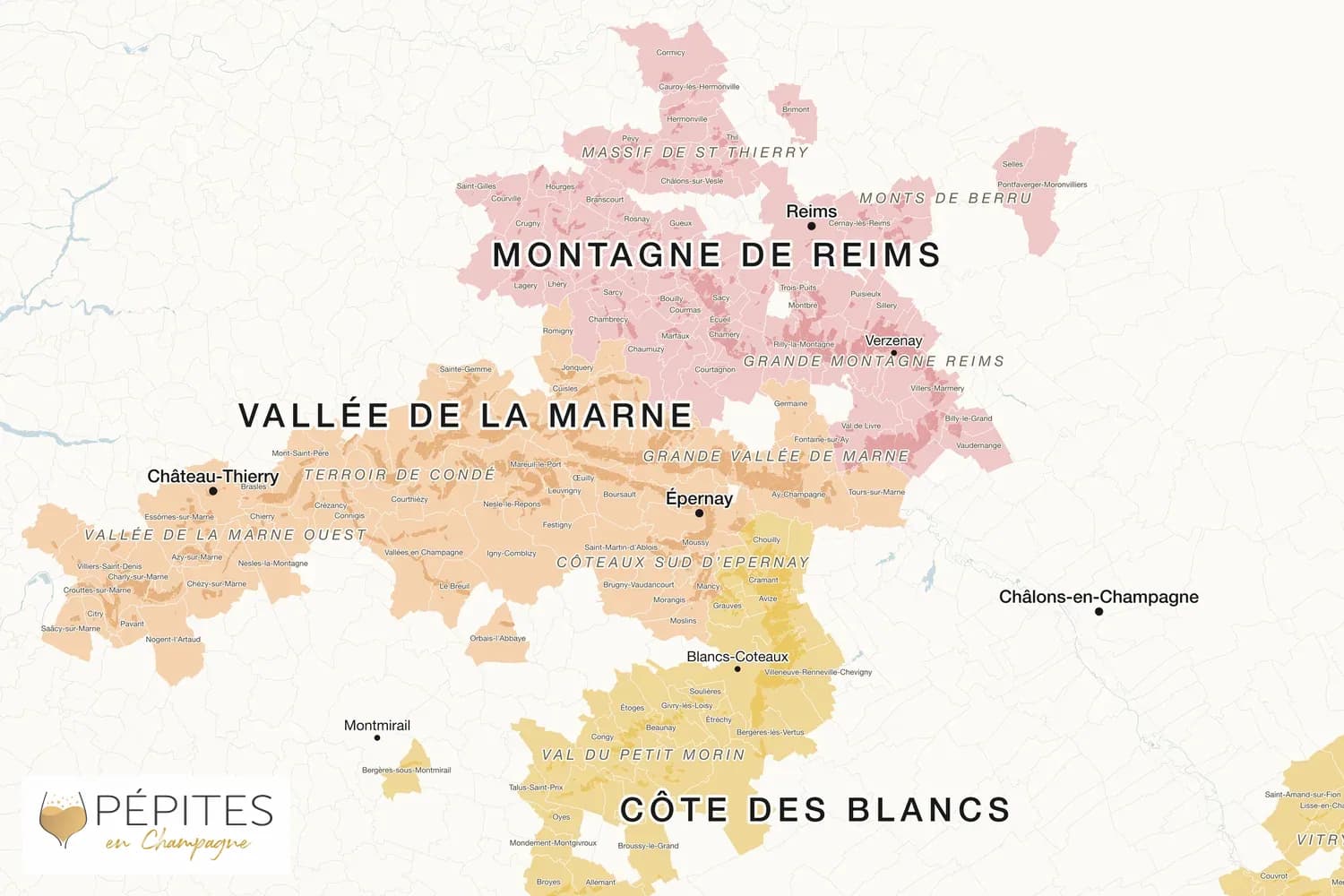
Verzenay and especially Ambonnay, in the heart of the terroir. In premier cru, it has pinot meunier on the terroir of Vrigny, in the valley of the Marne. In contrast to a Champagne that sells its bottles younger and younger.
Francis Égly, following in the footsteps of his father Michel, has patiently built up a treasure trove that allows him to market his bruts after four years of aging, and his vintages after six years.
The champagnes are always admirably made, dressed by maturing in füts followed by long aging on laths that have made their reputation.
The wines: a judicious novelty to start the tasting! The back label specifies the composition of the champagnes, including the base year.
Built around a dominant of 2017, Les Prémices (Massif de Saint-Thierry) is already very golden and shows a marked aromatic evolution on a tender mouth. It should be drunk now. The new cuvée Les Vignes de Bisseuil (base 2016), finely mastered, manages to tame the richness of the vintage to a tasty length.
Back in Montagne de Reims, Grand Cru (base 2016) pushes even further a beautifully chiseled frame: it has solid flavors and an extremely delicate bubble.
The rosé (2016 base) asserts itself by its structured and deep momentum, leaving a mouthful without any excess of richness. VP (2013 base) rests on an admirable toasty patina and the firm, austere feel of the vintage. A great Champagne classic.
Finely smoked-larded thanks to a singular füt maturation, the blanc de noirs W (base 2014) soars with power and incomparable race, and promises much for the keeping. Let's finish with the red Am-bonnay 2020, of incomparable greed and depth.
⭐⭐⭐ PHILLIPONNAT ️
This medium-sized house joined the Lanson-BCC group in 1997 and is autonomous in its supplies and in its production.
It has regained its influence in the high-end champagnes thanks to the rediscovered personality of its Clos des Goisses.
The rise of the brand is also the reward for the choices made throughout the range by its president Charles Philipponnat, in office since 2000. He brought cold temperatures into the vinification process, reoriented the blends towards more pinot noir, and increased the capacity for vinification in wood on lees without stirring and without malolactic fermentation. His goal? To integrate the vintage spirit in the non-vintage wines.
The third star is a reward for a range that continues to gain in precision.
The wines: the house maintains its rank by presenting a coherent range, from the Brut Royale to the Clos des Goisses. The dry 2009 is a real success, few domains manage to reach this level of finesse with a dosage of 30 grams. Brut Royale Réserve is of a good level, but the 2017 base does not have the level of the 2016 base presented last year.
The non-dosed version appeals to us more with its openness and taste harmony. Grand Blanc 2012 is a beautiful definition, with the power to which the house remains faithful. Cuvée 1522 is very long, almost lacking in thickness, in the tone of the 2014 vintage.
Clos des Goisses is a splendid champagne, combining full maturity of the grape and fullness of the mouth. A very great wine.
⭐⭐FREREJEAN FRÈRES ️
The brothers Guillaume, Rodolphe and Richard Frerejean-Taittinger created in 2005 their own house in Avize, in association with Didier Pierson, heir of an old winegrowing family of the Côte des Blancs. Their objective: to produce top-of-the-range wines, exclusively from 1er or Grand Cru vines, and aged from 5 to 12 years.
Premier Cru Brut
This signature wine is a blend of Chardonnay and Pinot Noir aged for a minimum of five years, producing an elegant Champagne that embodies the richness of the terroir Frerejean Frères.
The dosage and late disgorgement make it both balanced and generous.
Cuvée Rosée
A salmon and golden color, luminous and sparkling, this multi-vintage Rosé is a gastronomic getaway. This champagne blends notes of freshly picked red fruits with aromas of baked brioche.
This is a cuvée ready to be enjoyed or to age in your cellar for a few years to enjoy all the complexity of its aromas.
Blanc de Blancs
Our Blanc de Blancs is made exclusively from Premier Cru and Grand Cru Chardonnay grown in the Côte des Blancs.
A blend of vintages and reserve wines contributes to generous and complex aromas, and we age it longer, to produce a beautifully clear and elegant Champagne.
Cuvée des Hussards
Namedafter Napoleon Bonaparte's light cavalry, in which soldiers pioneered the art of swordsmanship, Cuvée des Hussards is powerful and expressive.
2012 is considered the benchmark vintage of the past decade.
Hussards 2008 Immersed
In 2018, the House Frerejean Frères tried a novel experiment: theimmersion in the Atlantic Ocean, of the Cuvée des Hussards 2008 Premier Cru.
At a depth of 60 meters, off the island of Ouessant, these bottles of Blanc de Blancs are stored for 12 months. The darkness is almost total, the temperature constant, the hygrometry maximum and the pressure of 6 bars optimal.
They have done this aging process once and the result was wonderful.
✨ Online sales of vintages Frerejean Frères ✨
⭐⭐ AGRAPART ↘️
The Agrapart family has been in the region since the end of the 19th century and has a superb heritage of Grand Cru Chardonnay in Avize, Cramant, Oger and Oiry, enhanced by traditional methods of cultivation and vinification. Pascal Agrapart and his son Ambroise are proud to be part of the harvesters and handlers.
The range highlights parcel-based vintages (malolactic fermentation done). The champagnes vinified in old füt are among the regional references, thanks to their strong expression of the Champagne minerality. The finishes are clear (with little or no dosage), the flavors are sapid, persistent, with notes of oxidation and salinity. The ageing in cellar helps, the fineness of the bubbles is remarkable. Do not hesitate to open these champagnes half an hour before tasting so that they reveal all they have to tell us.
The wines: what a pity! The domain did not send us its entry-level cuvées.
Complantée turns out to be juvenile: behind a rather primary rich aromatics, it soars with finesse. The chalky strength of the lieux-dits series was revived in 2016, notably with Minéral, a magnificent blanc de blancs that is all restraint, with an allongevity that combines power and refinement. An interlude with Mineral 2012 which shows the serene aging, full of concentration and substance of this vintage.
Avizoise pushes the cursor of fullness and density in dry extracts further, leaving an almost tannic perception on the finish. Quel relief I vénus asserts itself with a masterful elegance and energy, a sensation of extreme salinity and softness of bubble accompany this chardonnay of great depth. Resplendent!
Exp.16 (natural yeasts, no fining or filtration, second fermentation with the must) emphasizes acid, bitter and umami flavors. An outstanding balance for thrill seekers!
⭐⭐ FRANÇOISE BEDEL ️
The wisdom and serenity that emanate from the champagnes of Françoise Bedel and his son Vincent Desaubeau will never leave you indifferent.
The family tandem is committed to a biodynamic viticulture, essentially of the miller, on the varied terroirs of the western gateway of the Marne (silty, clayey, limestone, lined with millstones). The perfectly ripe harvest of the grapes and a long time in the cellar give birth to extremely tasty autumnal wines, at the same time calm and energetic, of a rare sincerity. Their effervescence coaxes the body, their subtle oxidative notes nourish the spirit. Certified organic since 1998 and biodynamic since 2001.
The wines: built on a dominant of the 2017 harvest, the Origin'elle meunier expresses itself with a greediness provided with a fine autumnal patina, not of a great substance this year. In a deeper and more dynamic register, Dis, Vin Secret (base 2017) ends its run on a slightly dry finish, a stigma of this year. A blend of meunier (50%), pinot noir and chardonnay, Entre Ciel et Terre (2017 base) soars with structured vinosity, both suave and energetic.
All three are showing great form today. Comme Autrefois 2005, despite a beautiful patina, is nevertheless marked by the vegetal framework of the vintage.
✨ O nline sales of vintages Françoise Bedel ✨
⭐⭐ AR LENOBLE ️
Brother and sister, Antoine and Anne Malassagne have brought this small house to high levels of quality. The wines are more oriented towards a "winemaker" style than a "house" style.
Wooden maturation for certain vintages and low dosage allow to produce vibrant and deep wines, marked by their origins. The range is complete and very coherent. The mention MAG followed by a number, which now appears on some of the bottles, indicates the base year of the cuvée, to which are added reserve wines kept in magnum under cork. A detail that is not a detail, and gives the wines an extra touch of complexity. These bottles blossom particularly well at the table.
The wines: the tasting confirms the level of this cellar and the homogeneity of the wines. The rosé, more and more refined, takes an additional dimension with a year of evolution.
The 2012 blanc de blancs keeps its energy while showing the patina of time.
Gentilhomme 2013 is a beautiful bottle for this cold vintage, the extra year relaxes the aromas and flavors. Les Aventures, from this Chouilly parcel, composed of the 2008 and 2009 vintages, sports a definition akin to a good mazanilla pasada: incredible complexity on rancid butter, spices and roasted dry fruits.
The cuvée brut nature
MAG 17 remains a serious wine in its conception, but the gustatory harmony is less accomplished and some bitterness appears on the finish.
⭐⭐ LECLERC BRIANT ️
Acquired in 2012 by a passionate American couple, this small house that had fallen into oblivion is making its way and rising from its ashes thanks to wines of very fine personality. The cultures are carried out in biodynamics and the purchases are made from organic or biodynamic wine growers. Partial maturation in wood, low doses of sulfur and low dosages, the wines produced here are in the air of time.
The wines: we are pleased to taste the Abyss vintage in 2016, which has much more breed and depth than the 2011. This vintage has a vibrancy and purity that shines with sincerity.
The palate remains chiseled and restrained, but we have no worries, the potential is there.
The 2015s surprise us pleasantly, the house has managed this complicated vintage well. The Bruts without year are without reproach: the white assumes its relaxed, federative side, largely dominated by the blacks; but our preference goes to the extra-brut rosé, for the dimension of the fruit and its harmony.
Rosé de Saignée remains an exercise in style that can please, but we find the whole a little rustic in the aromas and flavors, and hardened by the tannic perception.
✨ O nline sales of vintages Leclerc Briant ✨
⭐⭐ DE SOUSA ️
At De Sousa, champagne is a family story.
Erick de Sousa has been surrounded by his children for a few years: Charlotte is in charge of the commercial part, Julie is in charge of the vines and the horses and Valentin is in the cellar. The domain is composed of 14 hectares of vines, mainly chardonnays, located in the Côte des Blancs in Avize, as well as pinot noir, in Ay and Ambonnay. Certified organic in 2010 and biodynamic in 2013, the estate can rely on a large majority of grand cru terroir and a potential of old vines that exceed half of the estate.
The constant evolution allows today a much better management of the wooded areas, highlighting magnificent materials full of energy and concentration. We give the second star to the domain. The wines: 3A (2017) delivers a magnificent interpretation of Avize chardonnay, blended with pinot noir from Ay and Ambonnay.
The wine shows excellent ripeness, endowed with a creamy bubble and a dynamic velvety length.
Mycorhize 2015 combines superb suavity and irresistible gourmet tenderness, the powerful salinity further prolongs the flavors.
The 2012 Cuvée des caudalies (Les Pierres Vaudons parcel in Avize) is as resplendent with concentration as ever: its complex patina gives it serenity and majestic length. The umami flavor at its peak. We find this sensation in the 2012 Umami cuvée (60% chardonnay, 40% pinot noir), whose richness in dry extracts of the vintage intensifies its saline relief until a slightly generous finish.
Do not hesitate to open these champagnes an hour in advance, they need a gentle aeration.
Let's finish with the estate's first red coteaux-champenois, a 2018 from Ambonnay, with superb natural expression and brilliant finesse.
A sense of infusion and the sensation of biting into a fresh grape.
✨ O nline sales of the house's vintages De Sousa ✨
⭐⭐ ÉRIC RODEZ ️
Coming from a long line of winemakers, Eric Rodez, mayor of the village of Ambonnay, and his son Michael cultivate a little more than 8 hectares in this grand cru village. Renowned for the generosity and roundness of its Pinot Noirs, Ambonnay also produces deep Chardonnays from which the Rodezes know how to extract finesse and a particular brilliance.
The family has an admirable approach to vinification in wood, and a real gift for blending wines from different years, whether or not they have been malted. And what about the dosages? They brilliantly highlight pure, slender and perfectly defined champagnes. After the luminous 2014s, the solar 2015s do not offer the same momentum.
The wines: Cuvée des Crayères embodies an excellent entry, nicely patinated and dynamic, for a vinous aperitif. More pro-fundamental, the Blanc de Noirs (2014-2015-2016) proves beautifully defined, both dynamic and all in finesse.
What brilliance! The tasting begins under the best auspices. The 2015 lieux-dits express themselves with more fat and richness than usual, like the Genettes, a chardonnay with a velvety and comfortable flesh. The Pinot Noir Les Beurys is already open with a pleasant roundness.
Two meticulous champagnes that draw well the ample contours of their year of birth. Empreinte Noire 2010 evolves faster than it should on kirsch and curry notes, and a slightly delicate matter. It's time to drink it. The 2017 Coteaux-Champenois Les Bouités remains generously marked by its wood, rich and a bit dry on the finish. We'll note this in a future tasting.
⭐⭐ TAITTINGER ️
Vitalie Taittinger took over the presidency of the house in January 2020, succeeding her dynamic father, Pierre-Emmanuel, to whom we owe the return of this beautiful brand to the family fold. With a solid team, the young woman continues the development of this brand with a style turned towards elegance, with wines very marked by the chardonnay, signature of the house. The Comtes de Champagne cuvée, which tops the range, is one of the most regular and great cuvées; it perfectly expresses the taste Taittinger and ages admirably.
The other wines have gained in intensity in recent years.
The wines: the brut without year is more compressed than last year, more mat. Prélude also brings out that toasty reduction, but the bottom of the wine is above it and the palate relaxes into the width of the mid-palate.
The 2016 vintage delivers with more flesh on the attack, but a vegetal background remains, a marker of the vintage in Champagne.
Comtes de Champagne 2011 is not the greatest vintage produced in this cuvée, it offers itself in a chiseled and sharp style, tense and thirst-quenching. The rosé is juicy, vinous, marked by this red fruit intensity so greedy.
✨ Online sale of the vintages Taittinger ✨
⭐⭐ GOSSET ️
The oldest wine house in Champagne, founded in 1584, has been owned by the Renaud-Cointreau group since 1994. Now under the leadership of Odilon de Varine and Gabrielle Bouby-Malagu in the cellar, it distinguishes itself by the regular production of wines that are both intense, powerful and carried by a beautiful tension that balances them and allows them to age harmoniously.
The wines: Gosset remains faithful to a profile of nourishing wine, which has width and hold in the mouth. The blanc de blancs confirms this style, but the dosage is still a bit strong.
Grande Réserve is a full-bodied, vinous cuvée that lets the reserve wines reveal themselves.
Last year we pointed out that Celebris 2007 was showing some signs of evolution and this year's tasting proves it again, with a finish that is a bit heavy and lacks energy. Drink it without delay.
On the other hand, Celebris rosé 2008 is a superb bottle based on chardonnay, the wine remains faithful to the 2008 frame, a nice balance between power and freshness.
Grand Rosé, in a more primary style, is an excellent brut without rosé year.
✨ Online sale of the vintages Gosset ✨
⭐⭐ DOM PERIGNON ️
It is now more than three years since Richard Geoffroy left the reins of the house to Vincent Chaperon, who is in charge of keeping the legend alive.
A unique style, an impressive regularity and volumes that allow a very large worldwide distribution, "Dom Pé is more than a simple brand of champagne: an emblem of the French luxury and a formidable locomotive for the whole region.
Whether or not you are a fan of its recognizable taste, with its delicate buttered and toasted notes, Dom Pérignon remains an essential reference.
The wines: we received the same vintages as last year, which allows us to rediscover them with great pleasure. Plénitude 2003 never ceases to surprise us with its positive evolution.
The vintage is representative of a change at Dom Pérignon towards less reduction and more openness in the wines.
Although it remains well balanced, the 2012 vintage has closed up a bit since last year. This wine of great potential remains a bit strict and requires patience.
The 2008 rosé remains a true signature of the house.
It is a sparkling wine with great finesse and complexity.
✨ O nline sales of the vintages of the Dom Pérignon ✨
⭐⭐ SALON ↘️
Owned by the group Laurent-Perrier since 1988, this small mythical house, the paragon of blanc de blancs, has a very independent activity within the group.
Its champagne comes from a single grape variety, Chardonnay, from a single cru, Mesnil-sur-Oger, and from a single vintage.
Like Delamotte, Salon is managed by Didier Depond and the vinifications are steered by Laurent Perrier's cellar master, Michel Faucon-net. Salon's Chardonnays do not undergo malolactic fermentation in order to preserve a higher acidity and to favor aging.
Salon can only be fully enjoyed after a few more years of cellaring.
The wines: we are entering a new dimension with the superb 2012 vintage.
With all due respect to the 2007, the 2012 Le Mesnil takes us much further in both purity and depth of wine.
We still advise you not to rush into this divine bottle.
The wine remains today contained, reduced, on the toasted, it needs time to open up more and release.
⭐⭐ DEUTZ ️
Over the years and under the leadership of Fabrice Rosset, its president, this venerable house, in the bosom of the Rouzaud family (champagnes Louis Roederer), has been ploughing its own furrow and imposing the regularity of its always impeccable range.
Deutz sticks to its terroir in order to produce champagnes dominated by harmonious Pinots, full and uncluttered (malo-lactic fermentations are done), without artifice. The homogeneous range is in line with the times, with less reserve wine in the brut blend.
A master of black grapes, Deutz also specializes in a vinous blanc de blancs with the brilliant Amour de Deutz. The style of the Classic brut (86% of the volumes produced by Deutz), one of the best in Champagne, has been rejuvenated while remaining singular, very typical of Pinot. The rosés are in resplendent form.
The wines: the range tasted disappoints us and the second star is wavering. The
has sent us 2011 and 2015 wines, which are borrowed in their flavors by the vegetal and rustic character of these vintages.
We wonder about the validity of claiming this kind of vintages. Amour de Deutz 20ll is far from the finest definition of the vintage.
The 2015 white is marked by pyrazine. In this same vintage, the rosé fares better. We enjoyed the 2013 Brut William Deutz, a nice definition of the tension of this late vintage, unlike the Meurtet parcel, which bears too much of the stigma of 2015.
Carried by the dominant chardonnay, the 2013 Amour de Deutz rosé comes across as a subtle, relaxed wine.
Brut Classic remains a safe bet from this house.
✨ O nline sales of the DEUTZ house vintages ✨
⭐ PÉHU SIMONET ️
The vineyard of Champagne Pehu Simonet covers 5 hectares, mostly in Verzenay: "My vines are located in the heart of the terroir. The result of exchanges and skilful transactions of the generations that preceded me. They worked well! While David Péhu does some trading, almost all of his supply remains his own vineyard, which offers him the assurance of working with grapes whose maturity is consistent with the style of wine he is seeking. David insists on doing precise work on freshness that starts at the viticulture stage, through the development of a higher trellis to avoid having to trim the vines. In addition to the interest of the aerial expansion of the vine for the root development, it provides more acidity.
This preservation of the natural freshness of the grapes, a major asset of the north face, whose name he gave to one of his cuvées, allows him not to have to block malolactic fermentations. "I have enough acidity to allow me to let them start naturally if they need to happen, it saves me from adding extra sulfites." Having been in organic conversion for almost three years, Pehu Simonet has not retro pedaled despite the unprecedented mildew attack in the summer of 2021. "I knew the time when winegrowers were asked to flood Champagne with grapes. As soon as I took the reins of the farm, I took the opposite approach by experimenting with green harvesting.
Face Nord
This cuvée Champagne Péhu Simonet, Face Nord is a very faithful expression of the strong personality of the Grand Crus of the northern slopes of the Montagne de Reims. This vinification without malolactic fermentation allows to keep all the fruitiness of these soils, dressed with elegance and freshness.
Fins Lieux n°1
Champagne Péhu Simonet fins lieux n°1 Millésimé Champagne Grand Cru 'Verzenay' of the Domaine Pehu Simonet is an effervescent wine from the region of Champagne Grand Cru 'Verzenay' in Champagne. In mouth this sparkling wine is a powerful wine with a beautiful vivacity and a fine bubble.
✨ Onnline sale of PÉHU SIMONET vintages ✨
⭐ RUTAT ️
The vines draw their energy from the limestone soils of the Côte des Blancs to give typicity and character to our Cuvées. The return to working the soil to ensure its maintenance has encouraged our vines to anchor their roots more deeply. Convinced that the soil of Vertus is the source of the aromatic palette of our Champagnes, we limit our interventions to maintain the natural balance and preserve the life of our soils
In 2016, the will to convert our vineyard to organic viticulture became obvious. The respect of the traditions, the soil and its environment are the bases of our approach
Blanc de Blancs
Made exclusively from Chardonnay, the Brut Blanc de Blanc s is the result of the blending of our most recently planted parcels such as La Puce, Les Mazaux, Clou or Les Lyonnais. The youthfulness of these parcels gives dynamism and freshness to the Brut Blanc de Blancs.
Its lively and creamy mousse persists and reveals floral and white flesh fruit aromas.
It will spend at least 24 months in our cellars before the pleasure of tasting it during an aperitif with family or friends.
Brut Rosé
The Brut Rosé is a blend of Coteau Champenois Rouge and the base wine of 100% Chardonnay Champagne. The Pinot Noir is not in the majority in Vertus but it likes it a lot and produces mature grapes with a powerful and greedy fruitiness. This makes it possible to produce Vertus Rouge, 20% of which is blended with Chardonnay reserve wines.
Our Pinot Noir plots are very low yielding and we take great care of their grapes to make them very colorful, full of sugar and flavor.
Rosé de Saignée
A year, a character, an experience.
100% Pinot Noir from Vertus, rigorous monitoring of maceration to extract the fruitiness and color of the grapes.
Vintage 2010
The parcels located in the heart of the Vertus terroir are honored in our vintage.
We need well-planted and wise parcels so that the character of the soil, the Chardonnay and the climate can express themselves freely and make each year unique. The maturity of the grapes must be perfect for the elaboration of this cuvée.
Les Grillettes
We are only tenants of our Earth.
100% Chardonnay, this cuvée is the result of the selection of grapes from our plot Les Grillettes.
✨ O nline sale CHAMPAGNE RUTAT ✨
⭐ LOUISE BRISON ️
Very attached to this land, it is Delphine BRULEZ, agricultural engineer and oenologist, who perpetuates it today with a natural evolution towards organic viticulture.
Going to the end of a particular approach through the vintages to create the singularity Louise Brison has required and still requires a lot of courage and obstinacy..
The extra Brut Millesime 2015
The Vintage Louise Brison 2015 is an extra brut cuvée that offers both a lot of freshness, but also a certain complexity on the palate. The house Louise Brison only produces vintage cuvées that are only offered for tasting after at least 6 years of aging in the house cellars. Vinified and aged in wood for about 9 months on lees.
Impertinente Rosé
Champagne Louise Brisonthis is a rosé of maceration with an assertive style, made only from Pinot Noir grapes. The grapes come from the house's parcels located mainly in the terroir of Noé-Les-Mallets, in the Côte des Bars. This cuvée is vinified and aged on the lees in oak barrels for 9 months to develop its aromatic complexity. Malolactic fermentation is not performed.
Tendresse
The 2012 Tendresse cuvée from Louise Brison is an elegant and complex champagne. The house Louise Brison only produces vintage cuvées that are only offered for tasting after at least 6 years of aging in the house cellars. Vinified and aged in wood for about 9 months on lees. Vinified and aged in wood for about 9 months on the lees. The year 2012 is a solar year, giving expressive and generous wines. It is a vintage without dosage, in order to let the wine express itself completely.