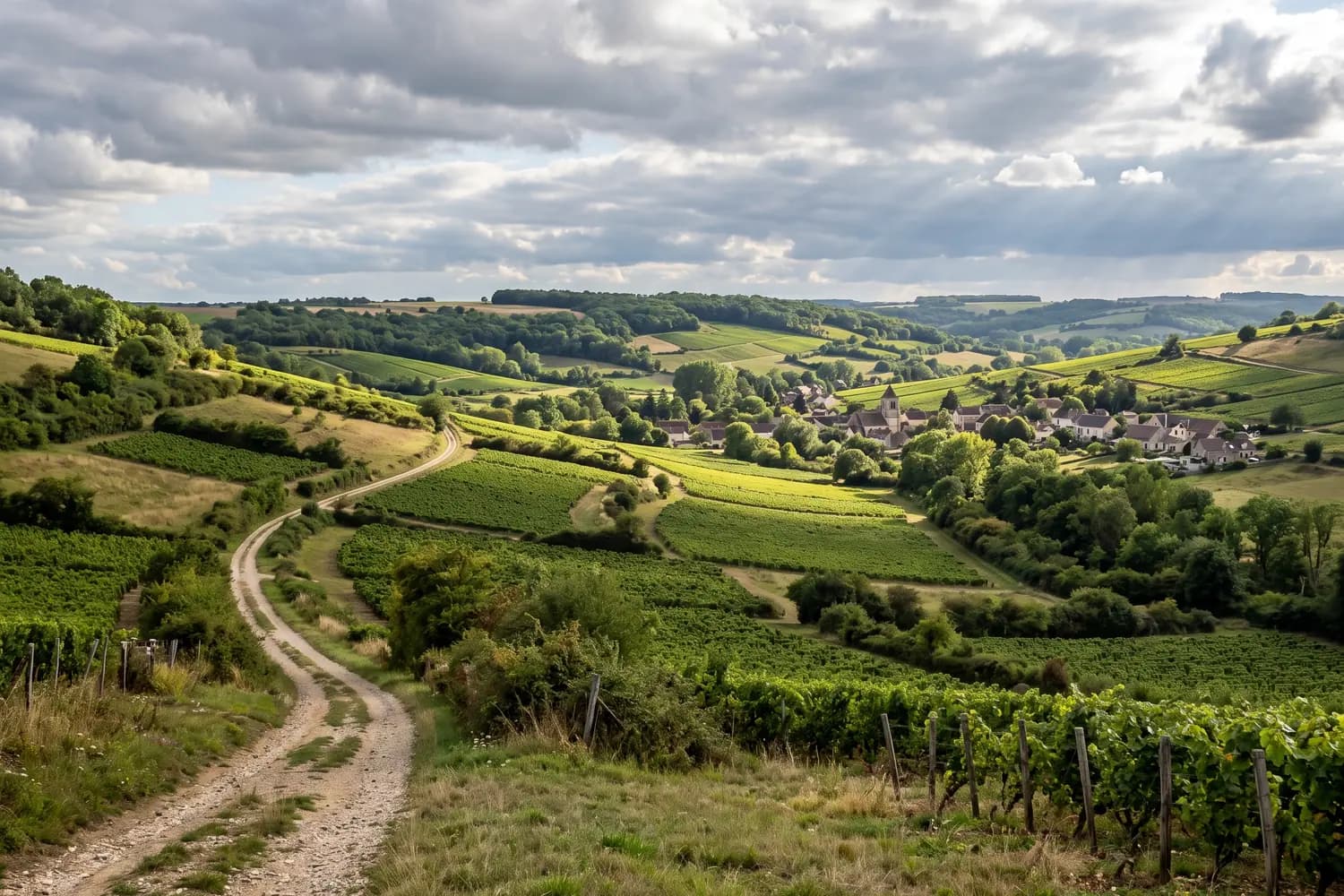
Spanning the northern Rhône Valley, the hillsides of Beaujolais and the high-altitude vineyards of Savoie, the Rhône-Alpes region boasts a diversity of wine-growing that few other areas in France can match. Learning to taste its wines means learning to interpret what the climate, the slope and the grape variety impart to a glass: a sensory journey as much as an invitation to explore.
A wine-growing crossroads of rare richness
Rhône-Alpes is not a single vineyard, but a mosaic of vineyards. Here, you move from the powerful Syrah of the steep Rhône slopes to the indulgent Gamay of Beaujolais, before reaching the Alpine grape varieties found almost nowhere else. This diversity makes the region an ideal place to learn: each appellation tells a story of soil and expertise.
The Northern Rhône Valley
Just south of Lyon, on often vertiginous granite slopes, Syrah produces deep, peppery wines — Côte-Rôtie, Cornas, Hermitage — whilst Viognier yields floral whites of rare intensity in Condrieu. Here, tasting teaches you to distinguish the freshness brought by a particular aspect, the minerality of a soil and the structure of well-ripened tannins.
Beaujolais
North of Lyon, Gamay reigns supreme on soils of pink granite and schist. Far from the cliché of Beaujolais Nouveau, the ten crus — Morgon, Fleurie, Moulin-à-Vent, Brouilly… — reveal wines with ageing potential that are refined and fragrant. It makes for a wonderful comparative tasting exercise: a single grape variety, ten different expressions depending on the terroir.
The wines of Savoie
Heading east towards the Alps: Savoie cultivates little-known indigenous grape varieties — Jacquère and Altesse (also known as Roussette) for lively, crystalline whites, and Mondeuse for spicy reds. With high-altitude vineyards and mountain freshness, these wines lend themselves to a tasting experience full of finesse.
Learning to taste wine in the region
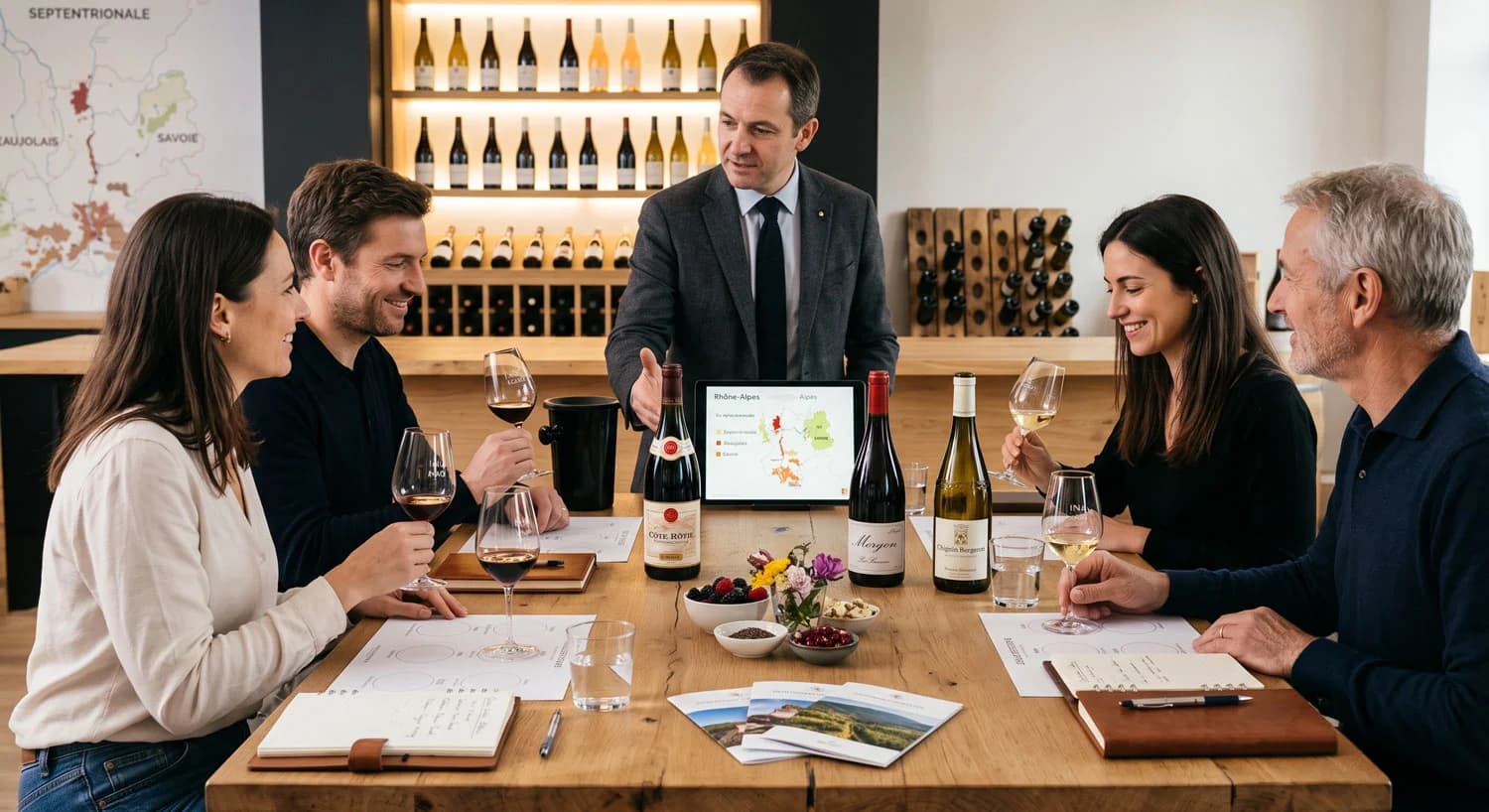
Learning to taste wine cannot be improvised, but there is no shortage of opportunities in Rhône-Alpes. You can start on your own, by methodically comparing two vintages of the same grape variety, or pop into a passionate wine merchant’s shop where they’ll share their personal favourites. Wine fairs, local festivals and cellars open to visitors also offer excellent starting points. To take things further and structure your progress, nothing beats structured guidance: from themed workshops to wine-tasting courses in Rhône-Alpes, which teach you how to identify aromas, recognise faults and build your own wine-tasting vocabulary.
Training your senses, step by step
Wine tasting involves three stages: the eye (colour, intensity, highlights), the nose (varietal aromas, ageing notes) and the palate (attack, balance, length). In the Rhône-Alpes region, the diversity of styles is a teaching asset: moving from an opulent Viognier to a mineral-driven Jacquère, or from a tannic Syrah to a silky Gamay, sharpens the palate far more quickly than a series of similar wines. Ultimately, tasting is about learning to put a sensation into words — and never drinking quite in the same way again.
Adrenactive: wine experiences across France
Beyond the Rhône-Alpes region alone, certain organisations offer the chance to experience wine as an experience in its own right. This is the case with Adrenactive, which lists discovery activities throughout France: introductory sessions, estate tours and guided tastings. For anyone wishing to get started or treat someone to a unique wine-centred experience, the wine workshops offered by Adrenactive cover a wide range of terroirs and skill levels, from the simply curious to the discerning connoisseur.
Whether you’re drawn to the power of the Rhône, the rich flavours of Beaujolais or the alpine freshness of Savoie, the Rhône-Alpes region offers the perfect playground for refining your palate. The best teacher is curiosity: taste, compare, ask questions — and let each glass tell the story of its terroir.