Get a €40 discount on purchases of €500 or more, and a €100 discount on purchases of €1,000 or more of champagne (excluding shipping costs)
Canard-Duchêne Champagne logo

Canard-Duchêne Champagne — Maison de Ludes, Pinot Noir terroir


Nestled in the heart of the vineyards in Ludes, a Premier Cru village in the Montagne de Reims, the Canard-Duchêne house has been producing a Pinot Noir-dominated style of Champagne since 1868 – one that is fresh, fruity and well-balanced. Owned since 2003 by the Thiénot family from Champagne, the house derives its uniqueness from some thirty hectares of its own vineyards — including nine hectares certified as organic — complemented by more than twenty years of partnerships with 200 winegrowing families. Its signature lies in a rare expertise: the ‘Réserve Perpétuelle’, employed in cuvées such as the Brut Léonie Iconic and the Blanc de Noirs Iconic. Aged in the chalk cellars of the Domaine de Ludes, dug 37 metres underground, its cuvées combine gastronomic freshness with precision in blending.

Buy Canard-Duchêne champagnes online


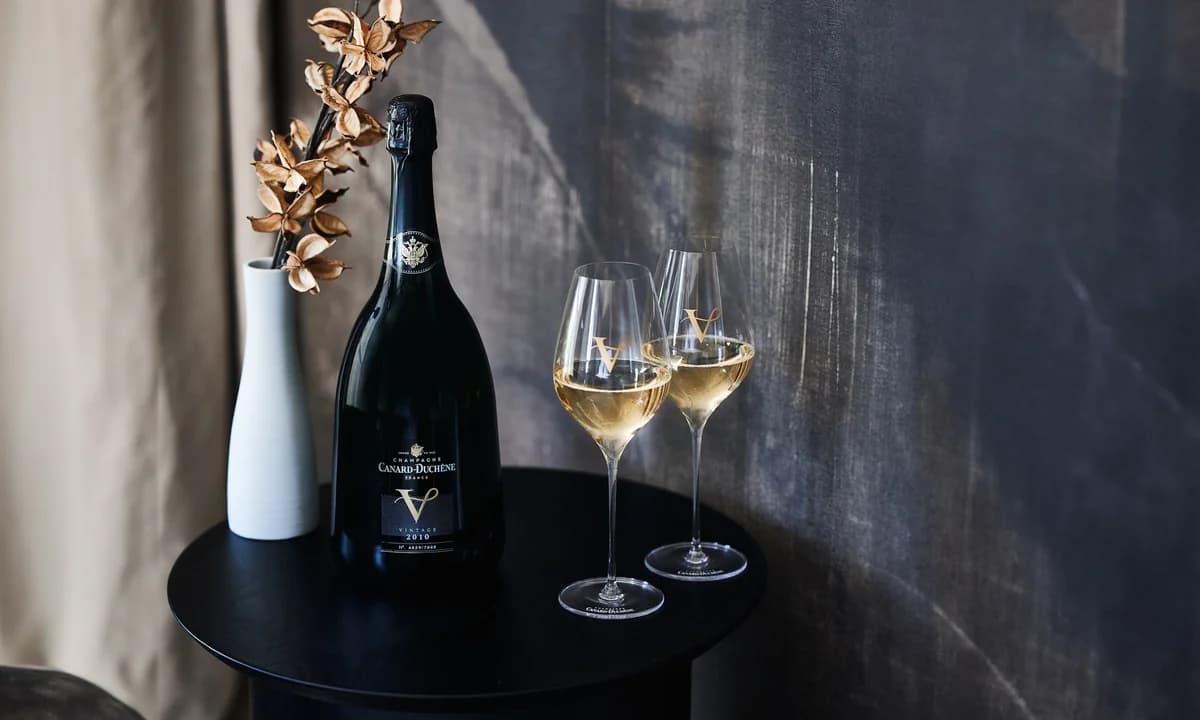
Canard-Duchêne V 2010 Champagne magnum served in two engraved flutes

The Canard-Duchêne vintages — from the Essentiel range to the Prestige collection


The Essentiel range (Brut, Rosé, Demi-Sec, Brut Réserve) is perfect for everyday meals, aperitifs and seafood. The Iconic collection elevates the gourmet dining experience: Brut Léonie Iconic pairs beautifully with roast poultry, Blanc de Blancs Iconic with shellfish and crustaceans, Blanc de Noirs Iconic with mature cheese, and Rosé Iconic – a rare saignée rosé – with a red fruit dessert. The P181 Bio, an extra-brut aged in oak barrels, pairs beautifully with delicate fish.

Served between 8 and 10°C in a tulip-shaped glass, the Essentiel cuvées are best enjoyed young, whilst the Iconic range, the P181 and the 2015 and 2018 vintages benefit from being cellared for a few years. The Prestige V 2010 and V 2012 cuvées, which have already been aged for a long time, are best savoured on special occasions.

Pépites en Champagne stocks the entire Canard-Duchêne range, from the Essentiel to the Prestige cuvées, offering expert advice from a specialist wine merchant and careful delivery throughout France and Europe.

Canard-Duchêne — a company founded in Ludes in 1868


Founded in 1868 in Ludes by Victor Canard, a cooper, and Léonie Duchêne, a winegrower, the house was born out of the union of their expertise and their surnames. As early as 1891, it was granted the right to bear the coat of arms of the Russian imperial family, having been a purveyor to the table of Tsar Nicholas II. Since 2003, it has been owned by the Thiénot family of Champagne, who have maintained the vineyard’s roots in the very heart of the Montagne de Reims, amidst classified vineyards and artisanal expertise passed down from generation to generation.

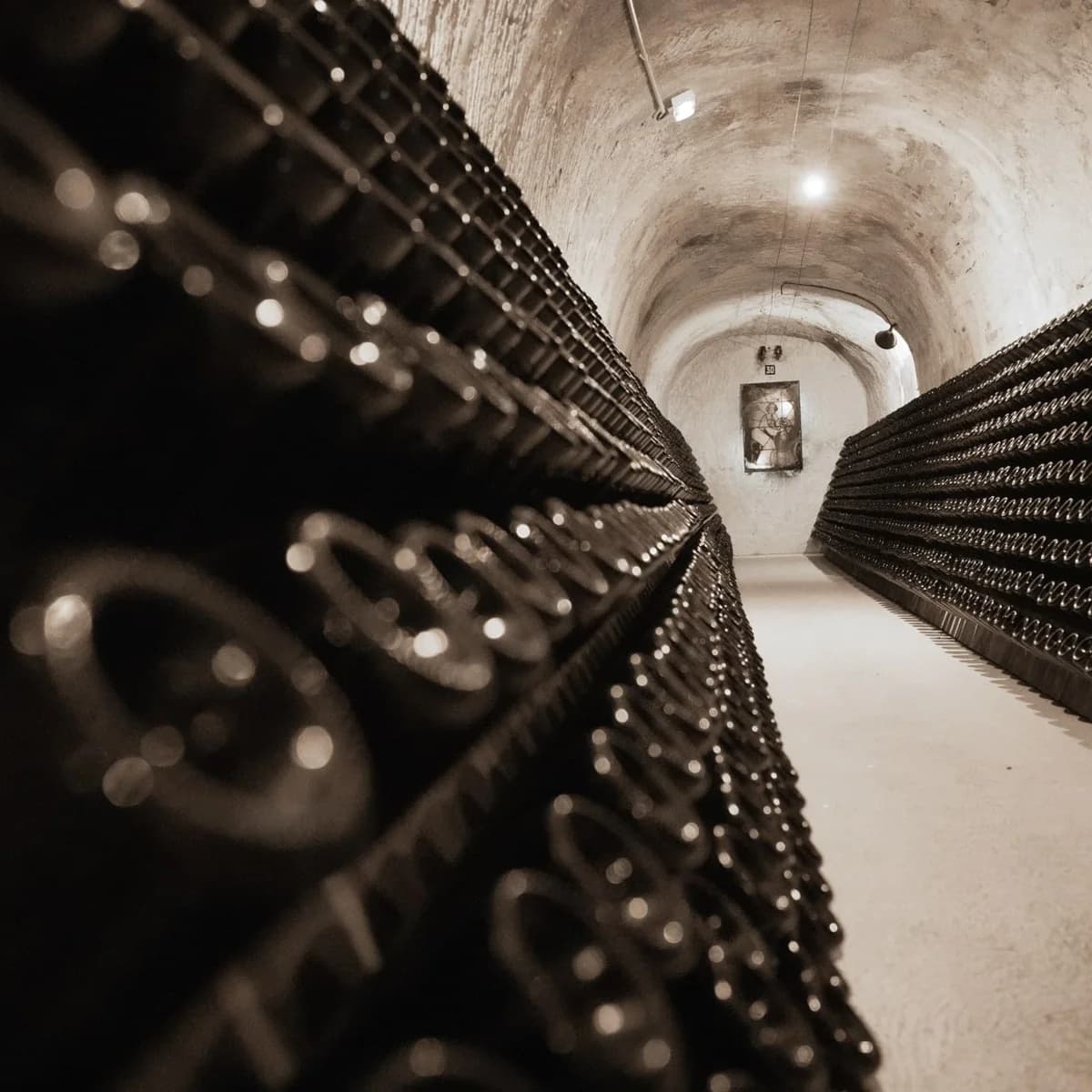
Since January 2025, Cynthia Fossier has held the position of Cellar Master — the tenth in the house’s history and the first woman to hold this role since Léonie Duchêne — after more than five years working on the blends alongside Laurent Fédou. Under her guidance, the cuvées mature exclusively in the chalk cellars of the Domaine de Ludes, 37 metres underground, in total darkness and at a constant temperature of 11°C.

Chalk cellars at the Domaine de Ludes where Canard-Duchêne champagnes age

Your questions about Canard-Duchêne champagnes


Who owns the Canard-Duchêne Champagne house?
Founded in 1868 in Ludes by Victor Canard and Léonie Duchêne, the house has been owned since 2003 by the Thiénot family from Champagne, who continue to maintain its roots in the heart of the Montagne de Reims and its predominantly Pinot Noir style.
What food and wine pairings go well with Canard-Duchêne champagne?
The Essentiel range is ideal with aperitifs and seafood; Brut Léonie Iconic pairs well with roast poultry; Blanc de Blancs Iconic with shellfish; Blanc de Noirs Iconic with mature cheese; and Rosé Iconic with a red-berry dessert.
How should Canard-Duchêne champagne be served and stored?
Serve it at between 8 and 10°C in a tulip-shaped glass to preserve its aromas. The Essentiel cuvées are best enjoyed young; the Iconic, P181 and vintage wines will benefit from being left to age for a few years in the cellar before drinking.
Where can I buy Canard-Duchêne champagne online?
Discover the full Canard-Duchêne range at Pépites en Champagne — an artisanal selection, expert advice, and express delivery throughout France and Europe.
What’s the latest news from Canard-Duchêne?
Since January 2025, Cynthia Fossier has become the house’s tenth Cellar Master — the first woman to hold this position since the founder, Léonie Duchêne. Canard-Duchêne has also been the ambassador house for the UNESCO Mission ‘Coteaux, Maisons et Caves de Champagne’ since 2023.
What is the difference between the Essentiel range and the Iconic cuvées, such as Brut Léonie?
The Essentiel range embodies the house style for everyday enjoyment, with over 20 per cent reserve wines and 2 to 3 years’ ageing in the cellar. The Iconic cuvées, such as Brut Léonie, which draws on a Perpetual Reserve established in 2009, are designed for gourmet dining and are aged for a minimum of 3 years in the cellar.

About

Champagne Canard-Duchêne — the essentials

Founded in
1868
Founder
Victor Canard, tonnelier, et Léonie Duchêne, vigneronne, qui associent leurs savoir-faire et accolent leurs noms
House / owner
Détenue depuis 2003 par la famille champenoise Thiénot
Location
Ludes, village Premier Cru de la Montagne de Reims
Vineyard
une trentaine d'hectares en propre, dont 9 ha certifiés en agriculture biologique à Verneuil, complétés par des partenariats de plus de 20 ans avec 200 familles de vignerons — accès à une centaine de crus
Grape varieties
Pinot Noir (cépage signature, minimum 30% des assemblages), Meunier, Chardonnay
Cellar master
Cynthia Fossier, 10e Chef de Caves depuis janvier 2025 — première femme à ce poste depuis Léonie Duchêne — après plus de 5 ans aux assemblages aux côtés de Laurent Fédou (Chef de Caves 2003-2025)
Distinctions
11e Maison de Champagne en volume dans le monde (IWSR 2023), 4e Maison de Champagne en volume en France (2023), Première Grande Maison à inscrire un champagne bio à sa gamme permanente (P181, dès 2009), Fournisseur de la table du Tsar Nicolas II dès 1891 — droit d'arborer les armoiries de la famille impériale russe, Ambassadrice de la Mission Unesco Coteaux, Maisons et Caves de Champagne (depuis 2023), Label Écotourisme de la Marne (2021) ; 50 000 arbres plantés avec Reforest'Action depuis 2021
Cuvées
Brut Léonie Iconic, Blanc de Blancs Iconic, Blanc de Noirs Iconic, Rosé Iconic, P181 Bio, Millésime 2015 et Vintage 2018