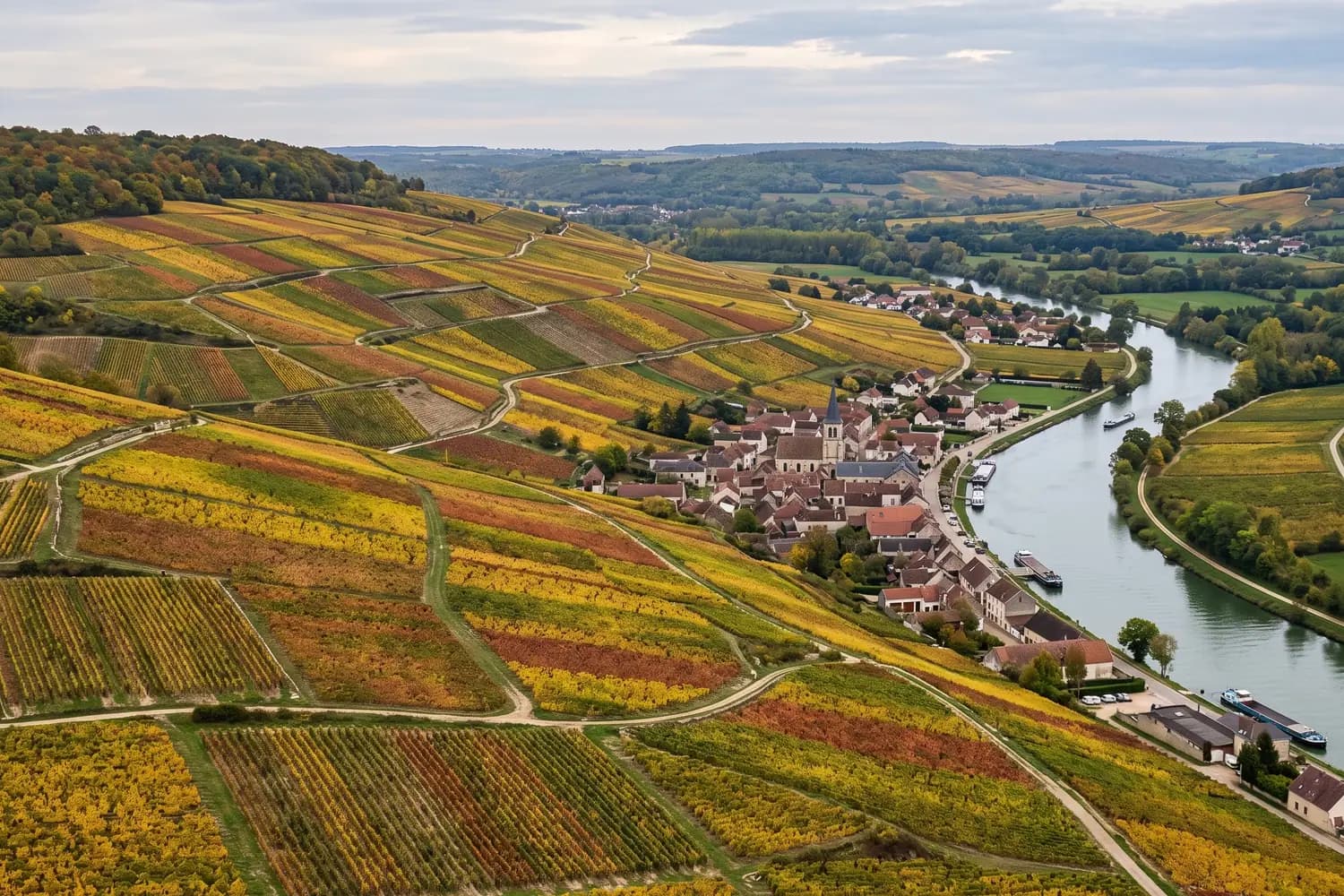
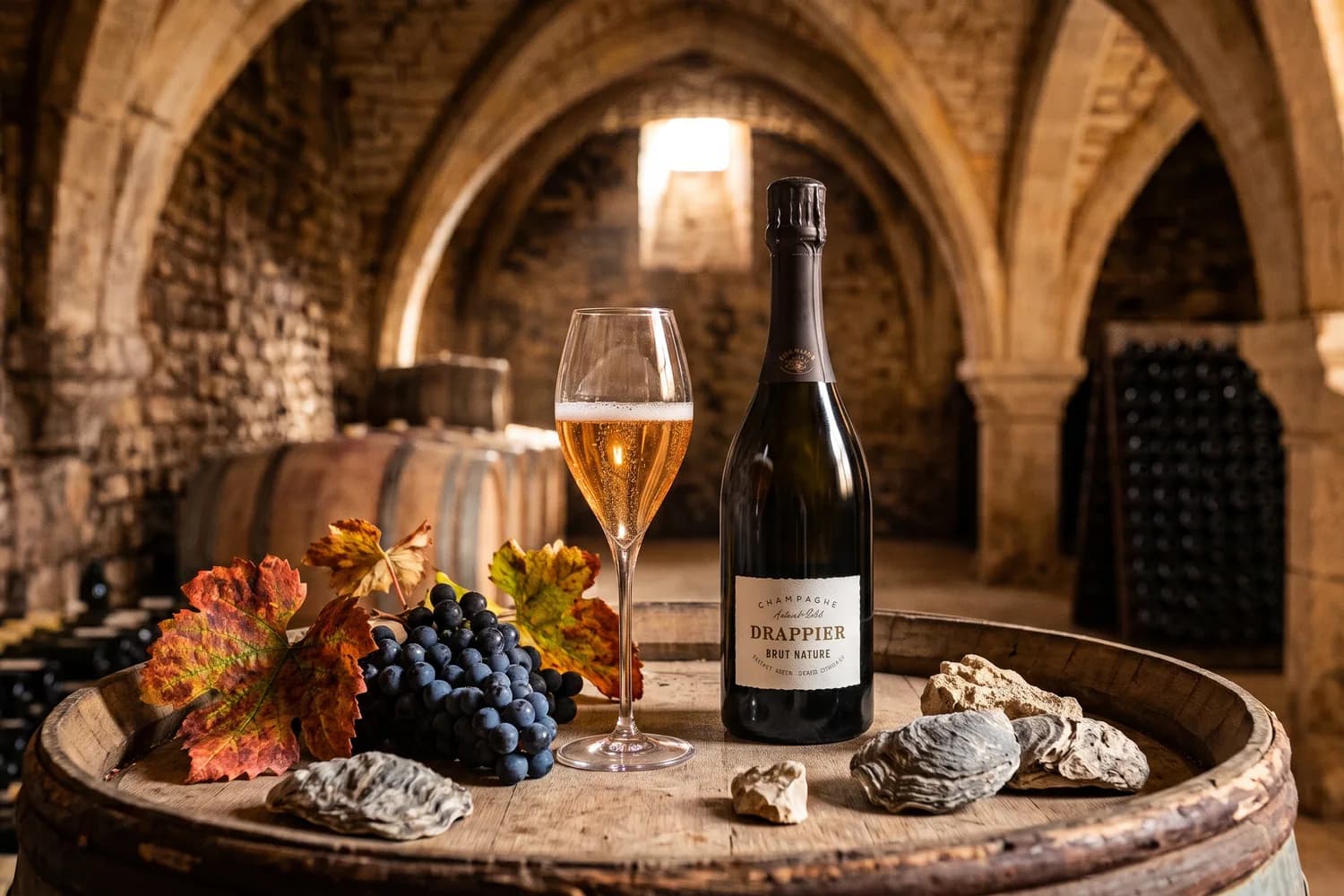
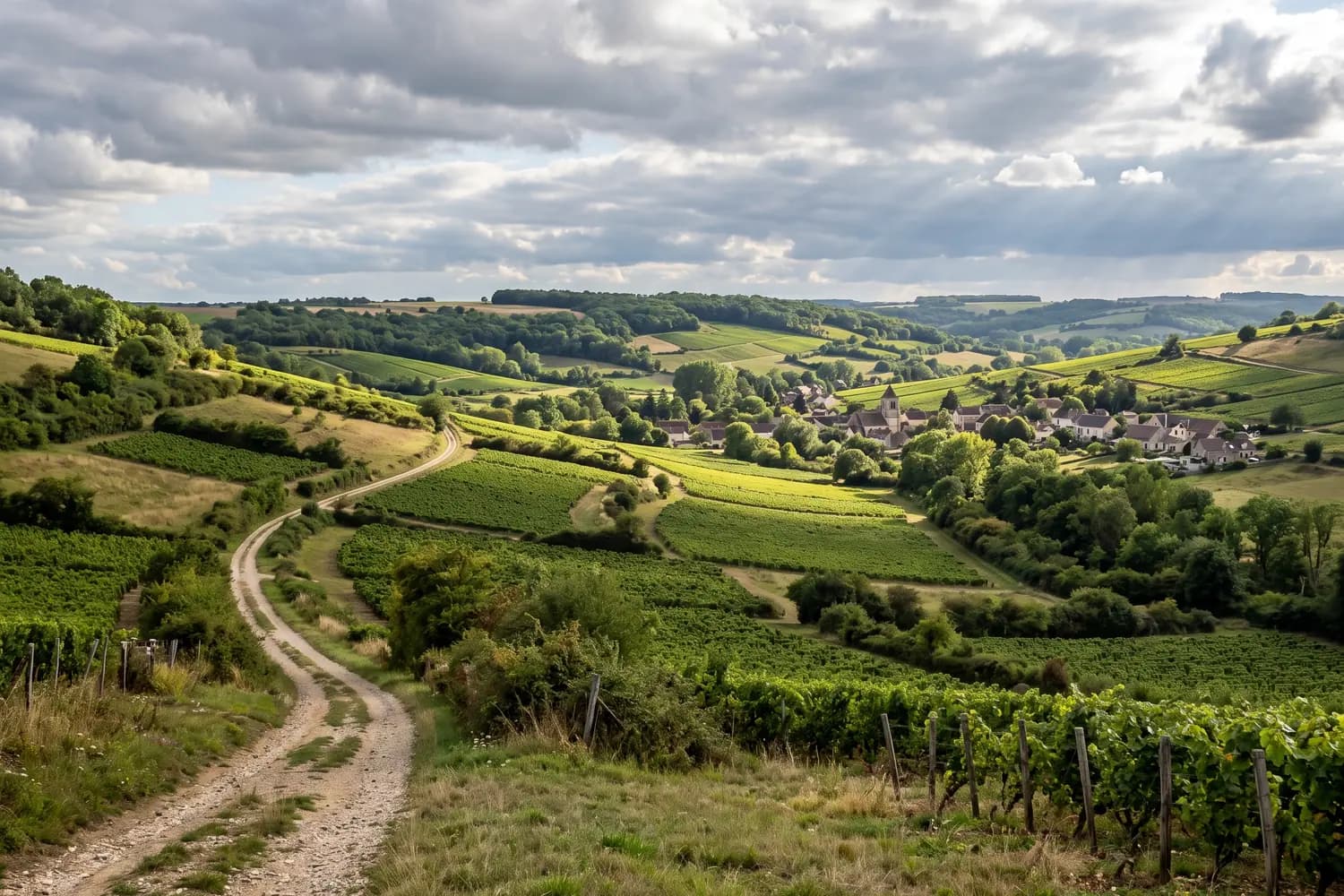
Cumières is a village that visitors pass through without noticing, on the right bank of the Marne, directly opposite Épernay. Yet it is one of the finest premier crus of the Valley: full south exposure, steep slopes running down to the river, and an unusually wide variety of soils for such a small area. This is where Geoffroy works 14 hectares spread across 35 parcels — a mosaic, in the literal sense.
The Geoffroy style: no malolactic fermentation, ever
One technical choice sums up the estate. Malolactic fermentation, practised by almost all of Champagne, converts malic acid — sharp, pointed — into softer lactic acid. It makes wines rounder, more immediately pleasant. Jean-Baptiste Geoffroy deliberately refuses it, across the entire range.
The consequence is immediately noticeable: these champagnes are more linear, more tangy than their neighbours in the Marne Valley, which usually produce round, fruity wines. They also demand more patience — and the fact that they retain their acidity intact explains why they age remarkably well.
The Geoffroy range at a glance
| Cuvée | Profile | Price |
|---|
| Expression 1er Cru | The entry-level blend, the calling card | 39.55 € |
| Rosé de Saignée 1er Cru | Maceration, wine-like and deeply coloured | 45.86 € |
| Les Collinardins 2019 | Single-parcel, one named site alone | 92.04 € |
| Terre 2015 1er Cru | Limited edition, for laying down | 101.40 € |
The estate also produces Pureté, Empreinte, Volupté and the single-parcel Les Tiersaudes and Les Houtrants complanté, which we do not currently carry.
Expression 1er Cru: the calling card
At 39.55 €, Expression is one of the best value-for-money bottles in our premier cru cellar. It is the estate's base blend, and it already carries the full signature: a clean attack, present but ripe acidity, and pear and apple fruit that is never coated in sugar. To discover what Cumières produces without going through a prestige cuvée, this is the bottle.
Rosé de Saignée: a rosé for the table
Most Champagne rosés are blends: a little red wine is added to the white wine. The Rosé de Saignée (45.86 €) is made differently — the skins are left to macerate in the juice, and the vat is then bled off. It is riskier, harder to get right, and the result is nothing like an aperitif rosé: deep colour, structure, an almost tannic frame. Best served with a dish, not with canapés.
Les Collinardins: a single parcel, no blending
The whole art of a great house lies in blending dozens of crus to achieve a consistent taste. The single-parcel approach does exactly the opposite: it isolates one place and lets it speak alone, flaws and character included. Les Collinardins 2019 (92.04 €) is precisely this exercise applied to a named site in Cumières. It is a bottle for those who want to understand what "terroir" concretely means, rather than to impress a table of guests.
Terre 2015: the limited edition
Terre 2015 1er Cru (101.40 €) is the most ambitious cuvée available from us. A sun-drenched 2015 vintage, from an estate that refuses malolactic fermentation: the combination produces a wine that is both ripe and taut, with the richness of warm years and the acidity the estate always preserves. This is a bottle for laying down — five to ten years in the cellar will do it good.
Cumières, a premier cru worthy of grand cru status
Champagne's classification — grands crus, premiers crus, the rest — dates from 1911 and has barely changed since. It reflects the commercial history of the villages as much as the actual quality of their soils: at the time, it was a grape purchase price scale, not a hierarchy of terroirs established by tasting. A century later, several premier crus produce wines superior to certain grand crus, without ever being allowed to say so on the label.
Cumières is one of them. The village combines a full south exposure that is rare in the Marne Valley, steep slopes that drain naturally, and a variety of soils — chalk, clay, marl — that allows all three grape varieties to be planted with relevance. This is what explains how a 14-hectare estate can produce so many different cuvées there without repeating itself: the 35 parcels do not all tell the same story.
Geoffroy prices: what to expect
From 39.55 € to 101.40 €. Two clear tiers: around 40-46 € for the blended cuvées, which remain among the best deals in the grower champagne section, and 92 to 101 € for the single-parcel wines and limited editions. The gap is justified: you are not paying for the same thing in a cuvée that blends 35 parcels and one that keeps only one.
Geoffroy at the table
The absence of malolactic fermentation makes these wines particularly useful at the table: their acidity cuts through rich dishes. The Expression pairs well with grilled fish and goat cheeses; the Rosé de Saignée goes with poultry, duck, or even a light red meat; Les Collinardins and Terre call for a dish with character — sweetbreads, mushrooms, fish in sauce. Served too cold, these champagnes close up: this is the most common mistake made with them.
Which Geoffroy for which occasion?
- Discovering the estate: Expression 1er Cru, 39.55 €.
- A full meal: Rosé de Saignée 1er Cru.
- Understanding a terroir: Les Collinardins 2019.
- A bottle to lay down: Terre 2015.
Serving and keeping a Geoffroy
Between 10 and 12 °C, in a wide glass — never in a chilled flute, which crushes the acidity and closes off the fruit. Almost all these malolactic-free wines benefit from waiting: the Expression improves over two to three years, the single-parcel wines over ten. Our storage guidelines apply here just as they do for the rest of the grower-producers in our cellar.