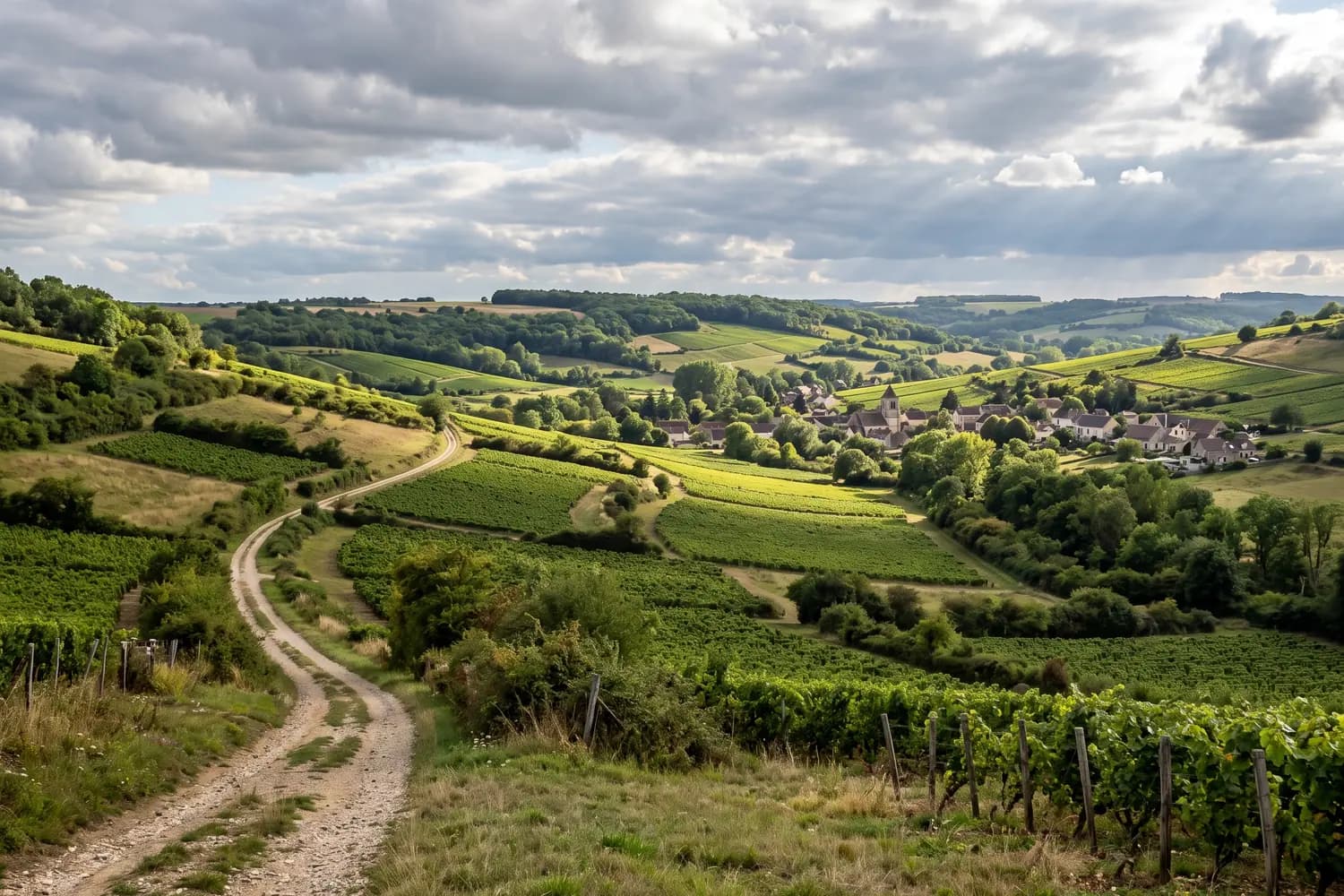
There are villages in Champagne that no one talks about, and yet they produce very good wine. Fèrebrianges, in the Petit Morin Valley, is one of them. This is where A. Bergère has been established since 1848, on 45 hectares spread across 139 plots — a figure that says everything about the fragmentation of Champagne vineyards, and the work involved in managing them.
The estate extends across three areas: the Petit Morin, the Sézannais and the Côte des Blancs. Three terroirs, three wine profiles, and a range organised less by price level than by place.
The A. Bergère style: nothing taken away
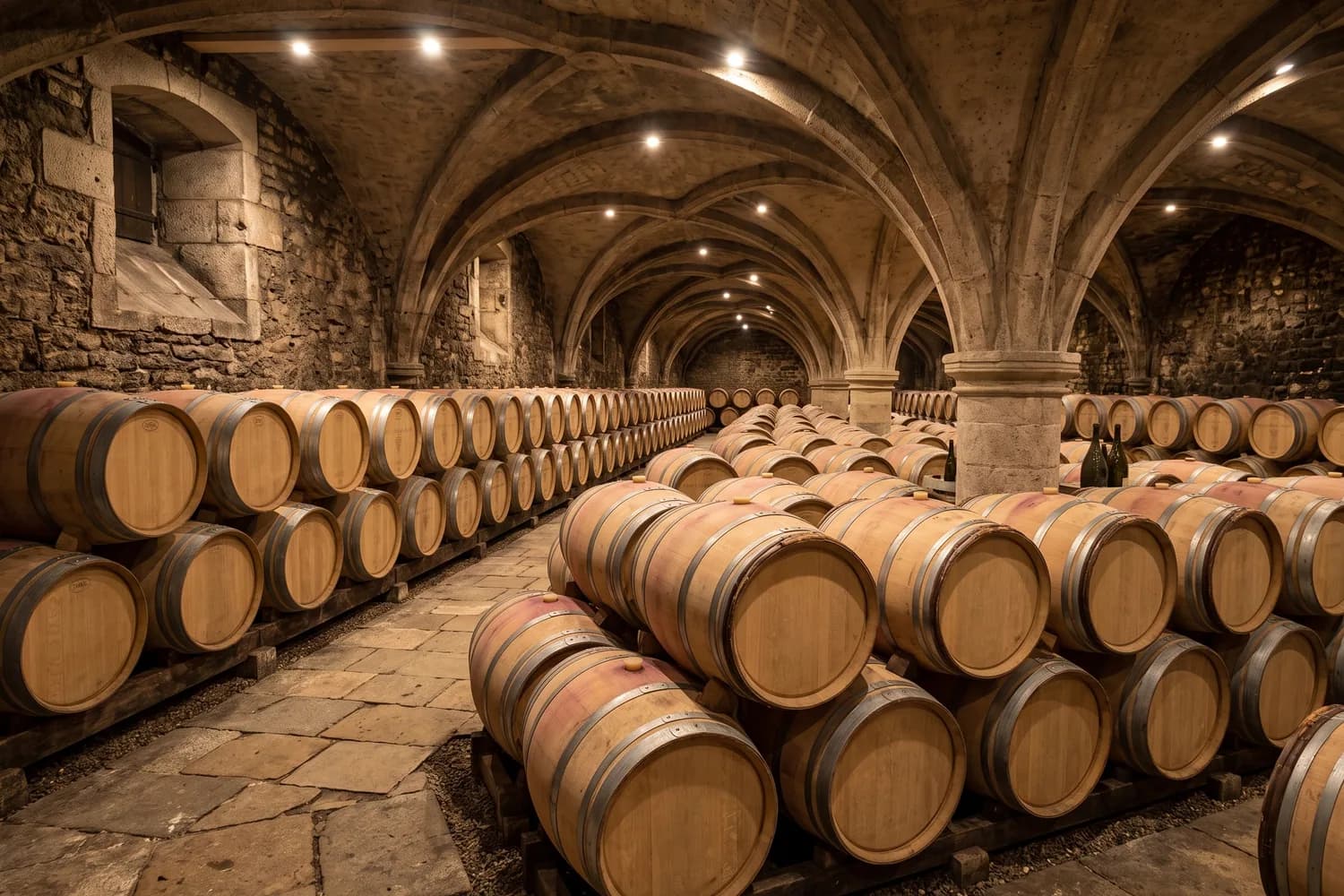
The technical signature is that of a grower rather than a house: indigenous yeasts, no fining, no filtration, and ageing spread between stainless steel, barrels and large oak casks depending on what each cuvée requires. Foregoing fining and filtration is not a stylistic quirk — these processes clarify the wine but take away some of its texture along the way. By skipping them, more matter is retained, even if it means a wine that is less brilliant to the eye and may throw a slight deposit.
The separate vinification of the 139 plots then gives the estate a range that is rare for its size, allowing it to release single-plot cuvées without ever depleting its main blend.
The Petit Morin, an unclassified terroir
The Petit Morin Valley has no village classified as grand cru. Under the logic of the Champagne classification, established in 1911 on largely commercial criteria, this places it at the bottom of the hierarchy. In practice, this mainly means that grapes are bought more cheaply there, and so the bottles sell for less — for equal work.
This is the main appeal of this kind of estate: you find the care of a Côte des Blancs grower without the price premium linked to the village's classification. You just have to be willing to accept names you don't know.
The A. Bergère range at a glance
| Cuvée | Profile | Price |
|---|
| Prestige Millésime | The entry-level millésimé | €46 |
| Rosé de saignée | Maceration, wine-like | €52 |
| Clos 2018 | Single-plot, walled plot | €62 |
| Vignes de Nuit | Single-plot, night harvest | €62 |
| Les Peignottes | Single-plot, the most accomplished | €85 |
| Petit Meslier | Ancient grape variety, extremely rare | €90 |
Origine Brut, Rosé, Grand cru and the solera blanc de blancs complete the range, currently sold out with us.
Prestige Millésime: the entry point
At €46, the Prestige Millésime is the logical starting point. A millésimé at this price is rare in Champagne — most houses start their vintage wines at around €70. This is a direct illustration of what an unclassified terroir makes possible.
Rosé de saignée: a food-pairing rosé
The Rosé de saignée (€52) is obtained by macerating the skins, rather than by adding red wine as most Champagne rosés are. Deep colour, structure, an almost tannic frame: this is a rosé for the table, with poultry or fish in sauce, rather than an aperitif rosé.
Clos 2018 and Vignes de Nuit: two plots, two ideas
Both are priced at €62 and are worth opening together. The Clos 2018 comes from a walled plot — a configuration that creates a warmer microclimate, more sheltered from the wind, and yields slightly riper grapes. Vignes de Nuit takes its name from a harvest carried out at night: the grapes are picked while still cool, before the daytime heat can warm them, which preserves acidity and the most volatile aromas.
Les Peignottes and Petit Meslier: the top of the range
Les Peignottes (€85) is the estate's most accomplished single-plot cuvée, the one where the ageing and the site come together best. Petit Meslier (€90) plays in a different category: this ancient grape variety, permitted but now extremely rare in Champagne, produces very tangy wines, with citrus and fresh herb notes, far removed from the expected Champagne taste. This is a bottle for the curious enthusiast, not for a family dinner.
A. Bergère prices: what to expect
From €46 to €90. Two tiers: €46 to €62 for the vintage wines and the first single-plot cuvées, €85 to €90 for the top of the range. Compared with the cost of a single-plot wine from the Côte des Blancs, the gap is considerable — this is the advantage of a terroir that the 1911 classification overlooked.
A. Bergère at the table
These unfiltered wines retain more matter, which makes them notably more suited to the table than to an aperitif. The Prestige Millésime pairs well with fish starters, fresh goat's cheeses, and simple poultry dishes. The Rosé de saignée, with its structure and colour, holds up to white meat, duck or fish in sauce — it is the most versatile bottle in the range for a full meal.
The single-plot cuvées call for more attention. The Clos, riper, pairs with dishes of character and mushrooms; Vignes de Nuit, fresher, prefers shellfish and raw fish. Les Peignottes deserves a well-constructed dish, and the Petit Meslier, very tangy, works surprisingly well with ceviche, citrus and Asian cuisine — settings where its acidity acts as a seasoning.
Which A. Bergère for which occasion?
- Discover the estate: Prestige Millésime, €46.
- A meal: Rosé de saignée, €52.
- Compare two terroirs: Clos 2018 and Vignes de Nuit, side by side.
- The most accomplished: Les Peignottes, €85.
- Surprise an enthusiast: Petit Meslier, €90.
Serving and storing an A. Bergère
Between 10 and 12°C, in a wide glass. These unfiltered wines may throw a slight deposit: serve without shaking the bottle, and let it stand upright for a few hours if it has travelled. The single-plot cuvées can happily be kept for five to eight years, according to our storage guidelines. The rest of our grower-producers can be found in the cellar.