

Cristal by Louis Roederer: the tsars’ champagne, its vintages and its price
The essentials
Cristal is the prestige cuvée from Louis Roederer, an independent family-run house in Reims, created in 1876 for Tsar Alexander II. A blend of Pinot Noir and Chardonnay from the house’s grands crus, it is produced only as a vintage: 2014, 2015 and 2016 are available for between €262 and €297.50, the 2014 Cristal Rosé at €595, and the 1996 vintage at €690.
- Why is the Cristal bottle transparent and flat-bottomed?
- Because Tsar Alexander II, who feared conspiracies, wanted to see the contents of his bottles and ensure that no device could be hidden in the hole in the base. Louis Roederer therefore had a crystal bottle blown – transparent and without any hollows. Today, the gold-coloured cellophane protects the wine from light.
- How much does a bottle of Cristal Roederer cost?
- €262 for the 2016 Cristal without a gift box, €295 with a gift box, €295 for the 2015, €297.50 for the 2014, €595 for the 2014 Cristal Rosé and €690 for the 1996 vintage — prices recorded in our cellar in September 2026.
- What is the best vintage of Cristal available?
- The 2016, a ‘vintage of abundant sunshine’, is the most highly acclaimed of the three recent vintages for its finesse and length. The 2015 is more opulent, whilst the 2014 is more taut and chalky. The 1996 is a collector’s item.
- Is Cristal an organic champagne?
- Cristal’s vineyards are managed using biodynamic methods by the estate, 135 hectares of which are certified organic. Since the 2012 vintage, Cristal has been produced entirely from plots cultivated using biodynamic methods.
- What is the difference between Cristal and the Louis Roederer Collection?
- The Collection (242, 243, 244, 245, 246…) is the house’s non-vintage brut, blended from a perpetual reserve and priced at around €55 to €59. Cristal is the prestigious vintage cuvée, produced exclusively from the house’s finest plots.
A clear bottle with a flat base, golden cellophane, a tsar concerned for his safety: Cristal was created in 1876 following an imperial commission and remains Champagne’s most recognisable prestige cuvée. History, style, available vintages and prices, cuvée by cuvée.
5 min read
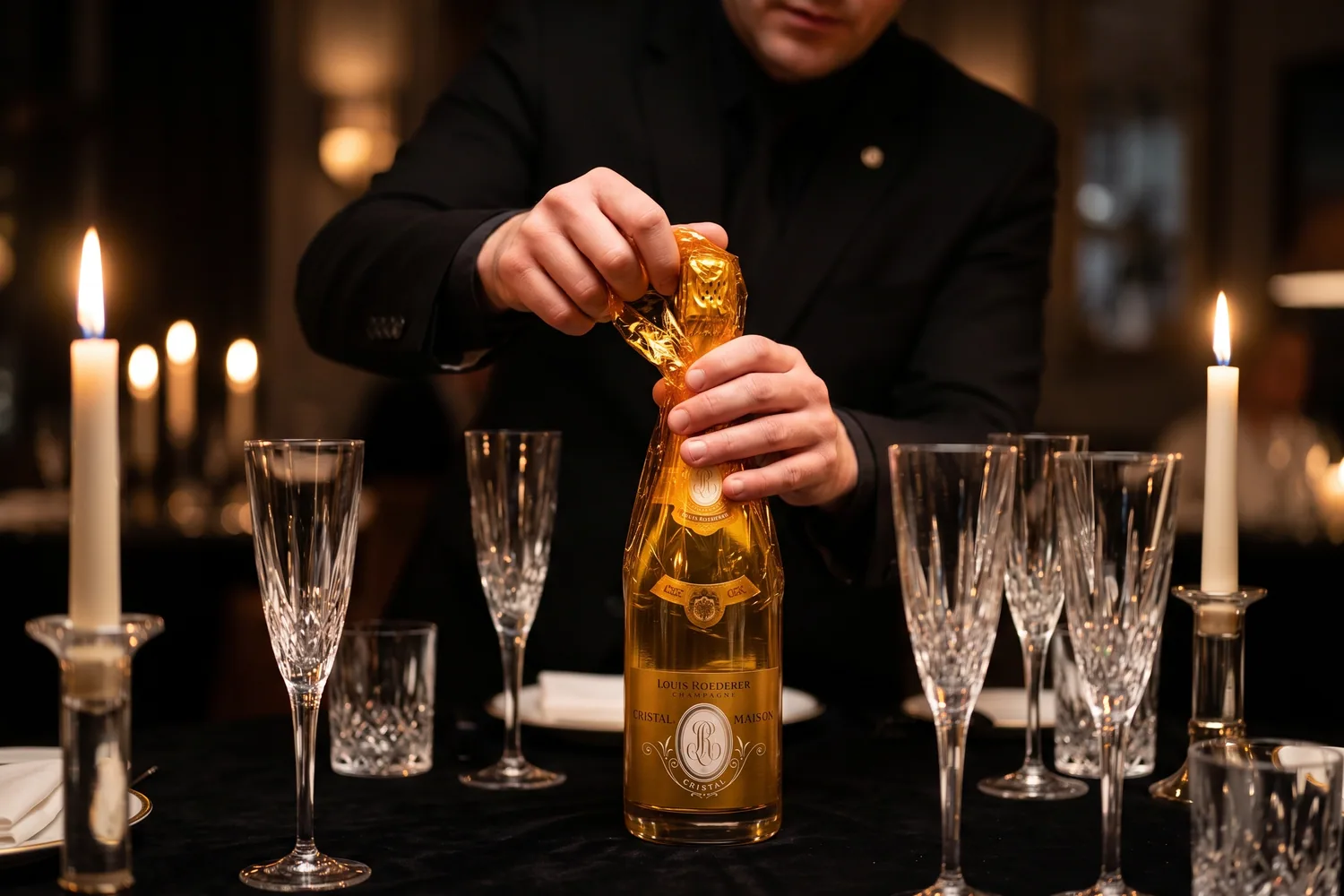
There are prestige cuvées, and then there is Cristal. Its transparent, flat-bottomed bottle, its golden cellophane and its monogrammed label are among the few objects that can be recognised from across a room. Behind this icon lies a Reims-based house that has remained family-owned and independent since 1776: Louis Roederer, which vinifies its 250 hectares plot by plot under the direction of Jean-Baptiste Lécaillon. This guide tells the story of Cristal, describes its style, reviews the vintages available in our cellar and provides current prices.
1876: an order from the Tsar
Louis Roederer supplied the Imperial Court of Russia, his first market, when Alexander II asked him for a cuvée reserved for his table. The Tsar, who feared conspiracies, demanded a transparent bottle so he could see the wine, and one without a hole in the base, so that no device could be concealed within it. It was blown from crystal: the cuvée took this name in 1876. The 1917 Revolution caused him to lose his client, and it was not until 1945 that Cristal was made available to the public. The gold cellophane that wraps around it today is not merely decorative: it shields the wine from light, as the bottle itself offers no such protection.
The Cristal style
Cristal is a blend of Pinot Noir and Chardonnay, with a predominance of Pinot Noir, sourced exclusively from the house’s grands crus on the Montagne de Reims and the Côte des Blancs — a few dozen plots of old vines on chalk, cultivated using biodynamic methods. It is produced only in great vintages, aged for six years in the cellar and then left to rest for several more months after disgorgement. Its hallmark is a chalky, briny tension that carries very pure fruit – citrus, vine peach, raspberry – and a finish of unusual length. This is a champagne for the long term: ten, twenty or thirty years are no problem for it.
Available Cristal vintages
Cristal 2016: the vintage of abundant sunshine
A generous and fully realised year, 2016 produced a Cristal of superior finesse and a racy finish: mandarin, pale apricot, raspberry, floral honey, a smoky minerality, followed by a juicy, briny palate of rare vibrancy. It is currently the most acclaimed vintage. Available in a gift box for €295 or without the box for €262 — the wine is the same.
Cristal 2015: opulence
The 2015 Cristal, born of a hot summer, displays dazzling complexity: candied citrus, white peach, fresh brioche, lime blossom and gentle spices, with a full-bodied yet taut palate, as precise as a jeweller’s work, and a finish of toasted hazelnut and ginger. €295.
Cristal 2014: tension
Fresher in character, the 2014 Cristal blends lemon and pink grapefruit with red apple and biscuit-like spices; the palate is full-bodied — citrus, strawberry, nectarine — before chalk and a framework of silky tannins draw out the finish. €297.50.
Cristal Rosé 2014
Created in 1974, the Cristal Rosé is one of Champagne’s rarest rosés. The Cristal Rosé 2014 displays a pale pink colour with coppery highlights; zesty redcurrant, wild raspberry, blackberry, floral and smoky notes from the Pinot Noir, with a concentrated texture blending chalk, mint and blood orange. €595, in a gift box.
Cristal 1996: the collector’s bottle
1996 is one of the most famous vintages in modern Champagne, combining ripeness with vibrant acidity. The 1996 Cristal has developed notes of candied citrus, fine patisserie, toasted hazelnut and a hint of smokiness, with an endless, briny finish. €690: the price of a thirty-year-old wine that still has a long life ahead of it.
Alongside Cristal: Louis Roederer’s other cuvées
Cristal is merely the pinnacle of a cohesive range. The Collection 246 — the house’s non-vintage brut, numbered with each new blend and built around a perpetual reserve — serves as the entry point at €58.90; the Collection 245 remains available, and our article on the Collection 243 explains the concept. Above that, the 2018 Vintage, the 2019 Blanc de Blancs, the 2017 Vintage Rosé and the 2018 Brut Nature by Starck, all without dosage, each showcase a different facet of the same family-owned terroir, priced between €80 and €96.
Prix de Cristal: what to expect
| Cuvée | Observed prices (incl. VAT, 75 cl) |
|---|---|
| Cristal 2016 (without gift box) | €262 |
| Cristal 2016 with gift box / Cristal 2015 | €295 |
| Cristal 2014 | €297.50 |
| Cristal Rosé 2014 | €595 |
| Cristal 1996 | €690 |
| For reference: Collection 245 / 246 | €58.90 |
Prices recorded in our cellar in September 2026; they vary as the house releases new vintages. To see how Cristal compares with its great rival, read our Cristal vs Dom Pérignon comparison and our ranking of the 10 most expensive champagnes in the world; to put 2014, 2015 and 2016 into context, see the best vintages in Champagne.
When should you open a Cristal?
- A fine meal: the 2014 with turbot or sole, the 2015 with Bresse poultry or lobster.
- A memorable gift: the 2016 in a gift box.
- A wedding or a birth to celebrate in twenty years’ time: any vintage, to be laid down in the cellar.
- An evening amongst connoisseurs: the 2014 Cristal Rosé, served blind, for the element of surprise.
Serving and storing Cristal
Serve it at between 10 and 12 °C, in a wide white wine glass rather than a flute, and let it breathe for a few minutes: a young Cristal is often reserved at first. Store it lying down, away from light — the gold cellophane is no substitute for a dark cellar — at between 10 and 15 °C. Our storage and serving guidelines provide further details. All available vintages are listed on the Louis Roederer website.
The bottles in this article
À lire également
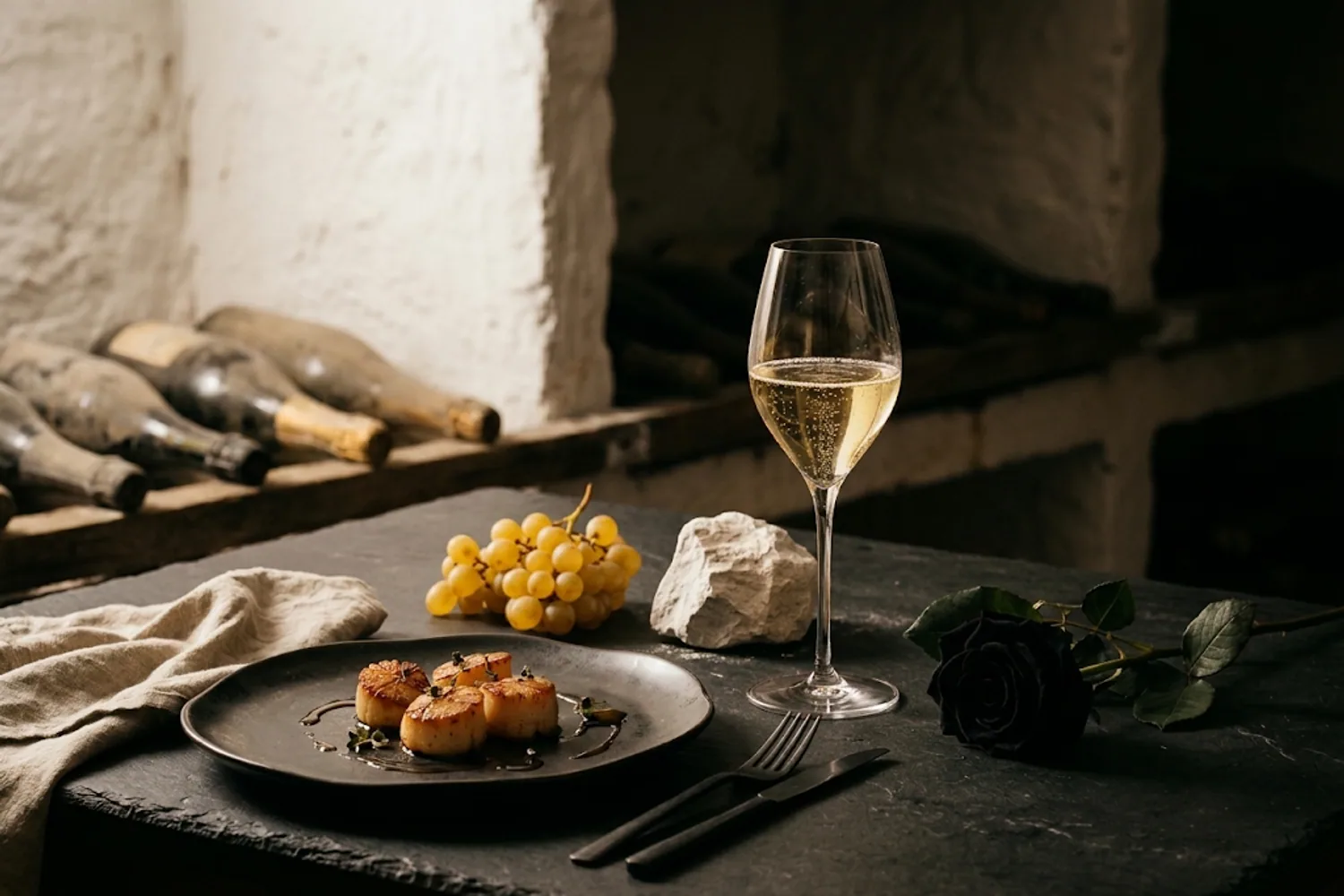
Champagne Henriot : le chardonnay de gastronomie à travers la cuvée Rose Noire
En Champagne, le chardonnay incarne la pureté, la tension saline et l’élégance minérale. Chez Champagne Henriot, ce cépage blanc d’élite constitue la colonne vertébrale du style de la Maison, portée par les grands crus de la Côte des Blancs. Si le Blanc de Blancs classique de la gamme illustre la vivacité crayeuse des terroirs d'Avize ou de Chouilly, une cuvée plus confidentielle attire le regard des connaisseurs : la cuvée Rose Noire Pur Chardonnay.
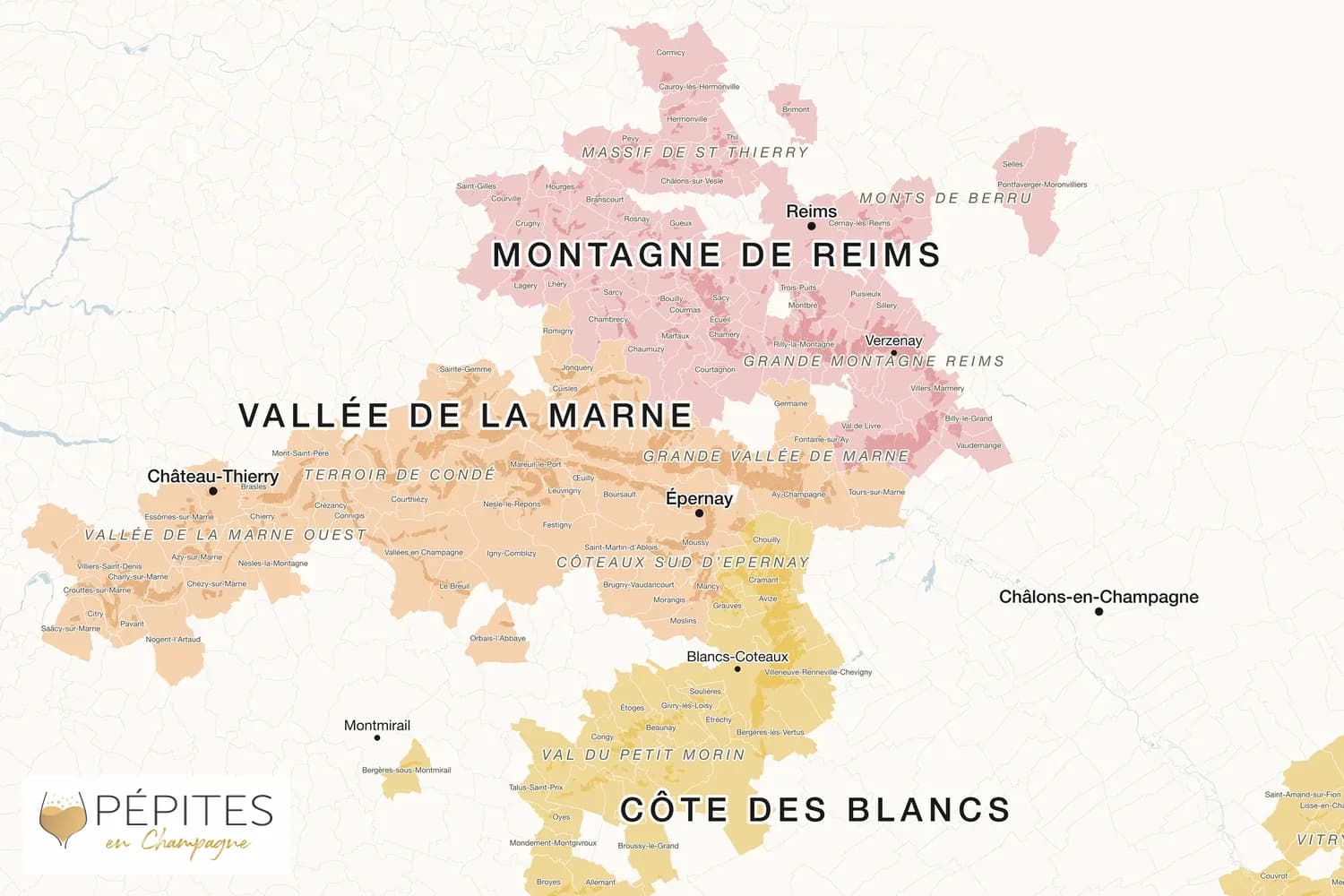
Atlas of Champagne Crus: the 319 Villages of the Appellation and their 17 Grands Crus in Maps
The Champagne appellation covers 319 crus and 34,317 hectares, including 17 grands crus and 42 premiers crus. Here is our atlas: the map of the four regions, the parcel maps of the grands crus and the complete list of villages.
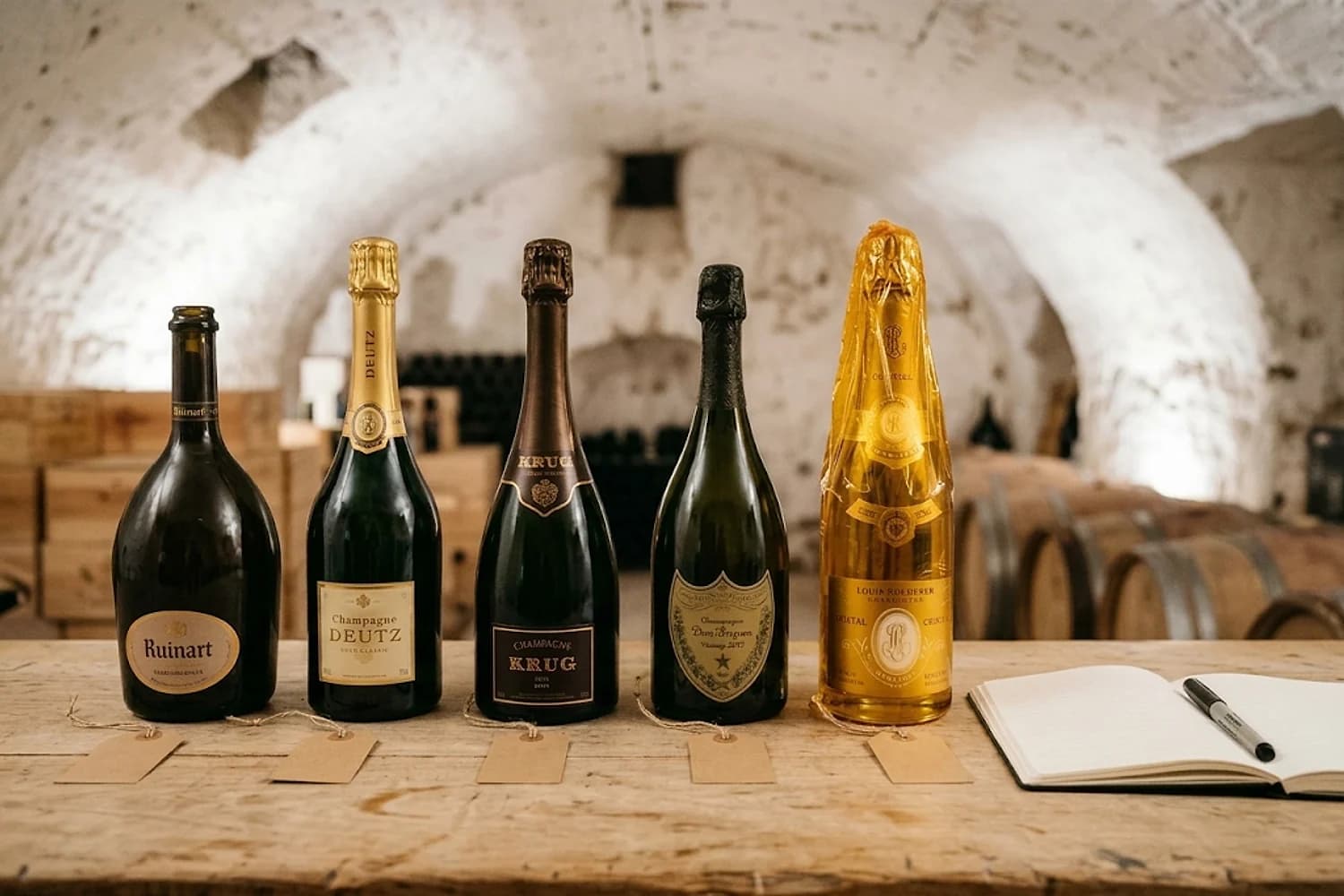
Champagne prices in 2026: our cellar's barometer, based on 268 cuvées
How much does a bottle of champagne really cost in 2026? We reviewed the 268 cuvées in stock in our cellar: median price, differences between major houses and winegrowers, price by style, and loss-leader prices from major brands.
