

Gaston Révolte: which cuvée should you choose? From Brut Tradition to Don de la Mer, aged under the sea
The essentials
For an aperitif: Brut Tradition (€34), half chardonnay, half pinot noir. To stay through the meal: Brut Cuvée Spéciale (€36), 80% pinot noir. For a blanc de blancs: IIIème Millénaire Chardonnay (€56), 50 months on lees. For a blanc de noirs for meals: IIIème Millénaire Pinot Noir (€56), 100 to 140 months on lees. For a one-of-a-kind piece: Le Don de la Mer (€179), 36 months in the cellar then 12 to 18 months in the sea off Cancale. All these cuvées are premier cru, from Avenay-Val-d'Or.
- What is Gaston Révolte's Le Don de la Mer?
- A premier cru made from 80% pinot noir and 20% chardonnay, aged twice: 36 months on lees in the house's 14th-century cellar, then 12 to 18 months in the sea off Cancale. The bottles emerge covered in shells and corals, making each one a one-of-a-kind piece. The house sells it by allocation.
- What does this champagne aged under the sea taste like?
- The attack is lively and fresh. The nose remains on ripe white fruits and a delicate spicy note, the palate is broad and creamy, with light iodized notes. Serve it at around 10°C, with scallops or Breton lobster.
- Which Gaston Révolte cuvée should you choose to start with?
- The Brut Tradition (€34) if you are looking for an aperitif champagne, fresh and ready to drink. The Brut Cuvée Spéciale (€36) if you prefer a champagne that stays through the meal, thanks to its 80% pinot noir.
- What is the difference between the two IIIème Millénaire?
- The Chardonnay is a blanc de blancs bottled in 2019 and aged 50 months on lees: white flowers, citrus fruits, brioche. The Pinot Noir is a blanc de noirs bottled in 2011 and aged 100 to 140 months on lees: candied figs, dark fruits, honey and cocoa. Both come from vines around 45 years old, in numbered bottles, and cost €56.
- What should you serve with a Gaston Révolte champagne?
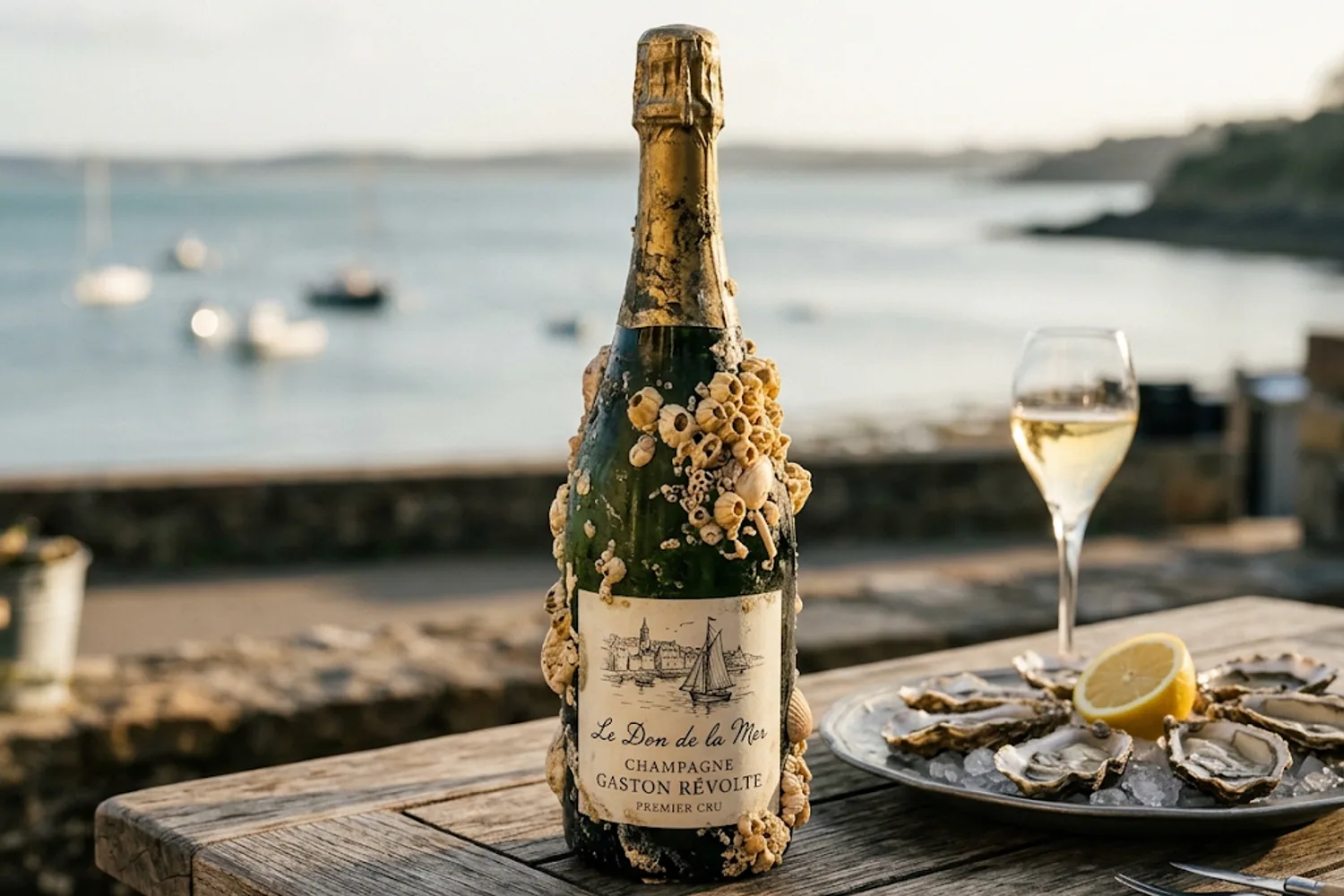
- The Brut Tradition pairs well with oysters and razor clams in persillade. The Brut Cuvée Spéciale goes well with white truffle risotto and scallops au gratin. The IIIème Millénaire Chardonnay accompanies turbot with beurre blanc or sashimi, the Pinot Noir a duck à l'orange or an aged Comté, and Le Don de la Mer a Breton lobster.
In Avenay-Val-d'Or, the Gaston Révolte estate still works its vines with a plough and lets its wines rest on lees for anywhere from 24 to over 150 months. Its most astonishing cuvée then spends 12 to 18 months in the sea off Cancale and emerges covered in shellfish. Here is how to choose among the five cuvées in our cellar.
7 min read
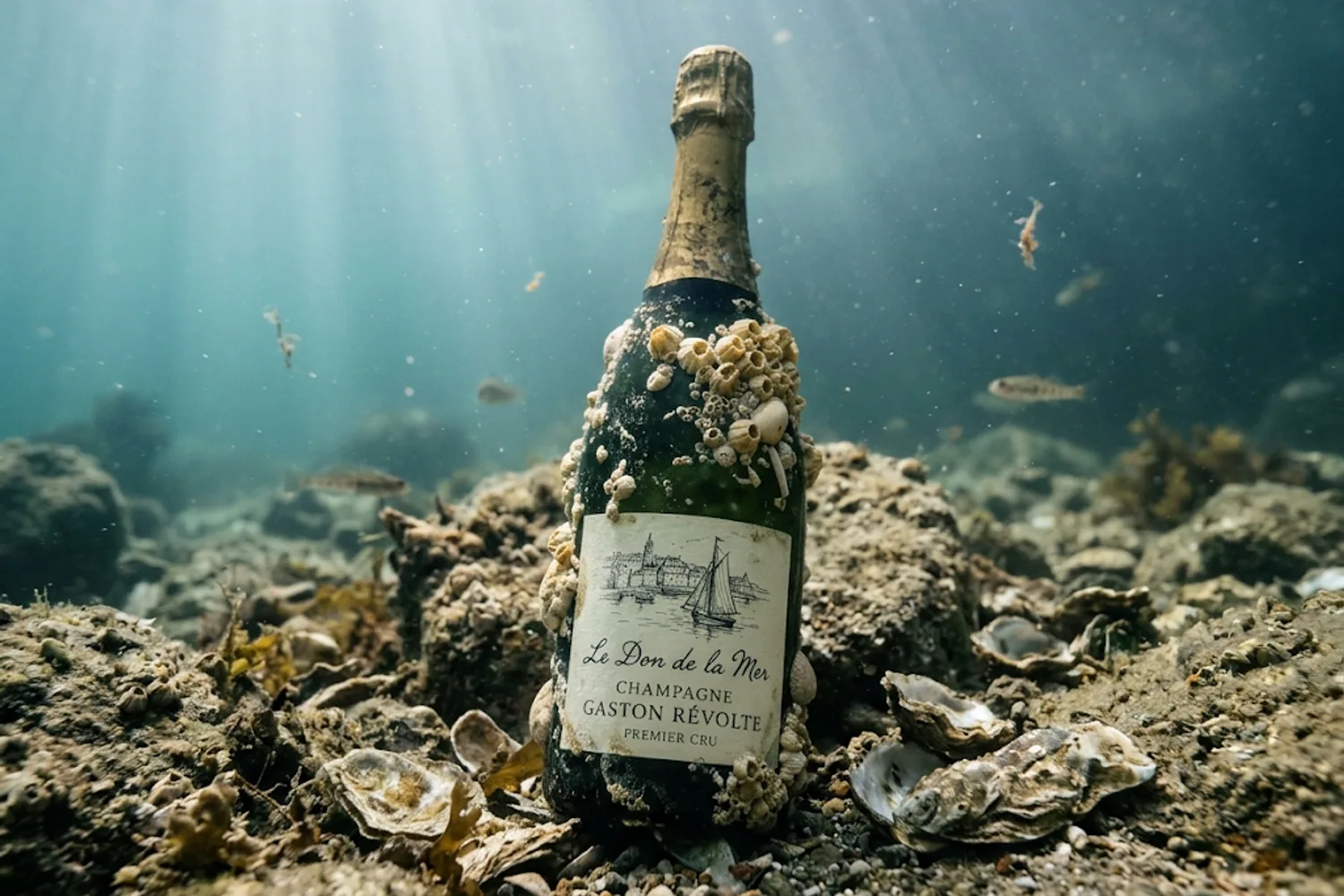
Few champagne bottles are recognisable from a distance. Le Don de la Mer is one of them: from shoulder to base, the glass disappears beneath shells and corals, after 12 to 18 months spent in the sea off Cancale. It is the most spectacular cuvée from Gaston Révolte, a family estate in Avenay-Val-d'Or, but it is not necessarily the one to start with.
The house was founded in 1963 by Gaston Révolte. Three generations later, it works the same land and ages its wines in the same cellars. We carry five of its cuvées, from €34 to €179. Here is what sets them apart, and which one to open depending on the occasion.
The Gaston Révolte style: pinot noir, chalk and time
The vineyard covers 7 hectares, all classified premier cru, planted with 90% pinot noir and 10% chardonnay. Avenay-Val-d'Or lies at the crossroads of the Montagne de Reims and the Marne Valley, on chalky subsoil facing south and south-east. The vines are still ploughed with the help of draught horses.
In the cellar, two choices run through the entire range. The harvest is vinified plot by plot, in enamelled steel tanks. The wine is then left on its lees for a long time: never less than 24 months, and more than 150 months for certain bottles, when regulations require only fifteen months for a non-vintage brut. This time brings the brioche, honey and dried fruit notes found from one cuvée to the next. The house describes them as "gastronomic cuvées", and its champagnes are served in Michelin-starred restaurants: they are designed as much for the table as for the aperitif.
The bottles in this article
The Gaston Révolte range at a glance
| Cuvée | Profile | On lees | Price |
|---|---|---|---|
| Brut Tradition | 50% chardonnay, 50% pinot noir: fresh, for the aperitif | 24 to 30 months | €34 |
| Brut Cuvée Spéciale | 80% pinot noir, 20% chardonnay: rich, for the table | 30 to 36 months | €36 |
| IIIème Millénaire Chardonnay | Blanc de blancs from old vines | 50 months | €56 |
| IIIème Millénaire Pinot Noir | Blanc de noirs from old vines | 100 to 140 months | €56 |
| Le Don de la Mer | 80% pinot noir, 20% chardonnay: aged in the cellar then at sea | 36 months, then 12 to 18 months at sea | €179 |
The house also produces a rosé (Églantine), a demi-sec cuvée (Symphonie) and spirits, which we do not offer.
Brut Tradition: the aperitif champagne
The Brut Tradition (€34) blends equal parts chardonnay and pinot noir, from vines around 35 years old. It spends 24 to 30 months on its lees and receives a dosage of 4.5 g/L, which makes it an extra-brut despite its name. The nose opens on dried fruit and biscuit, then on peach. The palate retains a touch of lemon and finishes on brandied morello cherry. The house presents it as mature and ready to drink: no need to wait. It pairs well with the aperitif, oysters and razor clams with parsley.
Brut Cuvée Spéciale: to stay at the table
The Brut Cuvée Spéciale (€36) costs €2 more and shifts register. With 80% pinot noir, 30 to 36 months on lees and a dosage of 6 g/L, it is markedly richer: a canary-tinged robe, flowers and citrus, then gingerbread and honey, with a creamy effervescence. It whets the appetite, and its intensity allows it to stay on the table throughout the meal. The house recommends it with white truffle risotto or scallops au gratin. If you take only one bottle from the range, this is the one we recommend, and it features among our good champagnes under €40.
IIIème Millénaire: a single grape variety, a great deal of time
Both IIIème Millénaire cuvées cost the same and share the same idea: a single grape variety, vines around 45 years old, a very long ageing process and numbered bottles. In the glass, however, they have little in common.
The IIIème Millénaire Chardonnay (€56) is a blanc de blancs, which is far from obvious in a vineyard that is only 10% chardonnay. Disgorged in 2019, it spent 50 months on its lees before receiving a dosage of 6 g/L. It combines white flowers and citrus, then brioche and toasted dried fruit, through to a long finish. It pairs with turbot in beurre blanc, grilled seafood or sashimi.
The IIIème Millénaire Pinot Noir (€56) is the house's blanc de noirs. Disgorged in 2011, it remained on its lees for 100 to 140 months, or eight to nearly twelve years, and is dosed at just 4 g/L. An old-gold robe, dried red flowers, vanilla, ginger and candied figs; on the palate, dark fruit, honey and cocoa, with a noble bitterness on the finish. This is a wine for the table: duck à l'orange, poultry in morel cream sauce, matured Comté. At the same price, it is the one that has waited longest. Our guide to blanc de noirs places it among other cuvées of this style.
Le Don de la Mer: 36 months in the cellar, then the sea
Le Don de la Mer (€179) is aged twice. The base is a premier cru made from 80% pinot noir and 20% chardonnay, from vines around 45 years old. The wine first spends 36 months on its lees in the house's 14th-century cellar. The bottles then head to the sea off Cancale for 12 to 18 months. They emerge covered in shells and corals, and no two bottles ever look alike.
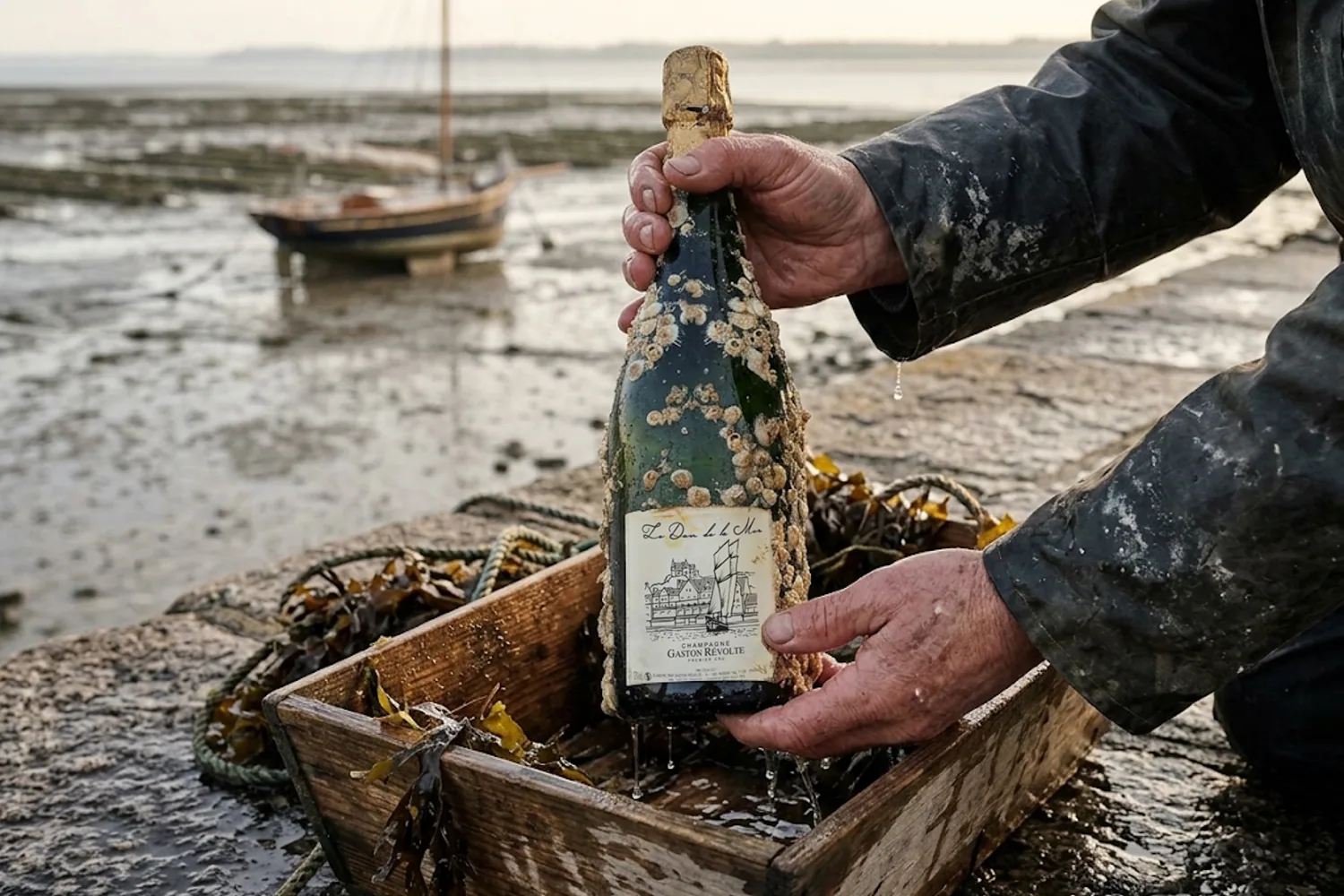
In the glass, the first impression surprises with its vivacity and freshness. The nose stays on ripe white fruit and a delicate spiced note; the palate is full and creamy, with subtle saline notes. The house believes it cannot be compared to its other cuvées, so distinctive is this ageing process, and we agree.
This is a bottle to place at the centre of the table, with scallops or a Breton lobster. The house sells it only by allocation, and we receive very few. It is not the only one in our cellar to pass through the sea: Abyss by Leclerc Briant (€174.90), submerged for a year off the coast of Ouessant, follows the same logic.
Gaston Révolte prices: what to expect
From €34 to €179, across three price tiers. Around €35 for the two bruts. €56 for the IIIème Millénaire: this is the tier we find most compelling, with 50 to 140 months on lees for the price of a non-vintage brut from a major house. And €179 for Le Don de la Mer, chosen for what it is: as much a unique piece as a wine.
Which Gaston Révolte for which occasion?
- An aperitif with friends: Brut Tradition, €34.
- A single champagne for the whole meal: Brut Cuvée Spéciale, €36.
- Fish or seafood: IIIème Millénaire Chardonnay, €56.
- Duck, poultry, aged Comté: IIIème Millénaire Pinot Noir, €56, which we also feature in our Christmas selection.
- A gift that stands out: Le Don de la Mer, €179.
Serving and keeping a Gaston Révolte
Both bruts are served at 8-9°C. The IIIème Millénaire cuvées and Le Don de la Mer benefit from being less cold, around 10°C. The house does not indicate an ageing period for its cuvées: the Brut Tradition is presented as ready to drink, and our storage guidelines apply to the others. Also discover our hidden gems, our cuvées to give as a gift and all our champagnes.
The bottles in this article
À lire également
Private chef, exceptional cuisine designed for you
A gourmet meal at home, without spending the evening in the kitchen: how to book a private chef in Paris, create a tailor-made menu to suit your budget and choose quality products.
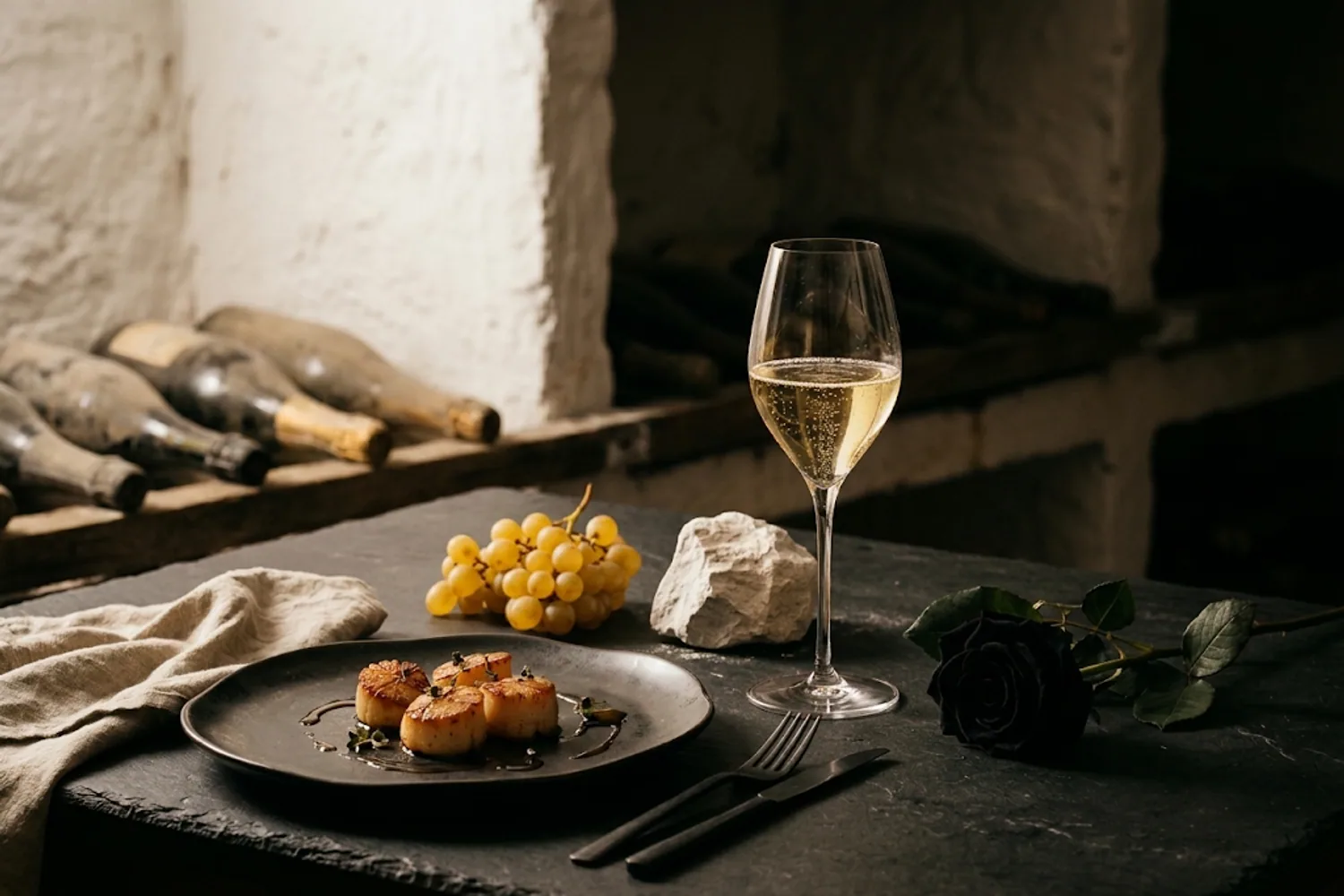
Champagne Henriot : le chardonnay de gastronomie à travers la cuvée Rose Noire
En Champagne, le chardonnay incarne la pureté, la tension saline et l’élégance minérale. Chez Champagne Henriot, ce cépage blanc d’élite constitue la colonne vertébrale du style de la Maison, portée par les grands crus de la Côte des Blancs. Si le Blanc de Blancs classique de la gamme illustre la vivacité crayeuse des terroirs d'Avize ou de Chouilly, une cuvée plus confidentielle attire le regard des connaisseurs : la cuvée Rose Noire Pur Chardonnay.
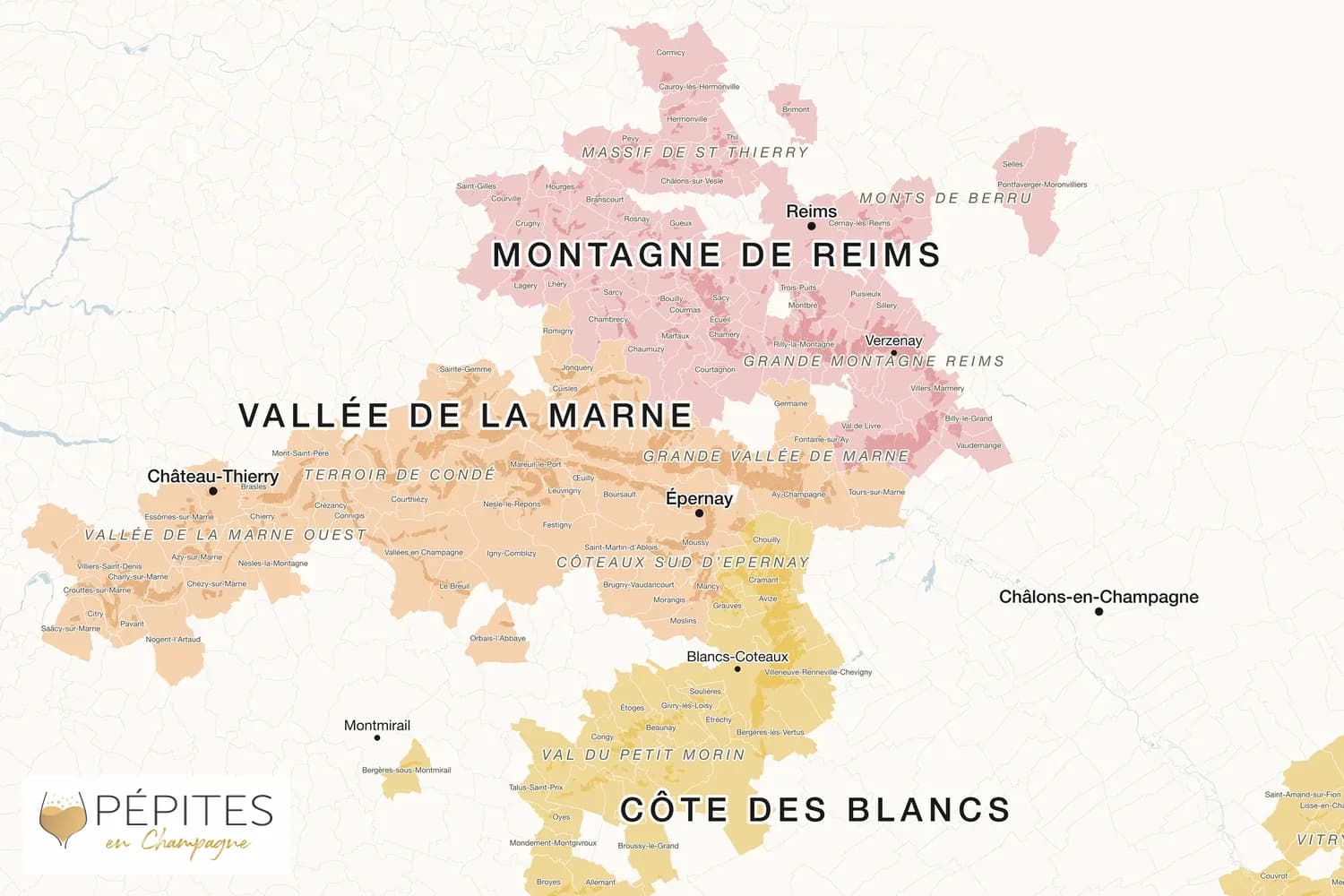
Atlas of Champagne Crus: the 319 Villages of the Appellation and their 17 Grands Crus in Maps
The Champagne appellation covers 319 crus and 34,317 hectares, including 17 grands crus and 42 premiers crus. Here is our atlas: the map of the four regions, the parcel maps of the grands crus and the complete list of villages.
