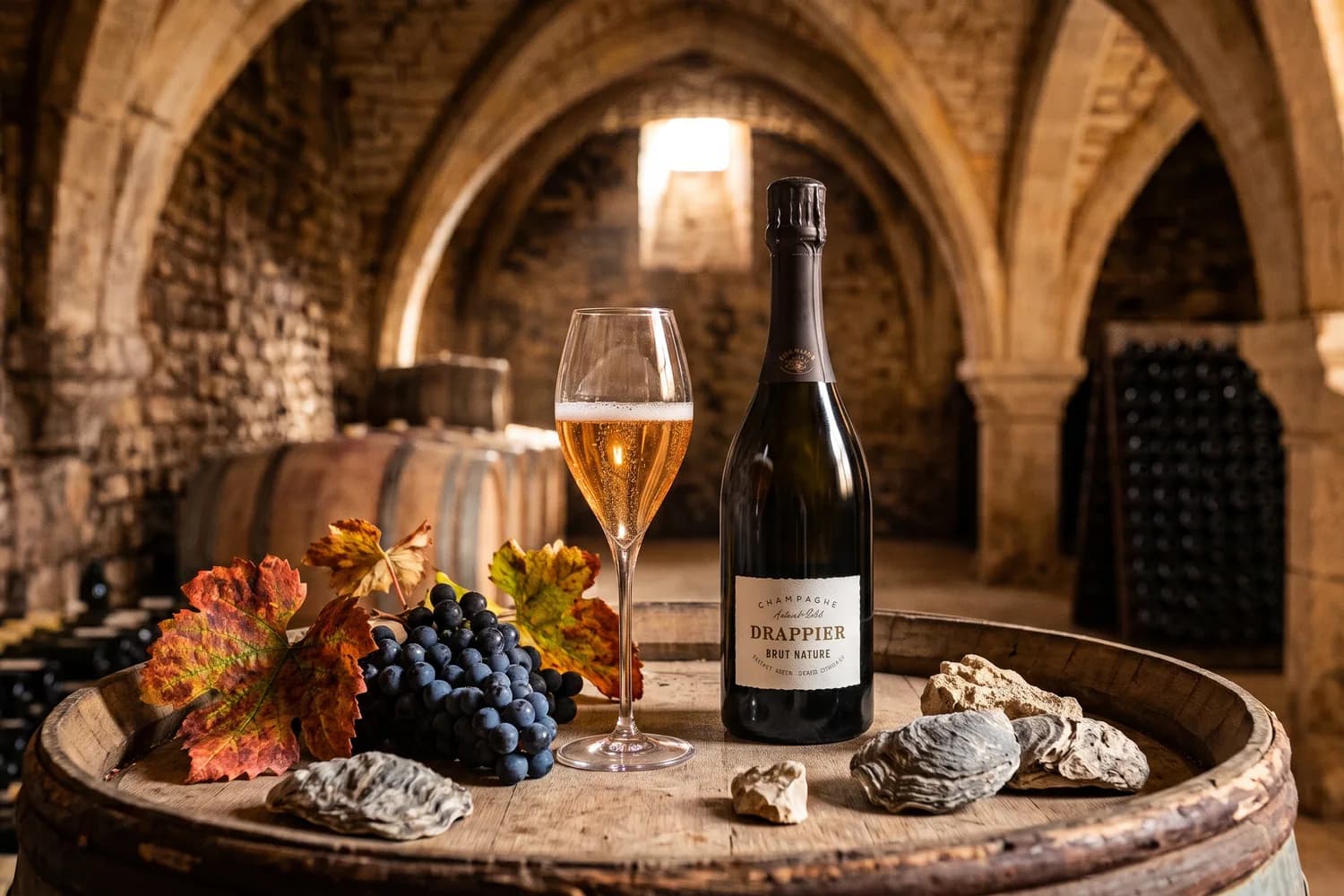
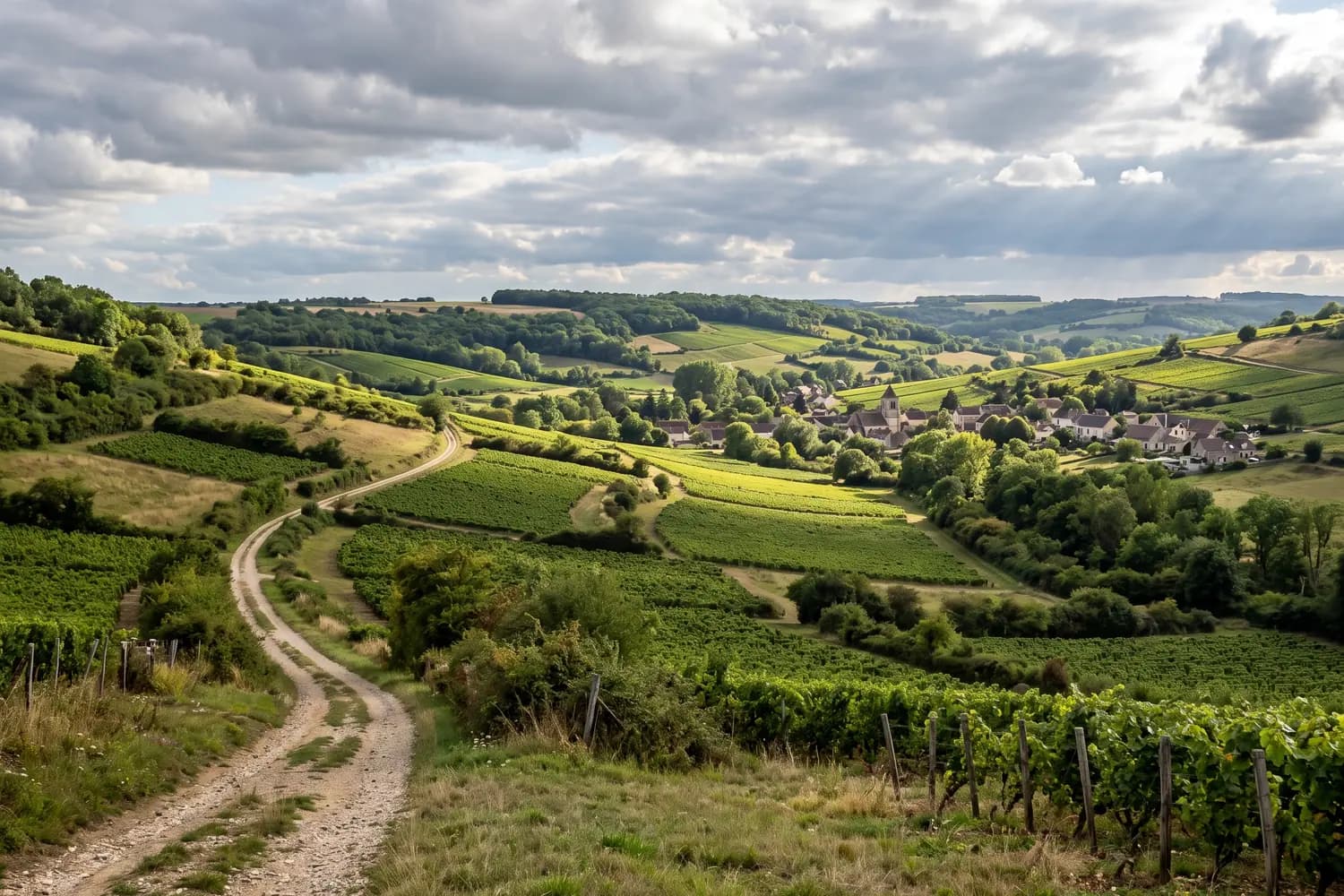
There are estates whose reputation precedes their fame. Pascal Agrapart is one of them: wine merchants and sommeliers have been mentioning it for twenty years, while the general public is only just discovering it. The estate, founded in 1894 in Avize, cultivates 12 hectares classified Grand Cru and produces around 90,000 bottles a year. That is not many — the scale of a grower, not a house.
What sets it apart can be summed up in one sentence: each plot is vinified separately, and blending, if it happens at all, only comes afterwards. Some plots are never blended at all.
The Agrapart style: the soil, given a voice
Three deliberate choices shape the range. First, hand harvesting and plot-by-plot vinification — which multiplies the number of vats on an already small estate. Second, ageing without fining or filtration, with sulphur kept to a minimum: the wine retains its full substance, even at the cost of sometimes producing slightly hazy wines.
Finally, the dosage, between 0 and 5 g/L across the entire range. This is the most exposed choice: at this level, a champagne can hide nothing. The result is a range of taut, saline blancs de blancs that speak of chalk more than fruit, and that demand attention — these are not wines for absent-minded sipping.
The Agrapart range at a glance
| Cuvée | Profile | Price |
|---|
| Extra Brut 7 Crus | Blend of seven villages, the entry point | 55.80 € |
| Extra Brut Grand Cru Terroirs | Blended Grand Crus | 77.70 € |
| Extra Brut Grand Cru Complantée | Old grape varieties blended together | 105.00 € |
| Extra Brut Grand Cru Minéral 2019 | Single plot on chalk, taut | 134.00 € |
| Extra Brut Grand Cru Avizoise 2019 | Single plot on deep soils, full-bodied | 189.00 € |
The estate also produces Vénus, its most emblematic single-plot cuvée, which we do not currently carry.
7 Crus: the entry point, and a good deal
The Extra Brut 7 Crus (55.80 €) blends seven villages and serves as the estate's calling card. It is the most approachable cuvée in the range — without being an easy wine: an extra brut remains an extra brut. At this price, for an estate of this reputation, it is one of the most interesting entry points in our grower champagne selection.
Terroirs: the first step up among the Grand Crus
The Extra Brut Grand Cru Terroirs (77.70 €) keeps only plots classified Grand Cru. The improvement is felt above all in length: the finish extends, the salinity becomes more pronounced, and the wine can stand up to a dish where the 7 Crus still belongs to the aperitif register. It is probably the best compromise in the range.
Complantée: the grape varieties of yesterday
Before Champagne specialised in three grape varieties, growers planted a mix and harvested it all together. The Complantée (105 €) revives this practice on a plot planted with old varieties, including arbane and petit meslier — two grape varieties now almost extinct in the vineyard. The wine draws from this an unusual, more spiced aromatic profile, which is disconcerting on the first glass and wins you over on the second.
Minéral and Avizoise 2019: two soils, one single grape variety
This is the estate's most demonstrative exercise. Two single plots, the same 2019 vintage, the same grape variety, the same vinification — and two wines that have almost nothing in common. Minéral (134 €) comes from shallow chalk: it is vertical, taut, almost cutting. Avizoise (189 €) comes from deeper, clay-rich soils: it is broad, wine-like, and takes longer to open up.
Opened side by side, these two bottles help you understand in ten minutes what a long lecture on terroir never truly explains. It is expensive, but it is the best lesson in Champagne one could give oneself.
Avize, and why chalk matters
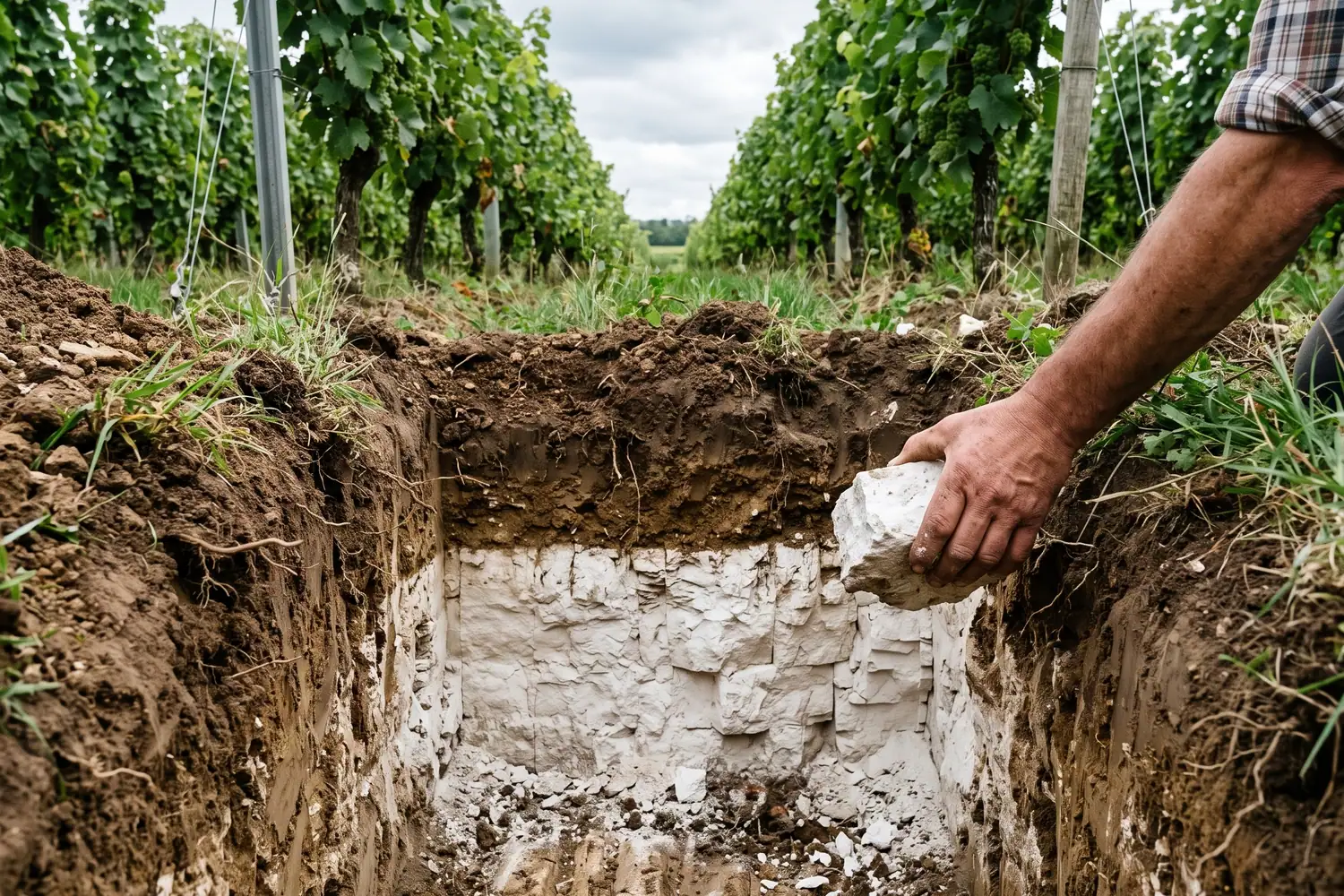
Avize is one of the seventeen villages classified Grand Cru in Champagne, and one of the four where Chardonnay reaches its finest expression, alongside Cramant, Oger and Le Mesnil-sur-Oger. What sets them apart lies in the subsoil: a soft, porous Campanian chalk, capable of storing winter rainwater and slowly releasing it to the vines throughout summer.
This natural regulation explains two things. First, freshness: a vine that never suffers from drought does not over-concentrate its sugars, and retains its acidity even in warm years. Second, salinity, that sensation of wet stone on the finish found in almost every cuvée from the village. When an estate like this one vinifies plot by plot, it is this chalk that it seeks to bring forward — and the depth of soil covering it, a few dozen centimetres here, more there, is enough to completely change the wine.
Agrapart prices: what to expect
From 55.80 € to 189 €. Three tiers: 56 to 78 € for the blends, around 105 € for the Complantée, 134 to 189 € for the single-plot wines. These prices place the estate on a par with the great house cuvées — but here you are buying 12 hand-worked hectares and 90,000 bottles a year, not a brand.
Agrapart at the table
The salinity and the absence of dosage call for iodine: oysters, shellfish, raw fish for the 7 Crus and the Terroirs. The Complantée, more spiced, pairs with more robustly seasoned cuisine — poultry with mild spices, Japanese cuisine. Minéral and Avizoise deserve a fully composed dish: a fine fish in sauce, sweetbreads, an aged Comté. These wines are too precise to be served on canapés.
Which Agrapart for which occasion?
- Discovering the estate: Extra Brut 7 Crus, 55.80 €.
- The best compromise: Terroirs, 77.70 €.
- Surprising an enthusiast: Complantée and its old grape varieties.
- A lesson in terroir: Minéral and Avizoise, opened together.
Serving and storing an Agrapart
Between 10 and 12 °C, never colder: below this temperature, these lightly dosed wines close up completely. A wide-bowled glass is essential, particularly for the single-plot wines, and the Avizoise benefits from being opened twenty minutes in advance. These unfiltered wines may show a slight deposit — serve without shaking. All keep well: five years for the 7 Crus, ten years or more for the single-plot wines, according to our storage guidelines. The rest of our grower-producers can be found in the cellar.