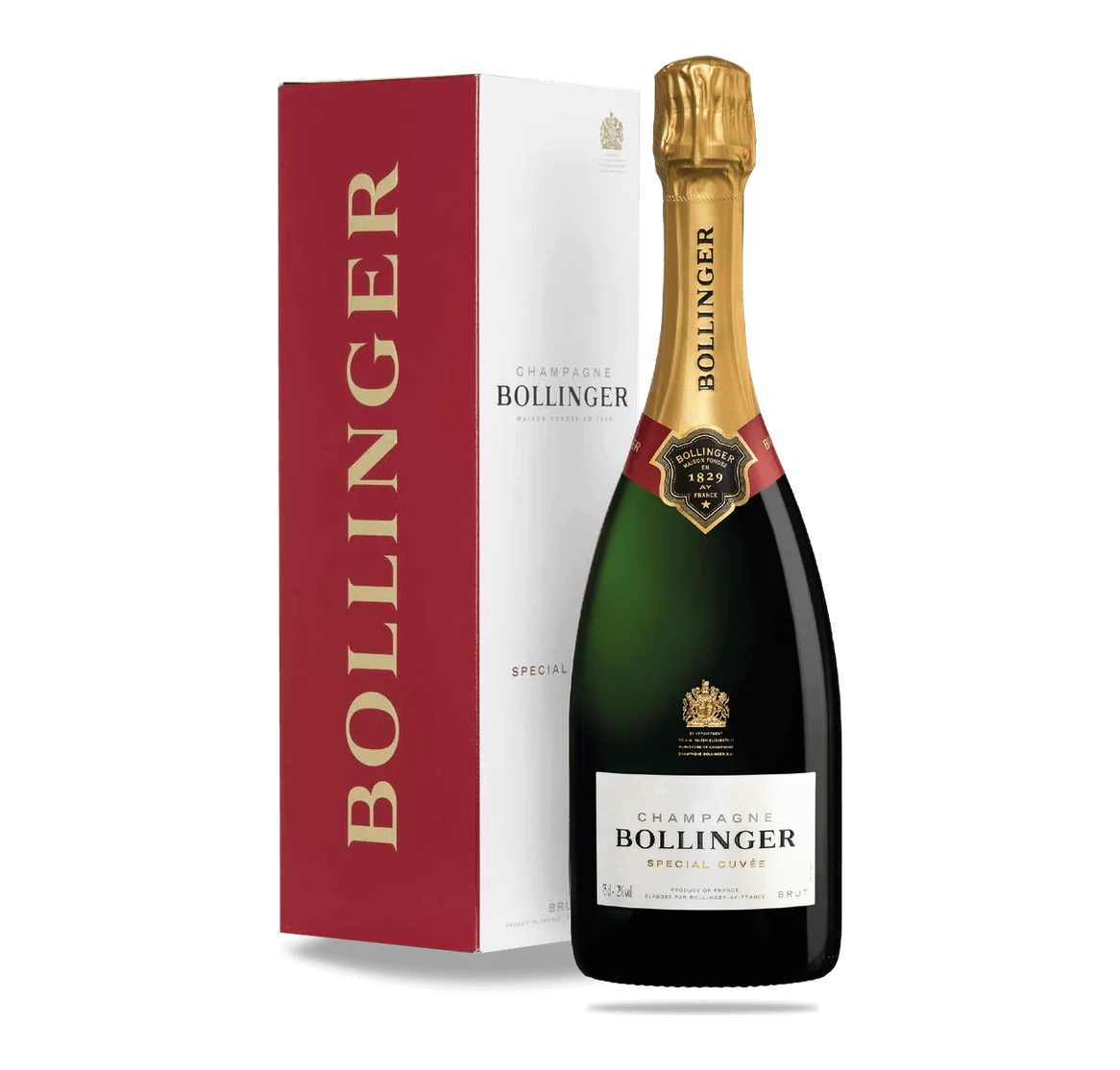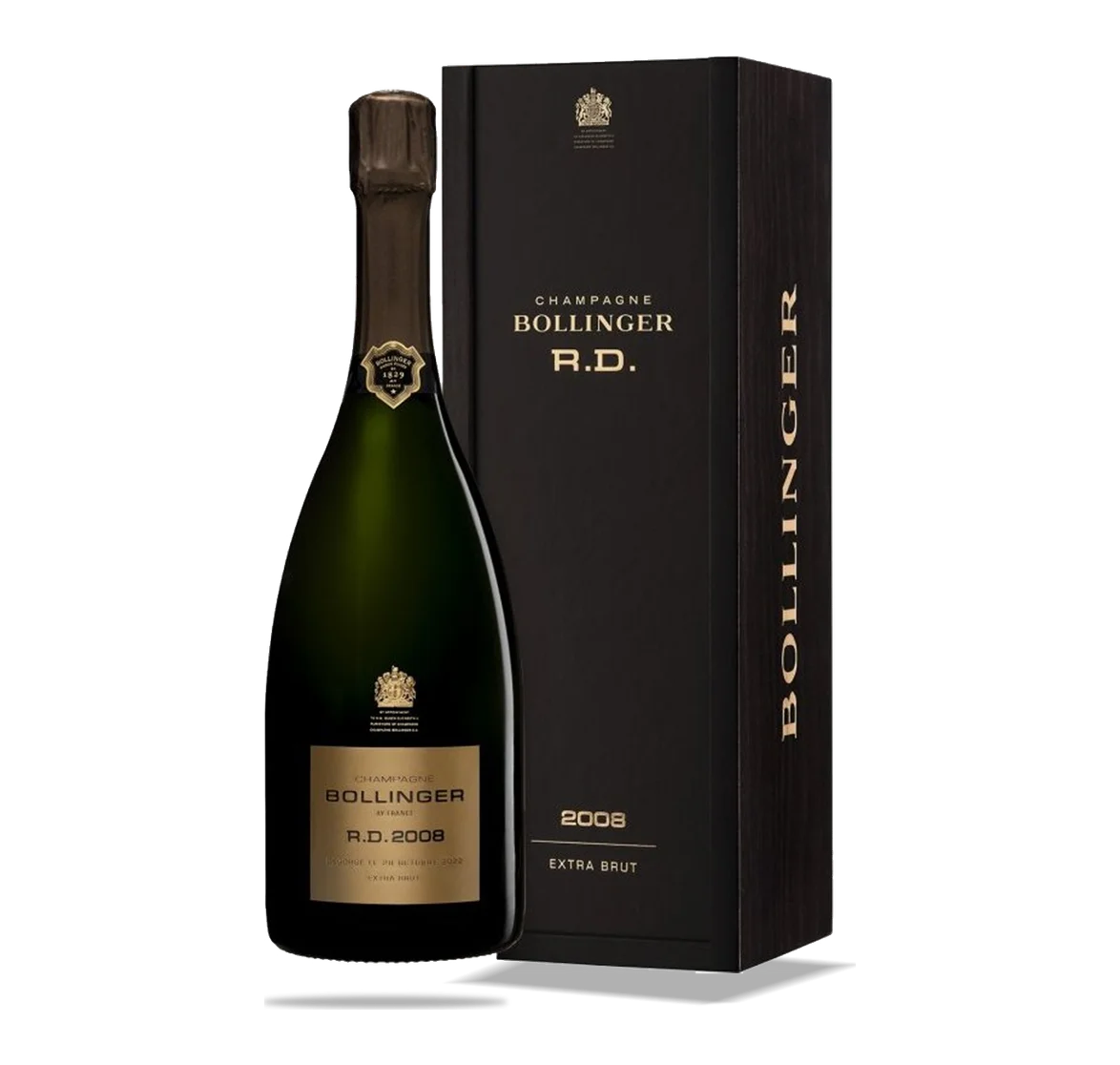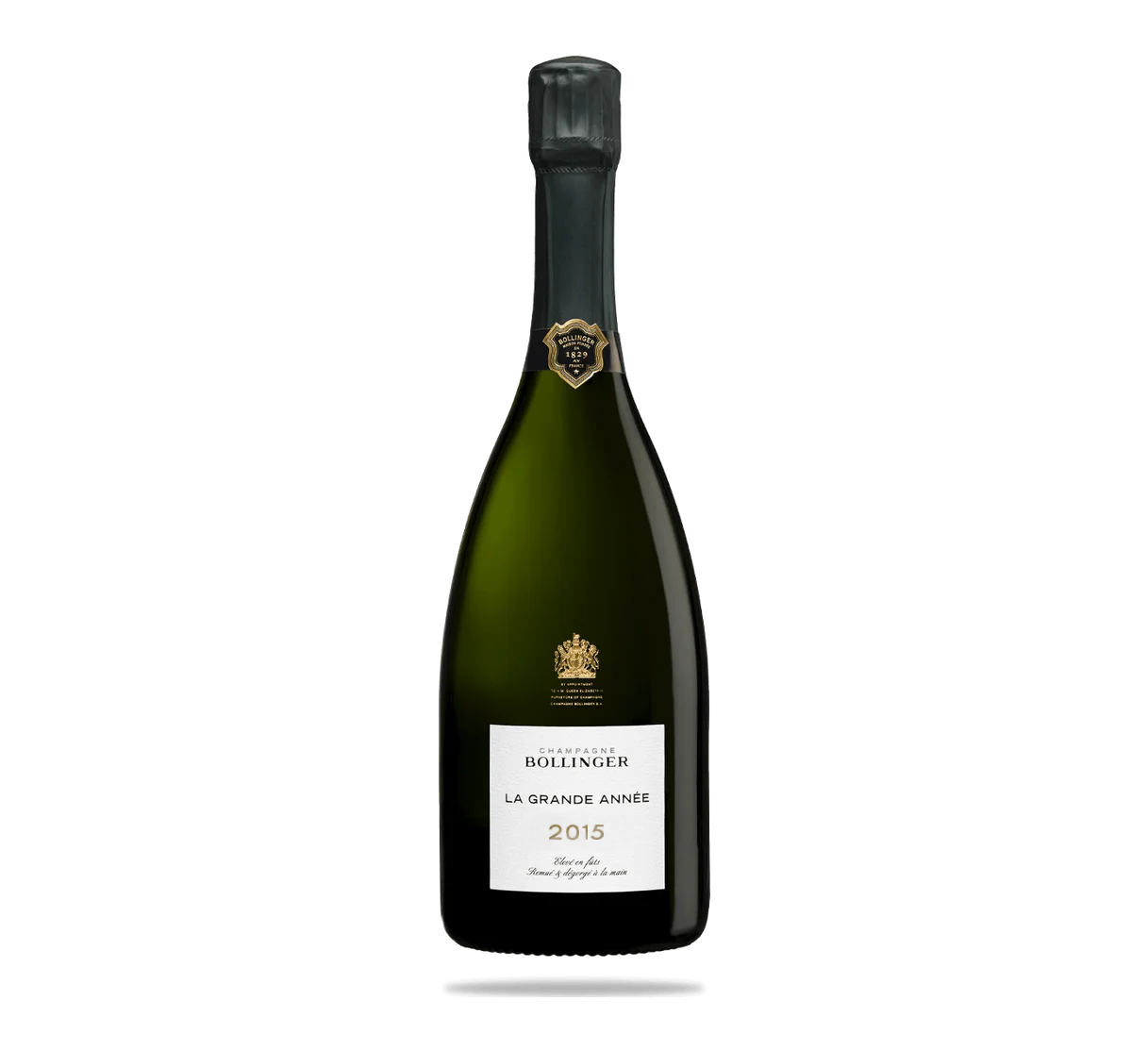

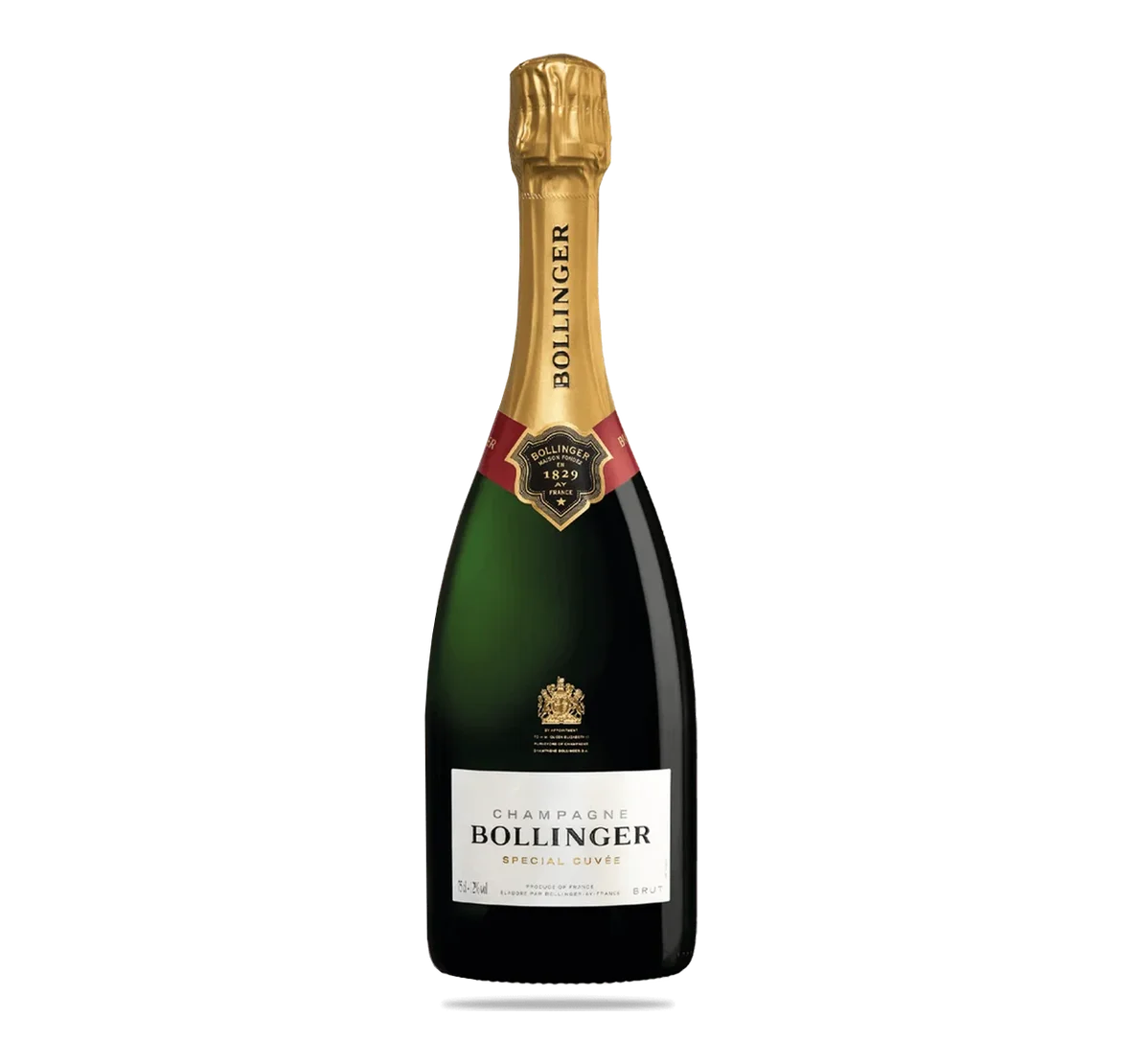
Bollinger Spécial Cuvée without gift box
A golden, bright robe beneath a fine, persistent bead. The nose opens on ripe fruit and spice — roasted apple, compote, white peach — then brioche and fresh walnut emerge, the house's signature. The palate does not choose between structure and vivacity, it holds both: a wine-rich texture inherited…
THE CUVÉES OF MAISON BOLLINGERThe expert verdict
The structure of this champagne
TASTING NOTES
A golden, bright robe beneath a fine, persistent bead. The nose opens on ripe fruit and spice — roasted apple, compote, white peach — then brioche and fresh walnut emerge, the house's signature. The palate does not choose between structure and vivacity, it holds both: a wine-rich texture inherited from the barrel, ripe pear fruit, and the discreet salinity left by thirty months on lees. The finish returns to walnut and toasted bread, long, without heaviness despite a dosage of 7 to 8 g/L. Serve between 8 and 10 °C, in a glass wide enough to let it open.
The composition
Terroirs
More than 85% of the grapes come from grand and premier cru vineyards, with pinot noir in the lead — the house's signature grape variety, both in Aÿ and in Verzenay. The blend then rests on three practices that Bollinger is almost alone in preserving. The first: nearly a third of the wine ferments in used 228-litre oak barrels, along with a few 400-litre casks up to forty years old, maintained by the cooper the house employs on site. The second: half of the blend is made up of reserve wines, part of which rests in cork-sealed magnums for seven to fifteen years, each magnum being hand-disgorged at the time of blending. The third: thirty to thirty-six months on lees, twice what the appellation requires. Dosage 7 to 8 g/L, 12% vol. The bottle is delivered on its own, without its gift box.
About this house
Founded in Aÿ in 1829, Bollinger has remained family-owned and independent, whereas almost all of its neighbours have joined a group. Its identity rests less on a discourse than on constraints it imposes on itself: oak barrels for a good part of the winemaking, cork-sealed magnums for reserve wines, an in-house cooper, hand riddling for the great cuvées. So many costly practices that nothing obliges it to keep, and which explain the strikingly recognisable character of its champagnes.
Special Cuvée is its calling card. Its name dates back to 1911: Georges Bollinger's British agent found "non-vintage brut" too flat a description for a wine of this calibre and suggested "Special Cuvée". The name stuck, along with the idea that a non-vintage brut can receive the same care as a vintage — the barrel, the reserve in magnum, time. Here without the gift box: exactly the same wine, in its simplest format.
The perfect pairing
Aperitif
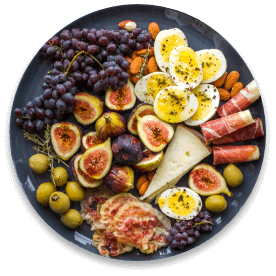
The wine's fresh walnut and toasted bread notes are made for dry-cured ham and a hard cheese; the fine bead cleanses the palate of fat between bites.
Starter
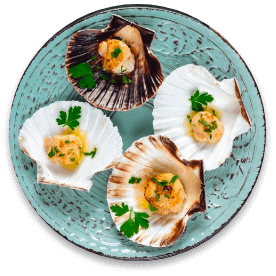
The house itself recommends truffled scallop carpaccio: the wine-rich character from the barrel and the salinity from thirty months on lees embrace the flesh without overpowering it.
Main course
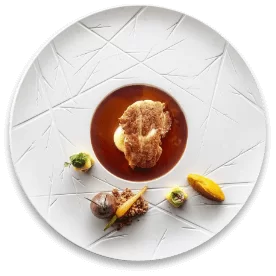
A brut made half from reserve wines has the depth needed for veal sweetbreads: the ripe pear fruit responds to the sweetness of the meat, while the vivacity balances the butter.
Other champagnes
from Maison Bollinger