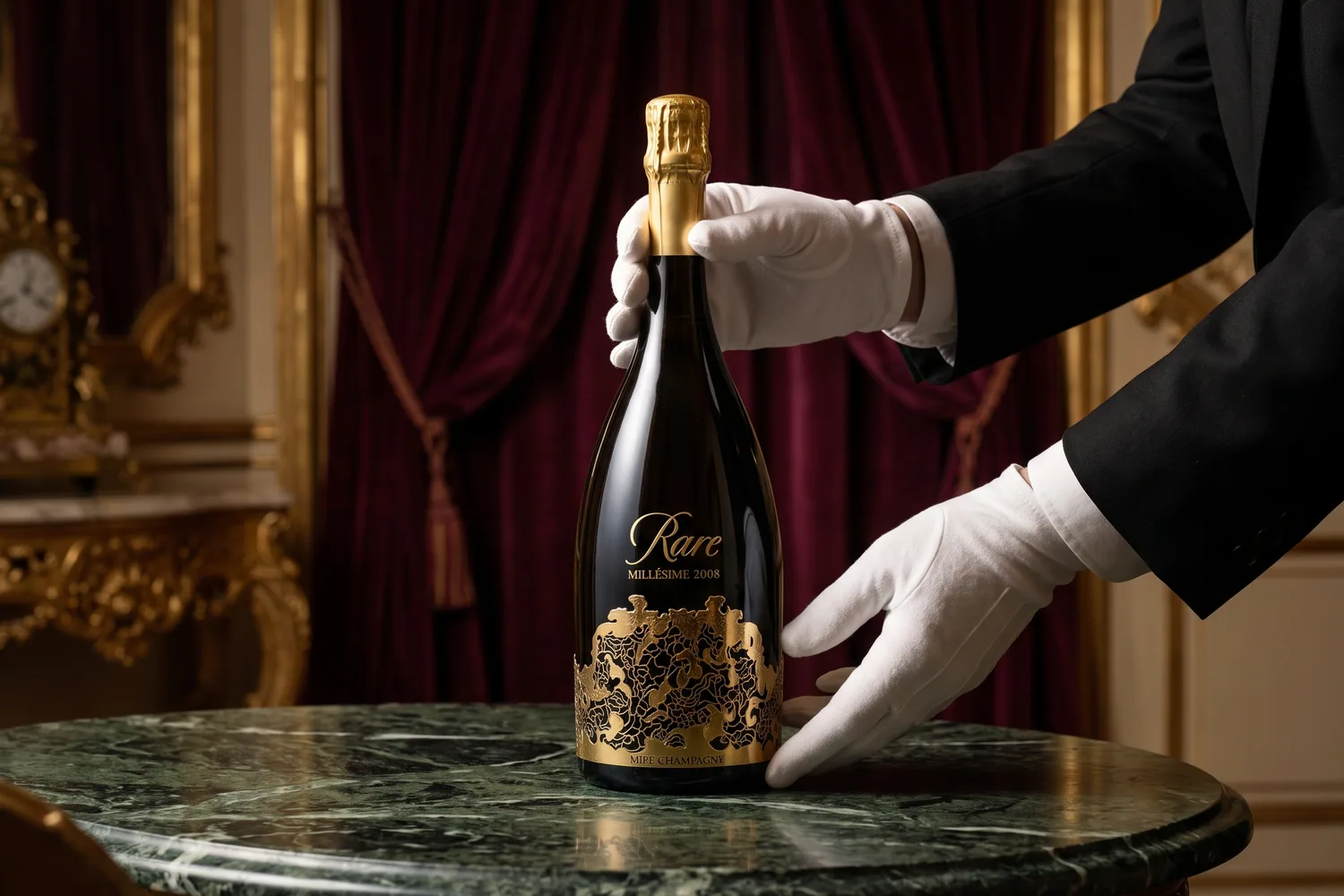
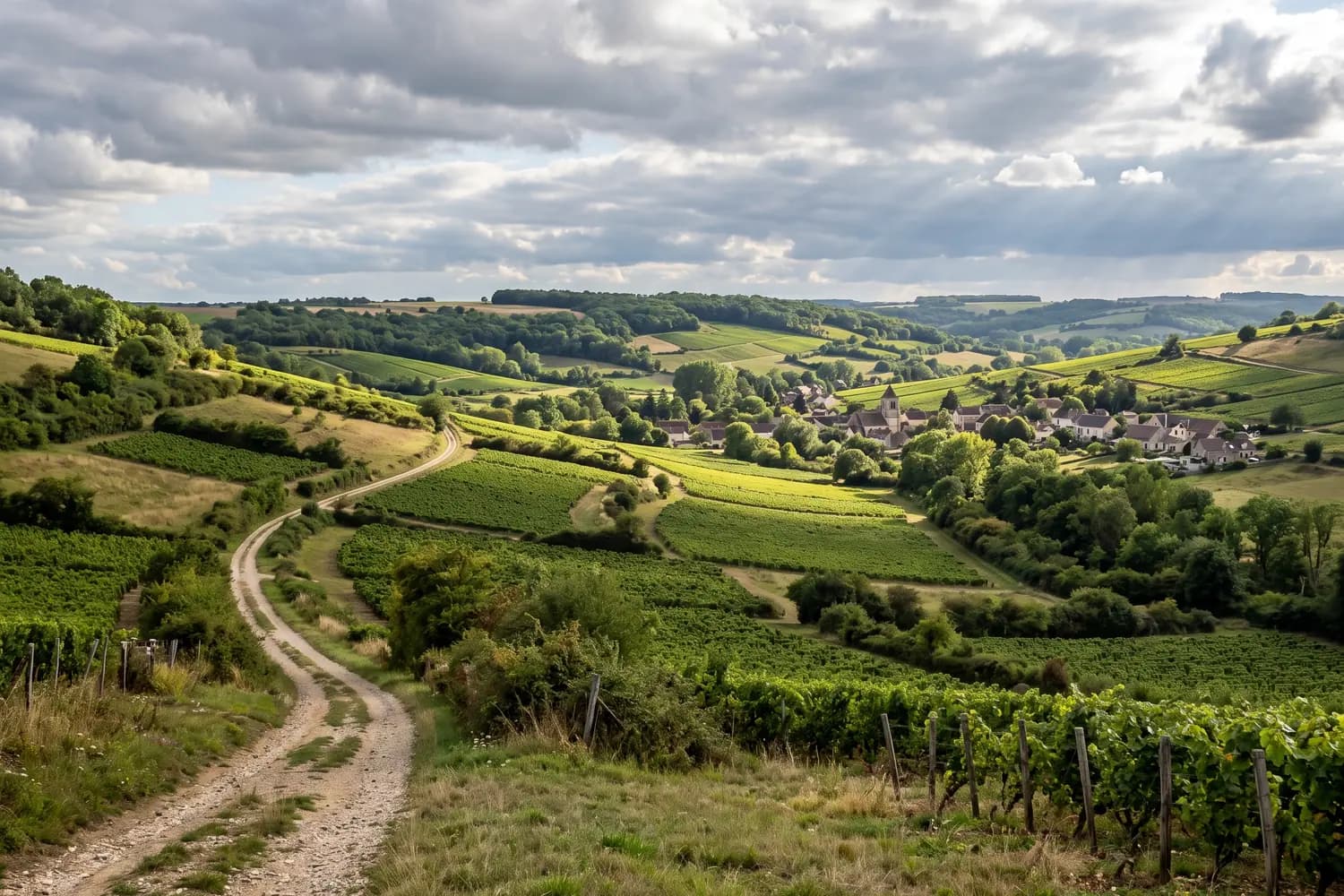
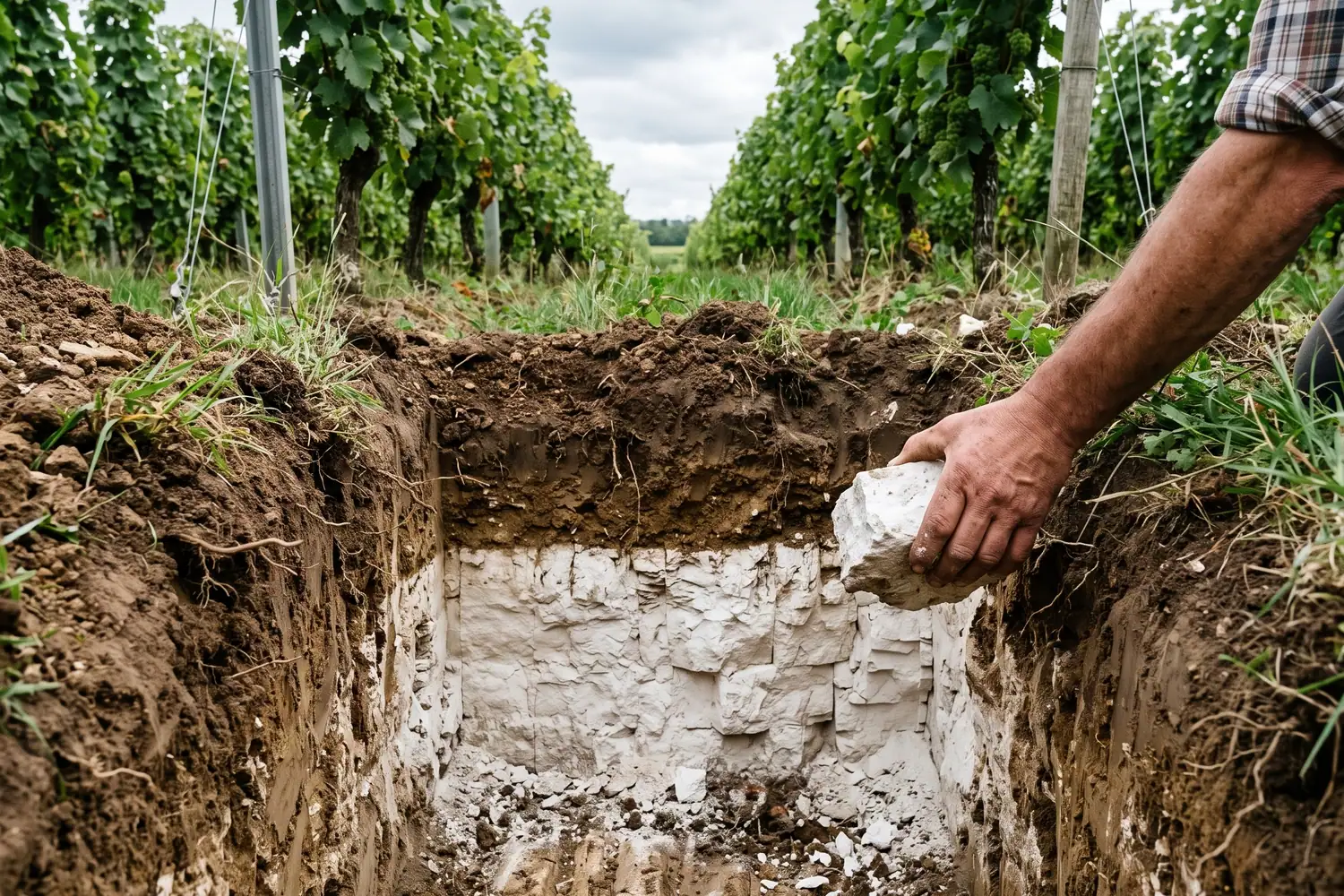
The name says it all. ‘Rare’ is produced only in years that warrant it — a handful of vintages in fifty years — and each bottle bears a distinctive gold-plated metal tiara around the neck, recognisable from a distance. Launched in 1976 as the prestige cuvée of Piper-Heidsieck, a Reims-based house founded in 1785, it is now presented as a house in its own right within the EPI group. Its blend remains consistent: 70 per cent Chardonnay from the Côte des Blancs and the Montagne de Reims, 30 per cent Pinot Noir from Verzy and Aÿ, and a minimum of eight to nine years’ ageing in the cellar. This guide reviews the vintages available in our cellar, along with their current prices.
The origins of ‘Rare’
In 1785, Marie-Antoinette paid a visit to Florens-Louis Heidsieck, the house’s founder. Two centuries later, Piper-Heidsieck celebrated this bicentenary by creating an exceptional cuvée with the 1976 vintage: Rare was born, and the golden tiara on its bottle pays homage to this royal tribute. Since then, the cuvée has adhered to a strict rule of rarity: no vintage is released unless the year is exceptional, and it undergoes a long ageing process before release. The rosé, Rare Rosé, was launched with the 2007 vintage. The group has also achieved B Corp certification for its three houses.
Three houses, three styles
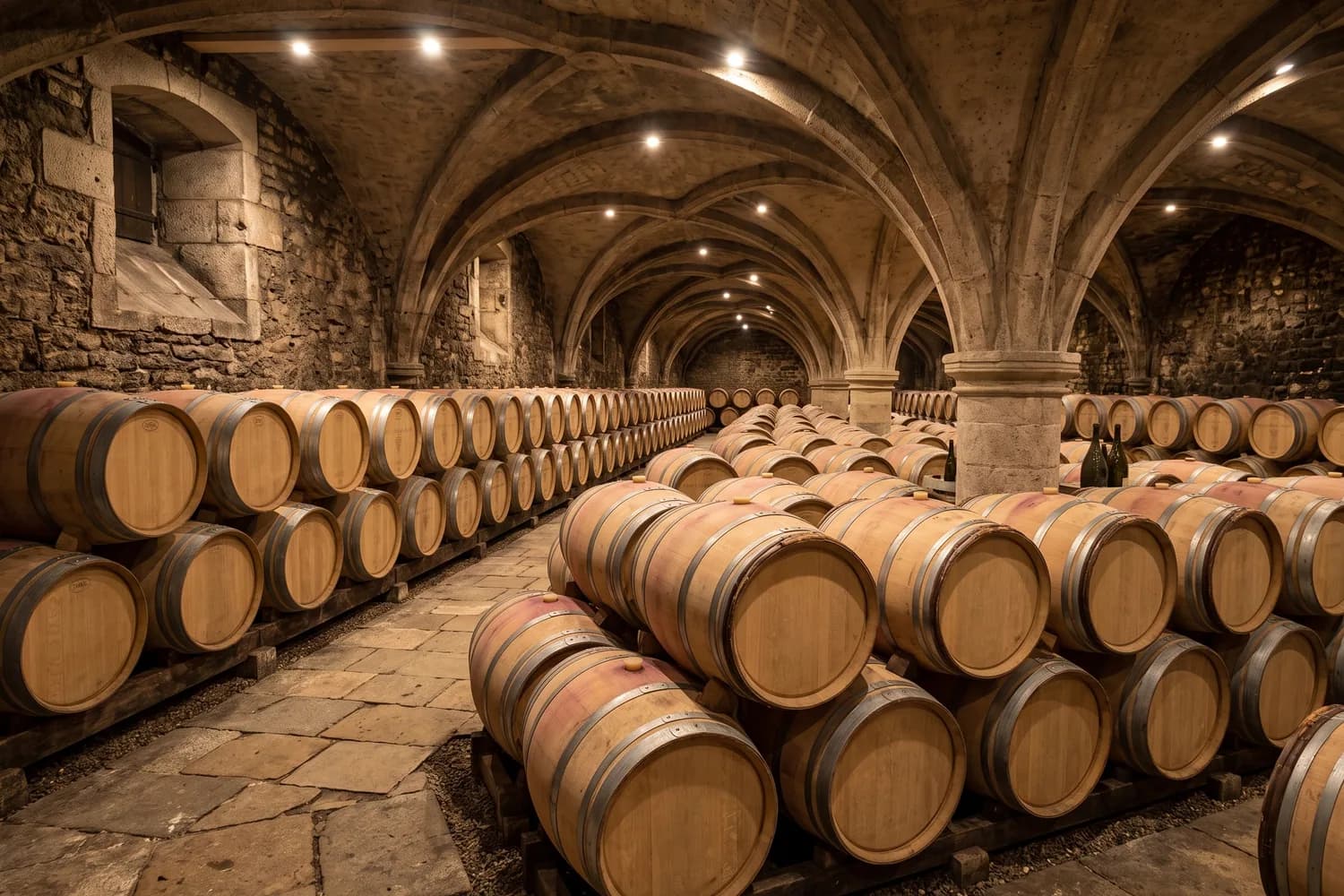
Rare shares its cellars in Reims with two sister houses. Piper-Heidsieck, the best known, emphasises fruit and freshness, with a widely available Brut and a Rosé Sauvage that has become a classic. Charles Heidsieck, the more low-key of the three, builds its Brut Réserve on an exceptionally high proportion of reserve wines, resulting in a rich, full-bodied style. Rare, for its part, produces only prestige vintage champagnes: it sits at the very top of the pyramid, and its cellar master has only a few vintages per decade in which to express it.
The Rare style
Chardonnay gives Rare its tension and backbone; Pinot Noir, its body. When young, the cuvée displays notes of exotic fruits, vanilla, toast and sweet spices that the house describes as ‘Oriental’; with age, it evolves towards sandalwood, gingerbread, honey and roasted coffee, without ever losing its freshness. This is a champagne for fine dining and for laying down: twenty years are no match for it, and the magnum further slows its development — our guide to bottle sizes explains why.
Available vintages
Rare Millésime 2008
2008 is one of the great vintages of the century in Champagne, and the Rare Millésime 2008 offers a strikingly pure expression of it: ripe pineapple, grapefruit, sweet vanilla, smoked almonds, followed by floral notes, with an ageing potential that the house describes as unlimited. €224. The magnum (€480) preserves this youthful character intact: orange blossom, hyacinth, Williams pear, fresh almond.
Rare Millésime 2006
More mature and warmer, the Rare Millésime 2006 blends apricot-flavoured pastries, orange zest and mango with vanilla, toast and oriental spices. Both exotic and fresh, it is the most accessible vintage in the range, priced at €169.95, sold in its own gift box.
Rare Millésime 1998 (magnum)
The first Rare release in magnum format, the 1998 vintage has been shaped by time: sandalwood, gingerbread, candied apricot, roasted coffee and crystallised honey, with a full-bodied, creamy palate. A collector’s bottle, priced at €429.90, including the gift box. To put the 1998, 2006 and 2008 vintages into context, read about the best Champagne vintages.
Rare Rosé: the prestige rosé
The Rare Rosé 2014 (€370.95), vibrant and floral, evokes wild strawberries, Morello cherries and candied orange, underscored by star anise and dried flowers. The Rare Rosé 2008 (€370.95, or €410 without the gift box depending on stock availability), with its rose quartz colour, blends wild strawberry, orange blossom, gentle spices and a minerality reminiscent of crushed rock. The 2012 Rare Rosé without a gift box (€410) is the spiciest: white flowers, cherry, lychee, ginger and Espelette pepper. Three gourmet rosés, perfect for lobster, pigeon or a red-berry dessert.
Rare Champagne prices: what to expect
| Cuvée | Observed prices (including VAT, 75 cl unless otherwise stated) |
|---|
| Rare Millésime 2006 | €169.95 |
| Rare Vintage 2008 | €224 (magnum €480) |
| Rare Rosé 2014 / Rare Rosé 2008 | €370.95 |
| Rare Rosé 2008 / 2012 (without gift box) | €410 |
| Rare Vintage 1998 magnum | €429.90 |
Prices recorded in our cellar in September 2026; these are subject to change as the house releases new vintages. Rare ranks amongst the great prestige cuvées — see our ranking of the 10 most expensive champagnes in the world — but its 2006 Vintage remains one of the most affordable entry points into this world.
When to open a Rare?
- A fine fish or poultry dinner: the 2006 Vintage, ready to drink.
- A gift to be kept: the 2008 vintage, to be opened in ten years’ time.
- An evening with fellow enthusiasts: the 1998 magnum, for a lesson in ageing.
- Lobster, a red-berry dessert: a Rare Rosé.
Serving and storing a Rare
Serve it at between 10 and 12 °C, in a wide white wine glass, and let it breathe: the spicy and honeyed notes take a few minutes to develop. Store it lying down, away from light, at between 10 and 15 °C; a Rare can be kept for twenty years, the magnum for even longer. Our storage and serving advice sets out the rest in detail. All available vintages are listed on the Rare Champagne website.