

Bollinger: Special Cuvée, Rosé, PN, La Grande Année, R.D. — which cuvée to choose and at what price?
The essentials
The Special Cuvée (€56) is the most full-bodied non-vintage brut from the great houses: predominantly Pinot Noir, with a majority of Grand Crus and Premiers Crus, and reserve wines aged in oak. The Rosé (€72.80) and the PN range (€109) continue this style; The Grande Année 2014 (€195) and the R.D. 2008 (€375), disgorged late, are the prestige cuvées.
- Why is ‘Special Cuvée’ written without an accent?
- In 1911, Georges Bollinger’s British agent felt that the name ‘brut sans année’ was too ordinary for such a champagne and suggested ‘Special Cuvée’, written in the English style. The name has remained, without an accent, as a nod to the house’s original market.
- What does ‘R.D.’ mean at Bollinger?
- ‘Récemment Dégorgé’: an idea conceived by Madame Lily Bollinger, who decided in 1967 to market an old vintage of La Grande Année that had just been disgorged, following a long period of ageing under cork, and dosed as extra-brut. The 2008 R.D. is the vintage currently available.
- How much does a bottle of Bollinger cost?
- €56 for the Special Cuvée (€127.90 for a magnum), €72.80 for the Rosé, €109 for the PN AYC, €195 for La Grande Année 2014 and €375 for the R.D. 2008 — prices recorded in our cellar in September 2026.
- Is Bollinger really James Bond’s champagne?
- Yes, ever since 1973 and the film *Live and Let Die*: Bollinger has been the official champagne of the franchise, and the Bollinger family has never paid for this endorsement, which stemmed from a friendship with the producers.
- What is Bollinger’s PN cuvée?
- A range of 100 per cent Pinot Noir ‘blancs de noirs’, launched in 2020, in which each release highlights a main cru and a benchmark vintage — AYC stands for Aÿ. The Pinot Noir sits between the Special Cuvée and La Grande Année.
Pinot Noir from Aÿ, vinification in oak barrels, reserve wines kept in magnums, an independent family-run business since 1829 and a secret agent as its ambassador: Bollinger is the house of character. Special Cuvée, Rosé, PN, La Grande Année, R.D.: our guide to each cuvée, with current prices.
5 min read
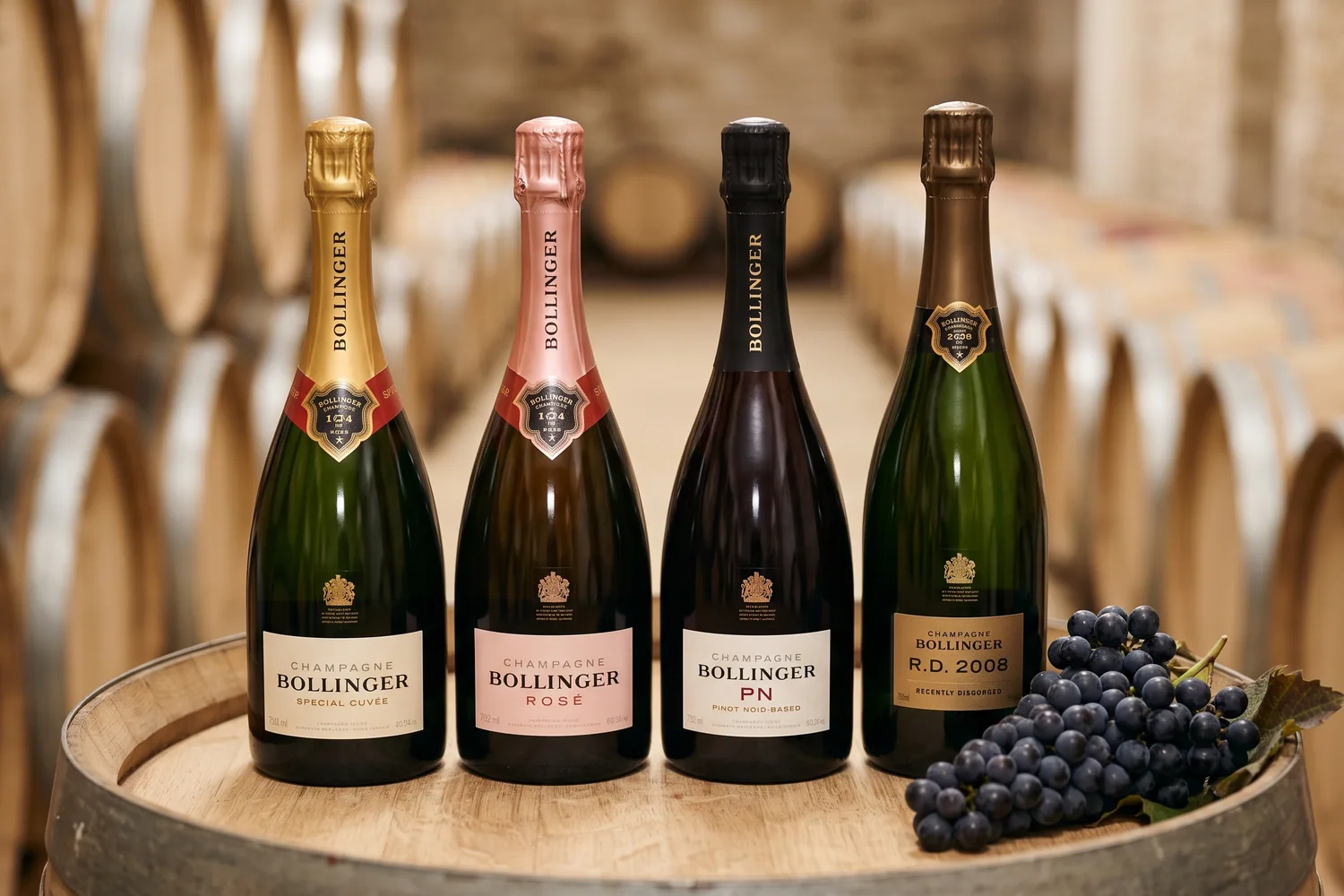
“I only drink champagne when I’m happy, or sad…” Lily Bollinger’s words have been heard around the world, and they perfectly encapsulate the house: Bollinger, founded in Aÿ in 1829 and still family-run, is a house of character. Pinot Noir dominates its blends; its wines ferment in oak barrels; its reserve wines are aged in magnums under cork; and its 178 hectares — Aÿ, Bouzy, Verzenay, Verzy — are among the finest grands crus of the Montagne de Reims. James Bond has been drinking it since 1973. This guide reviews the cuvées available in our cellar, along with their current prices.
The Bollinger style: Pinot Noir and oak
Three key choices define the style. Pinot Noir, which makes up the majority of all cuvées, provides structure and vinosity. Oak barrels, in which the house systematically ages its vintage wines and some of its reserve wines, providing body and longevity — the house still employs a cobler. And the reserve wines in magnums, kept under cork for years, which give the Special Cuvée its depth. The result is a dense, brioche-like, almost Burgundian champagne, which is just as enjoyable with a meal as it is as an aperitif. Its neighbour in Aÿ, Ayala, belongs to the same family and cultivates the exact opposite style.
The Bollinger range at a glance
- Special Cuvée — the non-vintage brut, available in standard bottles and magnums.
- Rosé — the Special Cuvée coloured with a house red wine.
- PN — the ‘blancs de noirs’ series, released once a year.
- La Grande Année — the prestigious vintage cuvée, available in white and rosé.
- R.D. — La Grande Année with late disgorgement.
The house also produces the Vieilles Vignes Françaises, a blanc de noirs made from ungrafted vines, which we do not currently stock.
Special Cuvée: the benchmark
The Special Cuvée is the most full-bodied non-vintage brut amongst the great houses: a deep golden colour, fresh brioche, Golden Delicious apple, dried fruit, subtle oaky notes from oak ageing, and a dense, long finish. It holds its own against roast poultry, a mushroom risotto or a mature Comté. €56 per bottle, €127.90 for a magnum. Our article on the Bollinger spirit explores what this style inspires in winemakers.
Rosé: the structure of a Bollinger
At Bollinger, they also produce superb red wines, and it is one of these that lends its colour to the Rosé: a salmon hue with ruby highlights, wild strawberries, redcurrants, cherries, hints of spice and toasted hazelnut, with a touch of minerality. A rosé for fine dining, priced at €72.80.
PN AYC: the blanc de noirs
Launched in 2020, the PN series is a 100% Pinot Noir ‘blanc de noirs’, with each release highlighting a main cru and a benchmark vintage: AYC for Aÿ. The PN AYC reveals notes of honey, fruit jelly, quince, candied citrus, marzipan and a hint of menthol, set against a golden colour with bronze highlights. €109, positioned between the Special Cuvée and La Grande Année. Compare it with our other Blanc de Noirs champagnes.
La Grande Année 2014: the prestige cuvée
Vinified exclusively in small oak barrels and riddled by hand, La Grande Année embodies the house’s artisanal expertise. The 2014 is precise and aromatic: cherry, lemon and bergamot, followed by hazelnut, peach and mirabelle plum, with a taut, mineral palate and a distinctive salinity. €195. To see where 2014 ranks amongst the great vintages, read about the best Champagne vintages.
R.D. 2008: the Grande Année disgorged late
R.D. stands for ‘Récemment Dégorgé’ (Recently Disgorged): an idea conceived by Lily Bollinger, who decided in 1967 to release an old vintage that had just been disgorged after a long period of ageing under cork, and dosed as extra-brut. The R.D. 2008, from one of the greatest vintages of the century, is rich and complex: marzipan, stewed apricot, honey, breadcrumb, and very fresh bergamot. €375, for connoisseurs who appreciate what a decade in the cellar brings to a great Pinot Noir. On the Bollinger page, explore champagne in literature and cinema.
Bollinger Awards: what to expect
| Cuvée | Observed prices (including VAT, 75 cl unless otherwise stated) |
|---|---|
| Special Cuvée | €56 (magnum €127.90) |
| Rosé | €72.80 |
| PN AYC | €109 |
| La Grande Année 2014 | €195 |
| R.D. 2008 | €375 |
Prices recorded in our cellar in September 2026; they vary as the house releases new vintages. The Special Cuvée is more expensive than most non-vintage bruts from the great houses: you’re paying for the barrel, the reserve wines in magnums and an unusually high proportion of grands crus.
Which Bollinger for which occasion?
- A meal, poultry, mature cheese: the Special Cuvée.
- A celebration where you want some character: the Special Cuvée in a magnum.
- A table rosé: the Rosé.
- For a Pinot Noir enthusiast: the PN AYC.
- An exceptional gift: La Grande Année 2014, or the R.D. 2008 for a collector.
Serving and storing Bollinger
Bollinger is served less chilled than average: 10 °C for the Special Cuvée and the Rosé, 12 °C for the PN, La Grande Année and the R.D., in a wide white wine glass or even a Burgundy glass. The Special Cuvée can easily be kept for three to five years; La Grande Année and the R.D. for ten years or more. Our storage and serving advice sets out the rest in detail. All available cuvées are listed on the Bollinger website.
The bottles in this article
À lire également
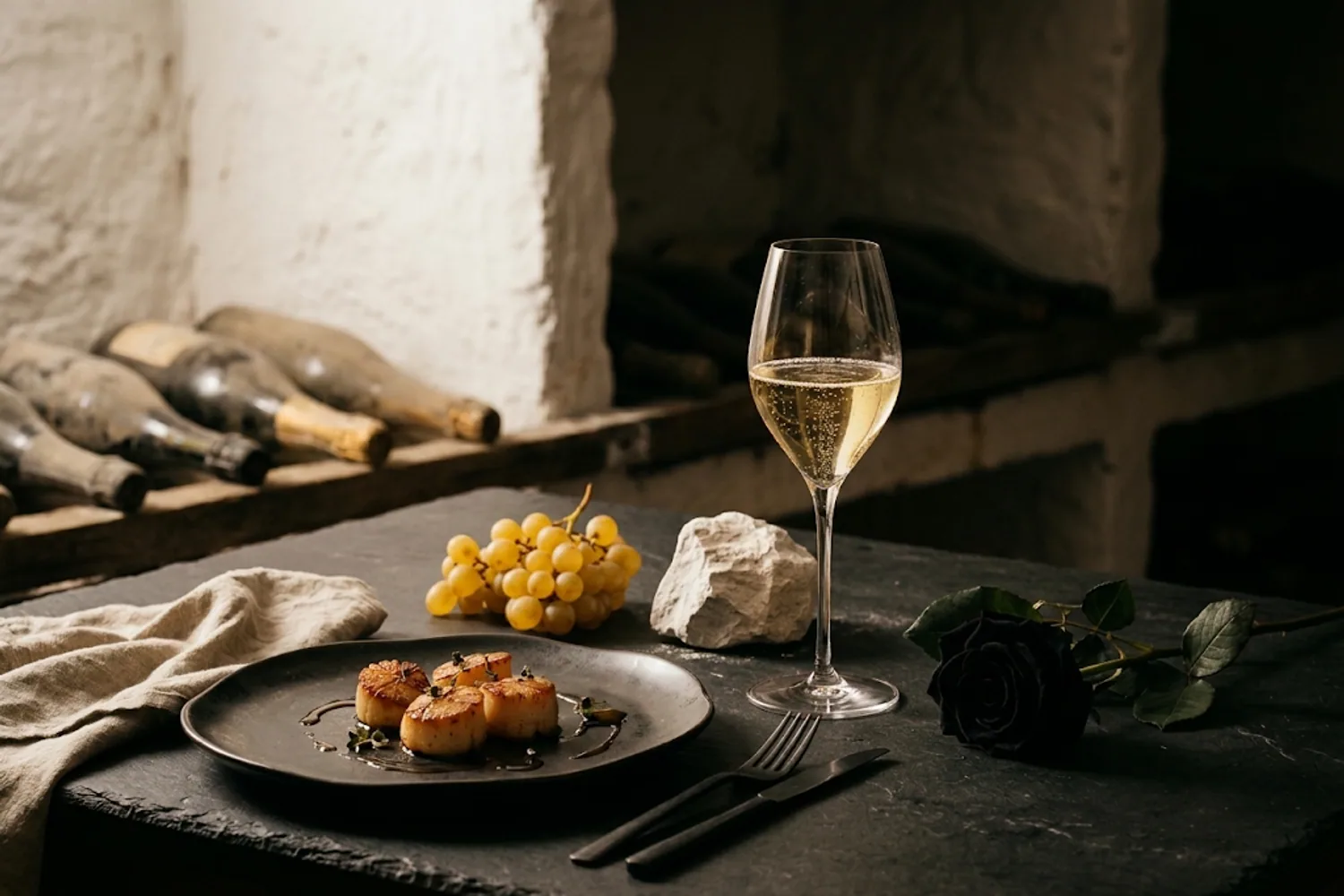
Champagne Henriot : le chardonnay de gastronomie à travers la cuvée Rose Noire
En Champagne, le chardonnay incarne la pureté, la tension saline et l’élégance minérale. Chez Champagne Henriot, ce cépage blanc d’élite constitue la colonne vertébrale du style de la Maison, portée par les grands crus de la Côte des Blancs. Si le Blanc de Blancs classique de la gamme illustre la vivacité crayeuse des terroirs d'Avize ou de Chouilly, une cuvée plus confidentielle attire le regard des connaisseurs : la cuvée Rose Noire Pur Chardonnay.
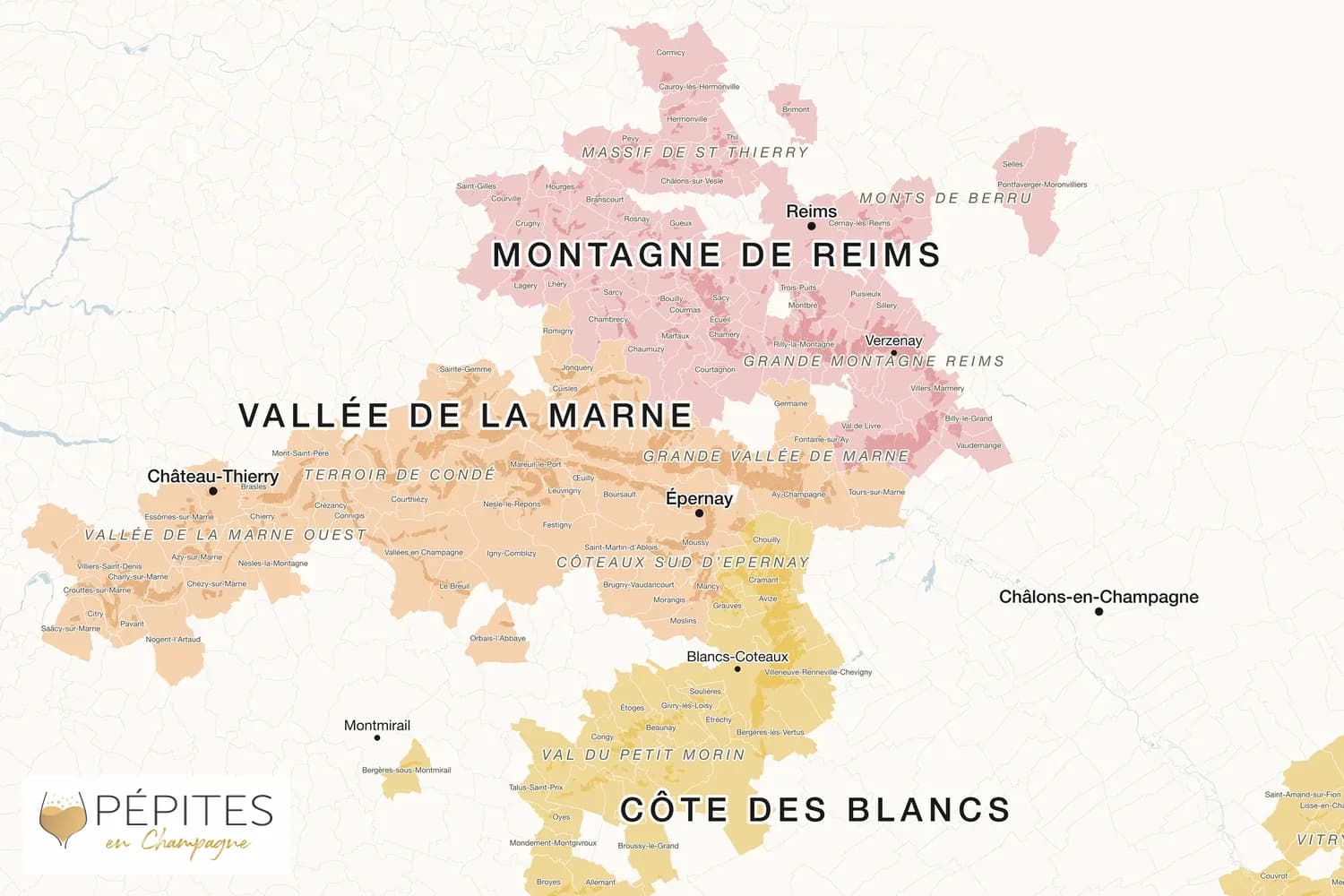
Atlas of Champagne Crus: the 319 Villages of the Appellation and their 17 Grands Crus in Maps
The Champagne appellation covers 319 crus and 34,317 hectares, including 17 grands crus and 42 premiers crus. Here is our atlas: the map of the four regions, the parcel maps of the grands crus and the complete list of villages.
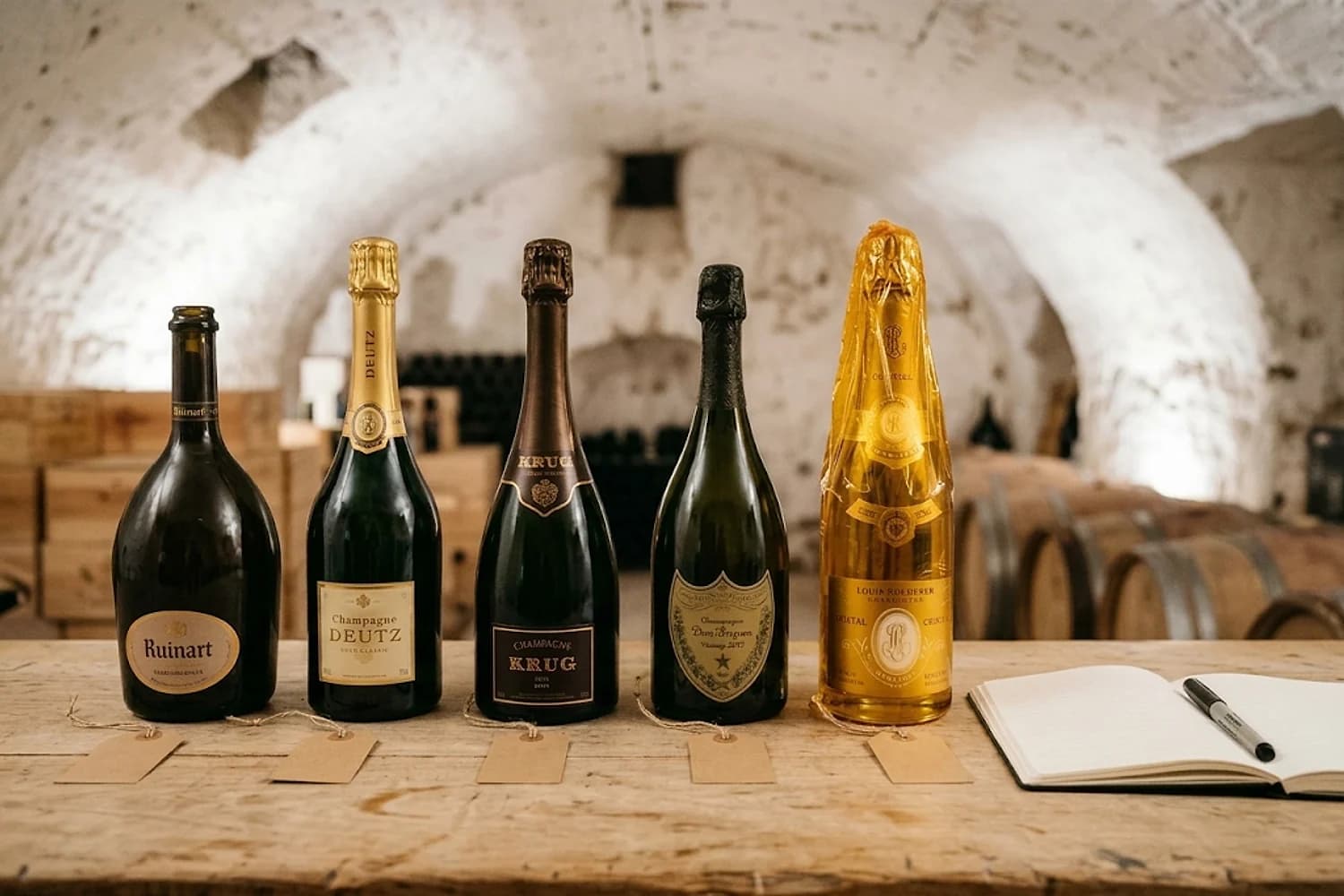
Champagne prices in 2026: our cellar's barometer, based on 268 cuvées
How much does a bottle of champagne really cost in 2026? We reviewed the 268 cuvées in stock in our cellar: median price, differences between major houses and winegrowers, price by style, and loss-leader prices from major brands.
