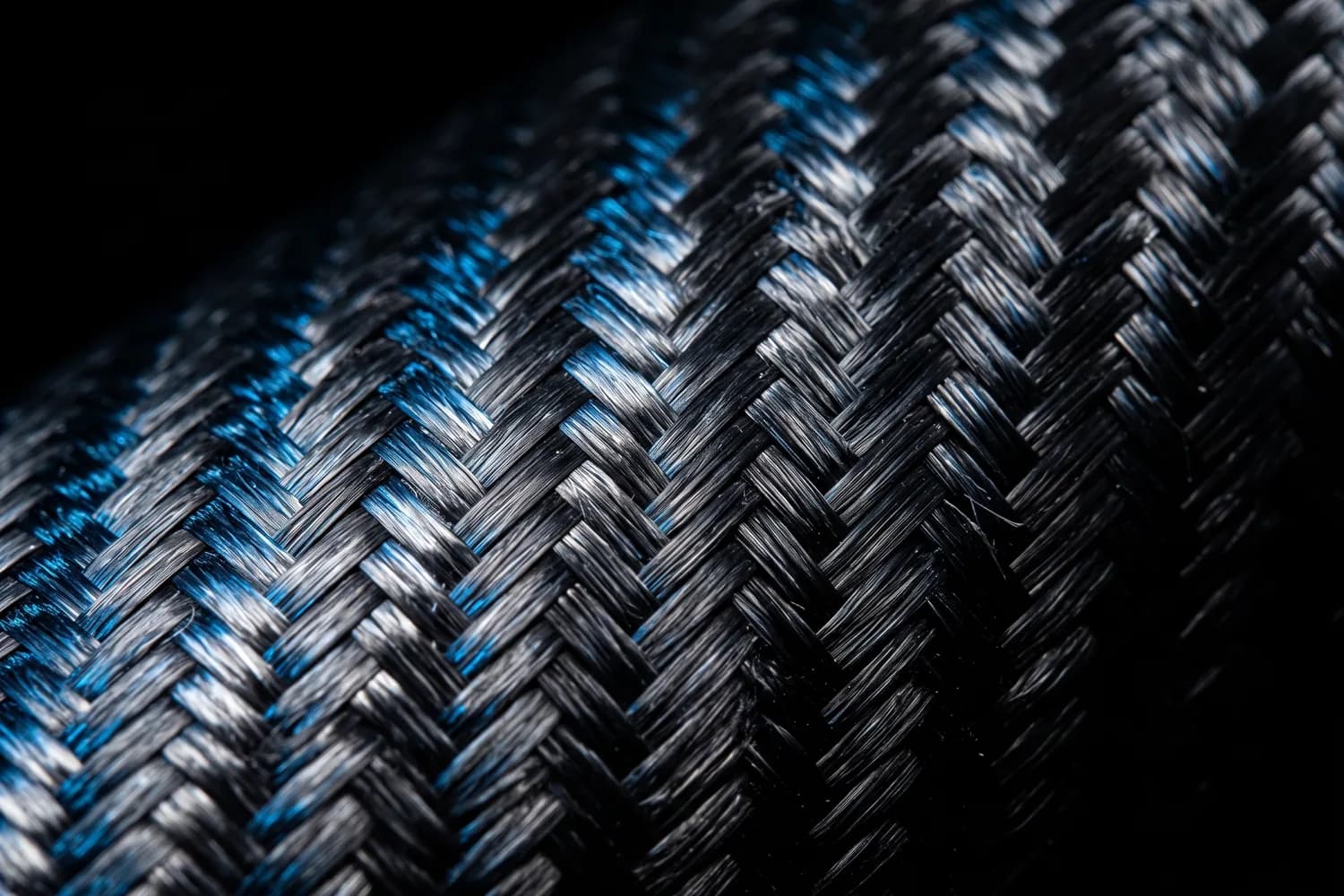
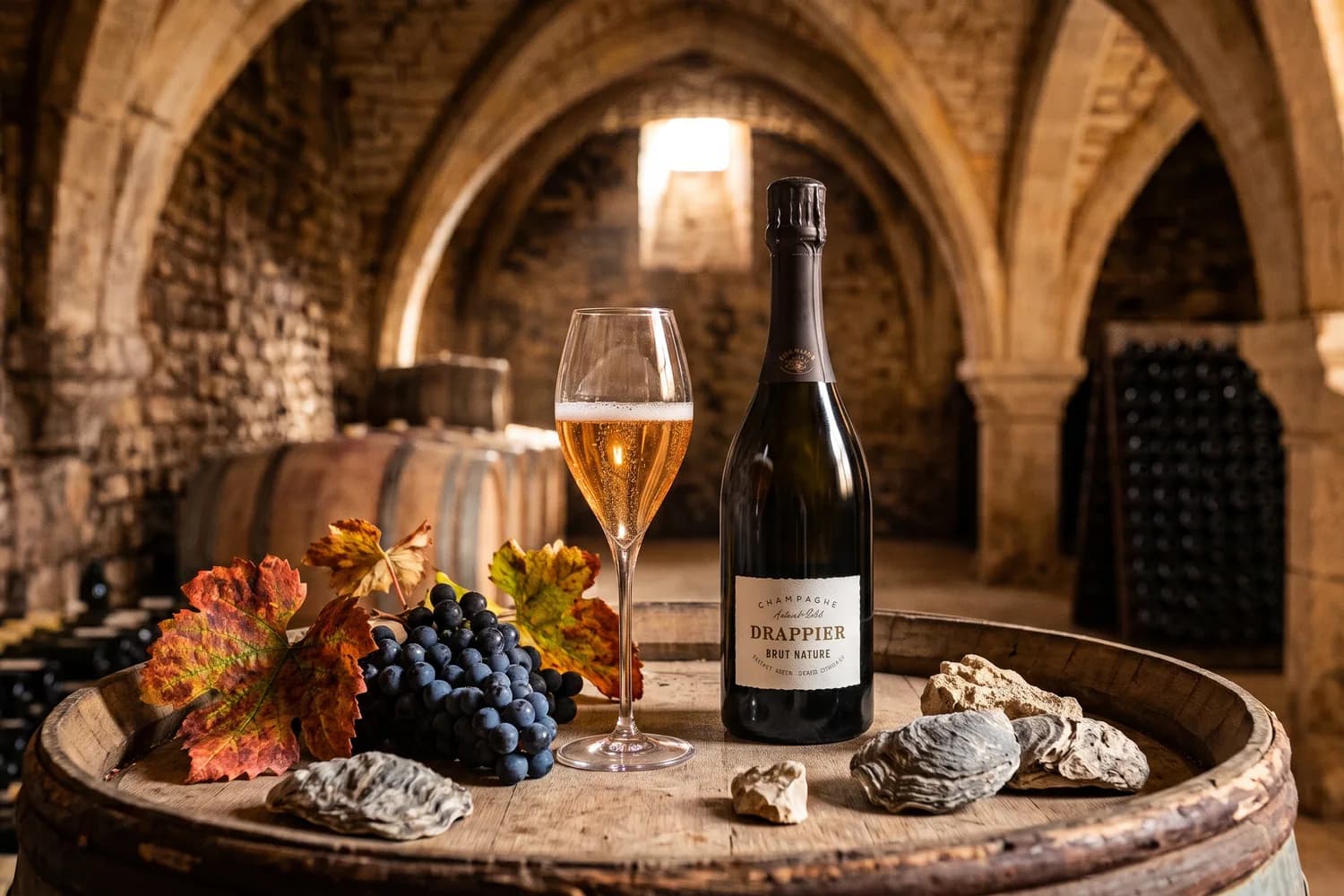
There are two ways to look at a Carbon bottle. The first is that of the object: a bottle entirely wrapped in carbon fibre, hand-woven using a process borrowed from Formula 1. You notice it from across a room. The second is that of the wine: an independent house, founded by Alexandre Mea, fifth generation of a winegrowing family from Champillon, on the Montagne de Reims, which practises slow ageing and a deliberately limited distribution.
Both readings are valid, and it would be dishonest to claim that the first does not matter. This guide chooses to embrace both.
The Carbon style: the object and time
Carbon fibre is not merely a covering. It is entirely opaque — and light is one of the worst enemies of a champagne, the cause of the well-known “light taste” fault. From this point of view, a Carbon bottle is better protected than a clear glass bottle displayed in a shop window. The artisanal process explains part of the price: each bottle is hand-woven.
In the cellar, the house claims a slow ageing process, and its range shows it: it still offers 2006 and 2008 vintages for sale today, which is unusual. These are wines that reach the buyer already ready to drink, without having to wait ten years.
The Carbon range at a glance
| Cuvée | Profile | Price |
|---|
| Cuvée Brut | The entry point into the house | €246 |
| Cuvée Orange 2008 | Mature millésimé, ready to drink | €286 |
| Cuvée Blanc de Blancs 2015 | Chardonnay, grand cru | €306 |
| Bugatti Bolide Millésime 2017 | Official Bugatti edition | €316 |
| Bugatti Millésime 2006 | Official edition, older vintage | €324 |
| Cuvée Rosée | The rarest in the range | €366 |
Cuvée Brut: the entry point, at €246
Let us be frank: there is no cheap Carbon bottle. The Cuvée Brut opens the range at €246, and this entry price immediately places the house outside the field of everyday consumption. If your goal is to drink the best possible champagne for this budget, other bottles in our cellar do better. If your goal is to bring something no one has seen before, the question is not framed in the same way.
Cuvée Orange 2008: the vintage that is already ready
The Cuvée Orange 2008 (€286) has the advantage of age. A 2008 — one of Champagne's great recent vintages — that has reached maturity, and which can be opened this very evening without waiting. It is the most interesting cuvée in the range for those who buy primarily to drink.
Blanc de Blancs 2015 and Cuvée Rosée
The Cuvée Blanc de Blancs 2015 (€306) comes from grand cru vineyards, from a sun-drenched vintage: it is the most “classic” of the range in the Champagne sense of the term. The Cuvée Rosée (€366) is the most expensive and the rarest — it is also, visually, the most spectacular, with the woven carbon taking on distinctive hues over the rosé.
The Bugatti editions: two collector's items
The official partnership with the car manufacturer results in two bottles available from us: the Bugatti Bolide Millésime 2017 (€316) and the Bugatti Millésime 2006 (€324). These are limited series, bought as much for the bottle as for the wine, and they naturally find their place among collectors — of cars as much as of champagne. The 2006, with almost twenty years in the cellar, is the more accomplished of the two when tasted.
Is it worth paying €250 for a bottle just for its covering?
The question deserves to be asked frankly, because it is the one everyone asks themselves in front of a Carbon bottle. The answer depends entirely on the intended use. If we reason purely in terms of tasting value for money, then no: at €250, Champagne offers millésimés from very great houses and rare growers' cuvées that will go further in the glass.
But this reasoning assumes that one is simply buying liquid. Yet a bottle also serves to mark a moment, and for this purpose, the object matters as much as its contents. Carbon occupies exactly this place: that of a bottle placed on a table that brings conversation to a halt. It is a narrow market, and the house knows it; its deliberately limited distribution is part of that — a bottle that everyone could buy would lose precisely what justifies it.
One rarely mentioned technical argument remains: since carbon is perfectly opaque, these bottles are better protected from the light taste fault than any clear glass bottle. For a wine intended to wait, this is not a minor detail.
Carbon prices: what to budget for
From €246 to €366. There is no entry-level tier: the range starts where most houses finish. This positioning is deliberate and consistent with a deliberately limited distribution. For an important gift or corporate gesture, this is a bottle that needs no further commentary; for an evening among enthusiasts, there are more rational choices in our cellar.
Which Carbon for which occasion?
- Discover the house: Cuvée Brut, €246.
- Open it this evening: Cuvée Orange 2008 — already mature.
- Give to a car enthusiast: a Bugatti edition.
- The most spectacular gesture: Cuvée Rosée, €366.
- A classic millésimé: Blanc de Blancs 2015.
Serving and storing a Carbon
Between 10 and 12°C for the millésimés, a little cooler for the Brut, always in a wide glass. The carbon covering means the bottle does not need protection from light, but it still needs protection from vibrations and temperature fluctuations: the usual storage rules apply for the rest. The bottles should be stored lying down, like others, and are presented standing up — that is their whole point. Our gift cuvées complete the selection.