One must remember what the Champagne region was like in 1989 to appreciate the scale of what De Sousa has achieved. At that time, the Champagne vineyards were emerging from three decades of intensive chemical use, and the idea of switching to organic farming seemed, at best, romantic. The Avize estate set out on this path that very year. Demeter certification followed in 2013, but by then the commitment had already spanned nearly a quarter of a century.
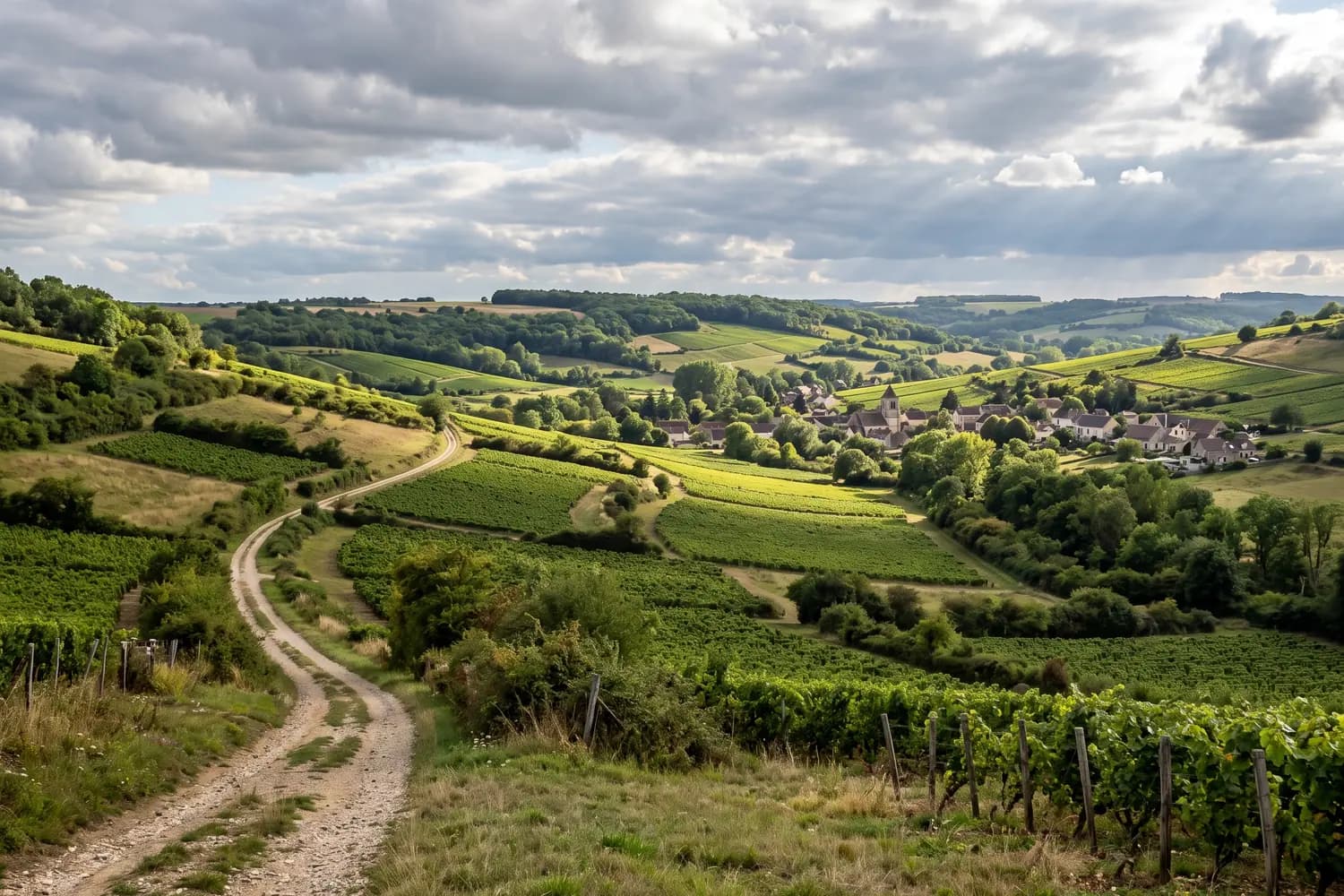
Everything else follows on from there: 14 hectares, 9.5 of which are classified as Grand Cru, spread across 42 plots between Avize, Cramant, Oger and Le Mesnil-sur-Oger — the four villages where Chardonnay really comes into its own. Native yeasts, no filtration, no fining. And old vines over sixty years old, aged in barrels since 1995.
The De Sousa style: chalk, unadulterated
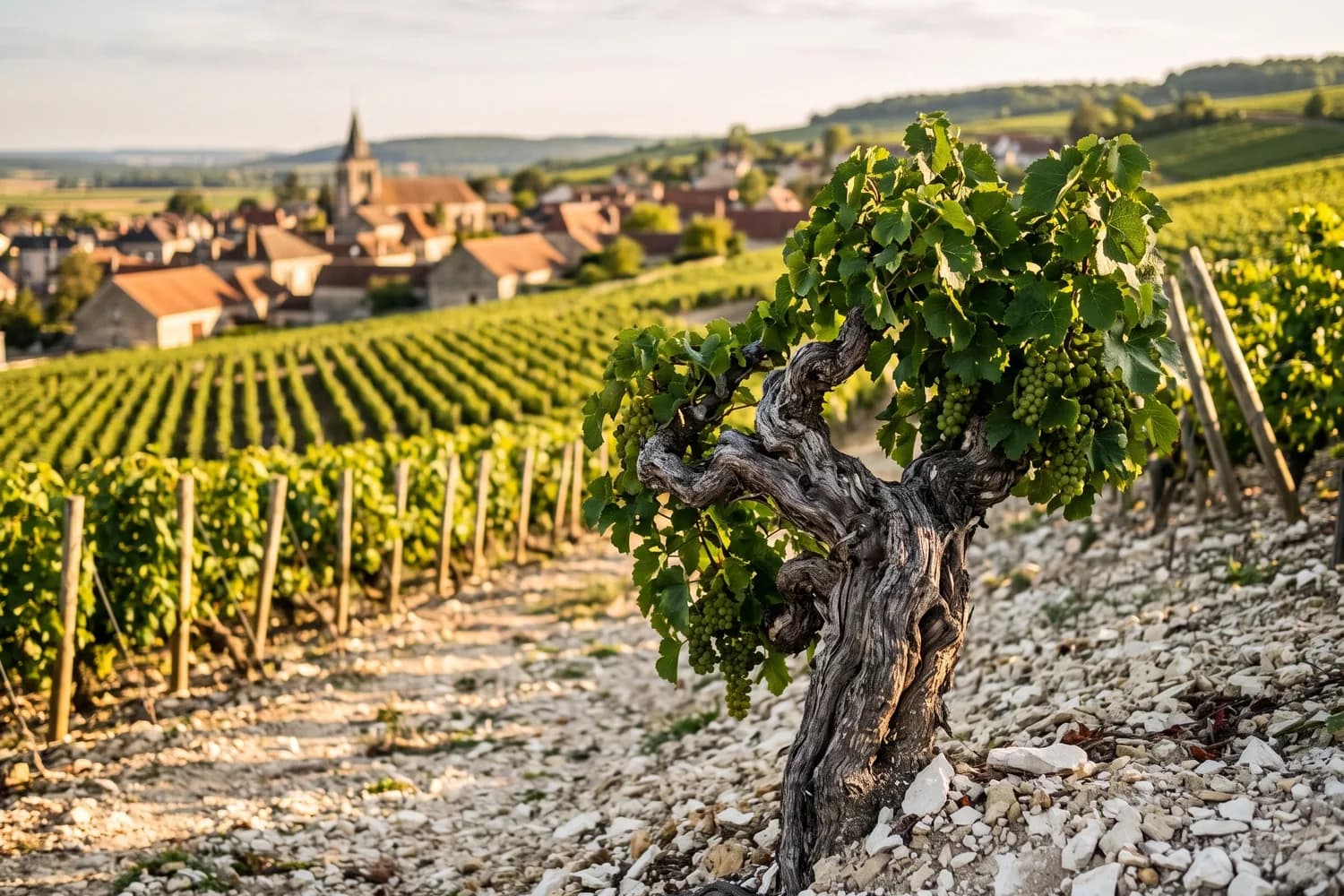
These wines share one immediate characteristic: salinity. This comes from the chalk of Avize, which the deeply rooted vines draw from far below the surface — this is the very essence of biodynamics as practised by the estate. The absence of filtration and fining leaves a texture on the palate that industrial champagnes have lost: sometimes slightly cloudy to the eye, but dense and long-lasting.
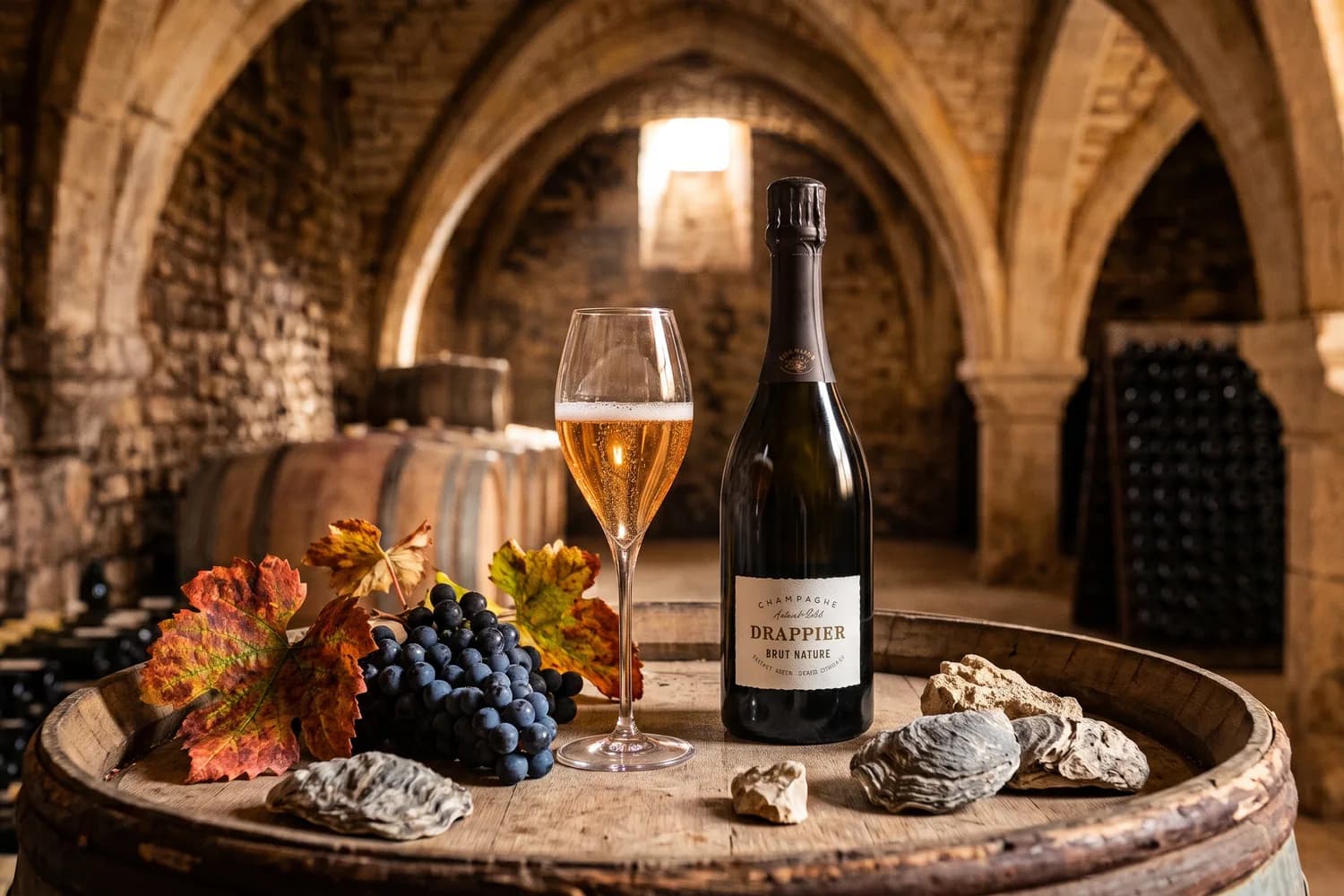
The practical implication is that these are not Champagnes for a quick aperitif. They call for a wide-bowled glass, served at a temperature that isn’t too low, and are best enjoyed with a meal.
The De Sousa range at a glance
| Cuvée | Profile | Price |
|---|
| Rosé | The estate’s rosé, with a fruity character | €42.90 |
| Reserve | The entry-level blend, already very accessible | €46.00 |
| Blanc de Noirs | Black grapes – unusual in Avize | €54.90 |
| Caudalies Blanc de Blancs | Old vines, barrel-aged | €71.90 |
| Mycorrhiza | The signature biodynamic cuvée | €74.90 |
The Tradition, Petite Mousse, 3A and Caudalies Rosé cuvées complete the range but are currently out of stock here.
Réserve: the entry-level wine
At €46, the Réserve is the estate’s entry-level blend, and it is already a wine of character. It features the estate’s characteristic salinity, a straightforward palate and a lingering finish — without the extra depth provided by old vines. This is the bottle to open if you want to find out whether the style appeals to you.
Rosé: fruitiness without heaviness
The Rosé (€42.90) is the most affordable in the range and the most accessible. Fresh red fruit, a crisp palate, a briny finish: it works just as well as an aperitif as it does with starters. At this price, it’s also one of the best introductions to a grand cru winemaker’s rosé.
Blanc de Noirs: the antithesis
A blanc de noirs in Avize is almost a provocation — the village is the kingdom of Chardonnay. The Blanc de Noirs (€54.90) therefore offers what the rest of the range does not: ripe fruit, body and a fuller texture. It pairs effortlessly with food and surprises those who thought they knew the estate.
Caudalies: old vines and oak
The Caudalies Blanc de Blancs (€71.90) is the cuvée that best explains why this estate is the talk of the town. Old vines over sixty years old, aged in oak barrels — a practice the house resumed as early as 1995, well before the return to the fashion for oak in Champagne. The result is dense and buttery without being heavy, with an unusually long finish. This is a wine for laying down: another five years in the cellar will do it good.
Mycorrhiza: the name says it all
Mycorrhizae are fungi that live in symbiosis with the vine’s roots, enabling them to explore the soil far beyond what they would reach on their own. Naming a cuvée after this phenomenon is a statement of conviction: the minerality of a champagne does not come from a cellar technique but from deep root penetration. La Mycorhize (€74.90) is the most vertical wine in the range, and probably the one that divides opinion the most — you either love it or find it austere.
De Sousa prices: what to expect
From €42.90 to €74.90 for the available cuvées. Two price brackets: around €43–55 for the estate’s classics, and €72–75 for the old-vine cuvées. At this level, we’re in the upper echelons of grower champagnes — justified by the Grand Cru classification and the age of the vines.
De Sousa at the table
The salinity of Avize calls for iodine: oysters, shellfish and crustaceans are the most obvious pairings, particularly with the Rosé and the Réserve. The Caudalies, denser and characterised by its barrel ageing, requires a more substantial pairing — roast poultry, fish in sauce, or a well-aged Comté. The Mycorhize, the most taut of the range, works remarkably well with raw fish, ceviche or seaweed tartare, where its crisp, linear character acts as a seasoning.
The Blanc de Noirs, meanwhile, steps away from the seafood repertoire: its ripe fruit and body make it ideal for white meats, mushrooms and richer seasonal dishes. It is the De Sousa wine that pairs best with an entire autumnal meal, from start to finish.
Which De Sousa for which occasion?
- To discover: Réserve, €46.
- A refined aperitif: Rosé, €42.90.
- A main course: Blanc de Noirs or Caudalies.
- A bottle to keep: Caudalies Blanc de Blancs.
- For a natural wine enthusiast: Mycorhize.
Serving and storing a De Sousa
Serve between 10 and 12 °C — any colder and the salinity becomes closed off and the body disappears. A wide-bowled glass is essential for the Caudalies and Mycorhize. These unfiltered wines may develop a slight sediment: serve without swirling the bottle. The old-vine cuvées age well for five to ten years, as indicated by our storage guidelines. The rest of our Blanc de Blancs and Récoltants can be found in the cellar.