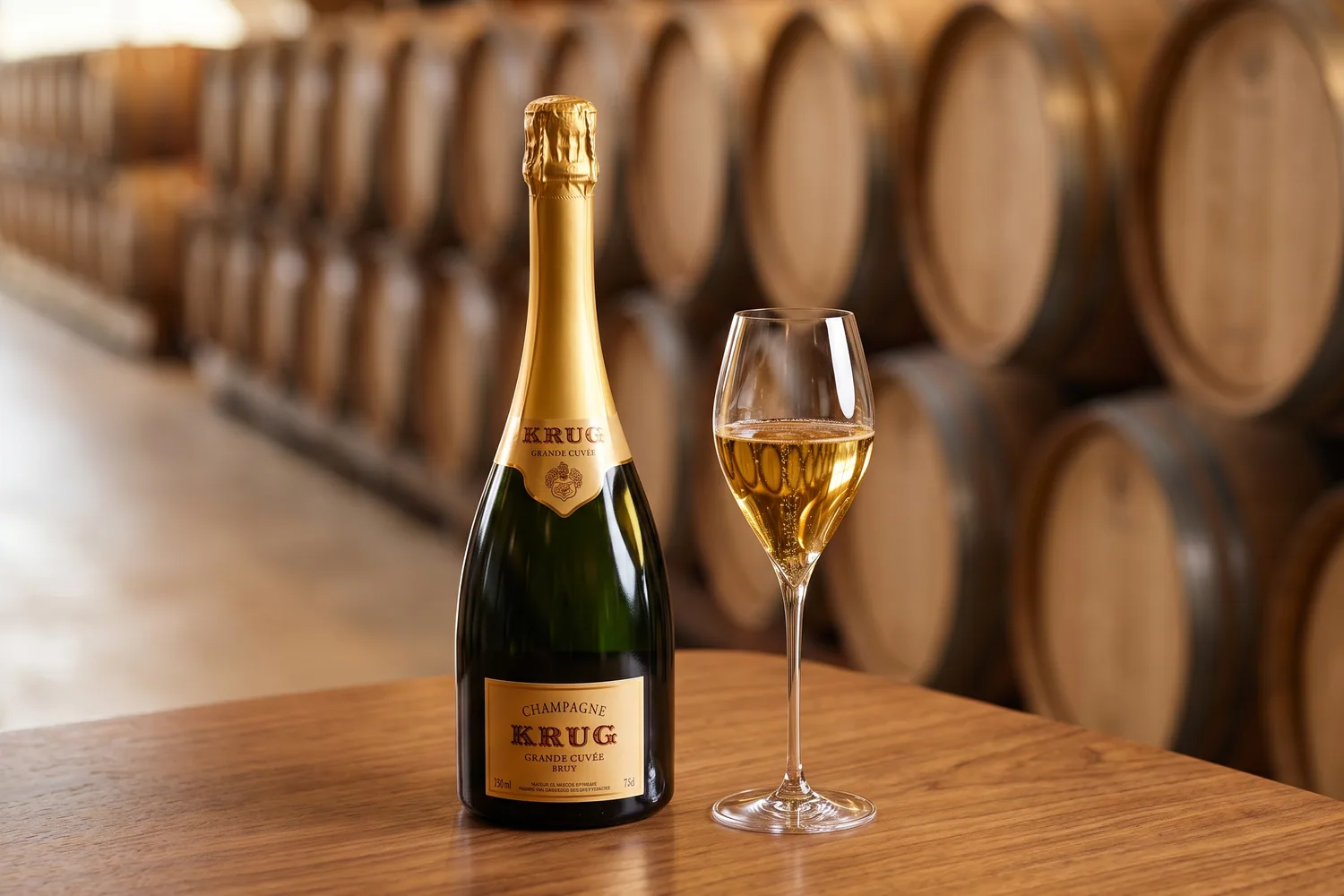
A bottle of Krug Grande Cuvée does not bear a vintage, but an edition number — 169th, 170th, 173rd — and this is anything but a mere detail. Since 1843, the house founded in Reims by Joseph Krug has recreated its signature cuvée every year using over 120 wines from more than ten different vintages, and the number represents the number of times this dream has been recreated. This guide explains what makes an ‘Édition’ special, how to read a bottle of Krug, and reviews the cuvées available in our cellar — Grande Cuvée, Rosé, Vintage and Clos du Mesnil — along with their current prices.
Joseph Krug’s dream
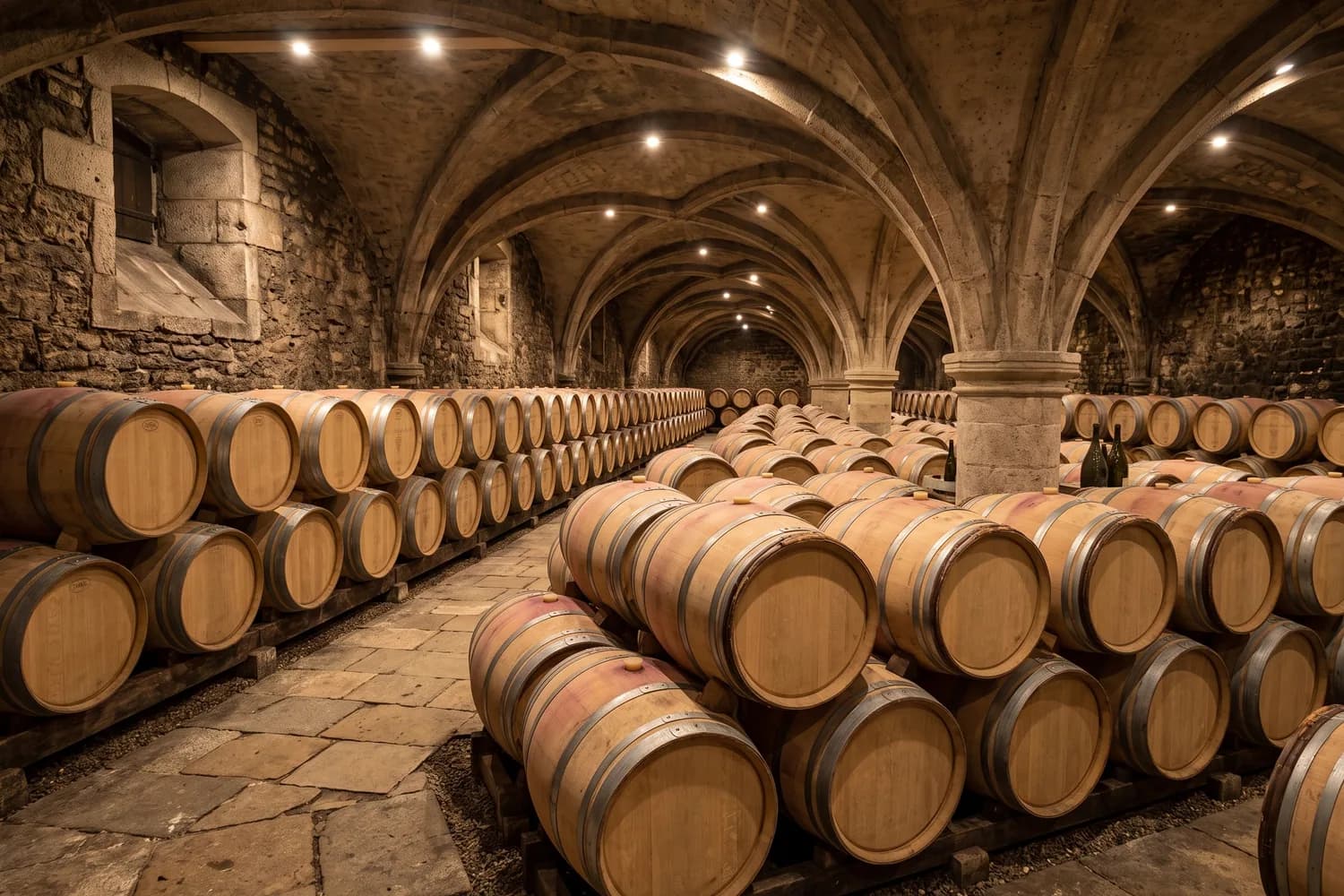
Joseph Krug wanted to offer the very best champagne possible every year, regardless of the conditions of the vintage. His solution was not to rely on a single year: to blend a wide range of reserve wines, some aged for as long as fifteen years, with the current harvest. Two technical choices have remained unchanged ever since: vinification in small 205-litre oak barrels, sourced from the Argonne Forest and averaging 35 years in age, and a plot-by-plot tasting — more than 250 wines tasted each winter by the tasting committee led by cellar master Julie Cavil. The house, part of the LVMH group since 1999, retains its autonomy; its chairman, Manuel Reman, joined the company in 2022.
Understanding the Éditions de la Grande Cuvée
Each Édition is a unique blend: a base vintage, complemented by reserve wines aged ten years or more, followed by approximately seven years in the cellar before release. The number simply follows the chronology of the editions since 1843. Two consecutive Éditions resemble one another like two interpretations of the same musical score — this is the image the house uses — but they differ in terms of the main vintage and the proportion of reserve wines. The Krug ID, a six-digit code printed on the back label, reveals everything about the bottle: the base year, the number of wines and years blended, and the quarter in which it was released from the cellar.
Available Editions
- Grande Cuvée 169th Edition — €195. Warm brioche, orange blossom, dried fruit, marzipan, gingerbread: a mature, full-bodied and generous Edition.
- Grande Cuvée 170th Edition — €259. 195 wines from 12 vintages: candied pineapple, dried apricot, flint, toasted brioche, lemon cream.
- Grande Cuvée 171st Edition — €268, or in the ‘Echoes’ gift set for €273. Spring flowers, candied citrus, marzipan, gingerbread, a chalky edge.
- Grande Cuvée 172nd Edition — €264. 198 wines from 11 vintages: white flowers, brioche, acacia honey, hazelnut, almond, candied zest.
- Grande Cuvée 173rd Edition — €262. 150 wines from 13 vintages: toasted brioche, rum baba, stone fruits, verbena, vanilla. The most recent edition.
Which one to choose? The most recent for its freshness and vibrancy, or an older Edition — the 169th or 170th — for the roundness that a few more years in the bottle bring. Neither is ‘better’: they each tell the story of a different year.
Krug Rosé: a rosé Édition
Born in 1976 from the fifth generation’s dream of creating a rosé that could be reproduced every year, Krug Rosé follows the same system of numbered Editions. The Rosé 27th Edition (€348.50) features notes of wild rose, redcurrant, blackberry and peony with a peppery hint; the 28th Edition Rosé (€355) adds fresh raspberry, pink grapefruit and smoky undertones. Two gourmet rosés, perfect with a rack of lamb or pigeon.
Krug Vintage: the music of a single year
Whilst the Grande Cuvée spans several vintages, the Vintage tells the story of just one, aged for over ten years in the cellar. The 2013 Vintage (€338), from a year of contrasts, bursts with citrus — lemon, bitter orange, grapefruit — followed by candied citrus; the 2011 Vintage (€338) blends white fruits, citrus, liquorice and a hint of basil; the 2006 Vintage (€375) opens with notes of smoked almonds and sweet spices; the 2000 Vintage (€530), with notes of matured honey, liquorice, menthol and orange peel; and the 2008 Vintage (€600), dubbed ‘Timeless Elegance’ by the house — our article on Krug 2008 is devoted to it. To put these years into context, they are among the finest vintages in Champagne.
Clos du Mesnil: the soloist
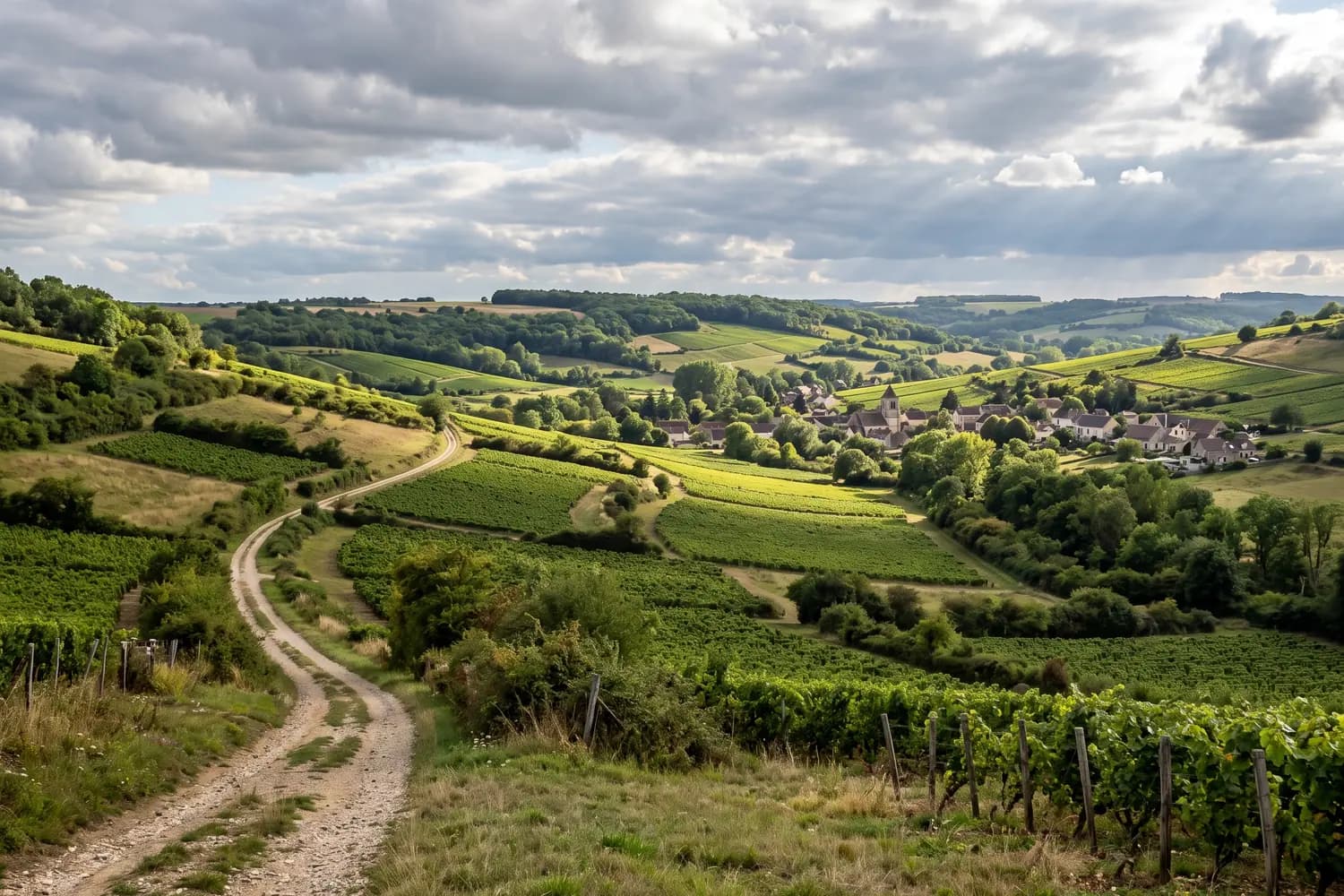
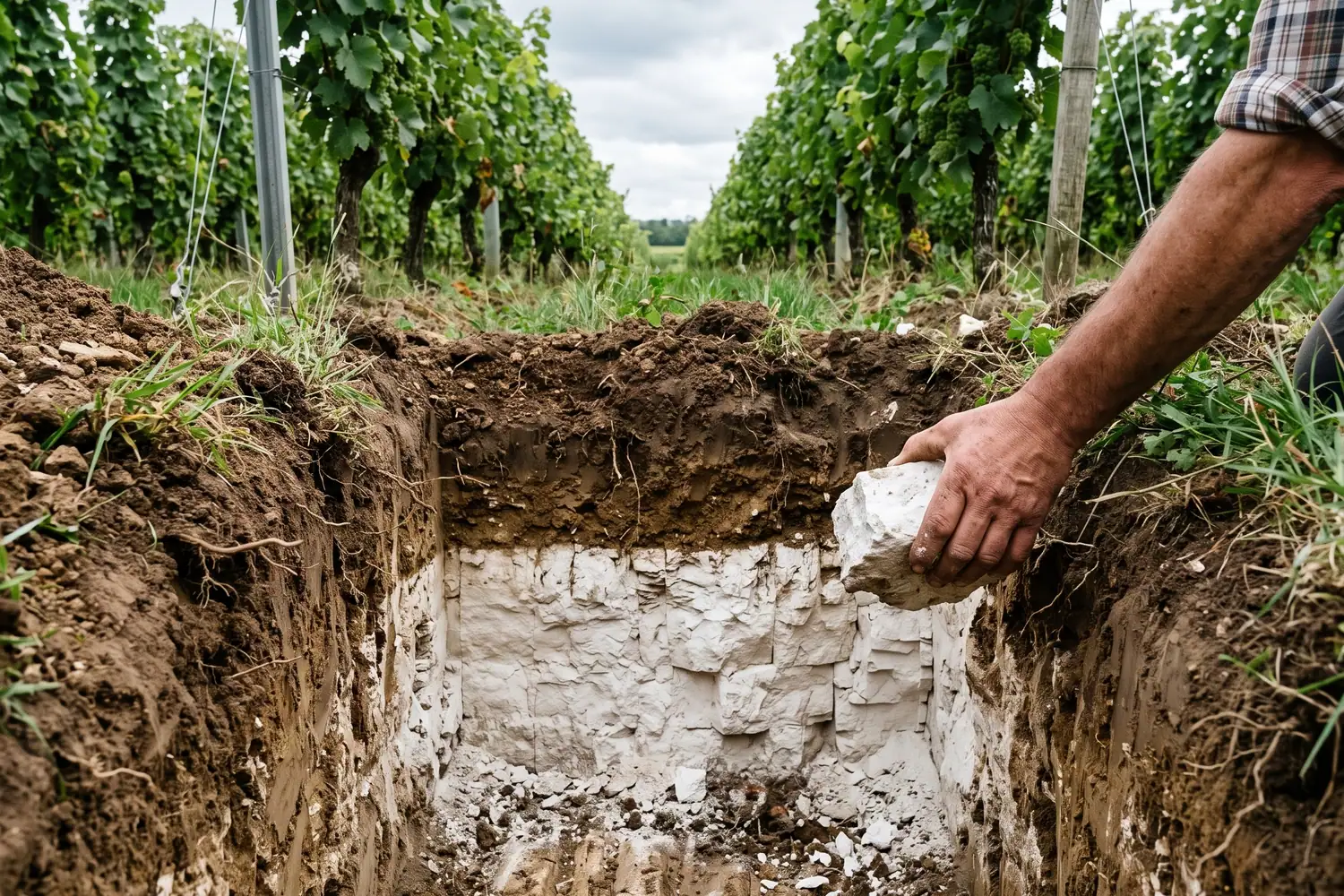
A 1.84-hectare vineyard enclosed by walls since 1698, in the heart of Mesnil-sur-Oger, made exclusively from Chardonnay, from a single vintage: the Clos du Mesnil 2009 (€1,520) is the house’s ‘soloist’, with notes of white flowers, candied citrus, light brioche and a signature chalky character. Our article on the Clos du Mesnil 2008 describes the site; our guide to Champagne’s clos places it amongst its peers. It naturally ranks amongst the world’s most expensive champagnes.
Krug prices: what to expect
| Cuvée | Observed prices (incl. VAT, 75 cl) |
|---|
| Grande Cuvée 169th Edition | €195 |
| Grande Cuvée 170th / 173rd / 172nd / 171st Edition | €259 / €262 / €264 / €268 (Echoes gift set €273) |
| Vintage 2011 / 2013 | €338 |
| Rosé 27th / 28th Edition | €348.50 / €355 |
| Vintage 2006 / 2000 / 2008 | €375 / €530 / €600 |
| Clos du Mesnil 2009 | €1,520 |
Prices recorded in our cellar in September 2026; they vary as the house releases new vintages. The Grande Cuvée is Krug’s most accessible prestige cuvée — and, at €195, the 169th Edition is the most affordable entry point into the house.
Which Krug for which occasion?
- Discover the house: the Grande Cuvée 169th or 173rd Edition.
- A gift: the 171st Edition in the ‘Echoes’ gift box.
- A game or lamb dinner: the Rosé.
- A vintage enthusiast: the 2008 Vintage, or the 2013 for its freshness.
- For a collector: the Clos du Mesnil 2009.
Serving and storing Krug
Krug should be served at between 10 and 12 °C — never ice-cold — in a wide white wine glass, or even a Burgundy glass, to allow the brioche, dried fruit and spices to develop; allow a few minutes for the wine to breathe. A Grande Cuvée will keep for ten years with ease, whilst a Vintage can be kept for twenty years or more, stored horizontally and away from light. Our storage and serving guidelines provide further details. All available cuvées are listed on the Krug website.