

Pol Roger: Brut Réserve, Vintage, Blanc de Blancs and Cuvée Sir Winston Churchill — which cuvée should you choose?
The essentials
The Brut Réserve (€44.90) is one of Champagne’s most consistent non-vintage brut champagnes, blended from around thirty crus. The 2016 and 2018 vintages (€78) follow the house recipe — 60 per cent Pinot Noir, 40 per cent Chardonnay — whilst the 2015 and 2016 Blanc de Blancs (€106.90) are sourced from the grands crus of the Côte des Blancs. The Cuvée Sir Winston Churchill (€250), created in 1975 as a tribute to the British Prime Minister, is the flagship of the range.
- Why has Pol Roger launched a Sir Winston Churchill cuvée?
- Winston Churchill discovered Pol Roger in 1908 and never drank any other champagne; he even named one of his racehorses Pol Roger. On his death in 1965, the house bordered its labels with black. In 1975, it created its prestige cuvée in his honour, predominantly made from Pinot Noir, in the style he loved: structured, full-bodied and mature.
- How much does a bottle of Pol Roger cost?
- €44.90 for the Brut Réserve (€91.90 for a magnum), €78 for the 2016 and 2018 Vintages, €106.90 for the 2015 and 2016 Blanc de Blancs, €250 for the 2015 or 2018 Cuvée Sir Winston Churchill — prices recorded in our cellar in September 2026.
- Does Pol Roger belong to a group?
- No. Founded in Épernay in 1849 by Pol Roger, the house is still run by the founder’s direct descendants, now in the sixth generation. It is one of the last remaining major independent family-run houses.
- What makes the Pol Roger cellars so special?
- Carved out over three levels to a depth of 33 metres beneath Épernay, these are amongst the deepest and coldest cellars in the town, which slows down the formation of foam and refines the bubbles. The house still carries out the riddling process by hand here.
- Which Pol Roger was served at Prince William’s wedding?
- Brut Réserve, chosen for the wedding reception of Prince William and Catherine Middleton in 2011. The house holds a Royal Warrant from the British Royal Family.
Churchill’s favourite champagne, served at Prince William’s wedding, hand-riddled in the deepest cellars of Épernay: Pol Roger is the quintessential family-run house. Brut Réserve, Vintage, Blanc de Blancs and Cuvée Sir Winston Churchill: our guide, cuvée by cuvée, with current prices.
5 min read
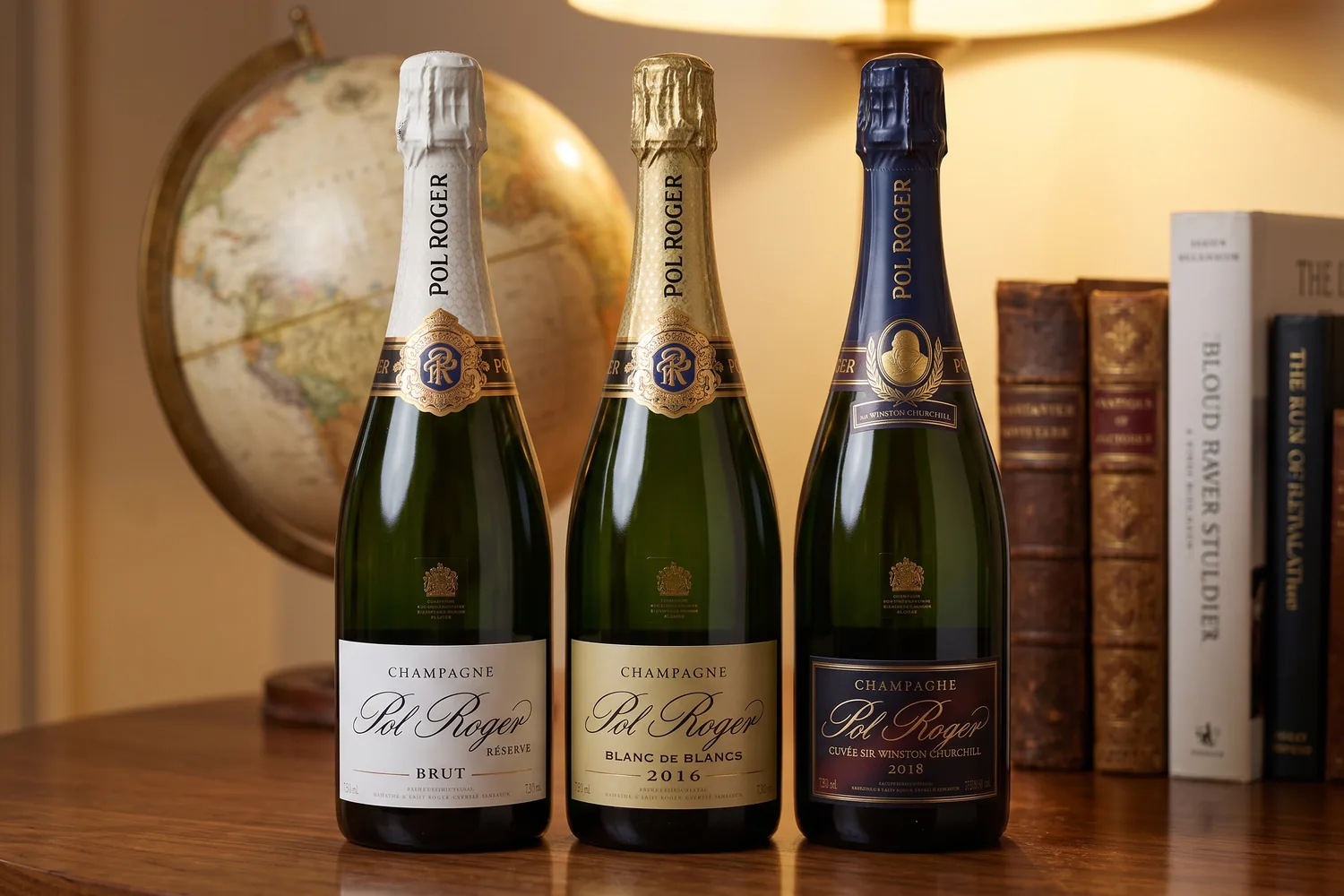
Few champagne houses have such a famous ambassador. Winston Churchill discovered Pol Roger in 1908 and remained a loyal customer for the rest of his life; upon his death in 1965, the house bordered its labels with black before creating, ten years later, the cuvée that bears his name. Founded in Épernay in 1849 and still run by the founder’s descendants, Pol Roger cultivates 92 hectares on the Montagne de Reims, the Côte des Blancs and the Marne Valley, ages its wines in cellars dug up to 33 metres deep — amongst the coldest in Épernay — and still riddles its bottles by hand. The result is a sparkling wine of legendary finesse. This guide reviews the cuvées available in our cellar, along with their current prices.
Cellars at 33 metres and hand-riddling
Two factors account for the finesse of Pol Roger’s bubbly. Firstly, the cellars: dug out over three levels to a depth of 33 metres beneath Épernay, they are amongst the deepest and coldest in the town, at around 9 °C, which slows down the second fermentation and refines the effervescence. Next, the riddling: whilst almost all of Champagne has entrusted this stage to automated riddling machines, Pol Roger continues to turn its bottles by hand, one-eighth of a turn at a time, over several weeks, to bring the sediment towards the neck of the bottle before disgorgement. These are steps that go unseen, but whose effects can be tasted in the glass.
The Pol Roger range at a glance
- Brut Réserve — the non-vintage brut, available in standard and magnum bottles.
- Brut Vintage — the vintage champagne, 60 per cent Pinot Noir and 40 per cent Chardonnay.
- Blanc de Blancs Vintage — the Chardonnay from the grands crus of the Côte des Blancs.
- Cuvée Sir Winston Churchill — the prestige cuvée.
The house also produces a Vintage Rosé, an extra-brut (Pure) and a Rich, which is close to demi-sec, though we do not currently stock these.
Brut Réserve: consistency personified in champagne
The Brut Réserve blends around thirty crus and several vintages, with the blend evolving each time to maintain the same style: white flowers, fresh citrus, green apple, followed by a subtle hint of brioche and a touch of toast, all on a remarkably fine mousse. It was served at Prince William’s wedding reception in 2011; it will be just as perfect for yours. €44.90 per bottle, €91.90 for a magnum. Our page on where to buy Pol Roger at the best price answers all your practical questions.
Brut Vintage 2016 and 2018: the house’s signature blend
The vintage champagnes follow Pol Roger’s traditional blend — 60 per cent Pinot Noir, 40 per cent Chardonnay — sourced from around twenty Grands Crus and Premiers Crus in the Montagne de Reims and the Côte des Blancs. The 2016 Vintage is open and complex: dried fruit, cocoa, sweet almond, coconut and mirabelle plum. The 2018 Vintage, from a sunny year, is initially reserved but then reveals fresh and exotic fruit, with pineapple leading the way. €78 each; compare with our other vintage champagnes.
Blanc de Blancs Vintage 2015 and 2016
Produced exclusively from Chardonnay grapes grown in the grands crus of the Côte des Blancs — Oiry, Chouilly, Cramant, Avize, Oger and Le Mesnil-sur-Oger — Pol Roger’s Blanc de Blancs display a mineral elegance. The 2015 Blanc de Blancs combines white flowers, candied citrus, pear and warm brioche with a hint of white pepper; the 2016 Blanc de Blancs features fresh pear, lemon zest and a delicate floral finish. €106.90 each. Compare with our other Blanc de Blancs champagnes.
Cuvée Sir Winston Churchill: the prestige cuvée
First produced in the 1975 vintage, the Cuvée Sir Winston Churchill is made only in exceptional years, in the style favoured by the statesman: firm structure, generous body and vinous maturity. Its exact blend remains a secret; Pinot Noir dominates. The 2015 Sir Winston Churchill is generous and complex — candied citrus, orange blossom, buttery brioche, toasted hazelnut —; the 2018 Sir Winston Churchill, still reserved but beautifully polished, evokes white flowers, citrus fruits and dried apricot, with twenty years’ ageing potential ahead of it. €250 each. On the place of champagne in the lives of the great, see also champagne in literature and cinema.
Pol Roger Awards: what to expect
| Cuvée | Observed prices (including VAT, 75 cl unless otherwise stated) |
|---|---|
| Brut Réserve | €44.90 (magnum €91.90) |
| Brut Vintage 2016 / 2018 | €78 |
| Blanc de Blancs Vintage 2015 / 2016 | €106.90 |
| Sir Winston Churchill Cuvée 2015 / 2018 | €250 |
Prices recorded in our cellar in September 2026; they fluctuate as the house releases new vintages. For a house of this calibre, the Brut Réserve at under €45 remains one of the best deals in Champagne.
Which Pol Roger for which occasion?
- A reception or a wedding: the Brut Réserve, in a magnum.
- A meal featuring white meat or mushrooms: the 2016 Vintage.
- Oysters or a fine fish dish: a Vintage Blanc de Blancs.
- A gift for a connoisseur — or an Anglophile: the Cuvée Sir Winston Churchill.
- A bottle to keep for twenty years: the Sir Winston Churchill 2018.
Serving and storing Pol Roger
Serve the Brut Réserve at between 8 and 10 °C, and the vintage champagnes and the Cuvée Sir Winston Churchill at between 10 and 12 °C, in a white wine glass. The Brut Réserve is best enjoyed within three years; vintages and Blanc de Blancs can be kept for ten years, whilst the Cuvée Sir Winston Churchill can be kept for twenty years or more, stored horizontally and away from light. Our storage and serving advice covers the rest. All available cuvées are listed on the Pol Roger website.
The bottles in this article
À lire également
Champagne Henriot : le chardonnay de gastronomie à travers la cuvée Rose Noire
En Champagne, le chardonnay incarne la pureté, la tension saline et l’élégance minérale. Chez Champagne Henriot, ce cépage blanc d’élite constitue la colonne vertébrale du style de la Maison, portée par les grands crus de la Côte des Blancs. Si le Blanc de Blancs classique de la gamme illustre la vivacité crayeuse des terroirs d'Avize ou de Chouilly, une cuvée plus confidentielle attire le regard des connaisseurs : la cuvée Rose Noire Pur Chardonnay.
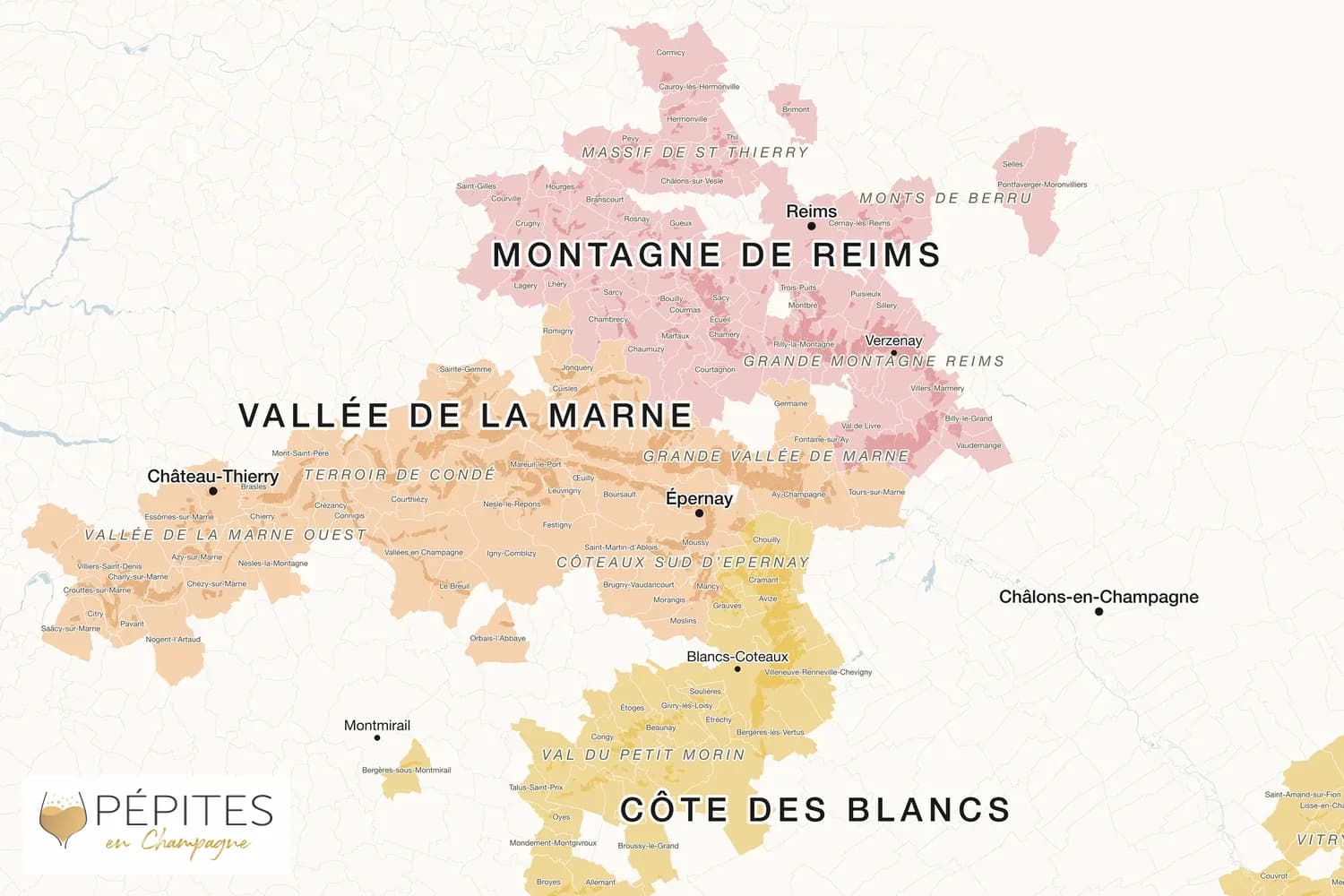
Atlas of Champagne Crus: the 319 Villages of the Appellation and their 17 Grands Crus in Maps
The Champagne appellation covers 319 crus and 34,317 hectares, including 17 grands crus and 42 premiers crus. Here is our atlas: the map of the four regions, the parcel maps of the grands crus and the complete list of villages.
Champagne prices in 2026: our cellar's barometer, based on 268 cuvées
How much does a bottle of champagne really cost in 2026? We reviewed the 268 cuvées in stock in our cellar: median price, differences between major houses and winegrowers, price by style, and loss-leader prices from major brands.
