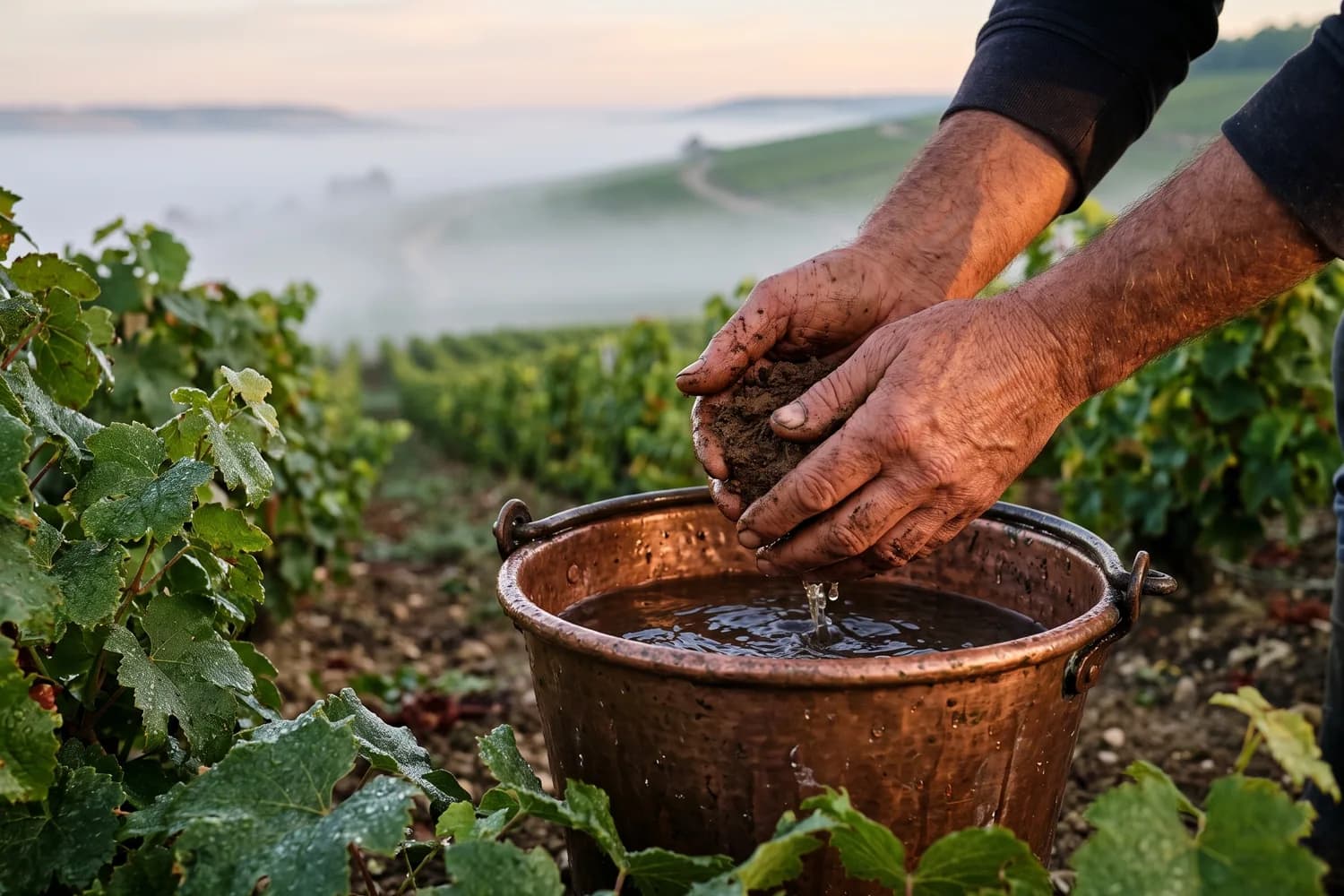
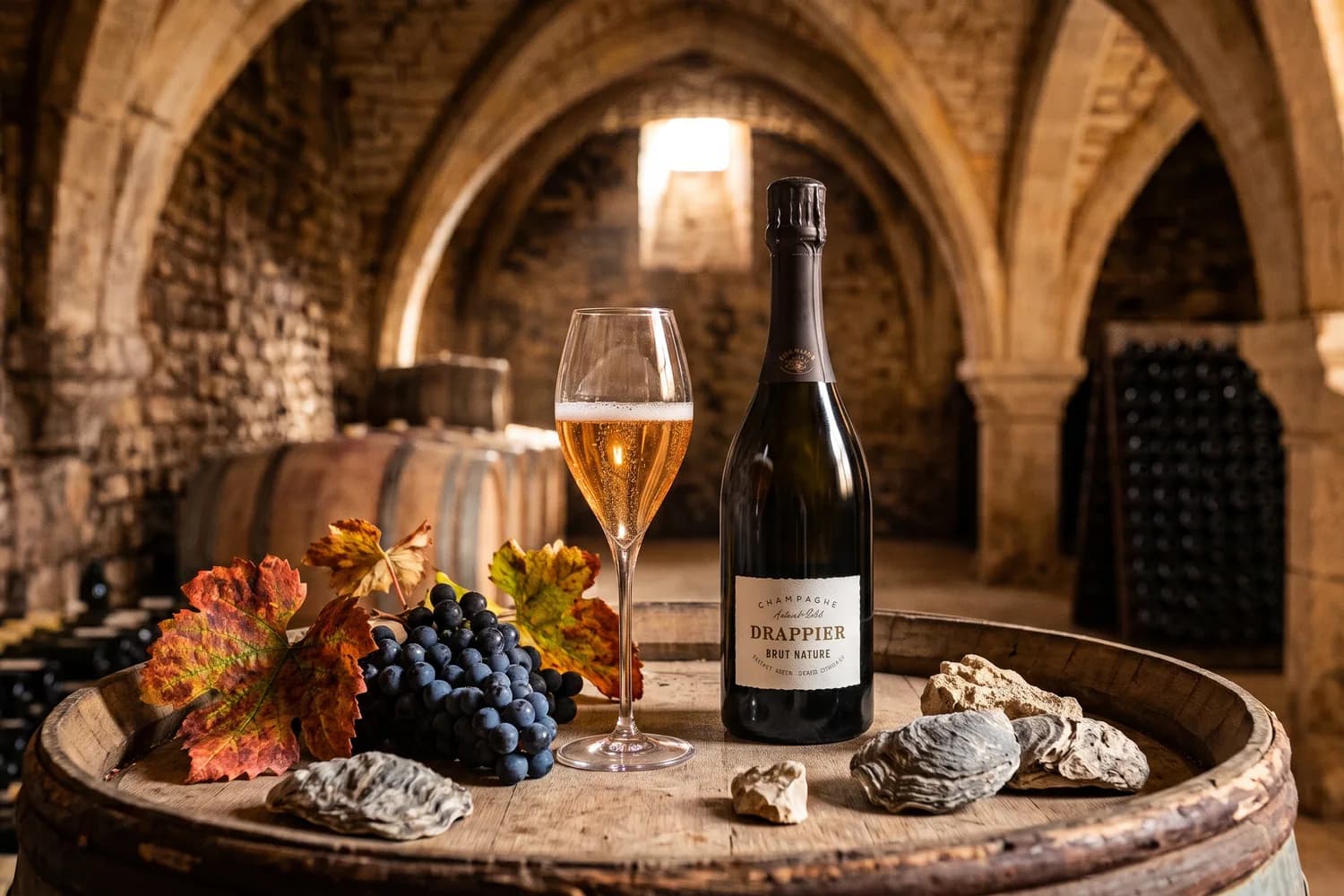
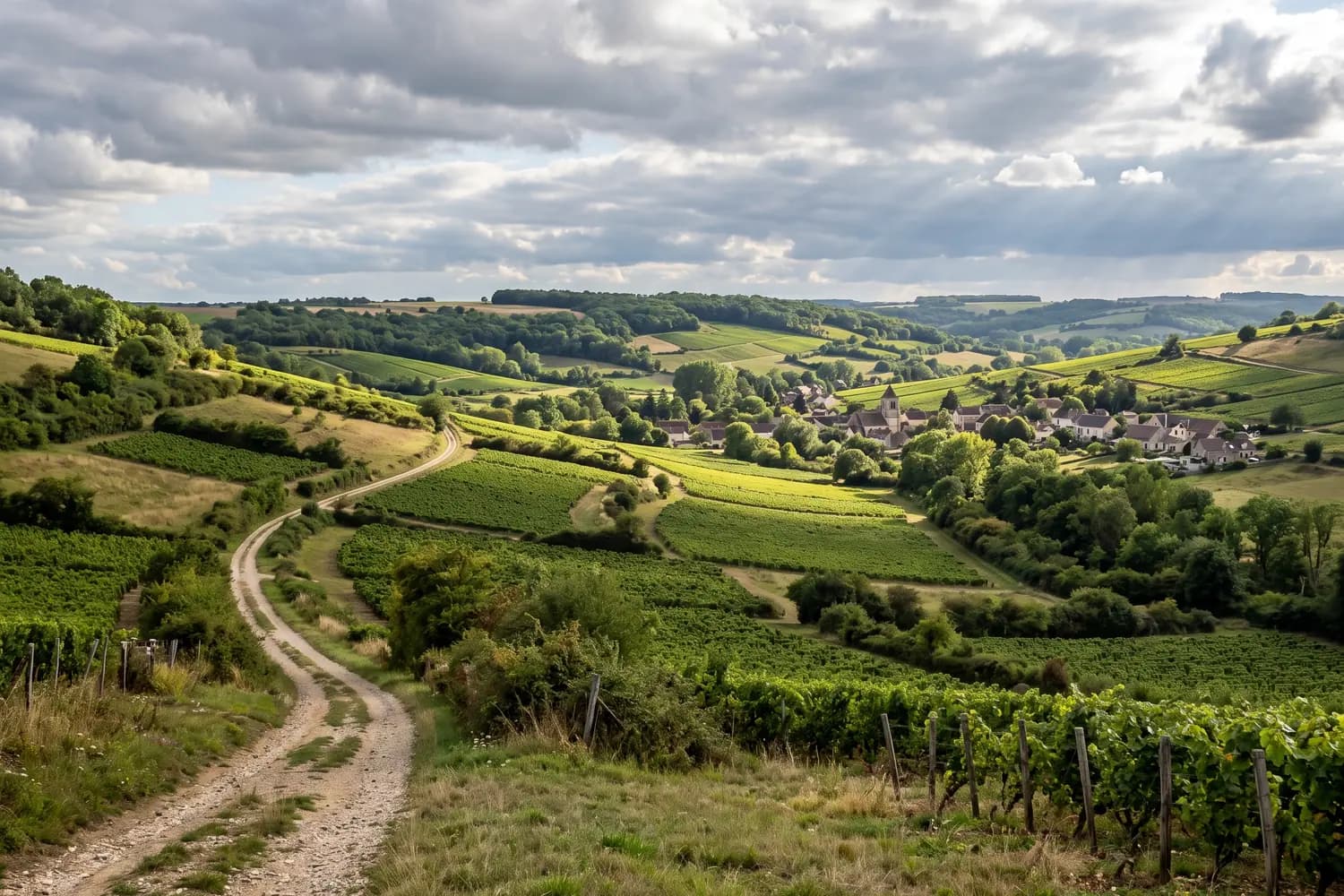
In 2003, when Leclerc Briant obtained its Demeter certification, biodynamic winemaking in Champagne was still considered something of an eccentricity. Twenty years on, it has become a selling point for many — but few houses can point to two decades of practice behind the logo. Founded in 1872 by Lucien Leclerc in Cumières, and based in Épernay since 1955, the house has built its reputation on a rare combination: a long-standing commitment to farming principles, minimal dosages, and an unapologetic taste for experimentation – to the point of ageing a cuvée at the bottom of the ocean.
The Leclerc Briant style: little sugar, plenty of character
Two principles underpin the range. The first is minimal dosage: extra-brut or zero dosage across the board. A champagne dosed at 8 or 10 g/L can compensate for incomplete ripeness; at 2 g/L, it makes no allowances. It is a choice that demands meticulous work in the vineyard from the outset.
The second is a focus on specific plots. The house works with precise locations, including La Croisette — Chardonnay planted in the 1960s right in the heart of Épernay, which has become a rarity. The range is divided into three tiers: the Classiques, the Sélections Parcellaires and the Spécialités, which include the experimental cuvées. This winemaker’s approach, applied to an Épernay house, explains the style: taut, briny wines that speak more of the soil than of the brand.
The Leclerc Briant range at a glance
| Cuvée | Profile | Price |
|---|
| Réserve Extra Brut | The house’s entry-level blend | €40.50 |
| Extra Brut Rosé | Blended rosé, lively | €51.90 |
| 2019 Vintage | The vintage for dining | €63.75 |
| Saignée rosé | Macerated, full-bodied and colourful | €69.95 |
| Blanc de Blancs Extra Brut 2018 | Pure, crisp Chardonnay | €82.00 |
| Blanc de Meuniers 2016 | A rare single-varietal wine | €130.00 |
| Abyss 2018 Brut Nature | Aged for one year underwater | €174.90 |
Réserve Extra Brut: where to start
At €40.50, the Réserve Extra Brut is the entry-level wine, and it’s a fair deal: it already has everything that defines the house — the tension, the salinity, the absence of sweet roundness. It’s a champagne that doesn’t set out to please straight away, which makes it a poor choice for large gatherings but an excellent choice for two people who enjoy straightforward wines.
Rosés: two methods, two wines
The Rosé Extra Brut (€51.90) is a blended rosé: lively, with fresh red fruit notes, perfect for aperitifs and starters. The Rosé de Saignée (€69.95) is in a league of its own: produced by macerating the skins, it is more deeply coloured, more tannic – almost a light red wine. This one is best served with a meal, alongside white meat or fish in a sauce.
The vintage wines: 2019 and the 2018 Blanc de Blancs
The 2019 vintage (€63.75) offers the best balance in the range for a full meal: mature enough to accompany a dish, yet crisp enough not to become tiresome. The 2018 Blanc de Blancs Extra Brut (€82) is more demanding and more precise — pure Chardonnay, a chalky finish; a bottle of Blanc de Blancs that will improve even further if left to age for another three or four years.
Blanc de Meuniers 2016: the grape variety you wouldn’t expect
Meunier is Champagne’s third grape variety, long confined to the role of softening the blends. The 2016 Blanc de Meuniers (€130) takes it seriously and vinifies it on its own: the result is full-bodied, ripe, with notes of white-fleshed fruit, and a roundness that Chardonnay never provides. It’s a bottle to open in front of someone who thinks they know Champagne.
Abyss: a year beneath the Atlantic
This is the cuvée everyone is talking about, and for once, curiosity is more than just a selling point. Bottlesof Abyss 2018 (€174.90) spend a year submerged off the coast of Ouessant. At depth, the pressure is constant, the darkness total, the temperature stable — three conditions that even the finest cellar cannot replicate. The bottles are brought to the surface covered in marine concretions, some of which the producer leaves intact. The wine, a brut nature, emerges with a distinctive, smoother texture. It’s expensive, and it knows it – but it’s as much an experience as it is a bottle of wine.
Leclerc Briant prices: what to expect
The range is priced from €40.50 to €174.90. There are three price brackets: around €40–52 for the classics, €63–82 for the vintage wines, and over €130 for the specialities. At this price point, you’re no longer paying for a brand but for the work done in the vineyard — the house is rated between 90 and 96 out of 100 by Robert Parker and James Suckling, placing it amongst the safest bets in organic Champagne.
Which Leclerc Briant for which occasion?
- To discover: Réserve Extra Brut, €40.50.
- A meal: 2019 Vintage or 2018 Blanc de Blancs.
- With meat: Rosé de Saignée.
- To impress a connoisseur: Blanc de Meuniers 2016.
- To mark a special occasion: Abyss 2018.
Serving and storing a Leclerc Briant
These low-sugar wines can become closed if served too cold: serve them between 10 and 12 °C, never at 6 °C, in a wide-bowled glass. The Abyss and the Blanc de Meuniers benefit from being opened ten minutes beforehand. Vintage wines can be kept for five to ten years without any difficulty — our storage guidelines apply, just as they do for the other winemakers in our cellar. If the terms used to describe the vintages mean little to you, our guide to premier and grand crus will help you understand the labels.