

Canard-Duchêne: Léonie, Blanc de Blancs, Blanc de Noirs, Rosé, P181 organic… which cuvée should you choose?
The essentials
The Brut Léonie Iconic (€31) is Canard-Duchêne’s signature cuvée, enriched with a perpetual reserve that gives it a depth rarely found at this price point. The Iconic collection includes a Blanc de Blancs, a Blanc de Noirs and a rare Rosé de saignée (€43); the P181 Bio Extra Brut (€34) is the house’s long-established organic champagne, certified since 2009.
- Who was Léonie Duchêne?
- The house’s co-founder: the daughter of winegrowers from Ludes, she married Victor Canard, a cooper, in 1868, and founded Canard-Duchêne with him. The ‘Léonie’ cuvée is named after her.
- What is a perpetual reserve?
- A reserve wine tank replenished each year with the new harvest and never emptied, in the style of a solera. The Iconic cuvées draw from it a depth and consistency that are unusual for non-vintage bruts.
- How much does a bottle of Canard-Duchêne cost?
- €31 for the Brut Léonie Iconic, €34 for the P181 Bio Extra Brut, €43 for the Blanc de Blancs, the Blanc de Noirs and the Rosé Iconic, €69.90 for a magnum of Léonie — prices recorded in our cellar in September 2026.
- Is P181 really organic?
- Yes: certified organic, it has been part of the company’s permanent range since 2009 — Canard-Duchêne was the first major company to do so. Its name comes from the number of the plot of land where it originated.
- Why is there an eagle on the Canard-Duchêne label?
- The double-headed eagle serves as a reminder of the company’s historical ties with Imperial Russia, one of its first major markets in the late 19th century.
A house from the Montagne de Reims founded in 1868 by a cooper and a winemaker’s daughter, featuring an eagle on the label, a perpetual reserve in the cellars and prices that remain reasonable: Canard-Duchêne is the great, accessible house. Léonie, Iconic, P181 organic: our guide, cuvée by cuvée, with prices as observed.
5 min read

Not all prestigious houses are prohibitively expensive. Canard-Duchêne has been proving this since 1868, the year in which Victor Canard, a cooper, and Léonie Duchêne, the daughter of winegrowers, founded their house in Ludes, a Premier Cru village in the Montagne de Reims. Owned by the Thiénot family of Champagne since 2003, it has retained a style dominated by Pinot Noir, a perpetual reserve that enriches its cuvées, a double-headed eagle on the label — a reminder of its early successes in Imperial Russia — and prices starting at €31. This guide reviews the cuvées available in our cellar.
Ludes, the Montagne de Reims and the perpetual reserve
Ludes is a Premier Cru village nestled on the northern slope of the Montagne de Reims, between Pinot Noir vineyards and woodland. It is here that the house has dug its cellars and that Victor Canard, a cooper by trade, has put his expertise in wood to work for the wine. The Canard-Duchêne style retains two key characteristics: a predominance of Pinot Noir, which gives the cuvées their body and fruitiness, and a perpetual reserve — a tank of reserve wines replenished with every harvest and never emptied, in the style of a Spanish solera system — which lends the non-vintage bruts a depth one would not expect at this price point. Part of the vineyard is certified organic.
The Canard-Duchêne range at a glance
- Brut Léonie Iconic — the signature cuvée, available in standard bottles and magnums.
- Iconic Collection — Blanc de Blancs, Blanc de Noirs and Rosé de saignée.
- P181 Bio Extra Brut — the house’s historic organic champagne.
The house also produces vintages and a numbered Prestige collection, which we do not currently stock.
Brut Léonie Iconic: the signature
Brut Léonie Iconic pays tribute to the co-founder. Its perpetual reserve — a vat of reserve wines that is replenished each year without ever being emptied — gives it a depth that is rare for a non-vintage brut: a pale golden colour, a nose of a summer orchard dominated by peach, a palate of exotic fruits and pineapple, and a freshness that ties it all together. At €31, it offers one of the best value-for-money experiences amongst the great houses; in magnum format (€69.90), the slower ageing process refines the bubbles even further. To understand what distinguishes a ‘grand maison’ from a ‘vintner ’s champagne’, read our article ‘Grand Maison or Vintner’s Champagne’.
The Iconic Collection: three grape varieties, three distinct styles
Blanc de Blancs Iconic
Made from 100% Chardonnay, the Blanc de Blancs Iconic blends the Côte des Blancs and the Vitryat: pastry cream, white fruits, lychee, pear, and a rich, rounded flavour that makes it equally suited to a meal or as an aperitif. €43.
Blanc de Noirs Iconic
Made from 100% Pinot Noir from the high-altitude terroirs of Ludes, Aÿ, Mailly and Ambonnay, enriched with the perpetual reserve, the Blanc de Noirs Iconic is the gastronomic cuvée: blood orange, cherry, and a full-bodied character that calls for poultry or a mature cheese. €43. Compare with our other Blanc de Noirs champagnes.
Rosé Iconic
A saignée rosé — the colour achieved through the maceration of black grapes, rather than by adding red wine — is rare among the great houses. The Rosé Iconic, made from grapes from Les Riceys, Avize, Aÿ and Vertus, offers notes of redcurrant, blackcurrant, cherry and morello cherry, underpinned by an ever-present freshness. €43.
P181 Bio Extra Brut: the historic organic wine
As early as 2009, Canard-Duchêne became the first major house to include a certified organic cuvée in its permanent range. The P181 Bio Extra Brut, named after its original plot, has a low dosage: yellow and white fruits, dominated by lychee, a slightly smoky note, a hint of green almond, and an appealing liveliness. €34. To help you navigate the different labels, see our guide to HVE, organic and biodynamic certification; to compare, see our selection of organic champagnes.
Canard-Duchêne Awards: what to expect
| Cuvée | Prices observed (including VAT, 75 cl unless otherwise stated) |
|---|---|
| Brut Léonie Iconic | €31 (magnum €69.90) |
| P181 Organic Extra Brut | €34 |
| Blanc de Blancs Iconic / Blanc de Noirs Iconic / Rosé Iconic | €43 |
Prices recorded in our cellar in September 2026; they vary as the house releases new vintages. This is the most affordable range amongst the prestigious houses we offer: for under €45, you can enjoy all three grape varieties and a saignée rosé.
Which Canard-Duchêne for which occasion?
- A party, a wedding, a large number of guests: the Brut Léonie Iconic, preferably in a magnum.
- A gourmet aperitif: the Blanc de Blancs Iconic.
- A meal, poultry or cheese: the Blanc de Noirs Iconic.
- A dessert with red berries, a summer barbecue: the Rosé Iconic.
- For lovers of organic wine and low dosage: the P181 Extra Brut.
The benefits of choosing an accessible house
A prestigious winery means reserve wines, deep cellars, and a team that tastes hundreds of young wines every spring to maintain a consistent style from one year to the next. Canard-Duchêne offers this consistency at winegrower’s prices: for a party where you open twelve bottles, the difference compared to a €60 cuvée amounts to hundreds of euros, without the guests even realising it. And for the curious, the Iconic collection allows you to taste, for under €45, how a Chardonnay, a Pinot Noir and a ‘saignée’ differ in the glass.
Serving and storing a Canard-Duchêne
Serve the Iconic cuvées and the P181 at between 8 and 10 °C, and the Blanc de Noirs slightly less cold, in a white wine glass. These non-vintage bruts are best enjoyed within two to three years of purchase, stored horizontally and away from light. Our storage and serving guidelines provide further details. All available cuvées are listed on the Canard-Duchêne website.
The bottles in this article
À lire également
Champagne Henriot : le chardonnay de gastronomie à travers la cuvée Rose Noire
En Champagne, le chardonnay incarne la pureté, la tension saline et l’élégance minérale. Chez Champagne Henriot, ce cépage blanc d’élite constitue la colonne vertébrale du style de la Maison, portée par les grands crus de la Côte des Blancs. Si le Blanc de Blancs classique de la gamme illustre la vivacité crayeuse des terroirs d'Avize ou de Chouilly, une cuvée plus confidentielle attire le regard des connaisseurs : la cuvée Rose Noire Pur Chardonnay.
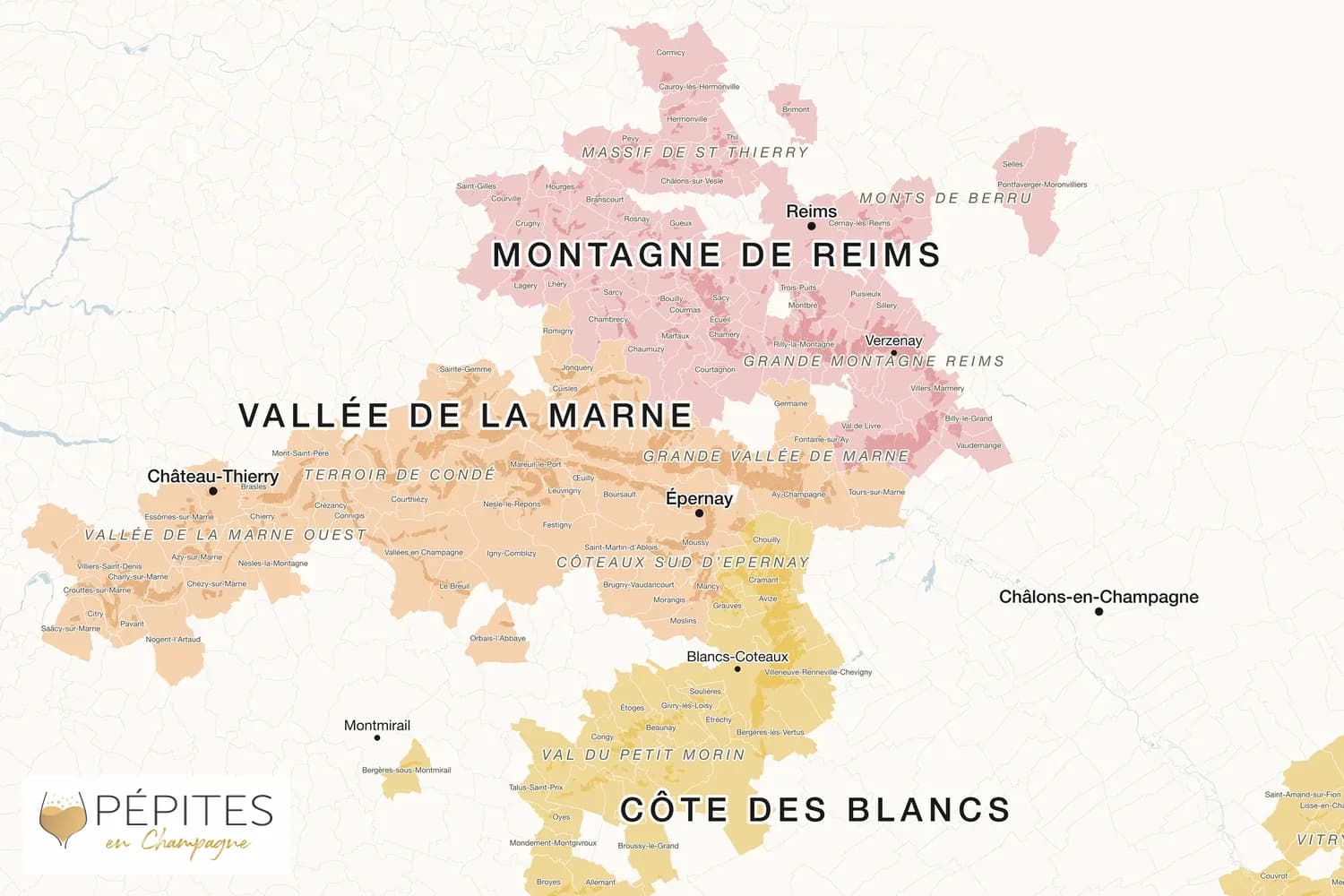
Atlas of Champagne Crus: the 319 Villages of the Appellation and their 17 Grands Crus in Maps
The Champagne appellation covers 319 crus and 34,317 hectares, including 17 grands crus and 42 premiers crus. Here is our atlas: the map of the four regions, the parcel maps of the grands crus and the complete list of villages.
Champagne prices in 2026: our cellar's barometer, based on 268 cuvées
How much does a bottle of champagne really cost in 2026? We reviewed the 268 cuvées in stock in our cellar: median price, differences between major houses and winegrowers, price by style, and loss-leader prices from major brands.
