There is one thing that is often overlooked about Louis Roederer: the house owns its own vineyards. It has 250 hectares of its own vineyards, whereas most of the major houses in Reims buy the bulk of their grapes. It is a structural detail, but it makes all the difference — it allows the house to vinify plot by plot, to decide the harvest date for each hillside, and to work the land just as a winegrower would. Founded in 1776 and remaining family-owned and independent for seven generations, Roederer is a great house that operates like a single estate.
Its range is organised into four tiers. This guide takes you through them from the most affordable to the rarest, detailing what each offers and its price here.
The Louis Roederer style: the vineyard comes first
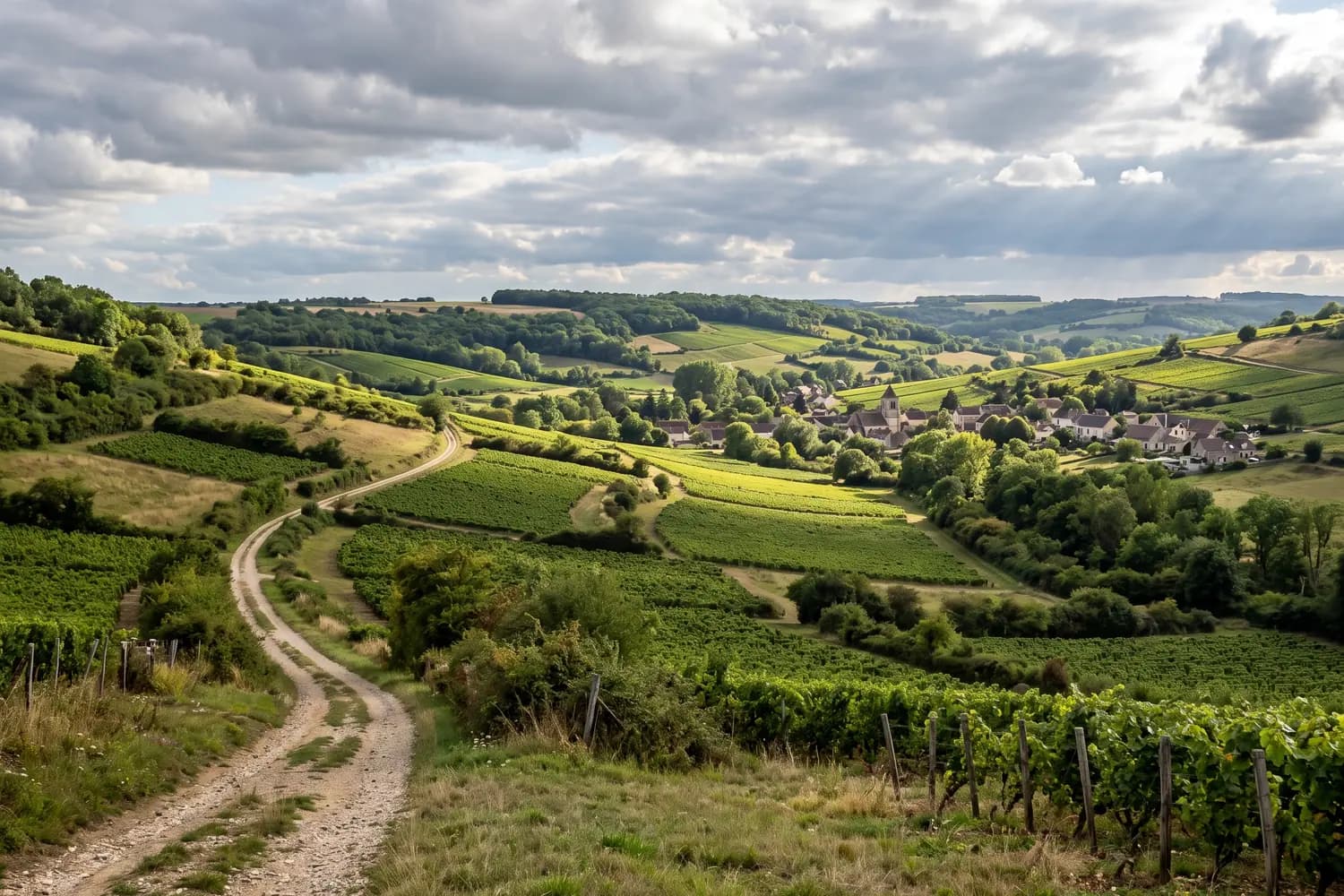
Three things set the house apart. The first is its estate: 250 hectares spread across the Montagne de Reims, the Marne Valley and the Côte des Blancs, 135 of which are certified organic. The second is plot-by-plot winemaking, overseen by cellar master Jean-Baptiste Lécaillon: each plot ferments separately, which increases the number of vats but ensures that only the best batches are blended.
The third is the perpetual reserve, the common thread running through the range for the past fifteen years or so. The principle: a vat that is never completely emptied and is replenished each year with the new vintage. Over time, it becomes the house’s liquid memory, where each recent year engages in dialogue with all those that came before. It is this that gives the Collection its unusual depth for a non-vintage brut.
The Louis Roederer range at a glance
| Cuvée | Profile | Price |
|---|
| Collection 246 (without gift box) | A multi-vintage brut, the house’s entry-level wine | €54.90 |
| Collections 245 and 246 | The same, in a gift box | €58.90 |
| Brut Nature 2015 by Starck | Single vineyard, no dosage | €76.96 |
| Vintage Rosé 2017 | Vintage rosé, predominantly Pinot Noir | €81.50 |
| Brut Nature Rosé 2015 by Starck | The rosé version, undosaged | €88.00 |
| Vintage 2018 · Brut Nature 2018 by Starck | Vintage wines for dining | €89.90 |
| Blanc de Blancs 2016 and 2019 | Pure Chardonnay from the Côte des Blancs | €91.00 to €95.95 |
| Cristal 2016 | The prestige cuvée | €262 to €295 |
Collection: the brut that embraces its vintage
The Collection 246 is the entry-level wine and offers the best value for money in the range at €54.90 without a gift box. Its number is not merely decorative: it represents the sequence of blends dating back to 1776. The 246 is composed of 55 per cent wines from the 2021 harvest, supplemented by 35 per cent from the perpetual reserve — vintages from 2012 to 2020 — and 10 per cent reserve wines aged in oak. A quarter of the blend has seen oak, malolactic fermentation is carried out on only 30 per cent of the wine, and the dosage is capped at 7 g/L.
In the glass: a Champagne that is more vinous and taut than a classic non-vintage brut, with yellow fruit, citrus and a noble bitterness on the finish. The Collection 245, still available, is based on the 2020 vintage: it is slightly rounder. Both are available in a gift set for €58.90.
The vintage champagnes: Vintage, Rosé and Blanc de Blancs
Roederer only declares a vintage in good years, and does so in three expressions. The 2018 Vintage (€89.90) is the classic blend – ripe and complex, perfect for the table. The 2017 Vintage Rosé (€81.50) is dominated by Pinot Noir and behaves more like a light red wine than an aperitif rosé.
The 2016 (€91) and 2019 (€95.95) Blanc de Blancs come from a few mid-slope plots in the Côte des Blancs, on limestone soils that give them an immediately recognisable chalky tension. These are the range’s age-worthy cuvées, the ones that benefit most from being left to mature for five or ten years in the cellar. If you’re torn between several vintages, our guide to Champagne vintages will help you decide.
Brut Nature by Philippe Starck: one plot, nothing added
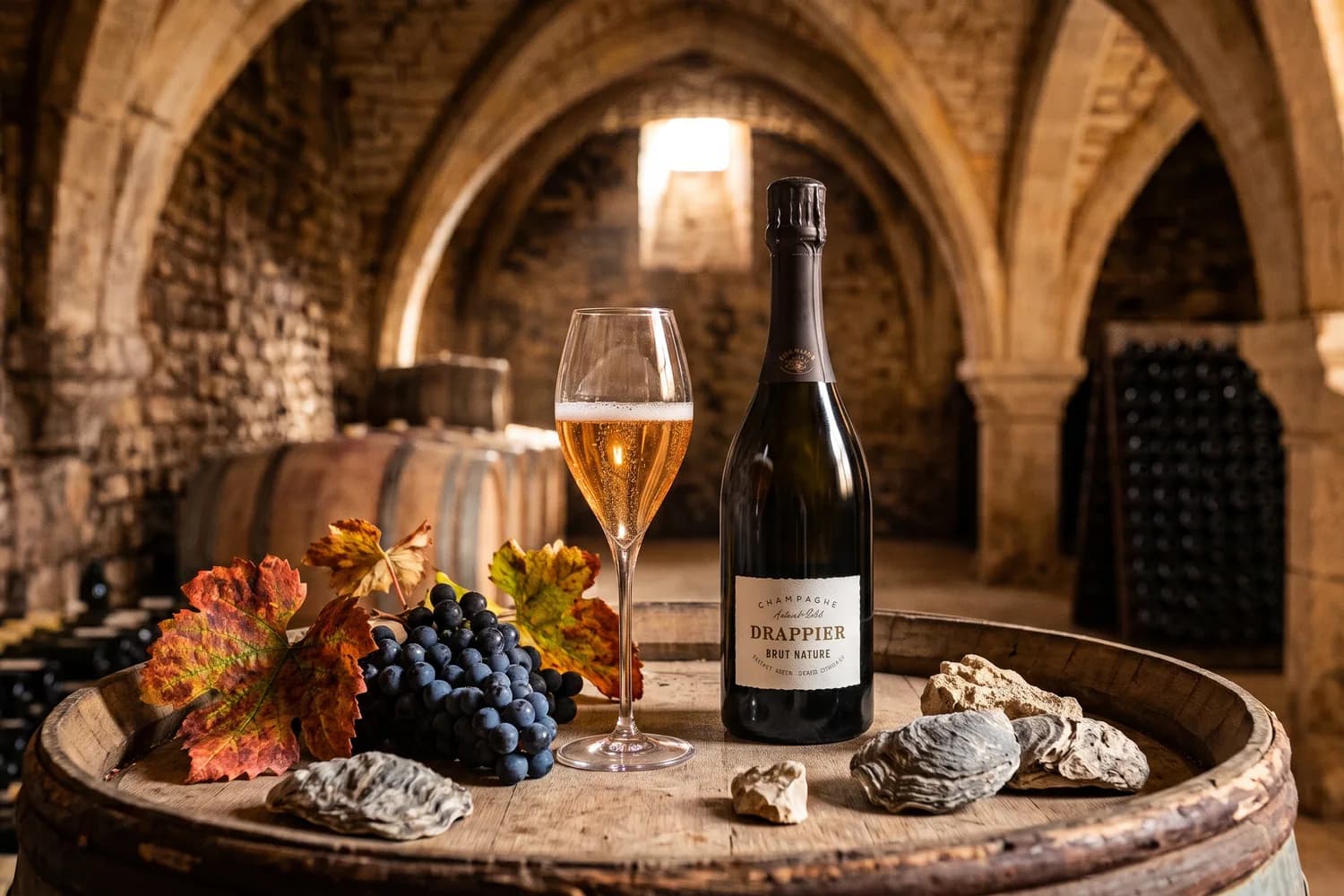
This is the house’s most distinctive cuvée, and the one that divides opinion the most. It comes from a single plot in Cumières, in the Marne Valley, on clay soils that produce full-bodied, sun-kissed wines. It is produced only in hot years — those in which the grapes reach such a level of ripeness that dosage becomes unnecessary — and is therefore released without a single gram of sugar. Philippe Starck has designed the label since the very first release; the 2018 (€89.90) is the fifth.
The 2015 vintage is still available at €76.96, and the rosé version is available in both the 2015 (€88) and 2018 (€94.90) vintages. Best served with a meal, never as an aperitif: without dosage, these wines need a substantial dish to complement them.
Cristal: the Tsar’s cuvée
In 1876, Tsar Alexander II asked the house for a champagne that he could recognise above all others — and which could not be poisoned without him noticing. Hence the clear-glass bottle with a flat base, which has remained unchanged ever since. Cristal 2016 is produced only in great vintages, exclusively from the house’s finest estate-owned vineyards, and is cellared for a long time before release. Expect to pay €295 in a gift box, or €262 without — a saving of €33 if the bottle is for yourself rather than as a gift. We’ve dedicated an entire article to it, vintage by vintage.
Louis Roederer prices: what to expect
The range spans from €54.90 to €295. There are three useful price brackets: around €55–60 for a ‘Collection’, between €80 and €96 for a vintage or a Brut Nature, and €262 to €295 for Cristal. At each price point, the version without a gift box is €4 to €33 cheaper — the gift box doesn’t change the wine itself, only the impression it makes when given as a gift.
Which Louis Roederer for which occasion?
- Discover the house: Collection 246 without a gift box, €54.90.
- A dinner party: Vintage 2018 or Blanc de Blancs 2016 — both pair well with a main course.
- A foolproof gift: Collection 246 in a gift box, €58.90.
- To surprise a connoisseur: Brut Nature 2018 by Starck — few people have tasted it.
- A special occasion: Cristal 2016.
Serving and storing Louis Roederer
The Collection cuvées are best served between 8 and 10 °C, whilst the vintage cuvées and Cristal are best served at around 10–12 °C, in a wide-bowled glass that allows them to open up. Brut Nature champagnes need a little air: open them ten minutes before serving. All these cuvées are suitable for ageing; the Blanc de Blancs and Cristal can be kept for ten years or more in a cool, dark cellar — our storage guidelines apply to them just as they do to the rest of the cellar.