

Barons de Rothschild: Blanc de Blancs, Rosé, Triptyque, Rare or Le Grand Clos — which Rothschild champagne should you choose?
The essentials
Barons de Rothschild (2005) is the champagne shared by the three Rothschild branches — Lafite, Mouton and Clarke —, made from 85 per cent Grand Crus and Premiers Crus, predominantly Chardonnay, aged for at least four years and with low dosage. In our cellar: Rosé (€73), Blanc de Blancs (€82), Triptyque 2018 (€99, three grape varieties, three vintages, three terroirs), Rare Blanc de Blancs 2014 (€316) and Le Grand Clos 2019 (€688), the first vintage from a vineyard in Vertus planted before 1914.
- Who produces Barons de Rothschild champagne?
- The three branches of the Rothschild family united: Château Lafite Rothschild, Château Mouton Rothschild and Château Clarke (Edmond de Rothschild). The estate, founded in 2005, is based in Reims and Vertus, on the Côte des Blancs, under the direction of cellar master Guillaume Lété. Its motto: Concordia, Industria, Integritas.
- What is the style of Barons de Rothschild champagnes?
- First, the Chardonnay: 85 per cent of the grapes come from Grand Cru and Premier Cru vineyards, mainly from the Côte des Blancs (Avize, Le Mesnil-sur-Oger, Oger, Vertus). Long ageing — at least four years —, low dosage, and plot-by-plot vinification: pure, crisp and precise champagnes, in the spirit of great white wines.
- How much does a bottle of Barons de Rothschild champagne cost?
- From €73 (Rosé) to €688 (Le Grand Clos 2019) in our cellar. Blanc de Blancs €82, Triptyque 2018 €99, Rare Blanc de Blancs 2014 €316.
- What is Le Grand Clos?
- A plot enclosed by walls for over two hundred years, in the heart of the Vertus Premier Cru, planted before the First World War and acquired by the Rothschild family in 2013. The 2019 vintage (€688) marks the first time it has been vinified and sold as a single vineyard wine: a ‘clos’ Chardonnay, the Champagne equivalent of a Burgundian monopole.
- Which vintage would be best for a corporate gift?
- The name is half the gift. Blanc de Blancs (€82) for a set, Triptyque 2018 (€99) for an important client, Rare 2014 (€316) for a key partner. Our article on champagne as a corporate gift sets out the various ways it can be used.
Lafite, Mouton, Clarke: the three branches of the Rothschild family, rivals in Bordeaux for a century and a half, have come to an agreement on just one occasion — to produce champagne. Since 2005, Barons de Rothschild has been producing a small range, dominated by Chardonnay from the Côte des Blancs, and crowned by a Clos de Vertus vinified separately. Here are the five cuvées in our cellar, with their prices.
5 min read
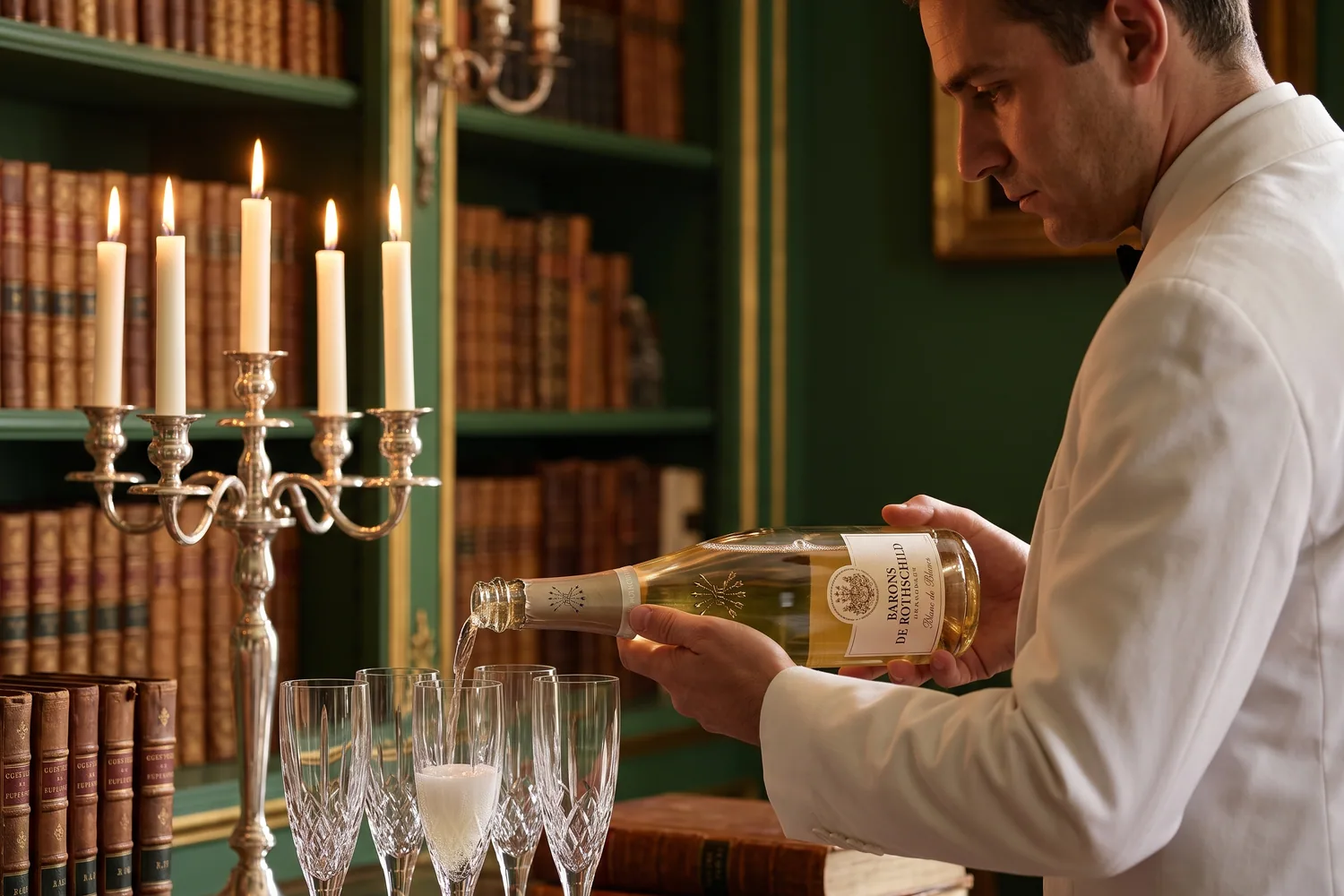
For one hundred and fifty years, the Rothschilds of Lafite, Mouton and Clarke cultivated their distinct identities in Bordeaux. In 2005, they decided to do something together — and it wasn’t Bordeaux. Barons de Rothschild is the champagne that brings the three branches together: a small range, dominated by Chardonnay from the Côte des Blancs, aged for a long time and with minimal dosage, under the motto ‘Concordia, Industria, Integritas’. This guide reviews the five cuvées available in our cellar, detailing what’s in the glass and the prices observed.
Barons de Rothschild: the name, and what lies behind it
The house is young, but it is not starting from scratch: 85 per cent of its grapes come from grands crus and premiers crus — Avize, Le Mesnil-sur-Oger, Oger, Trépail and Vertus on the Côte des Blancs for the Chardonnay; Aÿ, Verzenay, Ambonnay and Avenay on the Montagne de Reims for the Pinot Noir. Cellar master Guillaume Lété vinifies each plot individually, ages the wines for at least four years and uses a low dosage (6 g/L for the brut). The result is a style characterised by purity and tension, closer to a great white wine than a festive champagne. Our article on the Champagne classification explains the significance of these villages.
The range at a glance
| Cuvée | Style | Price | For |
|---|---|---|---|
| Rosé | Predominantly Chardonnay, with a touch of Pinot Noir vinified as a red wine | €73 | Aperitif, fine dining |
| Blanc de Blancs | Chardonnay, Côte des Blancs | €82 | Aperitif, fish, gift |
| Triptych 2018 | 3 grape varieties, 3 vintages, 3 terroirs | €99 | Dining, for the curious |
| Rare Blanc de Blancs 2014 | Prestige, grands crus from the Côte des Blancs | €316 | Special Occasion, for ageing |
| Le Grand Clos 2019 | Clos de Vertus, first vintage | €688 | Collection |
Blanc de Blancs: the cuvée that defines the house
The Blanc de Blancs (€82) is the Barons de Rothschild that you simply must try: a Chardonnay from the Côte des Blancs, pale in colour with green highlights, a stream of bubbles of rare finesse, fresh citrus and exotic fruits on the initial nose, followed by brioche, toasted almond and damp chalk as it opens up; silky, mineral and fresh on the palate. This is a Blanc de Blancs from a prestigious house, comparable to Salon or the Comtes de Champagne — younger, more affordable, and a gift that needs no explanation (see our gift sets). Our other Blanc de Blancs are available here.
Rosé: the delicacy of Chardonnay
The Rosé (€73) reverses the usual formula: Chardonnay makes up the majority of the blend, whilst Pinot Noir is used only sparingly, vinified as a red to contribute colour and fruit. The result is a delicate colour, with aromas of fresh red berries, rose petals and grapefruit, fine bubbles and a mineral freshness — a rosé more suited to a gourmet meal than as an aperitif, perfect with fish, carpaccio or poultry. Our other rosés help to put this one into context.
Triptyque 2018: three grape varieties, three vintages, three terroirs
Triptyque 2018 (€99) is the house’s most original creation: a vintage wine that brings together the three Champagne grape varieties, three harvest years and three great terroirs in a single cuvée — a blending exercise taken to the highest level, aged at length on its lees. Chalky tension, fruity depth, floral elegance: structured and harmonious, it is the Barons de Rothschild of the dining table, and a bottle that’s sure to spark conversation at a dinner party. Our other vintage wines are listed in the catalogue.
Rare Blanc de Blancs 2014: the prestige cuvée
The Rare Blanc de Blancs 2014 (€316) is the quintessence of the style: the finest Grand Cru Chardonnays from the Côte des Blancs, a very limited production, and a long ageing on lees. Ripe citrus fruits, white flowers, minerality, a fresh, briny and elegant finish — a champagne of purity and precision, intended for discerning connoisseurs, as the house puts it, and for those special occasions. A bottle to keep in the cellar.
Le Grand Clos 2019: the Vertus monopole
Le Grand Clos 2019 (€688) is a real treat: behind walls over two hundred years old, in the heart of the Vertus premier cru, lies a plot planted before the First World War and acquired by the family in 2013, vinified and marketed on its own for the first time. A single-vineyard Chardonnay, the most intimate expression of the house’s terroir, unveiled, she says, only when it was deemed ready. Much like Philipponnat’s Clos des Goisses, it is a single-vineyard champagne before it is a branded champagne — two bottles in the cellar, for collectors.
Which Barons de Rothschild cuvée for which occasion?
Aperitif: Blanc de Blancs. Meal: Rosé with fish, Triptyque 2018 with poultry or veal. Corporate gift: the name does half the job — Blanc de Blancs as a standard choice, Triptyque for an important client, Rare 2014 for a key partner; our article on champagne as a corporate gift sets out the appropriate uses. Cellar: Rare 2014 and Le Grand Clos 2019, for ten to fifteen years; the others are best enjoyed within five years.
Serving and storage
Serve the Blanc de Blancs and the Rosé at 8–9 °C in a tulip-shaped glass; Triptyque, Rare and Le Grand Clos at 10–11 °C in a white wine glass, opened half an hour beforehand. Store bottles lying down, in the dark, at between 10 and 12 °C (our advice). The prices shown are those recorded in our cellar on the date of publication; Rare and Le Grand Clos are available in limited quantities.
The bottles in this article
À lire également
Champagne Henriot : le chardonnay de gastronomie à travers la cuvée Rose Noire
En Champagne, le chardonnay incarne la pureté, la tension saline et l’élégance minérale. Chez Champagne Henriot, ce cépage blanc d’élite constitue la colonne vertébrale du style de la Maison, portée par les grands crus de la Côte des Blancs. Si le Blanc de Blancs classique de la gamme illustre la vivacité crayeuse des terroirs d'Avize ou de Chouilly, une cuvée plus confidentielle attire le regard des connaisseurs : la cuvée Rose Noire Pur Chardonnay.
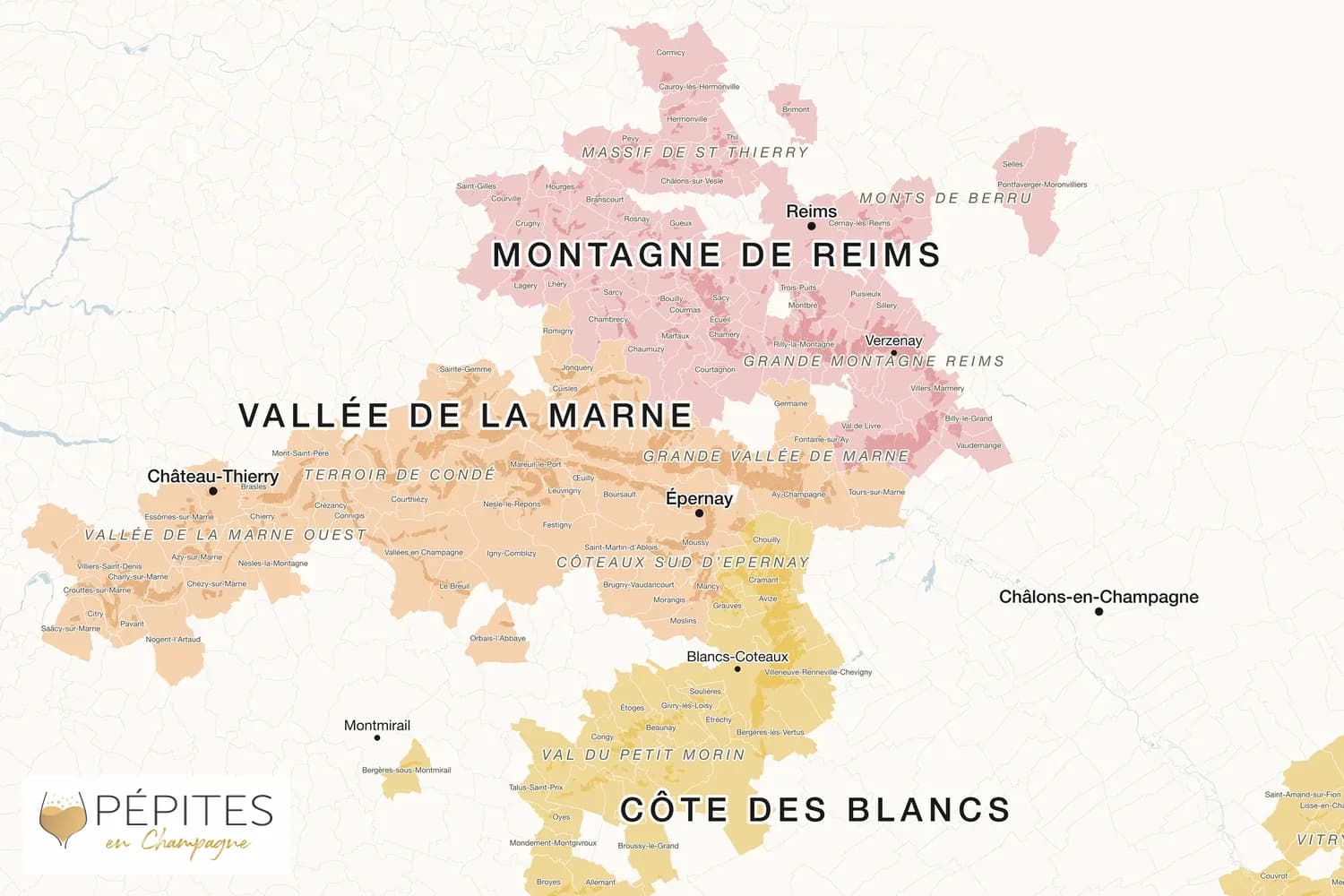
Atlas of Champagne Crus: the 319 Villages of the Appellation and their 17 Grands Crus in Maps
The Champagne appellation covers 319 crus and 34,317 hectares, including 17 grands crus and 42 premiers crus. Here is our atlas: the map of the four regions, the parcel maps of the grands crus and the complete list of villages.
Champagne prices in 2026: our cellar's barometer, based on 268 cuvées
How much does a bottle of champagne really cost in 2026? We reviewed the 268 cuvées in stock in our cellar: median price, differences between major houses and winegrowers, price by style, and loss-leader prices from major brands.
