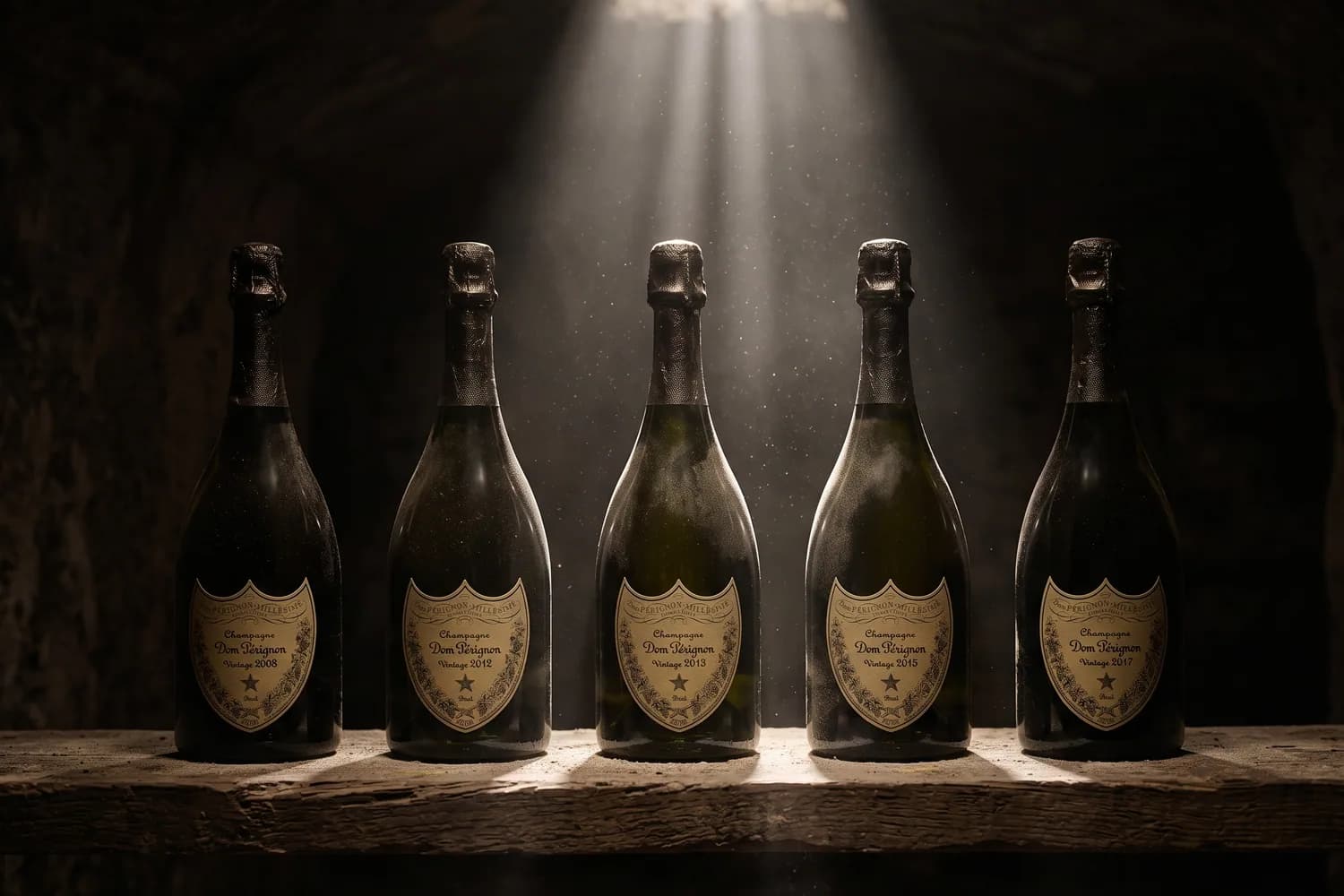
Dom Pérignon is the prestige cuvée of Moët & Chandon (LVMH group), produced in Épernay and named after the cellarer monk of Hautvillers Abbey. Its policy is simple and rare in Champagne: the house produces only vintage champagnes, never non-vintage ‘brut’, and refuses to release a vintage that does not meet its high standards — it therefore skipped the 2015 Vintage and moved straight to the 2017 Vintage. Choosing ‘a’ Dom Pérignon therefore means, first and foremost, choosing a vintage, a stage of maturity (Plénitude 1 or 2) and, at times, a specific edition. This guide reviews the cuvées available in our cellar, along with their current prices.
Dom Pérignon: three key points
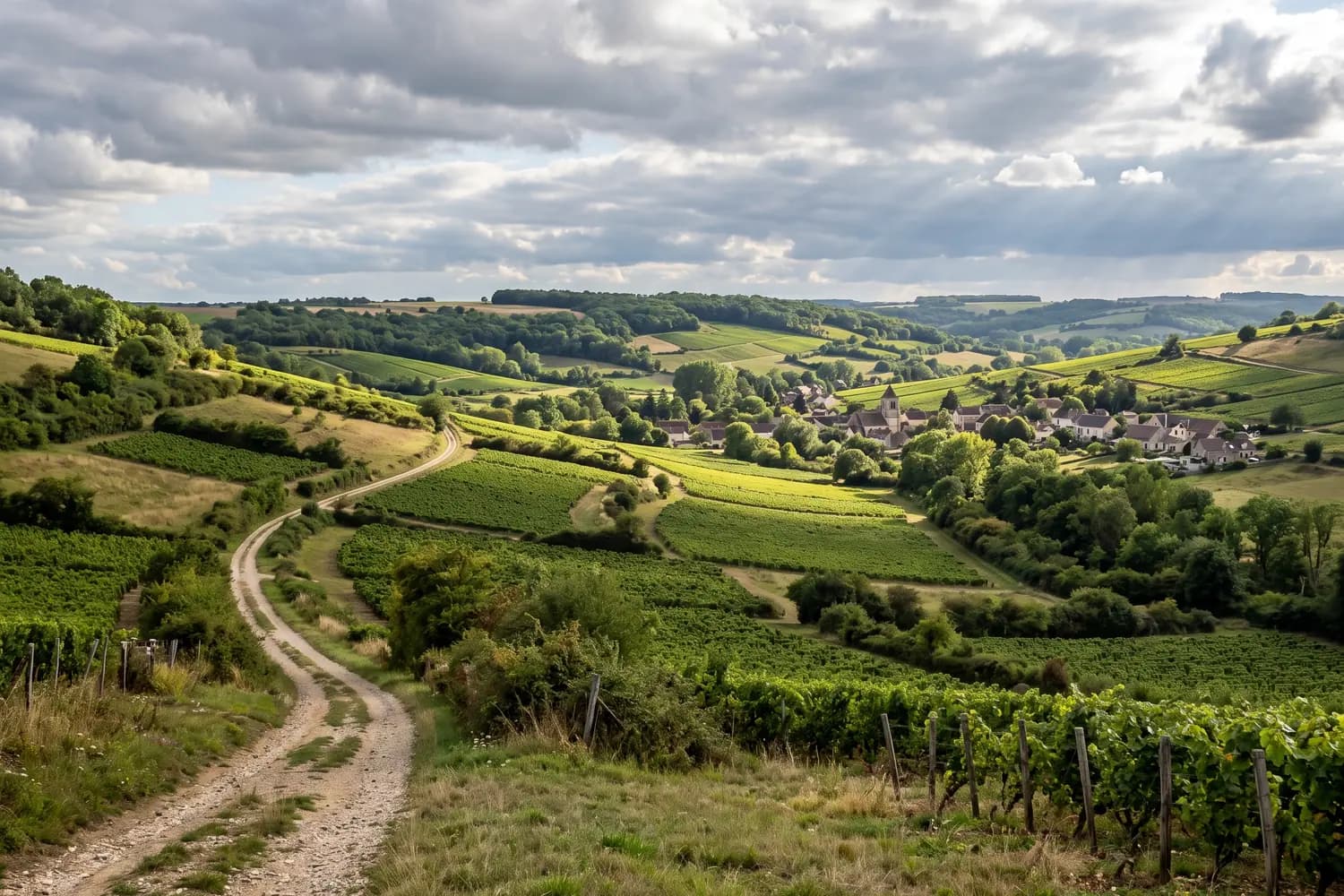
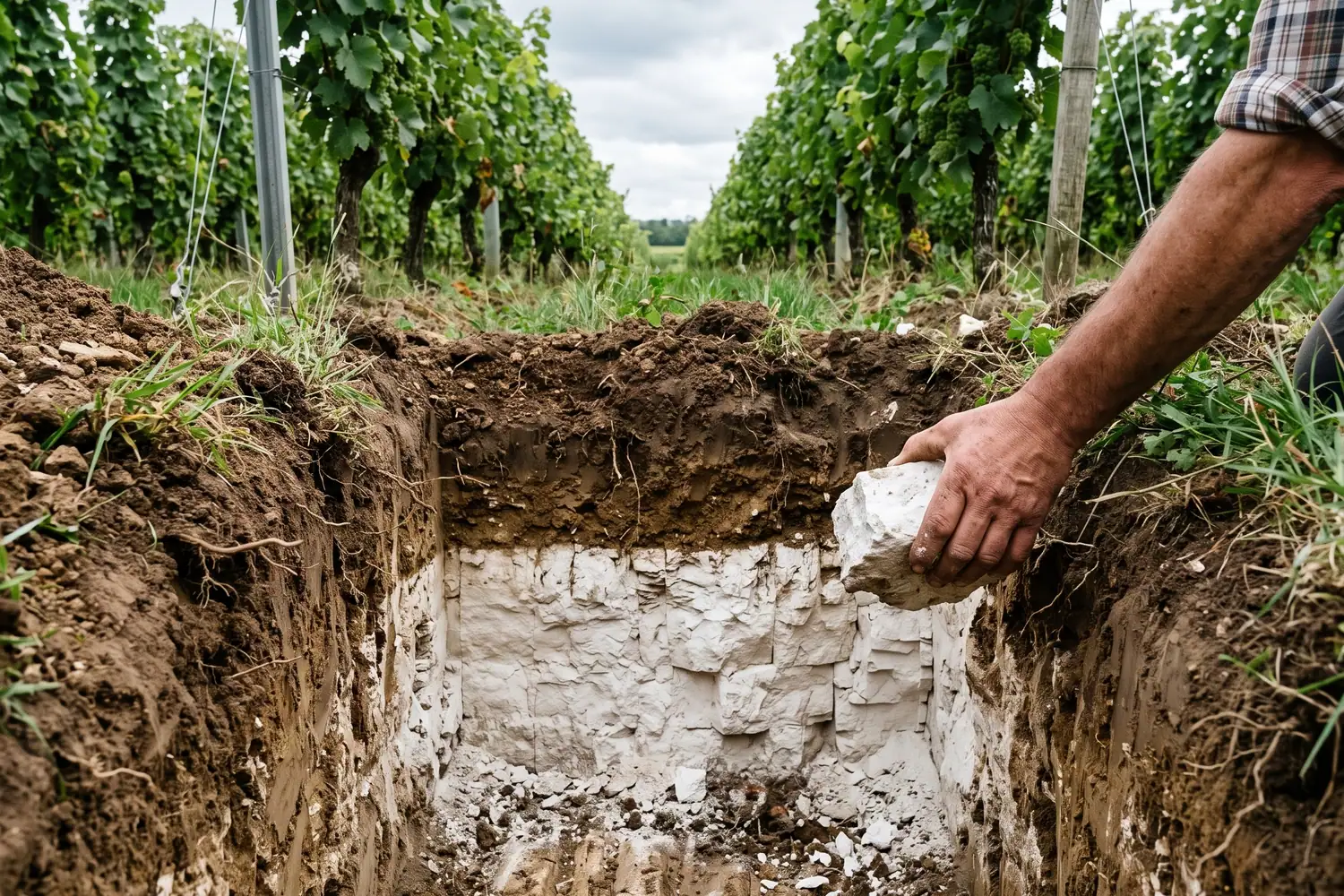
- A blend of Chardonnay and Pinot Noir, in roughly equal proportions depending on the vintage, sourced from the finest crus in Champagne and the historic village of Hautvillers.
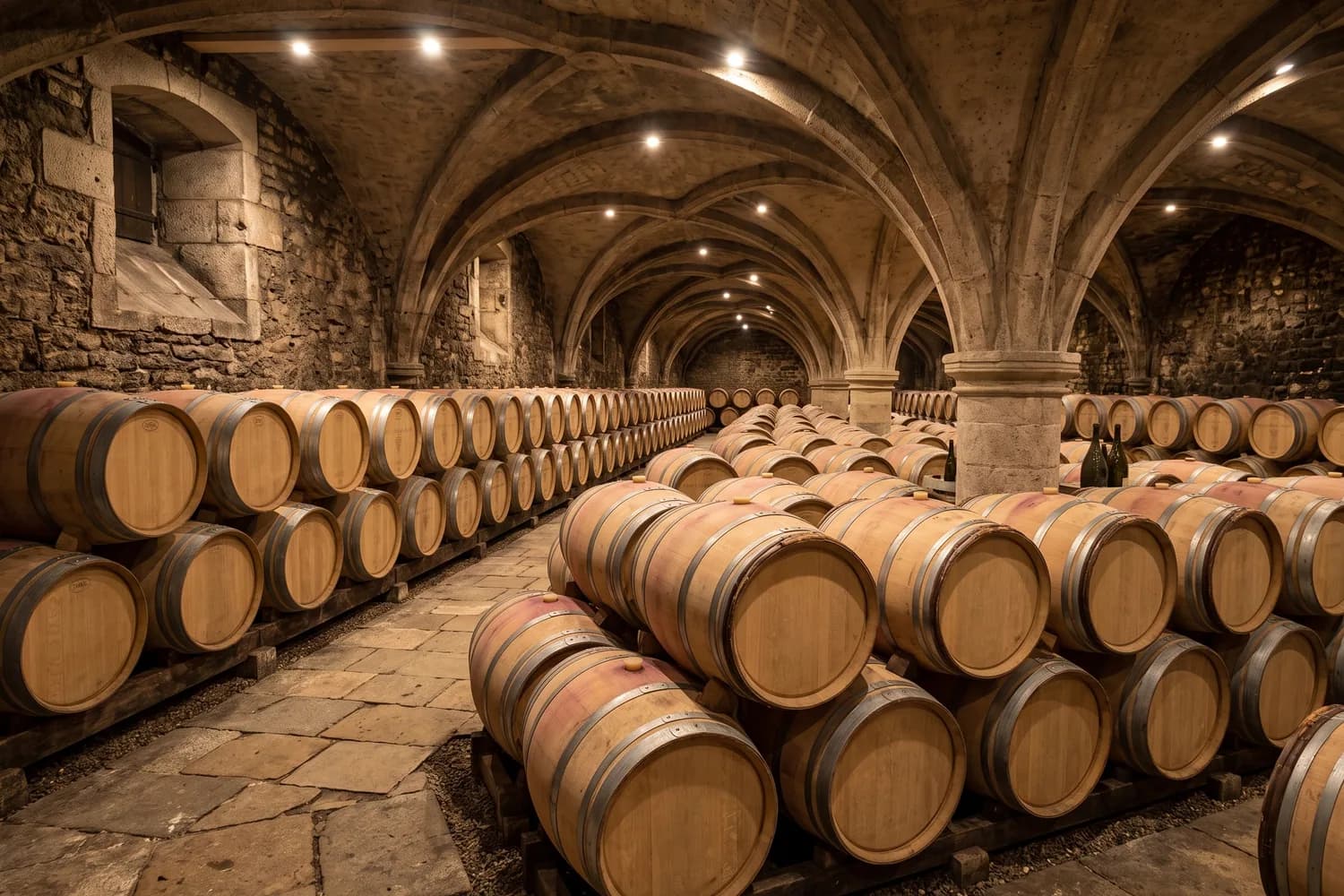
- Three stages of maturity. The first (P1, the ‘Vintage’) after at least seven to eight years on the lees; the second (P2) after around fifteen years; the third (P3) after more than twenty-five years.
- The cellar master, Vincent Chaperon, has succeeded Richard Geoffroy since 2019, the latter having overseen every vintage from 1990 to 2017.
For the legend of the monk, the abbey and the origins of the cuvée, read our history of Dom Pérignon. Here, we’re talking about the bottles.
Dom Pérignon vintages, year by year
2008 vintage: the benchmark vintage
A cool, late-ripening year with high acidity, producing wines built for ageing: 2008 is one of the great Champagne vintages of the century, and Dom Pérignon kept it in reserve — it was released after the 2009, in 2019, coinciding with the handover from Richard Geoffroy to Vincent Chaperon. Warm brioche, candied citrus, acacia blossom and chalk: tension and richness are perfectly balanced. Enjoy it now whilst it is still young, or lay it down for another ten years. Discover our Dom Pérignon Vintage 2008.
Vintage 2010: the unexpected vintage
A summer marred by August rains, saved by rigorous sorting at harvest: few houses declared 2010, but Dom Pérignon did. Candied mandarin, white flowers, chalky minerality and delicate smokiness combine to create a wine of great precision. We offer it in magnum bottles, a format that further slows its development and is ideal for large gatherings.
2012 Vintage: Generosity
Frost, hail and difficult flowering reduced the 2012 harvest, but the hot, dry summer concentrated what remained: a rich, structured vintage that is both ripe and fresh. Anjou pear, toasted brioche, smoky notes, candied citrus and a hint of menthol. Available in standard bottles or magnums.
Vintage 2013: Tension
A late harvest in October, as in days gone by: the 2013 is a slender, lemony and mineral Dom Pérignon, with notes of acacia blossom, yellow plum and a chalky backbone. It is one of the most affordable and one of the most gastronomic. Available in a standard bottle, in a gift box or as a magnum.
Vintage 2015: the sunny one
A hot, dry summer: the 2015 is ripe and intense, characterised by toasty notes, cocoa, white flowers (lime blossom, jasmine, peony) and spices — aniseed, cardamom — enhanced by orange and green papaya. It is currently the most sought-after vintage, the one the house has chosen for its Basquiat and Murakami editions. Available with or without a gift box.
2017 vintage: the rarest
Released in early 2026, the 2017 is the smallest release in the house’s history, resulting from a year of frost and very low yields. The last vintage blended by Richard Geoffroy, it gives pride of place to Chardonnay (61 per cent) with a dosage of 5 g/l, classifying it as extra-brut: taut, rich in texture, almost exotic. Don’t miss out whilst stocks last: Dom Pérignon Vintage 2017.
Dom Pérignon Rosé: the boldness of Pinot Noir
The house’s rosé is a Pinot Noir-based wine, to which a proportion of red wine lends its coppery colour and fruitiness. The 2009 Vintage Rosé, born of a sunny year, offers blood orange, raspberry, pomegranate and Timut pepper on a full-bodied and silky palate: a rosé for fine dining rather than an aperitif. It is also available without a gift box. For collectors,the 2010 Murakami Rosé edition showcases the following vintage.
Full Maturity P2: the Dom Pérignon of maturity
After around fifteen years on the lees, a vintage enters its second phase of maturity: greater fullness, energy and length, with notes of candied fruit, sweet spices and roasted aromas. The house disgorges it late and adds very little dosage.
- Plénitude P2 2003 — a year of heatwaves, a round and full-bodied wine: white peach, candied mirabelle plum, toasted brioche, brown butter and flint.
- Plénitude P2 2006 — the most opulent: mango, apricot, candied citrus, roasted coffee and hints of baklava. Also sold without a gift box.
- Plénitude P2 2008 — due for release in 2026, disgorged in 2024 with less than 5 g/l of dosage: the vibrant acidity of the 2008, underpinned by the richness of its maturity, with notes of wild strawberry, bergamot, roasted hazelnut and mocha. The most eagerly awaited P2 of the decade.
Expect to pay between €430 and €495 per bottle: that’s the price of fifteen years’ cellaring at the house.
Limited editions by Basquiat and Murakami: the perfect gift
Every year-end, the house commissions an artist to design the label for its vintage.The Jean-Michel Basquiat edition features the 2015 vintage on three labels inspired by his works, available individually or in a box set of three bottles bringing together all three designs.The Takashi Murakami edition, also based on the 2015 vintage, and its Rosé 2010 counterpart complete the series. The wine is identical to the 2015 Vintage: you’re paying for the object, the rarity and the box set — from €255 to €340 per bottle.
Dom Pérignon prices: what to expect
| Cuvée | Observed prices (including VAT, 75 cl unless otherwise stated) |
|---|
| Vintage 2013, 2015, 2017 | €228 to €240 |
| Vintage 2012 | approx. €234 |
| Vintage 2008 | €335 |
| Murakami and Basquiat limited editions (2015 vintage) | €255 to €340 |
| 2009 Vintage Rosé | €425 to €430 |
| Plénitude P2 (2003, 2006, 2008) | €429 to €495 |
| Magnums (2010, 2012, 2013) | €634 to €649 |
| Basquiat gift set, 3 bottles | €1,095 |
Prices recorded in our cellar in September 2026; they vary as new releases come out from the house. The same cuvée is often available with or without a gift box: the wine is identical, only the packaging changes, with a price difference of around ten euros. To see how Dom Pérignon compares with its rivals, read our Cristal vs Dom Pérignon comparison and our ranking of the 10 most expensive champagnes in the world.
Which Dom Pérignon for which occasion?
- To open tonight, with a meal: the 2013 Vintage with fish and shellfish, the 2012 with poultry and mushrooms.
- A foolproof gift: the 2015 Vintage in a gift box, or a Basquiat or Murakami edition.
- For a discerning connoisseur: the 2008 Vintage, or a Plénitude P2.
- To mark a special year (birth, wedding): the corresponding vintage — 2008, 2010, 2012, 2013, 2015 or 2017 — in a standard bottle or a magnum.
- For a large gathering: a magnum, which ages more slowly and makes quite an impression when served.
To put these vintages into the wider context of Champagne as a whole, our article on the best Champagne vintages is a useful complement to this guide.
Serving and storing Dom Pérignon
Serve it at between 10 and 12 °C, in a white wine glass rather than a narrow flute, to allow the toasty and smoky aromas that are the hallmark of the house to come through. A bottle can be stored for several years lying down, away from light, at a temperature of between 10 and 15 °C: a recent Vintage gains in roundness over five to ten years, whilst a Plénitude P2 can be kept for even longer. Our champagne storage and serving guidelines provide further details. All available cuvées are listed on the Dom Pérignon house page.