

Mumm RSRV: Cuvée 4.5, Foujita Rosé, Blanc de Noirs, Lalou — Mumm’s exclusive collection: which cuvée should you choose?
The essentials
Mumm RSRV is the ‘réservée’ collection from G.H. Mumm (Reims, 1827): 100 per cent grands crus — Cramant and Avize for the Chardonnay, Verzenay, Aÿ, Bouzy and Ambonnay for the Pinot Noir —, with a dosage of 6 to 9 g/L and four to six years’ ageing in the cellar. In our cellar: Cuvée Lalou 2008 (€119.90), the prestigious blend from a legendary vintage; Blanc de Noirs 2013 (€74.90), a Pinot Noir from Verzenay; Cuvée Foujita Rosé (€59.50), a rosé made from six grands crus and bearing the painter’s signature. Cuvée 4.5 (€49.90) is currently out of stock.
- What does RSRV mean at Mumm?
- ‘Réservé’ without the vowels: that was the label the winery used on the bottles it kept for family and friends. Since 2017, RSRV has been a collection in its own right, distributed on a limited basis, outside the mainstream retail channels.
- What is the difference between Mumm Cordon Rouge and Mumm RSRV?
- Le Cordon Rouge blends around a hundred wines, including premiers crus, with a classic brut dosage. RSRV uses only grands crus, with a dosage of between 6 and 9 g/L (extra-brut or brut léger), and is aged for four to six years in the cellar, compared with three for Le Cordon Rouge. The result is more taut, more profound, and closer to a terroir-driven champagne.
- How much does a Mumm RSRV cost?
- From €49.90 (Cuvée 4.5, currently out of stock here at the time of writing) to €119.90 (Cuvée Lalou 2008). In between: Cuvée Foujita Rosé €59.50, Blanc de Noirs 2013 €74.90.
- What is the Cuvée Lalou?
- Mumm’s prestige cuvée, named after René Lalou, president of the house from 1920 to 1973, who created it in 1969. Reintroduced in 2006, it is a blend of Pinot Noir and Chardonnay from twelve Grand Cru plots, produced only in exceptional vintages. The 2008 (€119.90) is a vintage for the history books.
- Who is Foujita?
- Léonard Foujita (1886–1968), a Japanese painter of the School of Paris and a friend of René Lalou. In 1958, he painted the roses of the Cordon Rosé for Mumm and decorated the Notre-Dame-de-la-Paix chapel in Reims, which was funded by the house. The RSRV Foujita Rosé cuvée features these roses on its label.
Everyone is familiar with the Cordon Rouge. Few people know that behind this ribbon, Mumm keeps a collection that the house used to reserve for its friends: RSRV, four cuvées made exclusively from grand cru grapes, with low dosage, and aged for four to six years. Here’s what they’re worth, what sets them apart, and which one to choose.
5 min read
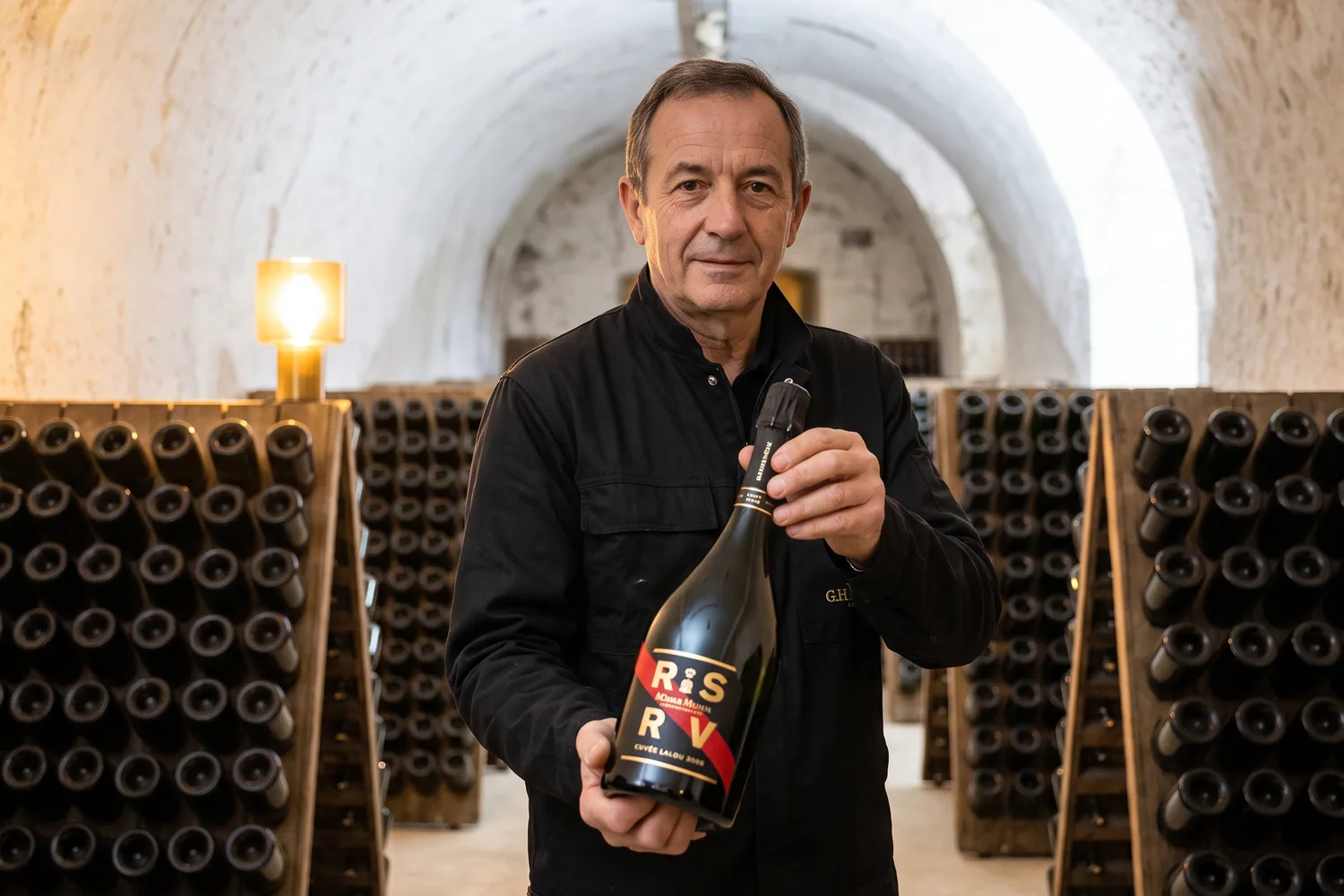
On the label, three letters and a consonant: RSRV. It stands for ‘réservé’ without the vowels, and this is what Mumm used to write on the bottles it kept for itself, its friends and its distinguished guests. Since 2017, this reserve has become a collection: four cuvées made exclusively from grand cru grapes, with low dosage, aged for longer than the Cordon Rouge, and sold far from supermarket shelves. This guide explains what sets them apart, cuvée by cuvée, with prices as recorded in our cellar.
G.H. Mumm and its reserve
The house was founded in Reims in 1827 by three German merchants: Gottlieb de Mumm, Friedrich Giesler and Jacques-Louis Bohne. The red ribbon across its bottle – the ribbon of the Legion of Honour, affixed as early as 1876 – has made it one of the world’s most recognisable champagnes, and today one of Pernod Ricard’s leading brands. RSRV is its other side. Whilst the Cordon Rouge blends around a hundred different wines, this collection draws exclusively from the grands crus: Cramant and Avize, on the chalk soils of the Côte des Blancs, for the Chardonnay; Verzenay, Aÿ, Bouzy and Ambonnay, on the clay-limestone soils of the Montagne de Reims, for the Pinot Noir. Dosage of 6 to 9 g/L, aged for four to six years in the cellar. Our article on the Champagne classification explains what ‘grand cru’ means; the one on Mumm’s Stellar champagne, designed for space, highlights the house’s penchant for the unexpected.
The collection at a glance
| Cuvée | Grape varieties and crus | Price | For |
|---|---|---|---|
| Cuvée 4.5 | 60% Pinot Noir, 40% Chardonnay, 5 grands crus | €49.90 (out of stock) | Aperitif, introductory |
| Foujita Rosé | Rosé, 6 grands crus | €59.50 | Aperitif, gift |
| Blanc de Noirs 2013 | 100% Pinot Noir, Verzenay | €74.90 | Dining, white meats |
| Cuvée Lalou 2008 | Prestige, 12 grand cru plots | €119.90 | Special occasions, for ageing |
Cuvée 4.5: the entry-level wine
The Cuvée 4.5 (€49.90) takes its name from its recipe: a minimum of four years’ ageing in the cellar, five grands crus, 60 per cent Pinot Noir and 40 per cent Chardonnay. Warm brioche, white peach, white flowers, toasted hazelnut, a full-bodied and fresh palate — this is the everyday RSRV, and the best way to appreciate, in a single glass, the difference between this and the Cordon Rouge. It’s currently out of stock here as we write; the following three cuvées are available.
Cuvée Foujita Rosé: the painter’s roses
The Cuvée Foujita Rosé (€59.50) features on its label the roses that Léonard Foujita, a Japanese painter of the École de Paris and a friend of the house, designed for Mumm in 1958. The wine is a blend of six grands crus: an intense pink colour with salmon-hued highlights, notes of golden brioche, vanilla, strawberry coulis and ripe red berries, with an immediate roundness underpinned by the freshness of the grands crus. A rosé from a prestigious house that makes an obvious gift — it features among the suggestions in our gift set guide — and compares favourably with the cellar’s other rosés.
Blanc de Noirs 2013: Verzenay, 100% Pinot
The Blanc de Noirs 2013 (€74.90) is a single-varietal Pinot Noir, vintage-dated, from the Verzenay grand cru on the northern slope of the Montagne de Reims — the village that produces Champagne’s most taut Pinot wines. Candied apricot, toasted brioche, dried fruit, vanilla; a clean, structured attack, fresh acidity and a long, mineral finish. It’s the go-to wine for the table: roast poultry, veal, mushrooms. Our other ‘blancs de noirs’ provide a context for this wine, ranging from small-scale winemakers to the great houses.
Cuvée Lalou 2008: the prestige cuvée
The Cuvée Lalou 2008 (€119.90) is named after René Lalou, president of Mumm from 1920 to 1973, who created it in 1969; the house reintroduced it in 2006, produced exclusively in great vintages, from twelve grand cru plots. 2008 is a legendary vintage in Champagne — the year of the great Cristal and Dom Pérignon (see our Cristal and Dom Pérignon guides). A luminous golden colour; an elegant, subtle reduction on opening, followed by fresh butter, milky caramel and mirabelle plum, with a complexity that unfolds in the glass. For its price, it is one of the most accessible prestige cuvées in our cellar, and one of the most ready to drink: fifteen years old, with another ten ahead of it. Six bottles in stock; our other vintage wines are here.
Which RSRV cuvée for which occasion?
Aperitif: Cuvée 4.5 when it’s back in stock, Foujita Rosé in the meantime. Meal: Blanc de Noirs 2013 with poultry or a hard cheese, Cuvée Lalou 2008 with a festive dish — lobster, sweetbreads. Gift: Foujita Rosé for the label and the story behind it, Lalou 2008 to mark a special occasion. Cellar: Lalou 2008, ten years; Blanc de Noirs 2013, five years; the others are best enjoyed now.
Serving and storage
Serve Cuvée 4.5 and Foujita Rosé at 8 °C; Blanc de Noirs and Cuvée Lalou at 10 °C, in a white wine glass, and open the Lalou half an hour beforehand to allow its reduction to fade. Store bottles horizontally, in the dark, at between 10 and 12 °C (our advice). The prices shown are those recorded in our cellar on the date of publication; RSRV is a limited-release collection, and quantities are limited.
The bottles in this article
À lire également
Champagne Henriot : le chardonnay de gastronomie à travers la cuvée Rose Noire
En Champagne, le chardonnay incarne la pureté, la tension saline et l’élégance minérale. Chez Champagne Henriot, ce cépage blanc d’élite constitue la colonne vertébrale du style de la Maison, portée par les grands crus de la Côte des Blancs. Si le Blanc de Blancs classique de la gamme illustre la vivacité crayeuse des terroirs d'Avize ou de Chouilly, une cuvée plus confidentielle attire le regard des connaisseurs : la cuvée Rose Noire Pur Chardonnay.
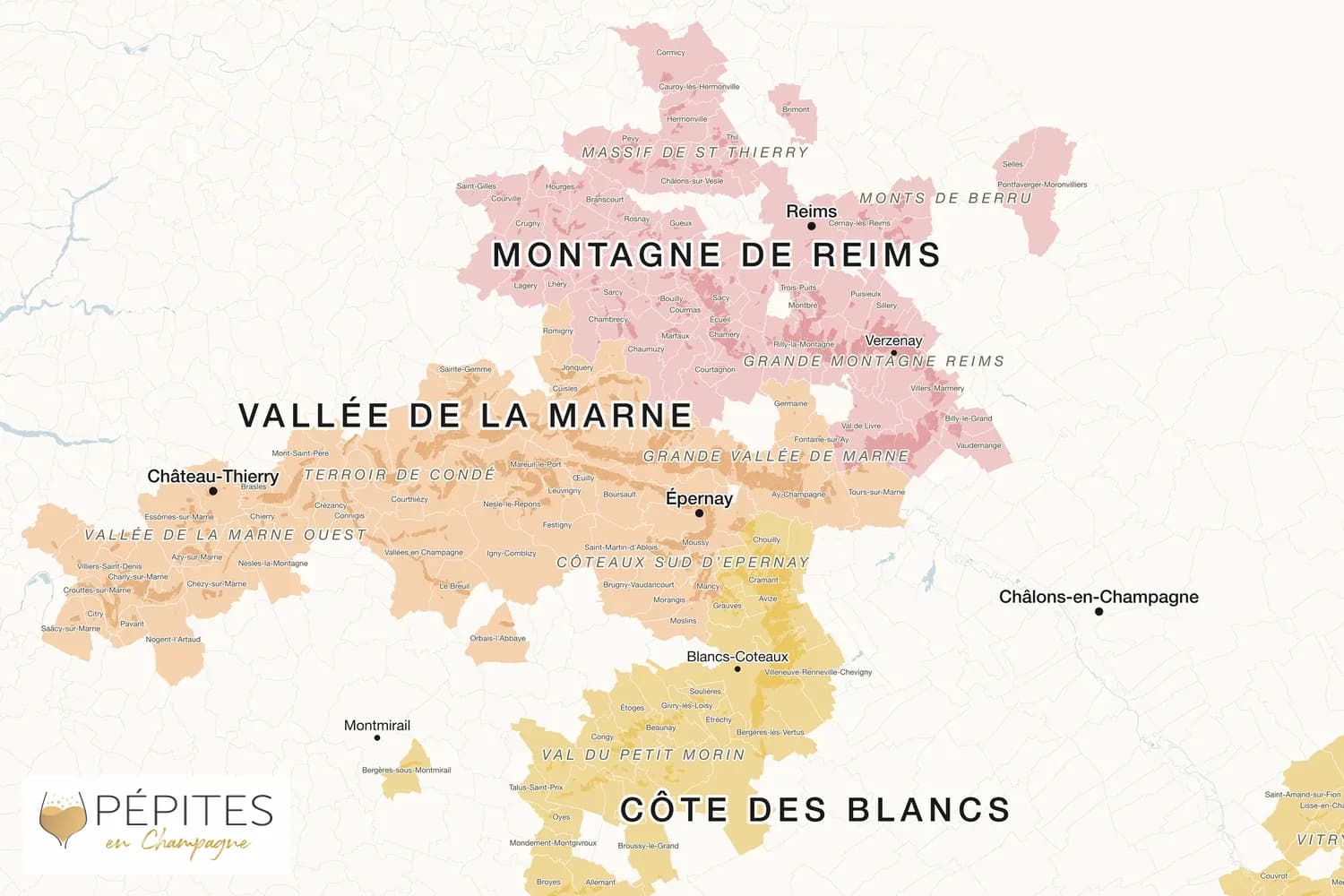
Atlas of Champagne Crus: the 319 Villages of the Appellation and their 17 Grands Crus in Maps
The Champagne appellation covers 319 crus and 34,317 hectares, including 17 grands crus and 42 premiers crus. Here is our atlas: the map of the four regions, the parcel maps of the grands crus and the complete list of villages.
Champagne prices in 2026: our cellar's barometer, based on 268 cuvées
How much does a bottle of champagne really cost in 2026? We reviewed the 268 cuvées in stock in our cellar: median price, differences between major houses and winegrowers, price by style, and loss-leader prices from major brands.
