In 2005, three Frerejean-Taittinger brothers decided to create their own champagne house. The name reveals the lineage; the project, however, is different. Partnering with Didier Pierson, heir to a winegrowing lineage from the Côte des Blancs, they settled in Avize and set themselves a simple rule: work only premier cru and grand cru plots, and let the wine age far longer than customary.
Twenty years later, Frerejean Frères remains a low-profile house, with ageing on lees of six to twelve years and dosages that never exceed 6 g/L.
The Frerejean Frères style: time as method
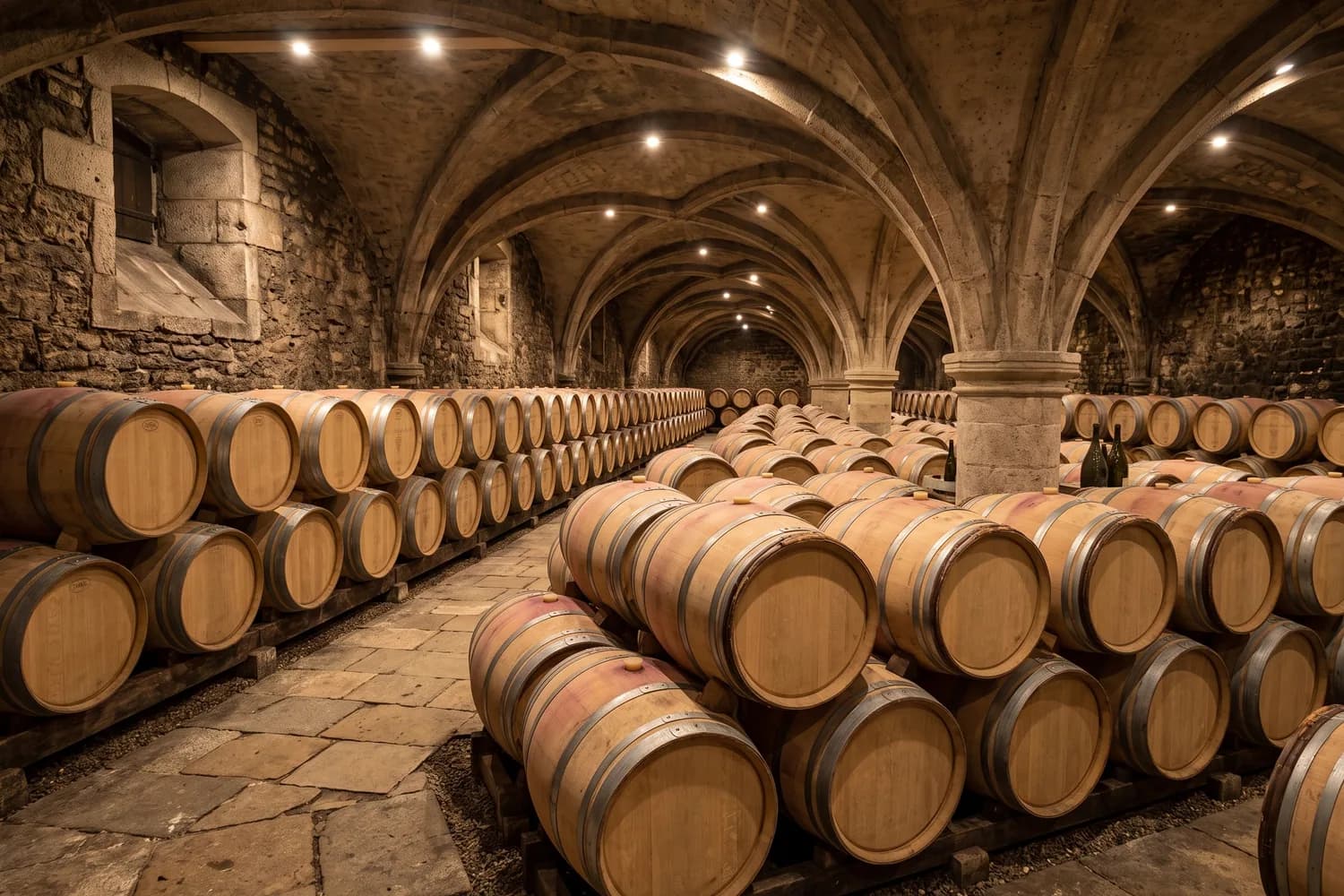
Champagne regulations require fifteen months on lees for a non-vintage brut. The house practises six to twelve years — four to eight times longer. This is not a marketing detail: it is a significant financial choice, with each bottle tying up capital for a decade.
The result in the glass is immediately noticeable. The long contact with the lees produces notes of brioche, hazelnut and toasted bread, melts the bubble until it becomes almost creamy, and gives the wine a texture that short ageing never achieves. Combined with an extra-brut dosage, the whole remains precise: you get the richness without the heaviness.
The other distinctive feature lies in the founding partnership. A house founded by heirs of a great champagne name could have settled for buying grapes and polishing the label. The partnership with a winegrower from the Côte des Blancs steered the project differently: towards the choice of plots and the discipline of the calendar, rather than towards volume. This explains why a house created in 2005 now produces wines with a maturity one would expect from a much older estate.
The Frerejean Frères range at a glance
| Cuvée | Profile | Price |
|---|
| Premier Cru Brut | The entry point, already long aged | €40.30 |
| Blanc de Blancs | Chardonnay from Avize | €62.90 |
| Blanc de Blancs Magnum | The same, in 1.5 L — at the same price | €62.90 |
| VV26 Grand Cru | Very old vines | €149.00 |
| Hussards 2012 Immergée | The prestige cuvée | €380.00 |
The Cuvée Rosée, the Secret d'Irène and the non-immersed Hussards 2012 and 2013 complete the range, currently out of stock with us.
Premier Cru Brut: the best entry point
At €40.30, the Premier Cru Brut is one of the best deals in our selection. It already carries the house signature — the smooth texture of long ageing, the sugar-free finish — for the price of a major brand's non-vintage brut. For anyone who wants to understand what time brings to a champagne without spending a hundred euros, this is the bottle.
Blanc de Blancs: and the magnum anomaly
The Blanc de Blancs (€62.90) is the heart of the house: Chardonnay from Avize, grand cru, grown on chalk. Taut, saline, with the roundness that years on lees provide.
One detail is worth noting: the magnum is currently the same price, €62.90. A magnum holds two bottles. For the same budget, that is therefore twice as much wine — and a wine that ages better, since the ratio between volume and the oxygen present in the neck slows down its evolution. Our magnum guide explains why this format is the best friend of a champagne meant for cellaring.
VV26 Grand Cru: the very old vines
The VV26 Grand Cru (€149) steps things up a notch. Very old vines yield little — often half as much as a young vine — but their roots run deep into the chalk and their grapes are more concentrated. The wine gains a density and salinity not found in blended cuvées. This is a bottle for the table, and for cellaring.
Hussards 2012 Immergée: the rare gem
At €380, the Hussards 2012 Immergée is the rarest bottle in the range with us. The house's prestige cuvée from a celebrated 2012 vintage, aged underwater: it is as much a collector's item as a wine to drink. Reserve it for occasions you will remember, or for enthusiasts seeking what no one else will have.
Frerejean Frères prices: what to expect
From €40.30 to €380. Three tiers: around €40 for the entry level, €63 for the Blanc de Blancs — in bottle as in magnum for as long as the anomaly lasts —, then €149 and above for the rare cuvées. Relative to the ageing periods involved, the first tier is well below what the house could charge.
Frerejean Frères at the table
The long ageing makes these wines particularly versatile at the table. The Premier Cru Brut pairs with starters, pressed-curd cheeses, and simple poultry dishes. The Blanc de Blancs calls for iodine: shellfish, grilled fish, scallops. The VV26 can stand up to a dish in sauce or a mature Comté, and the Hussards are served on their own, at the end of a meal, in large glasses — these are wines to be savoured in contemplation rather than paired with food.
Which Frerejean Frères for which occasion?
- Discovering the house: Premier Cru Brut, €40.30.
- A table of guests: the Blanc de Blancs magnum, at €62.90.
- A dinner for two: Blanc de Blancs in bottle.
- A discerning enthusiast: VV26 Grand Cru.
- An exceptional bottle: Hussards 2012 Immergée.
Serving and storing a Frerejean Frères
Between 10 and 12°C, in a wide glass: these long-aged wines have tertiary aromas that a flute would stifle. The magnum chills more slowly than a bottle — allow a good hour in an ice bucket. All these cuvées can be cellared, the grand crus for ten years or more, according to our storage guidelines. The rest of our blancs de blancs, our winegrowers and our cuvées to give as gifts can be found in the cellar.