

Champagne magnums: which one to choose, how many glasses they serve, and our 20 large-format bottles in stock
The essentials
A magnum of champagne (1.5 L) serves twelve flutes and ages better than a standard bottle: less oxygen per litre, a slower evolution, and finer bubbles. Expect to pay the price of two bottles plus 10 to 20 per cent. In our cellar: non-vintage bruts from €62.90 to €127.90 (Pol Roger, Taittinger, Billecart-Salmon, Bollinger…), Laurent-Perrier Cuvée Rosé at €179, Deutz and Taittinger jeroboams at €249 and €279, and great vintages up to the Rare 2008 at €480.
- How many glasses are there in a magnum of champagne?
- Twelve flutes, compared with six for a 75 cl bottle: a magnum contains 1.5 litres, or two bottles. A jeroboam (3 litres) serves twenty-four flutes, and a methuselah (6 litres) serves forty-eight.
- Why does champagne taste better in a magnum?
- Because the amount of air beneath the cork is the same as in a standard bottle, but with twice the amount of wine: the oxygen acts at half the rate. The champagne matures slowly, retains its freshness and develops finer bubbles and greater complexity. It is the format preferred by cellar masters for ageing.
- How much does a magnum of champagne cost?
- Generally, the price of two bottles plus 10 to 20 per cent, to cover the glass, the box and the large-format second fermentation. In our cellar: €62.90 (Frerejean Frères Blanc de Blancs), €88.80 to €104.90 for La Cuvée by Laurent-Perrier, Pol Roger, Taittinger, Billecart-Salmon and Gosset, €127.90 for Bollinger Special Cuvée, €179 for Laurent-Perrier Cuvée Rosé, up to €480 for Rare 2008.
- How do you chill and serve a magnum?
- Four hours in the fridge or thirty minutes in a large bucket of water, ice and coarse salt. Serve using both hands – one supporting the base, the other holding the neck – filling the glasses to a third of their capacity. An opened magnum bottle can be kept chilled for twenty-four hours with an airtight stopper.
- A magnum or two bottles: which is best for a party?
- A magnum, as soon as there are more than eight of you: it makes quite an impression, it’s served in a single round, and the wine tastes better in it. Two bottles are more practical if guests arrive in several waves or if you want to offer a variety of vintages.
A magnum is two bottles in one, enough for twelve flutes, and a champagne that ages more slowly and develops more subtly. It’s also the bottle that makes quite an impression when it arrives at the table. How many glasses does it serve, why does it taste better, how much does it cost, and the twenty large-format bottles available in our cellar, ranging from €62.90 to €480.
6 min read
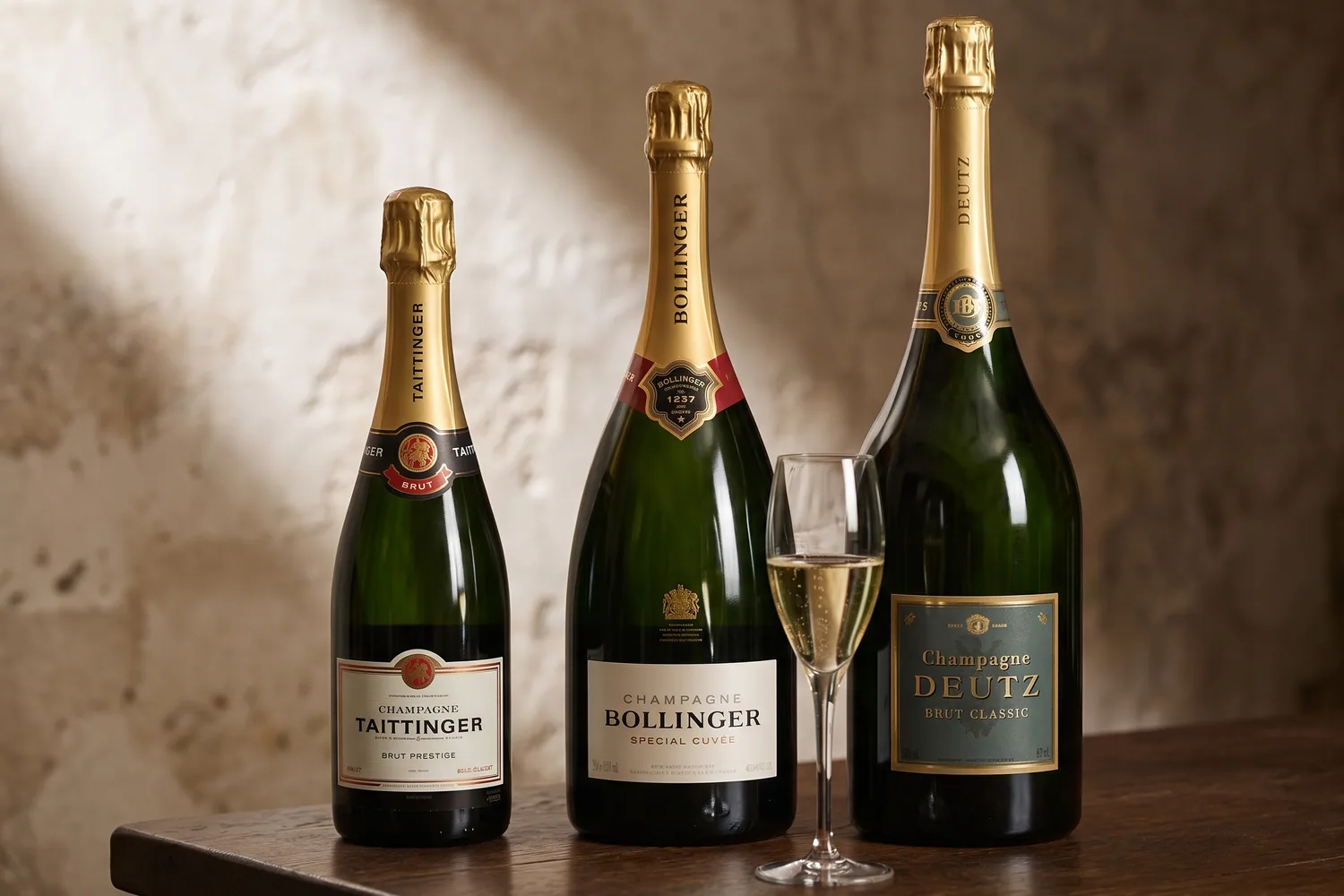
There’s a reason why cellar masters keep their old vintages in magnums: champagne ages better in them. And there’s a reason why we open one on a wedding evening or on New Year’s Eve: nothing makes more of an impression than a magnum of champagne being brought to the table. This guide explains what difference the larger bottle size makes, how many glasses it serves, how much it costs, how to serve it — and presents the twenty magnums, jeroboams and great vintages available in our cellar, with their current prices.
Magnum, jeroboam, Methuselah: how many glasses?
| Size | Capacity | Equivalent | Flutes |
|---|---|---|---|
| Bottle | 75 cl | 1 bottle | 6 |
| Magnum | 1.5 L | 2 bottles | 12 |
| Jeroboam | 3 L | 4 bottles | 24 |
| Methuselah | 6 L | 8 bottles | 48 |
For an aperitif, allow one and a half flutes per person: a magnum serves eight guests, a jeroboam sixteen. For a champagne meal, two to three flutes per person: a magnum serves four to six. Our article on bottle sizes and capacities lists all the formats, right up to the Nebuchadnezzar.
Why champagne tastes better in a magnum
The reason lies in physics. Under the cork of a magnum, the air pocket is roughly the same as in a standard bottle — but with twice as much wine. Oxygen, which causes the champagne to evolve, therefore acts at half the rate: the wine retains its freshness for longer, its bubbles remain finer, and its complexity develops at a more leisurely pace. The houses are well aware of this: Laurent-Perrier disgorges its old vintages in magnums after twenty years on the lees; Deutz reserves its prestige cuvées for the large format; and Bollinger stores its reserve wines in magnums sealed with cork. Unlike the jeroboam, where the wine is often produced in bottles and then decanted; the magnum, on the other hand, undergoes its second fermentation right in the bottle you drink from.
Our magnums of brut: from €62.90 to €127.90
For a celebration, a non-vintage brut in a magnum offers the best value for money. The Frerejean Frères Blanc de Blancs (€62.90) leads the selection: warm brioche, fresh walnuts, dried apricot. The Laurent-Perrier Cuvée in a gift box (€88.80) offers zesty, floral freshness; the Pol Roger Brut Réserve (€91.90), served at Prince William’s wedding, boasts Champagne’s finest effervescence; the Taittinger Brut Prestige (€98.90), showcasing the finesse of Chardonnay; the Billecart-Salmon Le Réserve (€99.55), with the ethereal precision of Mareuil-sur-Aÿ; the Gosset Grande Réserve (€104.90), embodying the richness of Champagne’s oldest house. For a summer terrace, the Moët & Chandon Ice Impérial (€124.80) is best served over ice. And for those seeking character, the Bollinger Special Cuvée (€127.90): Pinot Noir, oak ageing, a dense palate that holds its own throughout an entire meal. Our guides to Pol Roger, Billecart-Salmon, Bollinger, Laurent-Perrier and Moët & Chandon provide detailed information on each house.
Rosé and blanc de blancs in magnums
The Laurent-Perrier Cuvée Rosé in a magnum (€179) is the ultimate celebratory rosé: 100 per cent macerated Pinot Noir, with notes of raspberry, redcurrant and black cherry, presented in the iconic Henri IV-style bottle that everyone recognises. The Billecart-Salmon Blanc de Blancs in a magnum, in a wooden box (€172), pairs perfectly with a seafood platter for twelve: acacia blossom, lemon zest and fresh chalk.
Jeroboams: for twenty-four flutes
For sixteen guests or more, the three-litre jeroboam is the obvious choice: the Deutz Brut Classic (€249) — pear, citrus, white flowers, one of Champagne’s most consistent bruts — or the Taittinger Brut Prestige (€279), white peach, acacia, hawthorn. Make sure you have a suitably sized bucket or cool box: a jeroboam weighs over five kilos.
Great vintage champagnes in magnums: ageing and cellaring
This is where the magnum really comes into its own. On 15 May 2025, Laurent-Perrier disgorged three ‘Réserve’ magnums after nearly twenty years on the lees: the 2006 Vintage Brut (€289), honeyed pear and buttered brioche; the 2004 (€299), orange peel, toast, almond; the 2002 (€319), honey, dried fruit, chalk — each in a wooden case. At Deutz, the William Deutz 2014 (€338) andthe Amour de Deutz 2013 (€349) are the prestigious cuvées from the Aÿ-based house in large formats, as isthe Amour de Deutz 2011 (€349 without a presentation box, €378 in a presentation box) — as described in our Deutz guide. And at the very top of the range, the 2008 Rare Millésime in magnum format (€480), one of the greatest vintages of the century in the format that will allow it to age for thirty years — see our Rare Champagne guide.
Magnum prices: what to expect
| Size and cuvée | Observed prices (incl. VAT) |
|---|---|
| Frerejean Frères Blanc de Blancs magnum | €62.90 |
| Magnums: Laurent-Perrier La Cuvée / Pol Roger / Taittinger / Billecart-Salmon / Gosset | €88.80 to €104.90 |
| Moët Ice Impérial / Bollinger Special Cuvée magnums | €124.80 / €127.90 |
| Billecart-Salmon Blanc de Blancs / Laurent-Perrier Cuvée Rosé magnums | €172 / €179 |
| Jéroboams Deutz Brut Classic / Taittinger Brut Prestige | €249 / €279 |
| Magnums Laurent-Perrier Millésimé 2006 / 2004 / 2002 | €289 / €299 / €319 |
| Magnums: William Deutz 2014 / Amour de Deutz 2013 and 2011 | €338 / €349 to €378 |
| Rare Millésime 2008 magnum | €480 |
Prices as at September 2026 in our cellar; large-format bottles are often available in limited quantities. Delivery is free on orders of €300 or more in mainland France, and you’ll receive a €40 discount on orders of €600 or more and a €100 discount on orders of €1,200 or more: three magnums of brut qualify for free delivery.
Which magnum for which occasion?
- A wedding or a reception: Pol Roger, Taittinger or Billecart-Salmon — see our guide on how many bottles to buy for a wedding and our page on buying champagne for weddings for quantities.
- Christmas Eve or New Year’s Eve: Bollinger Special Cuvée with the meal, Laurent-Perrier Cuvée Rosé with dessert — see the best champagnes for Christmas 2026.
- A 16th birthday: a Deutz or Taittinger jeroboam.
- A memorable gift: a Laurent-Perrier vintage in a wooden case, or Amour de Deutz.
- Building a wine cellar: the great vintage champagnes — they’ll age best in magnums.
Chilling, opening and serving a magnum
A magnum takes twice as long to chill: four hours in the fridge, or thirty minutes in a large bucket filled with water, ice and a handful of coarse salt — our method for chilling a bottle quickly applies, but double the times. When opening, hold the cork firmly: the pressure is the same as in a standard bottle but the grip is wider; here’s our advice on how to uncork like a professional, and for the more daring, how to sabre a magnum. Serve with both hands, one under the base, the other around the neck, filling the glass to a third of its capacity. A partially consumed magnum will keep for twenty-four hours in a cool place with an airtight stopper. For storage, keep the bottle lying down, away from light, at a temperature of between 10 and 15 °C — see our storage advice — and discover our full range of vintage champagnes and all our other champagnes.
The bottles in this article
À lire également
Champagne Henriot : le chardonnay de gastronomie à travers la cuvée Rose Noire
En Champagne, le chardonnay incarne la pureté, la tension saline et l’élégance minérale. Chez Champagne Henriot, ce cépage blanc d’élite constitue la colonne vertébrale du style de la Maison, portée par les grands crus de la Côte des Blancs. Si le Blanc de Blancs classique de la gamme illustre la vivacité crayeuse des terroirs d'Avize ou de Chouilly, une cuvée plus confidentielle attire le regard des connaisseurs : la cuvée Rose Noire Pur Chardonnay.
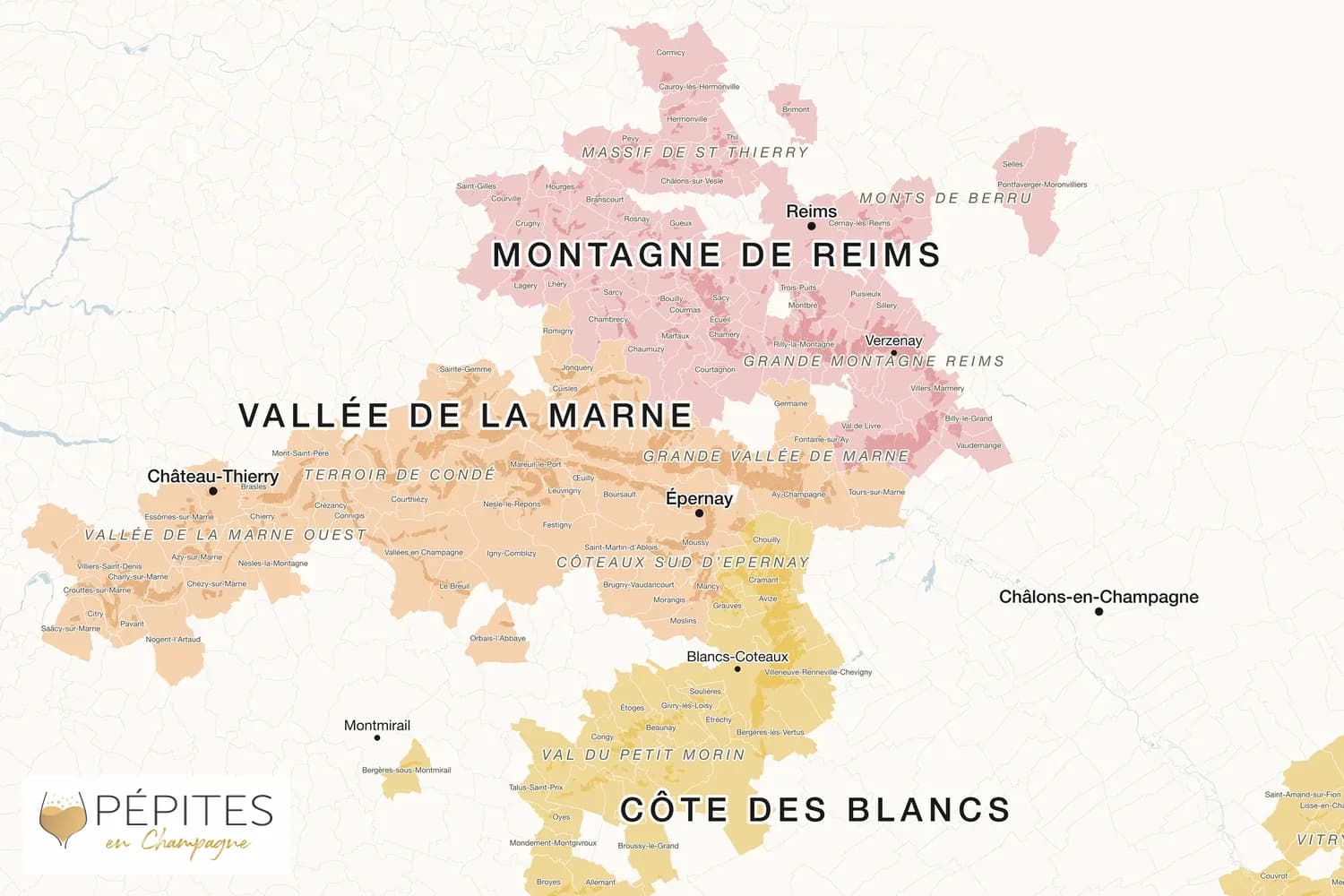
Atlas of Champagne Crus: the 319 Villages of the Appellation and their 17 Grands Crus in Maps
The Champagne appellation covers 319 crus and 34,317 hectares, including 17 grands crus and 42 premiers crus. Here is our atlas: the map of the four regions, the parcel maps of the grands crus and the complete list of villages.
Champagne prices in 2026: our cellar's barometer, based on 268 cuvées
How much does a bottle of champagne really cost in 2026? We reviewed the 268 cuvées in stock in our cellar: median price, differences between major houses and winegrowers, price by style, and loss-leader prices from major brands.
