Get a €40 discount on purchases of €600 or more, and a €100 discount on purchases of €1,200 or more of champagne on participating items (excluding shipping costs)
Get a €40 discount on purchases of €600 or more, and a €100 discount on purchases of €1,200 or more of champagne on participating items (excluding shipping costs)
Gosset: Grande Réserve, Grand Rosé, Zéro Dosage or Célébris — which cuvée should you choose from the oldest Champagne house?
The essentials
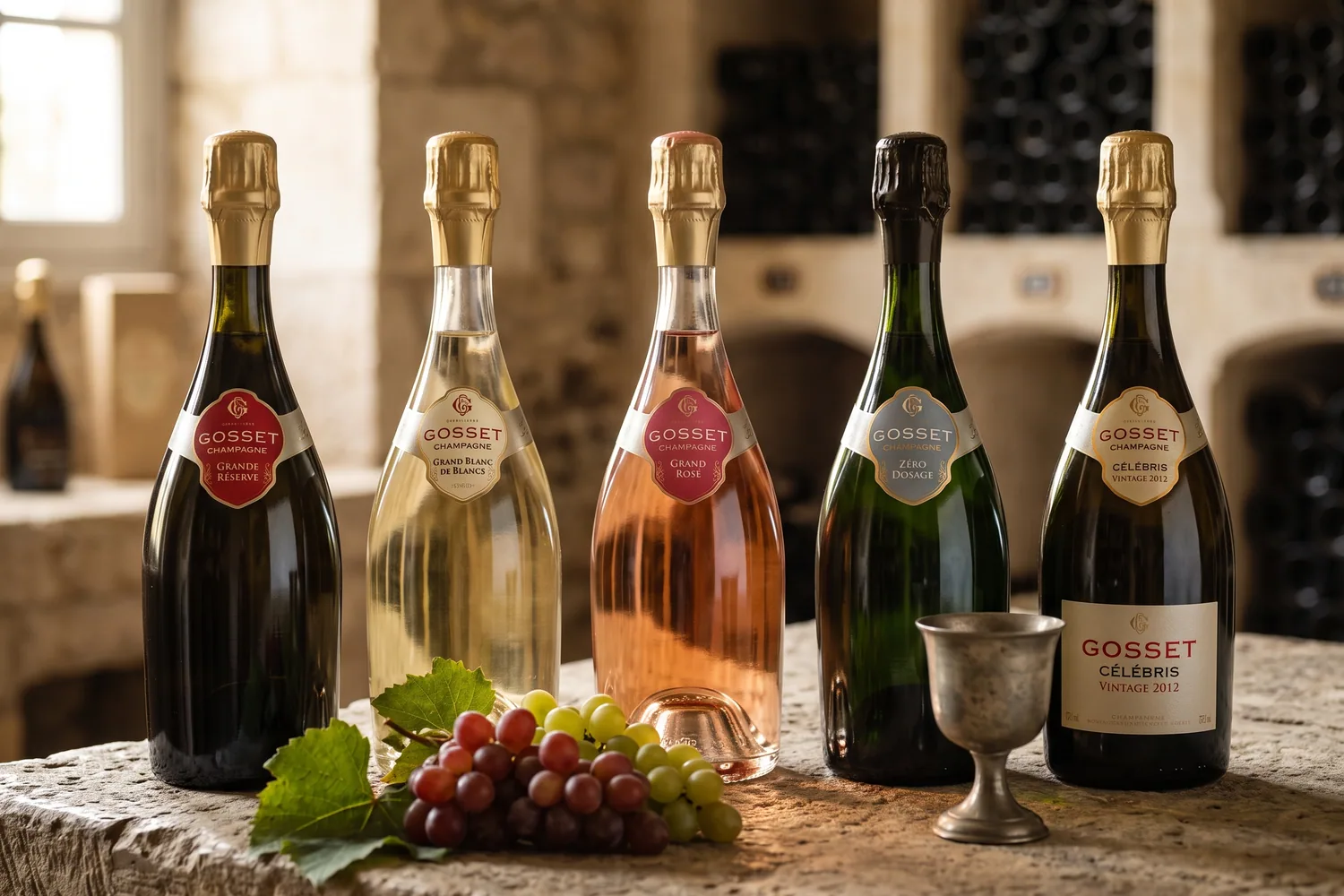
Gosset (Aÿ, 1584) is the oldest Champagne house: no malolactic fermentation, a minimum of four years’ cellaring, and a crisp, fruity style that ages very well. For everyday drinking: Grande Réserve (€44.35, magnum €104.90). Sugar-free: Zéro Dosage (€55.85). Rosés: Grand Rosé (€61.90) and Rosé Suzanne (€62.90). Blanc de blancs: Grand Blanc de Blancs (€61.90). Prestige: Celebris Rosé 2008 (€178), Célébris Vintage 2012 (€228.90), Célébris Blanc de Blancs 2012 (€258).
Is Gosset really the oldest Champagne house?
Yes: Pierre Gosset, a councillor in Aÿ, was selling his wines as early as 1584 — still wines, as sparkling champagne did not yet exist. Ruinart (1729) is the oldest producer of sparkling champagne; Gosset is the oldest producer of Champagne wines. It is based in Épernay and has been owned by the Renaud-Cointreau family since 1994.
Why does Gosset avoid malolactic fermentation?
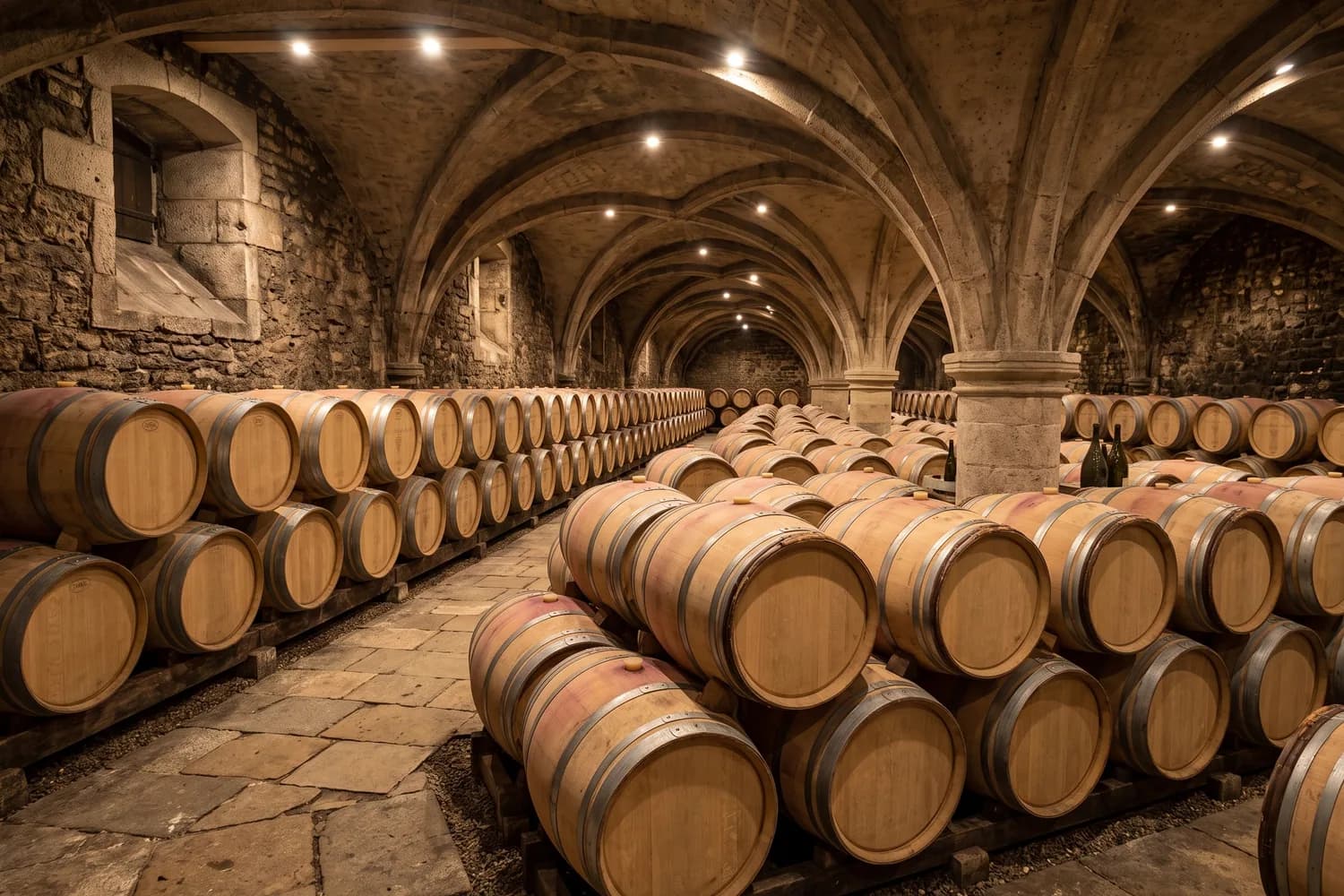
Malolactic fermentation converts malic acid (green apple) into lactic acid (smoother); almost all wineries carry out this process to round out their wines. Gosset does not allow this to take place in order to preserve the grapes’ natural acidity, which gives the wine its freshness, crisp fruit aromas and exceptional ageing potential. The wines are then aged for at least four years in the cellar.
How much does Gosset Grande Réserve cost?
€44.35 from our cellar, €104.90 for a magnum. This is the house’s signature cuvée, made predominantly from Pinot grapes and refreshed by Chardonnay, and one of the most well-rounded brut champagnes from a leading house at this price.
What is Célébris?
Gosset’s prestige cuvée, a vintage champagne produced in small batches — the Célébris Vintage 2012 is only the ninth edition in thirty-five years. It is available as a white (€228.90), a blanc de blancs (€258) and a rosé (Célébris Rosé 2008, €178), all of which have been aged for at least ten years in the cellar.
How long should you keep a Gosset?
Longer than most champagnes, precisely because there is no malolactic fermentation: Grande Réserve and Grand Blanc de Blancs can be kept for five to eight years, whilst the Célébris range can be kept for fifteen to twenty years. Store them lying down, in the dark, at 10–12 °C.
Gosset has been selling wine in Aÿ since 1584, eighty years before Champagne became sparkling. From this long history, the house has retained a traditional bottle shape, a distinctive method — no malolactic fermentation, a minimum of four years’ cellaring — and a style characterised by tension and fruitiness that is instantly recognisable in a blind tasting. Here is its range, cuvée by cuvée, with prices from our cellar.
5 min read
There is one bottle in a cellar that you can recognise from a distance: bulbous, with a sloping shoulder, modelled on18th-century bottles. It is the Gosset bottle, and it says it all — the house is older than champagne itself. Pierre Gosset sold his wines in Aÿ in 1584; the bubbles would arrive a century later. This guide explains what makes the Gosset style unique, then reviews the range, from the Grande Réserve to the Célébris, with prices as found in our cellar.
Gosset, the oldest Champagne house
Founded in Aÿ in 1584 and now based in Épernay, Gosset has been owned by the Renaud-Cointreau family since 1994, and its cellar master, Odilon de Varine, upholds two principles that define the house’s style: no malolactic fermentation — the house preserves the grapes’ natural acidity, whereas almost all others round it off — and a minimum of four years in the cellar before disgorgement, well beyond the statutory fifteen months. The result: crisp, fruity, vinous champagnes that age remarkably well. Aÿ, where it all began, is also home to Bollinger andHenri Giraud, two other houses of character; our article on the Champagne classification explains why this grand cru is so important.
The Grande Réserve (€44.35) is the Gosset you simply must try: predominantly Pinot Noir and Pinot Meunier for the fruit, refreshed by Chardonnay, and matured on lees without oxidation. Ripe apple, fresh brioche, white peach, with a ‘subtle and refined’ structure, as the house describes it — in other words, a brut with real substance, equally at home with fish as with poultry. For a large gathering, the magnum (€104.90) ages even better, as explained in our guide to magnums of champagne.
Zéro Dosage: Gosset’s brut nature
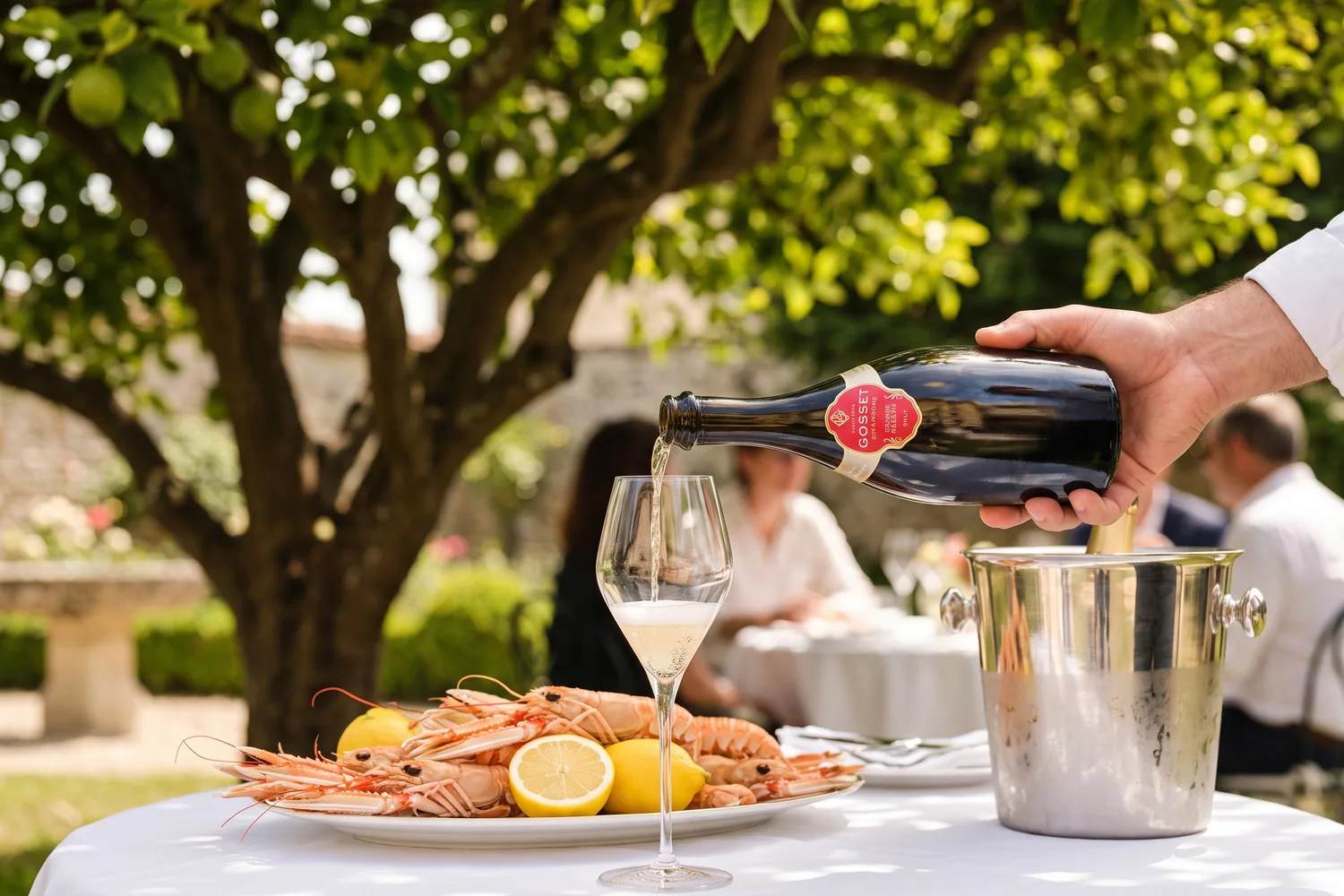
The Zero Dosage (€55.85) is a brut nature, with no added sugar, blended from grands crus and premiers crus. With no malolactic fermentation and no dosage, one might fear it would be austere; in fact, the opposite is true: marzipan, ripe lemon, bergamot, a hint of salted butter caramel when aerated, a lively yet enveloping palate and a briny finish. The perfect champagne for oysters and sushi, and our favourite brut nature from a prestigious house — our other brut nature champagnes are listed under ‘champagnes for aperitifs’.
Grand Blanc de Blancs and Grand Rosé
The Grand Blanc de Blancs (€61.90) combines the finesse of the Côte des Blancs with the structure of the Montagne de Reims, in the house style: crisp fruit, tension, minerality. A blanc de blancs that accompanies an entire meal, and which pairs with oysters like few others. The Grand Rosé (€61.90) is a blended rosé with a high proportion of Chardonnay, coloured by red wines from Bouzy and Ambonnay: luminous salmon pink, fresh red fruits, structure — just as at home as an aperitif as it is with a meal. Our other rosés stand up to comparison.
Rosé Suzanne: a tribute in a clear bottle
Rosé Suzanne (€62.90) pays tribute to Suzanne Gosset, who ran the house from 1955 to 1965 and, in 1947, did something unprecedented at the time: presenting a rosé champagne in a clear glass bottle to showcase its colour. This cuvée takes up the idea — a vibrant coral colour in the clear bottle, with notes of dried strawberry, white peach and citrus — and makes an elegant gift for under €65.
Célébris: the prestige cuvées
Célébris is produced only in exceptional vintages and in limited quantities: the Célébris Vintage 2012 (€228.90) is just the ninth release in thirty-five years. Aged for over ten years in the cellar: white flowers, candied lemon, pastry notes, a hint of pepper that develops into chalk and lime blossom — the quintessence of the style, taut and deep. The Célébris Blanc de Blancs 2012 (€258) is the Chardonnay version: fresh mint, pink grapefruit, frangipane, followed by notes of a great white Burgundy — chalk, lime blossom, white pepper — and a palate of tarte tatin and roasted apple. The Célébris Rosé 2008 (€178), from a vintage year and aged for ten years, offers candied orange, strawberry, white pepper and a hint of menthol: a gourmet rosé to pair with duck or lamb. Our article on Gosset’s new exceptional cuvée recounts the origins of the series; all our vintage wines are listed in the catalogue.
Which Gosset cuvée for which occasion?
Every day, as an aperitif or with a meal: Grande Réserve — this is the cuvée that makes people fall in love with the house. Oysters, seafood, Japanese cuisine: Zéro Dosage or Grand Blanc de Blancs. Festive meals: Grand Rosé with fish, Célébris Vintage with truffled poultry. Gift: Rosé Suzanne for its history and bottle design, Célébris Blanc de Blancs 2012 to mark a special occasion. Cellar: the Célébris range, aged fifteen to twenty years — the absence of malolactic fermentation ensures they age slowly and gracefully.
Serving and storage
A Gosset should be served slightly less chilled than an ordinary brut, so that the effervescence does not dominate: 9 °C for the Grande Réserve, the Zero Dosage and the rosés; 10 to 11 °C for the Célébris, in a tulip glass or a white wine glass. Open a Célébris half an hour beforehand. Store bottles lying down, in the dark, at between 10 and 12 °C (our advice). The prices shown are those recorded in our cellar on the date of publication; the Célébris and the magnum are available in limited quantities.