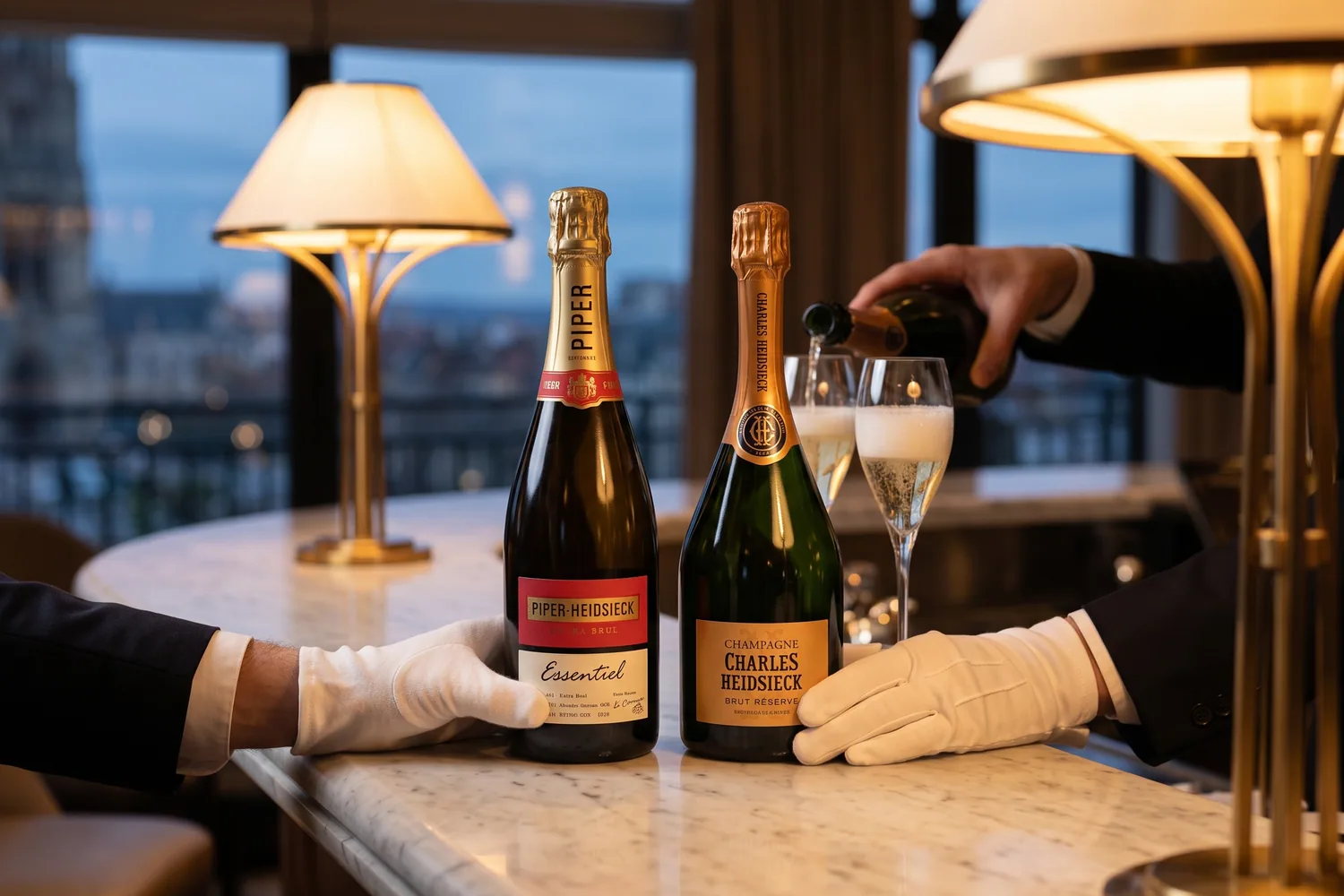
On a restaurant menu, ‘Heidsieck’ refers to two houses — three, if you count Heidsieck & Co Monopole. The two that matter in our cellar are neighbours in Reims, have belonged to the same group since 2011, and yet have almost nothing in common when tasted. Piper-Heidsieck is the champagne of freshness, extra-brut and reasonable prices; Charles Heidsieck is the champagne of reserve wines, roundness and great vintages. This guide explains the difference, then reviews the cuvées available from both houses, along with their current prices.
Two houses, one family, two distinct characters
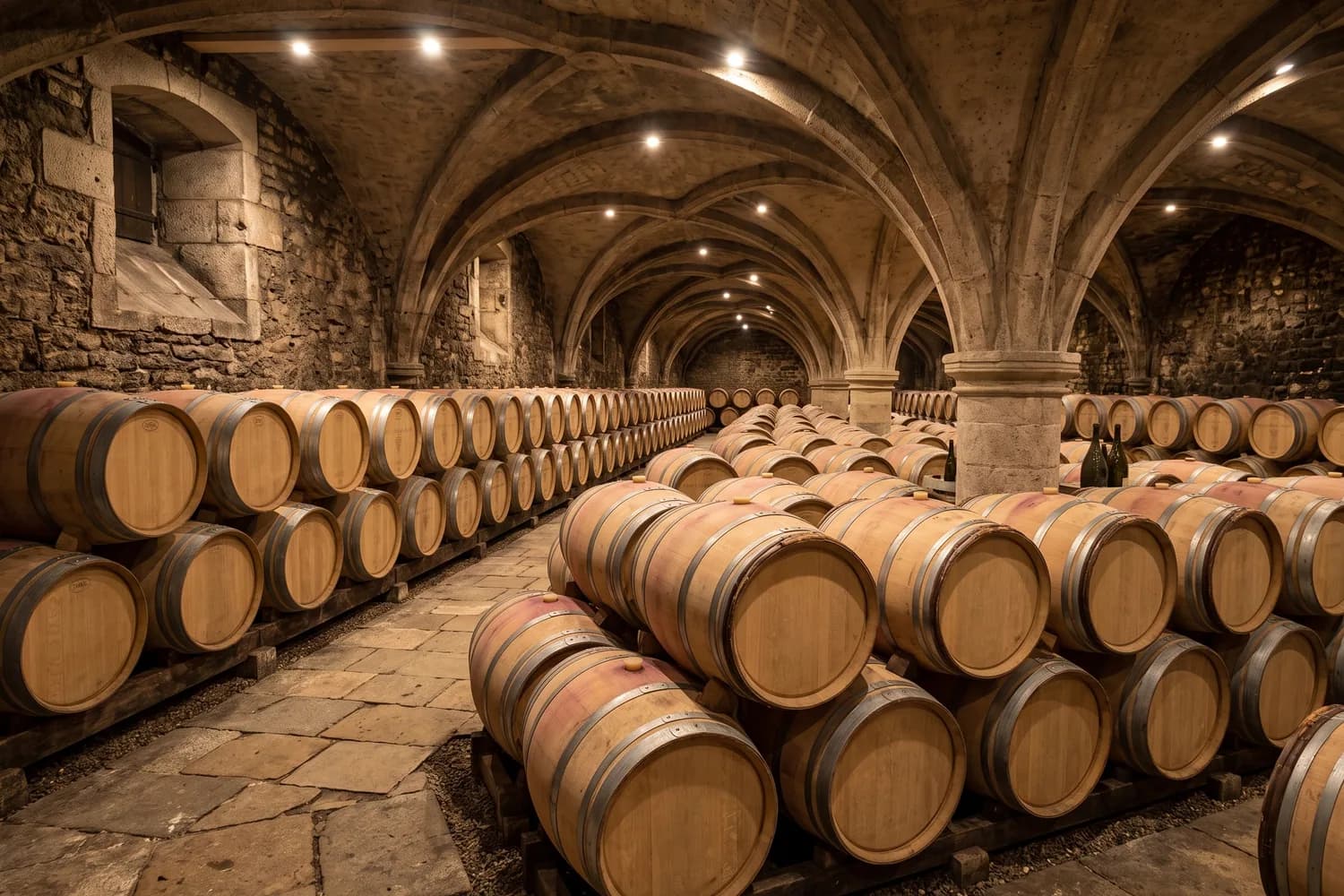
It all began in 1785 with Florens-Louis Heidsieck, a cloth merchant from Westphalia, who founded the house in Reims of which Piper-Heidsieck is the heir. In 1851, his grand-nephew Charles-Camille Heidsieck set up his own house and set off to sell his champagne in the United States, where the press nicknamed him ‘Champagne Charlie’. The two houses followed separate paths until 2011, when the Descours family’s EPI Group brought them together under one roof — without merging them. Piper-Heidsieck, a certified B Corp, sources its grapes from 240 partner winegrowers across more than 110 crus, ages its wines for at least 36 months on slats and, under the guidance of Émilien Boutillat, cultivates a lively and precise style. Charles Heidsieck ages its reserve wines in eight kilometres of Gallo-Roman chalk cellars, listed as a UNESCO World Heritage Site in 2015, and incorporates up to 40 per cent of these into its non-vintage brut — wines that are on average ten years old, which explains its roundness. For the neighbouring house that follows the same formula of Chardonnay and chalk cellars, see our Taittinger guide.
Both ranges at a glance
| Cuvée | Maison | Style | Price |
|---|
| Essentiel Extra Brut | Piper | Extra-brut, 3 grape varieties, multi-vintage | €41 |
| Essentiel Blanc de Noirs | Piper | Pinot Noir and Meunier | €46.50 |
| Essentiel Blanc de Blancs (box) | Piper | Chardonnay, reserve wines | €48.50 |
| Vintage 2018 | Piper | Vintage, aged on lees for 5 years | €59.50 |
| Brut Réserve | Charles | 40% reserve wines | €44.80 |
| Blanc de Blancs | Charles | Chardonnay, 10 crus | €67 |
| Brut Millésimé 2013 / 2012 | Charles | Vintage | €109 / €119 |
| Vintage Rosé 2008 | Charles | Great Vintage Rosé | €148 |
| Blanc des Millénaires 2007 / 1996 | Charles | Prestige, Blanc de Blancs | €194 / €460 |
Piper-Heidsieck Essentiel: the extra-brut that transformed the house
The Essentiel collection is Piper’s modern signature.The Essentiel Extra Brut (€41) blends the three grape varieties across several vintages, with a low dosage that allows the fruit to shine through: toasted hazelnut, brioche, white peach, quince, a chalky minerality, and a firm, lemony finish. It is our most affordable extra-brut from a grand maison, and it features in our list of good champagnes under €40 as soon as it drops below that price point.The Essentiel Blanc de Noirs (€46.50) blends Pinot Noir and Meunier from ten crus: apricot, clementine, followed by raspberry and blueberry, with a smoky note — a fruity and elegant Blanc de Noirs, worth comparing with the house’s other Blanc de Noirs.The Essentiel Blanc de Blancs in a gift box (€48.50) is a pure Chardonnay enriched with a high proportion of reserve wines: white flowers, lemon, grapefruit, chalk — and the gift box makes it the simplest gift on this list (see our gift sets). Finally,the Essentiel Extra Brut Ampli (€57.50) is a limited-edition version of the same blend, with a more taut profile and the Chardonnay taking centre stage.
Piper-Heidsieck Vintage 2018 and Hors-Série 1982
The 2018 Vintage (€59.50) is the house’s sun-kissed vintage: Chardonnay and Pinot Noir predominantly from Grands Crus and Premiers Crus, exclusively the cuvée — the first pressing — and aged on lees for over five years. Nectarine, ripe red fruits, fresh almond, mocha, a smoky note: a generous vintage at a price rarely seen in this category (our other vintages are listed here). At the other end of the spectrum,the 1982 Hors-Série (€570) reinterprets the 1982 Brut Sauvage, the house’s legendary cuvée from the 1990s: candied mirabelle plum, kumquat, dried pineapple, ginger, bergamot tea, roasted coffee, with the liveliness of an extra-brut dosed at 4 g/L. A collector’s bottle; two copies in the cellar.
Charles Heidsieck Brut Réserve: Reims’ most generous brut
The Brut Réserve (€44.80, without case) is the very raison d’être of the house: up to 40 per cent reserve wines aged for an average of ten years in the chalk cellars, some of which have been aged in old Burgundian barrels. Hence the nose of warm brioche, peach, pear and toasty notes, and the full-bodied, creamy palate that is a world away from an ordinary négociant brut. It is one of the most award-winning non-vintage champagnes in the world, and at this price, one of the best buys in our cellar — equally suited to a meal or as an aperitif. The Blanc de Blancs (€67) brings the same richness to the Chardonnay from ten crus: white peach, candied citrus, honeysuckle, hazelnut, with a buttery, lemony finish. Our other Blanc de Blancs provide a point of reference.
Charles Heidsieck: the vintages
Charles Heidsieck only produces vintage champagnes in years that deserve it, and ages them for a long time. The 2013 Vintage Brut (€109) is a vintage of contrasts — power and purity, mint, pear, citrus, and remarkable freshness; the 2012 Brut Millésimé (€119), richer in character, offers praline-infused almond, crème brûlée, acacia honey and white peach, with a smoky, mineral note: the champagne for a gourmet dinner. The 2008 Vintage Rosé (€148) comes from one of the great vintages of the century: a coppery salmon colour, an initial salty and smoky impression, followed by pink grapefruit, blood orange and redcurrant — a gourmet rosé, perfect with lamb or duck.
Blanc des Millénaires and Champagne Charlie: legendary cuvées
The Blanc des Millénaires is Charles Heidsieck’s prestige cuvée, a vintage blanc de blancs aged for a very long time in chalk cellars. The 2007 (€194) is at its peak; the 1996 (€460), with notes of damp chalk, candied lemon, toasted brioche and hazelnut, is one of the house’s legendary vintages — five bottles in the cellar. And for collectors, Champagne Charlie 1982 (€2,299) revives the cuvée that bore the founder’s nickname: a bottle steeped in history rather than merely a cellar purchase.
Piper or Charles: which to choose?
Aperitif, seafood, tight budget: Piper-Heidsieck Essentiel Extra Brut or Blanc de Blancs — the freshness and low dosage do the trick. Meals, poultry, cheeses: Charles Heidsieck Brut Réserve, whose roundness holds its own against the dishes; our article onpairing cheese with Piper-Heidsieck champagne shows that Piper also excels in this area. As a gift: the Essentiel Blanc de Blancs in a gift box for under €50, the 2012 Vintage at around €120, or the Blanc des Millénaires for a special occasion. Cellaring: Charles vintages improve over ten years without losing their quality; Essentiel is best enjoyed within three years. In a nutshell: Piper for its vibrancy, Charles for its depth.
Serving and storage
Serve the Essentiel and the 2018 Vintage at 8 °C, in a flute or tulip-shaped glass; the Brut Réserve, the vintages and the Blanc des Millénaires at 10 °C, in a white wine glass that allows the reserve notes to open up — the 1996 and the 1982 Hors-Série deserve half an hour in a decanter. Store all bottles lying down, in the dark, at between 10 and 12 °C (our storage advice). The prices shown are those recorded in our cellar on the date of publication; older vintages are available in limited quantities.